LECA Balls for Houseplants: Complete Guide
LECA balls replace soil in semi-hydro setups. Learn what they are, which plants fit, how to transition safely, and when potting mix is still better.
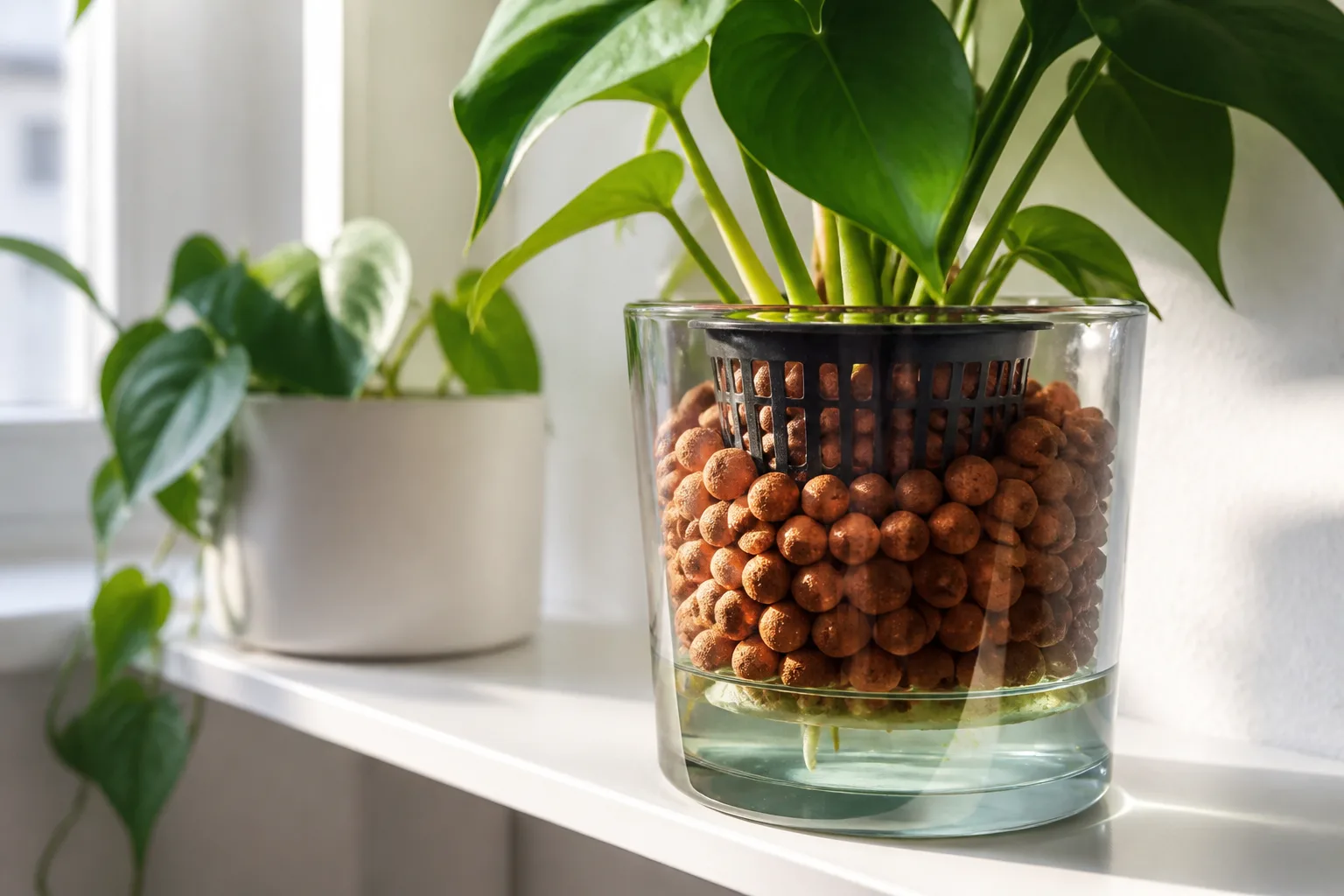
LECA balls look like terracotta marbles spilled into a glass jar—and that visual is exactly why they spread through houseplant social feeds. LECA (lightweight expanded clay aggregate) is a baked, porous clay medium used in semi-hydroponic setups: plants anchor in inert balls while a nutrient solution sits in a reservoir below, wicking upward through capillary action. Roots get a stable moisture gradient and more oxygen between balls than they often get in dense, waterlogged potting mix.
LECA is not a magic substitute for attention. It does not contain nutrients, it will not fix a dark room, and it is not automatically easier than soil for every species. What it can do—when matched to the right plant and maintained with hydro fertilizer and periodic flushing—is reduce fungus-gnat habitat, make root health visible, and give you more control over moisture at the root zone. This guide explains what LECA is, how semi-hydro works, which houseplants fit, how to transition safely, and when potting mix is still the smarter choice.
Quick Answer: What LECA Does—and What It Cannot
LECA helps plants by holding a thin film of moisture on porous clay surfaces while leaving large air gaps between balls. In a semi-hydro pot, fine roots explore the wet lower zone for water and dissolved nutrients; thicker roots stay in drier upper zones for oxygen. That split is the whole point.
LECA cannot: feed your plant (you add hydro nutrients), replace adequate light, or guarantee success for moisture-sensitive species that hate any root-zone change. The University of Washington Elisabeth C. Miller Library also warns that LECA will not free you from watering discipline—if the reservoir runs dry, roots can desiccate faster than they would in forgiving potting mix because LECA holds less water overall than peat-based blends.
The Three-Question Fit Test
Before you buy ten liters of clay balls, run this quick test:
- Is the plant struggling mainly from soggy soil, gnats, or repeated root rot? LECA may help if you are willing to learn semi-hydro maintenance.
- Are you okay fertilizing on a schedule? Inert media means every nutrient comes from you.
- Can you start with one inexpensive cutting or rescue plant—not your entire collection? Transition shock is real; a trial plant limits risk.
If you answered no to question 2 or want zero learning curve, stay in soil and fix the mix or watering pattern first. Guides like can you reuse potting soil and water vs soil propagation solve different problems but share the same theme: the medium only works when you match it to the plant and your habits.
What LECA Balls Actually Are
Lightweight expanded clay aggregate is manufactured from natural clay—often with brick dust and mineral processing byproducts—fired in a rotary kiln at high heat until it expands into round, honeycombed pellets. Brand names such as Hydroton and generic labels like grow rocks or clay pebbles describe the same class of product: inert, reusable, pH-neutral expanded clay.
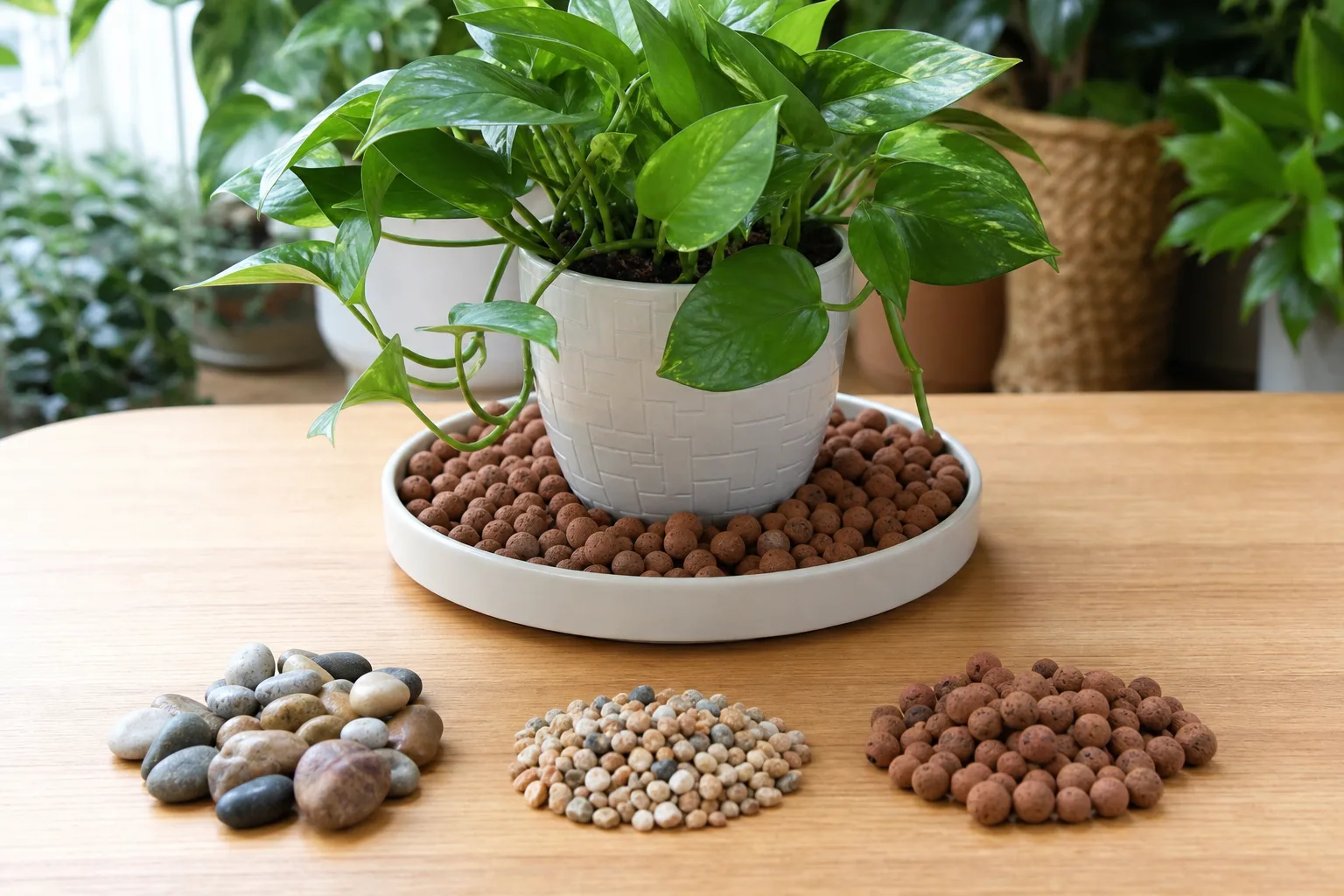
The balls feel hard and sound hollow when tapped. Their surfaces are rough enough for roots to grip, and their internal pores absorb some water, then release it slowly. Absorption varies by brand and manufacturing—more finely pulverized mixes in the batch can hold less water than coarser grades, as the Miller Library notes.
Do not confuse LECA with a humidity pebble tray. A pebble tray raises ambient moisture around a potted plant sitting above water; LECA is the root environment. If you only need humidity, read pebble trays for plants instead of converting the whole pot.
LECA vs Hydroton and Other Clay Pebbles
Most home growers use “LECA” and “clay pebbles” interchangeably. Hydroton is a long-standing trade name; newer bags may simply say expanded clay aggregate. For houseplant semi-hydro, choose horticultural-grade pebbles sold for hydroponics or aquaponics—not landscape gravel, which is too dense and irregular.
How LECA Balls Are Made
Manufacturers feed pre-treated clay into a kiln heated hot enough to vaporize trapped moisture inside the pellets. The steam expands the clay like popcorn, creating a hard shell with internal voids. After cooling, the balls are screened to size—typically about 4–16 mm for houseplant use.
That process explains two practical behaviors you will notice at home:
- Dust on new bags — fines from shipping and handling must be rinsed away before use.
- Floating at first — dry pellets are buoyant until they saturate; Oklahoma State University Extension notes that floating pebbles can clog filters in commercial systems. In a cache pot, floating is mostly an annoyance during the first soak, not a long-term problem.
Porosity and round shape matter because roots need both air channels and thin water films. Crushed or angular aggregate packs tighter and can behave more like gravel at the bottom of a soil pot—which is exactly the drainage myth you want to avoid.
Semi-Hydroponics vs Soil: The Real Difference
Soil (really, peat- or bark-based potting mix) holds water, nutrients, and biology in one matrix. Microbes break down organic matter; the mix buffers pH; you water when the top dries. Semi-hydroponics replaces that matrix with an inert scaffold and puts water plus nutrients in a separate reservoir.
In the common houseplant version—sometimes called passive semi-hydro—there is no pump. An inner net pot or slotted insert holds LECA and roots inside an outer cache pot that holds the reservoir. Water rises by capillary action through the balls until the upper zone stays mostly airy. You top off the reservoir rather than drenching from the top the way you would with soil.
| Factor | Potting mix | LECA semi-hydro |
|---|---|---|
| Nutrients | In mix + fertilizer you add | Only from hydro nutrients you add |
| Oxygen at roots | Depends on mix structure and watering | Generally high between balls |
| Water-holding | High in peat-heavy blends | Lower; reservoir supplies moisture |
| Pest habitat | Organic matter feeds fungus gnats | No soil organic matter for larvae |
| Visibility | Roots hidden | Roots visible in clear setups |
| Learning curve | Familiar | Requires pH/nutrient habits |
| Upfront cost | Low | Higher for media + containers |
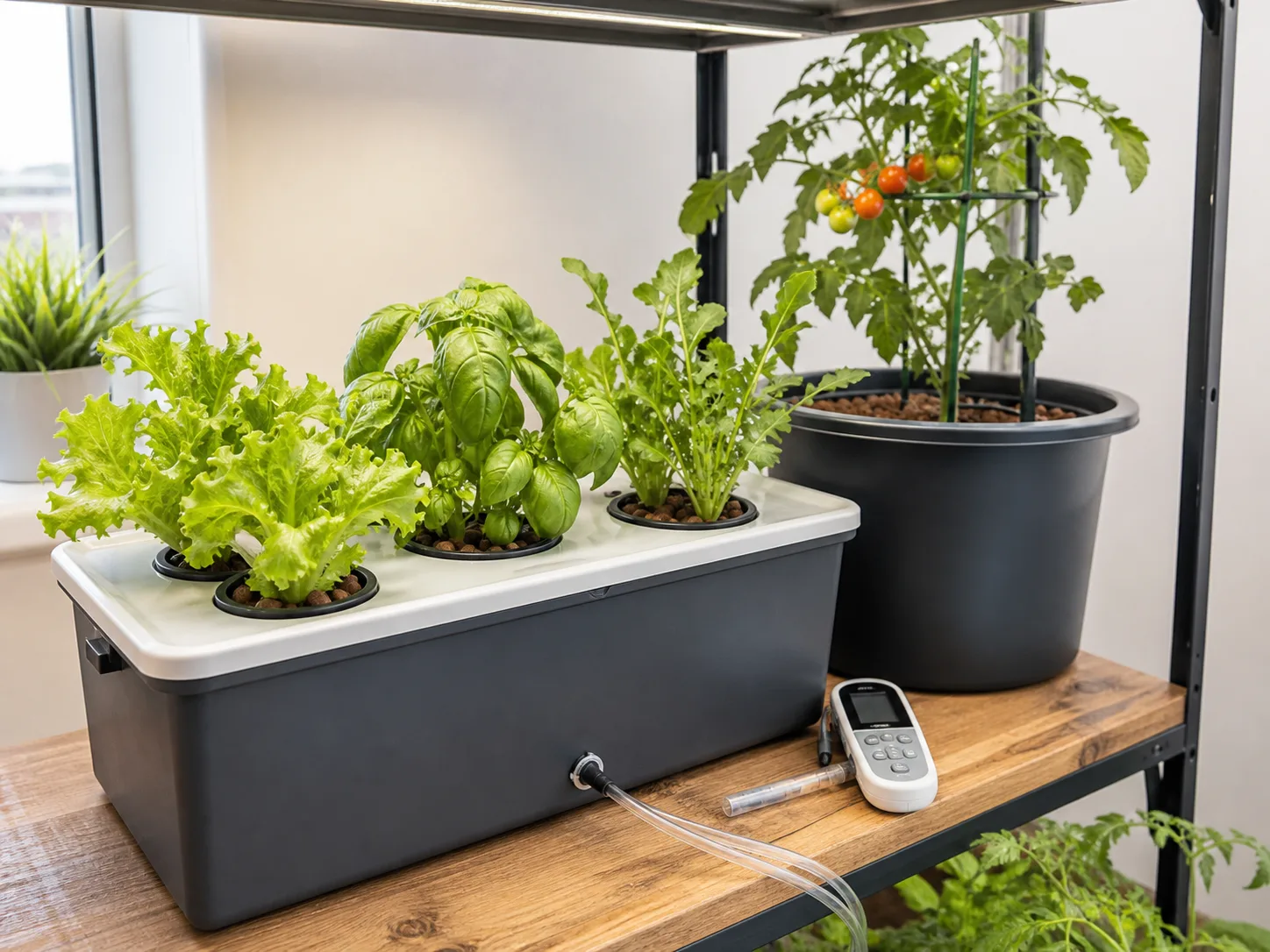
Full circulating hydroponics—NFT, DWC, ebb-and-flow—is a different project aimed often at food crops; see plants to grow hydroponically for that lane. Semi-hydro is the bridge many houseplant growers use: no electricity, but more structure than a jar of water.
What LECA Does for Houseplant Roots
Aeration is the headline benefit. OSU Extension describes expanded clay as having high pore space with good solution flow and effective drainage between irrigation cycles. Roots ramify through the balls instead of suffocating in a wet plug of fine peat.
Moisture buffering works differently than soil. LECA wicks water upward from the reservoir; the upper balls stay drier. That gradient can reduce chronic root rot if you keep the reservoir at a sane level and use nutrients correctly. It is not automatic—roots sitting in a constantly full, stagnant reservoir can still decline.
Fewer fungus gnats is a real lifestyle upgrade for many growers. Gnat larvae need decaying organic matter in moist soil. Inert LECA removes that food source. You may still see algae on the reservoir wall or occasional pests on leaves, but the soil-gnat cycle largely disappears.
Reusability matters for long-term cost. After a repot or failed experiment, you can wash, optionally sterilize, and redeploy the same balls. OSU suggests pasteurizing reusable media at 180°F (82°C) for 30 minutes or a brief dilute bleach soak followed by thorough rinsing—overkill for a single houseplant, but useful if you had root rot and want a clean restart.
Honest Drawbacks, Costs, and Trade-Offs
Price is the first hurdle. Expanded clay costs several times more per volume than bagged potting mix. You buy once and reuse, but the initial sticker shock is real—especially for large cache pots.
Prep labor is non-negotiable. New LECA must be rinsed until water runs clear; many growers soak 24–48 hours before planting. Used LECA needs periodic cleaning to remove algae, salt crust, and old root fragments.
Nutrients are entirely on you. LECA releases almost no minerals into the water stream. Houseplant fertilizer diluted for hydro use—or a dedicated three-part hydro formula—is standard. Soil growers who rarely fertilize often struggle in semi-hydro because the plant has nowhere else to get nitrogen, potassium, or calcium.
pH and salt management replace the “water when dry” simplicity of soil. Tap water minerals accumulate unless you flush with plain water monthly or use lower-mineral water. A simple pH pen or combo meter helps you stay in the 5.5–6.5 range many tropical houseplants prefer.
Transition shock can yellow leaves for weeks after conversion. Soil-grown roots are structurally different from water-adapted roots; the plant must grow a new root profile. Gardening Know How’s semi-hydro guides note temporary leaf drop during adjustment—normal, but stressful if you convert a prized specimen without a backup cutting.
Should You Switch to LECA? A Simple Decision Test
LECA shines when root health and moisture control are your bottleneck—not when light, humidity, or pests on foliage are the real problems.
Strong yes signals:
- Repeated root rot in dense store-bought potting mix despite careful watering
- Persistent fungus gnats tied to soil organic matter
- You already root cuttings in water and want a longer-term medium
- You enjoy monitoring reservoirs and testing nutrient solution
Strong no signals:
- You forget to water for weeks at a time (LECA reservoirs can run dry)
- You want “set and forget” nutrition from compost-rich mix
- The plant is a slow-rooting succulent you barely water now
- You are unwilling to buy hydro fertilizer and test occasionally
Best first trial plants: a golden pothos cutting, a spider plant pup, a small snake plant division, or a rescue alocasia with mushy soil roots—something valuable enough to learn on, cheap enough to lose. Starting from a water-rooted cutting skips the hardest soil-removal step; see water vs soil propagation for why that path is easier.
When to Stay in Soil Instead
Soil is not inferior—it is the right tool for most of the plant kingdom. Stay in potting mix when:
- The plant wants rich, steady organic moisture — many ferns and bog lovers do better in sphagnum or high-peat blends than in fast-draining LECA.
- You grow mostly cacti and succulents that want long dry spells between soaks.
- You rely on slow-release fertilizer in the mix and do not want a hydro regimen.
- The specimen is large and root-bound — ripping soil from a mature root ball is traumatic; top-dressing and improving watering is often kinder.
If your issue is mix quality, refreshing with new components—see coco coir vs peat moss—may solve soggy soil faster than a full semi-hydro conversion.
Why You Should Never Mix LECA with Potting Soil
Social posts sometimes show LECA layered under soil “for drainage.” Do not do this—and do not blend LECA into potting mix expecting better aeration.
The Miller Library is explicit: clay balls belong in semi-hydro culture, not mixed into soil and not placed at the bottom of traditional pots. When water moves through potting mix and hits a sudden texture change, it slows and spreads sideways, creating a perched water table—a saturated band where roots sit wetter than you think. UNL Extension explains that a different layer at the bottom does not improve drainage; it can leave roots hanging in excess moisture.
If you want better drainage in soil, use chunkier mix ingredients (bark, perlite, pumice) throughout the whole profile—not a LECA layer that acts like a false bottom.
Supplies for a Basic Semi-Hydro Setup
You need less specialty gear than a pumped hydro system, but the right container geometry matters.
LECA balls — horticultural expanded clay, rinsed before use.
Inner net pot or slotted insert — lets roots pass through and reservoir water contact the balls. Common sizes 3–5 inches (8–13 cm) for small houseplants.
Outer cache pot — holds the reservoir; opaque sides reduce algae. No drainage hole in the outer pot is intentional—the reservoir lives inside.
Hydroponic nutrients — liquid formulas labeled for hydro or semi-hydro; start at quarter strength while roots adapt.
pH test tool — pen or strips; optional EC/TDS meter if you want tighter control.
Filtered or rainwater (optional) — lowers mineral buildup if your tap is very hard.
Skip for now: air pumps, timers, and grow lights—unless you are also upgrading light for the plant itself.
How to Prep and Rinse New LECA
Factory dust clogs pores and clouds your reservoir. Treat prep as part of planting, not an optional shortcut.
- Pour the balls into a bucket and cover with tap water.
- Agitate and drain — swirl like rinsing rice; dump milky water outside or down a drain that can handle fine sediment.
- Repeat until water runs mostly clear — usually three to six cycles.
- Soak 24–48 hours so pellets saturate and stop floating.
- Optional sterilization for reused media after disease: dilute bleach soak (about 10% solution for 20 minutes per OSU guidance) or hot-water pasteurization, then rinse thoroughly.
Skipping rinse is how new growers end up with cement-colored reservoirs and clogged pores before the plant even settles in.
Step-by-Step: Transition a Plant from Soil to LECA
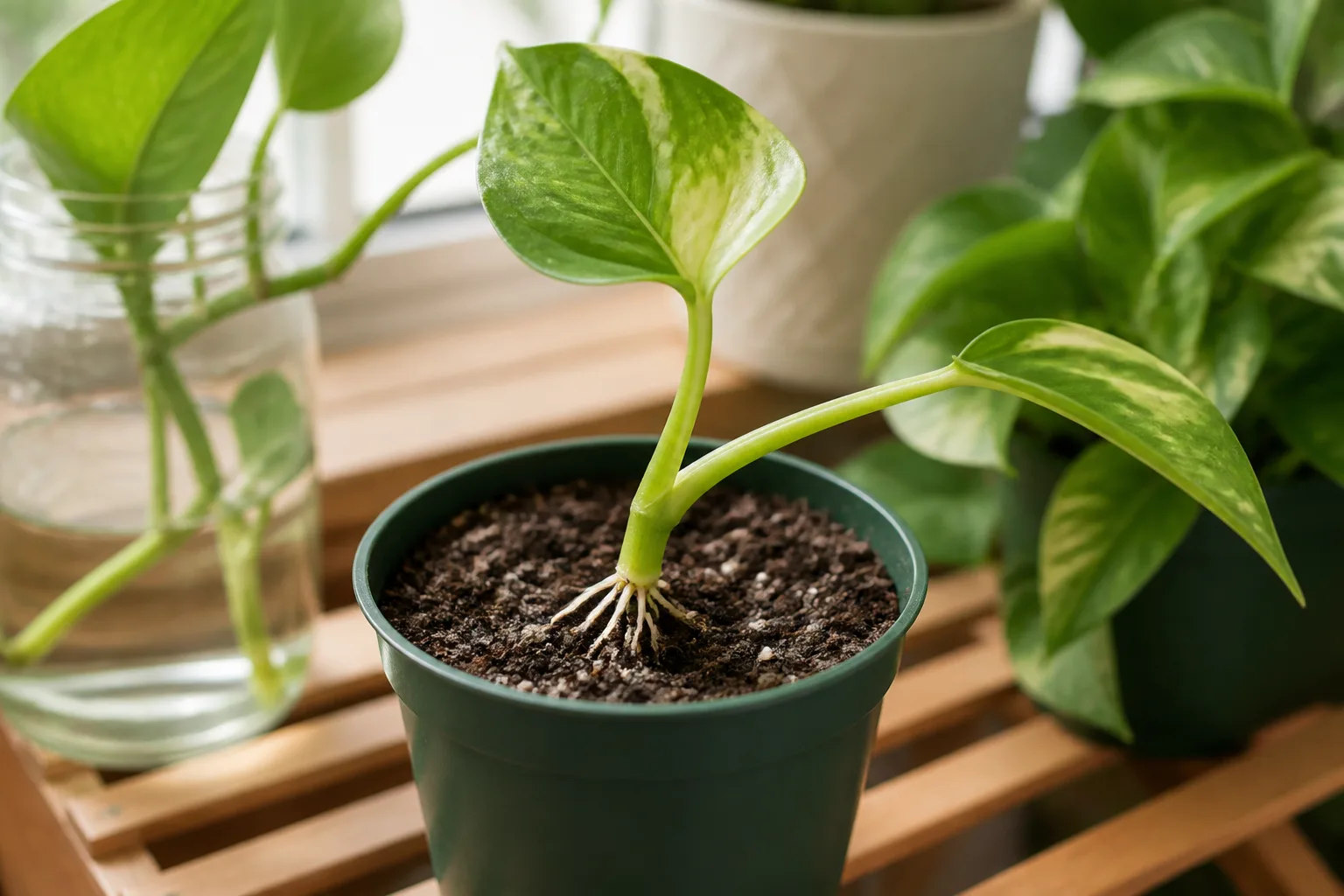
This is the highest-risk phase. Patience and bare roots matter more than trendy jars.
- Prep the LECA as above so it is saturated and clean.
- Unpot the plant and work room-temperature water through the root ball. Massage gently until every visible soil particle is gone. Leftover peat rots in the reservoir and invites anaerobic slime.
- Trim mushy or dark roots with clean scissors. Healthy roots should feel firm.
- Add a base layer of LECA to the net pot, set the plant, and backfill around roots. Stop with balls just below the crown—do not bury the stem.
- Seat the net pot in the cache pot and add nutrient solution to the bottom third of the outer container—or just high enough to kiss the lowest roots without submerging the crown.
- Place in bright indirect light; avoid direct sun during recovery.
- Expect 2–6 weeks of adjustment — older leaves may yellow; new roots and leaves signal success.
Young plants and water-rooted cuttings adapt faster than old soil-rooted specimens. If you have one cherished monstera, take a cutting first and convert the cutting while the mother stays in soil.
Reservoir Depth, Watering, and Nutrients
The bottom-third rule is a practical starting point: keep nutrient solution in the lower third of the cache pot so upper roots stay airy. As roots grow down, they contact the film of moisture on lower balls without sitting submerged.
Top off with dilute nutrient solution when the reservoir drops—often weekly once established, more often in dry winter air with a small pot. Do not let the reservoir sit empty for long; LECA’s limited water-holding capacity means roots can dry quickly compared with peat.
Use hydro-appropriate fertilizer at reduced strength initially (roughly quarter label rate), then increase as new growth appears. Soil-only fertilizers can work in a pinch if they are complete and water-soluble, but formulas made for inert media balance pH and micronutrients more predictably.
Change the solution entirely every two to four weeks in small home reservoirs, or sooner if it smells off or grows thick algae. A full swap beats endless top-offs that concentrate salts.
pH Testing, Fertilizer, and Monthly Flushing
Expanded clay is pH neutral around 7.0 when new, per OSU Extension. Your tap water, nutrient mix, and plant uptake shift pH over time. Most tropical foliage houseplants root best around 5.5–6.5 in hydro culture.
Test when you mix fresh solution and again mid-cycle if leaves show odd spotting or stalled growth. Adjust with products labeled for hydro pH up/down—never household vinegar guesses on a prized collection.
Monthly plain-water flush — fill the reservoir with fresh water (no nutrients), let it sit briefly, then drain and refill with new nutrient solution. This clears salt crust on LECA and reservoir walls. If you see white crystal buildup on balls, flush more often or switch to lower-mineral water.
Plants That Usually Thrive in LECA
No medium suits every species, but these groups consistently perform in semi-hydro when nutrients and light are adequate:
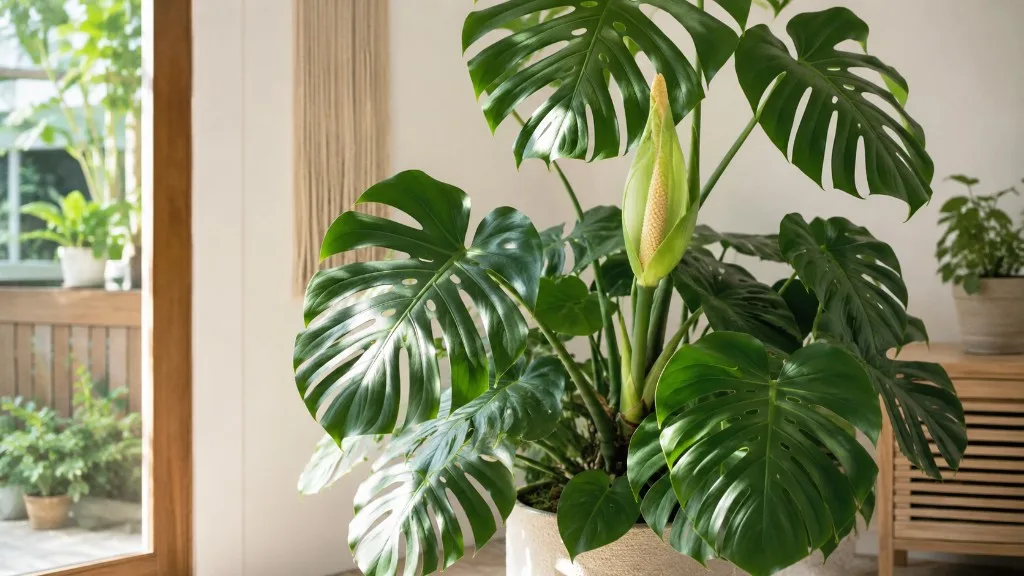
Aroids and trailing vines — Monstera deliciosa, philodendron, pothos, and syngonium often root vigorously in LECA after transition. They tolerate the moisture gradient and reward steady feeding with faster vine growth.
Alocasia and colocasia — elephant-ear types with rot-prone soil mixes sometimes recover in semi-hydro when soggy peat was the original problem. Watch for transition yellowing; new spear leaves are the signal to trust.
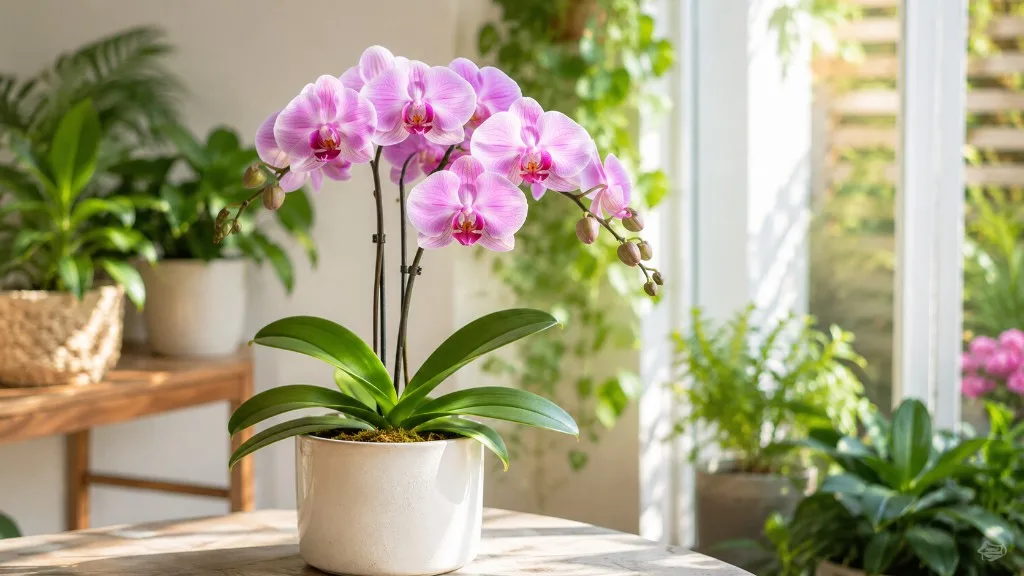
Orchids — epiphytic types such as phalaenopsis already evolved for chunky, airy root zones. LECA mimics that structure and makes root inspection easy.
Drought-tolerant structure plants — Snake plant and ZZ plant adapt slowly but can become very stable once water-adapted roots form. Keep reservoirs modest; they tolerate dry upper zones.
Other frequent winners — Spider plant, hoya, jade plant, peperomia, and begonia hybrids appear often in grower success lists. Match each to its light needs on the species hub—not every “LECA plant” tolerates the same brightness.
Plants to Approach Cautiously
Experiment on backups, not trophies:
- Prayer plants and calatheas — need stable humidity and can crisp during transition even when semi-hydro eventually works.
- String of pearls and delicate succulents — rot easily if reservoirs stay too high.
- Large woody specimens — slow to reroot; soil changes may be gentler.
- Ferns that want constantly moist organic media — may never love fast-draining LECA.
Conflicting anecdotes online—pothos loves LECA in one home, sulks in another—usually trace back to reservoir height, nutrient strength, and light, not magic incompatibility. Change one variable at a time.
Troubleshooting Common LECA Problems
Yellow leaves after conversion — Usually transition shock or roots still dying off. Hold light steady, keep solution mild, and wait for new roots. If the crown goes soft, remove the plant, trim rot, and restart with fresher LECA.
Wrinkled leaves with low reservoir — Underfilled system. LECA does not forgive dry reservoirs the way peat can. Top off promptly.
Algae on clear pots — Switch to opaque cache pots, reduce light hitting the reservoir, or add a brief hydrogen peroxide flush at low dilution. See hydrogen peroxide for plants for concentration caution.
Salt crust on balls — Flush monthly; reduce tap mineral load; verify you are not over-concentrating fertilizer.
Stagnant smell — Dump solution, rinse LECA, trim bad roots, sterilize if needed, refill with fresh mild nutrients.
Floating balls months later — Usually trapped air or very dry upper zone; a full soak and proper initial rinse usually fixes new media. Persistent float in an established pot can mean the root mass is pushing balls upward—repot into a larger net pot.
Conclusion
LECA balls are expanded clay pebbles that anchor houseplants in semi-hydroponic culture: a passive reservoir wicks moisture and nutrients while air fills the gaps between balls. They can improve root oxygen, cut soil-borne gnats, and make root health visible—but only if you supply hydro nutrients, manage reservoir depth, and accept a real transition period from soil.
Use LECA when root rot, gnats, or your water-rooting habit point toward inert media—not when you want zero maintenance. Never mix balls into potting soil or layer them under mix; fix drainage with better blend structure instead. Start one cutting or rescue plant, rinse media thoroughly, keep the reservoir at the bottom third, and judge success by new roots and leaves, not by whether old soil leaves stay green. For many collections, the smartest setup is hybrid: soil for finicky ferns, LECA for the aroids and orchids that clearly thrive once converted.



