Artificial vs Real Christmas Trees: Why I Choose Faux
Real or fake? After years on team artificial, I break down setup time, break-even math, environmental trade-offs, and a first-time buyer checklist.
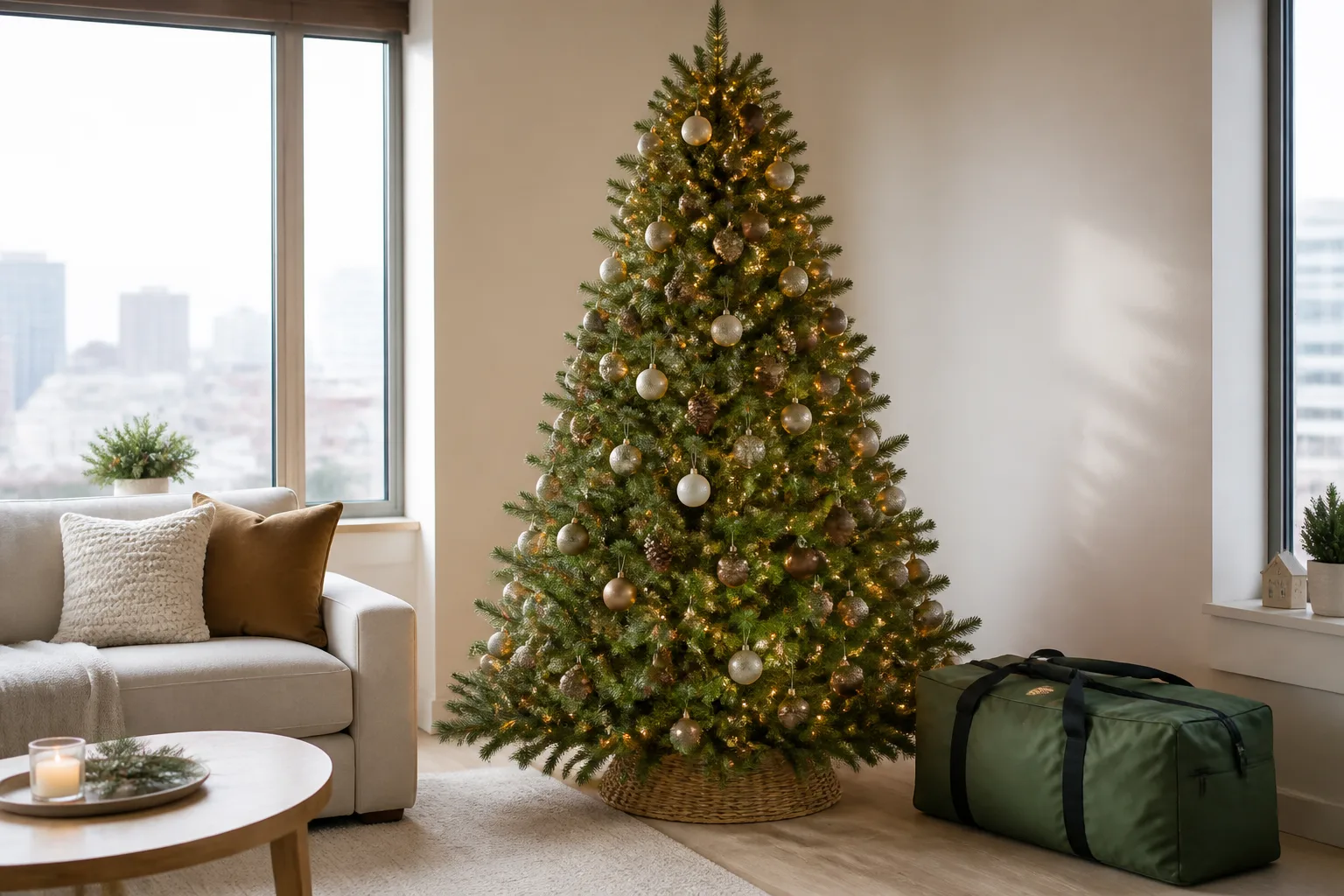
I grew up hauling a real tree home every December—needles in the back seat, sap on my gloves, and a stand that always leaked onto the hardwood. As an adult in a smaller apartment with a packed holiday calendar, that ritual stopped feeling festive and started feeling like unpaid labor. I switched to an artificial Christmas tree years ago, and I have not gone back. That is a preference, not a moral verdict: real trees still win for some households. This guide explains the practical reasons artificial trees work better for me, where the trade-offs actually land, and how to buy one that does not look like a green pipe cleaner under ornaments.
The Moment Convenience Became the Holiday Deal-Breaker
Convenience sounds shallow until you count the hours. A real tree demands a trip (or a delivery window), a fresh cut, daily watering, needle patrol, and a disposal run in January when every curb is already piled with dry branches. An artificial tree lives in a closet eleven months a year and shows up ready to decorate. For anyone balancing work, kids, travel, or a tight decorating window after Thanksgiving, that time savings is the real gift.
No Farm Trips, No Watering, No Sap Stains
Real trees are wonderful in photos and miserable on white rugs. Sap sticks to skin and fabric, dropped needles embed in carpet, and a forgotten water refill turns a living room into a fire-risk lecture from your building manager. Artificial trees eliminate watering math entirely—no stand leaks, no “did I add enough today?” panic, no midnight tree-collapse because the trunk dried out while you were at a party.
Live-tree households also inherit a January chore chain: drag the dried skeleton outside, sweep needles from every corner, scrub sap rings off the floor, and hope municipal pickup accepts curbside greens that week. In apartment buildings, that often means a hallway parade of shedding branches and an elevator ride you only get once before management sends a reminder about hallway debris. Artificial takedown is reverse assembly—unplug, un-decorate, compress, bag, slide into storage. No brown puddle under the stand, no guilt about a tree turning brittle in the dining room because pickup day got delayed by snow.
I still mark the season emotionally. Pulling the tree bag out of storage feels like unboxing childhood, minus the car wash afterward. If you miss the farm outing, many families keep that tradition for wreaths or a small live tabletop tree while the main display stays faux. You are not banned from pine scent; you are just not obligated to mop it up.
Setup That Takes Ten Minutes, Not a Whole Saturday
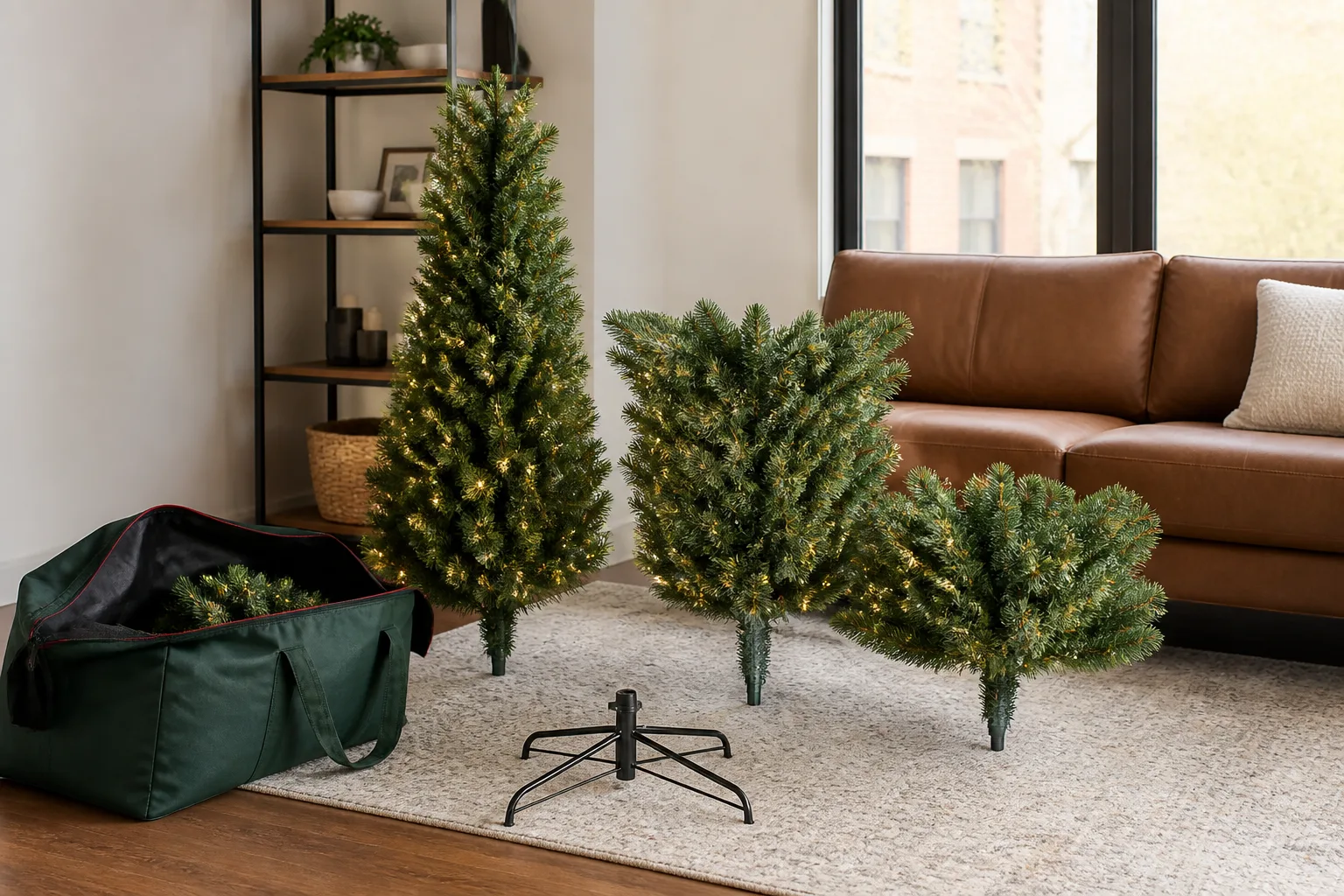
My current pre-lit tree goes from bag to decorated-ready in about ten minutes: base, three labeled sections, a quick branch fluff, plug in. Compare that to wrestling a seven-foot fir through a doorway, centering it in the stand while sap runs down your arm, and stringing lights branch by branch in a cold room. Setup time is the hidden cost of real trees that price tags never show.
Label your sections when you first assemble. Manufacturers often color-code plugs; a strip of painter’s tape on the trunk with “middle” written in marker saves arguments next year. If you hate fluffing, look for trees marketed as “instant shape” or hinged branches that snap down instead of wire-bending every tip.
How I Picked an Artificial Tree That Actually Looks Real
Cheap artificial trees deserved their bad reputation in the 1990s. Modern mid-tier and premium models use molded polyethylene (PE) tips shaped like real needles, mixed with PVC filler for density. The difference is visible at three feet: PE catches light like a living branch; flat PVC sheets look like green tinsel.
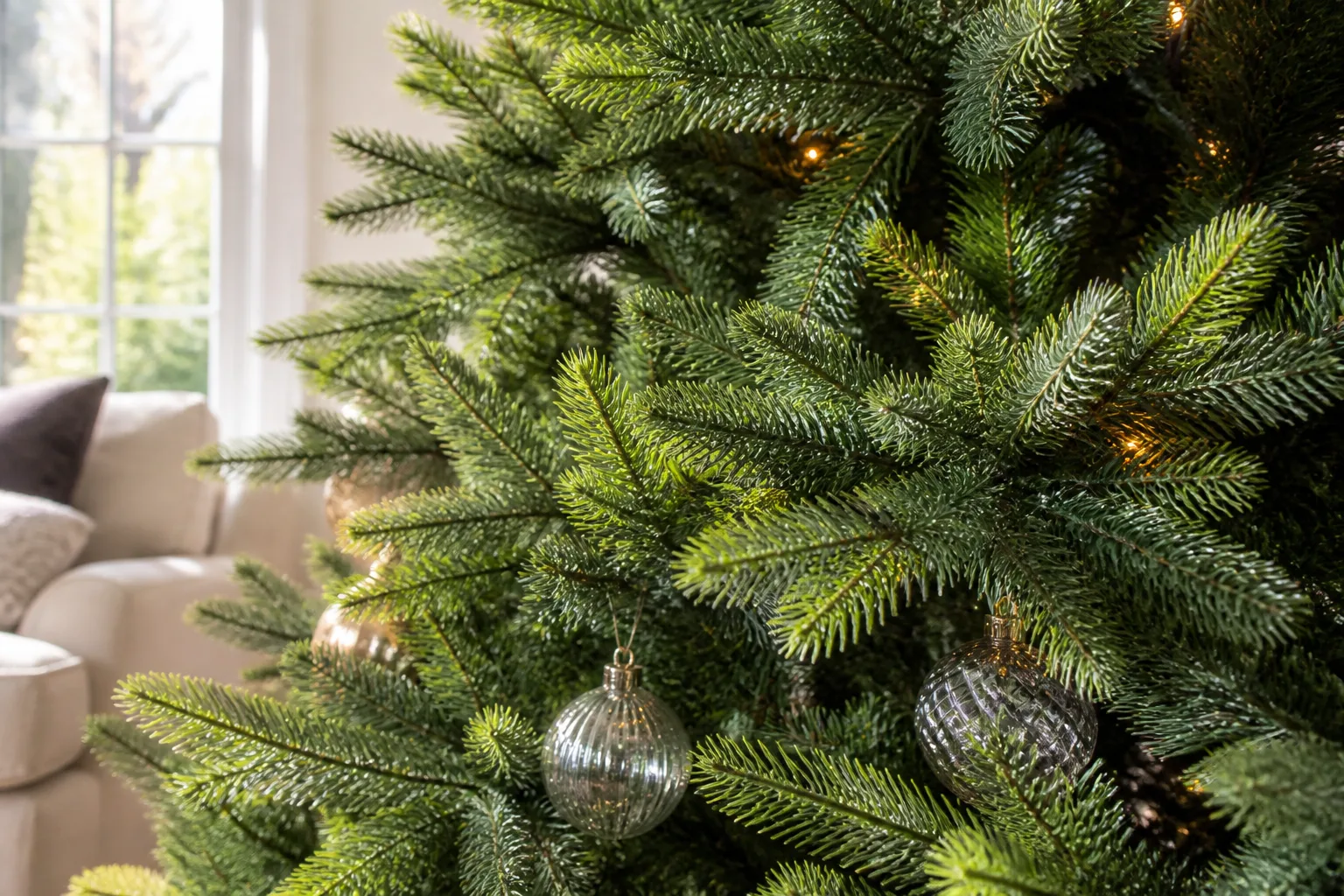
Height, Profile, and PE vs PVC Needles
Measure ceiling height minus your topper and stand—leave six to twelve inches of air so the tree does not feel crushed against the crown molding. In apartments, a five- to six-foot slim or pencil profile often reads fuller than a seven-foot tree jammed against a sofa.
| Factor | What to look for | Why it matters |
|---|---|---|
| Tip material | PE dominant on outer branches | Realistic silhouette and light play |
| Branch count | Higher on full profiles | Hides pole; supports heavy ornaments |
| Profile | Slim/pencil for tight rooms | Full shape without eating floor space |
| Color variation | Olive, gray-green, brown stem tones | Avoids single neon green plastic look |
Stand back in the store aisle—or unbox under daylight near a window—before you commit. Ornaments forgive a lot; bare branches do not.
Pre-Lit Trees and When Built-In Lights Pay Off
Pre-lit trees divide households. I like them because one plug, even spacing, and no post-season light removal beat another tangled ball in the ornament bin. Look for warm white LEDs (2700K–3000K), a sturdy wire routed inside branches, and a warranty that covers the light string for at least three to five years.
Skip pre-lit if you change color schemes yearly, if you love dense vintage bulb styles, or if you are buying budget models with non-replaceable micro-LEDs that fail in clusters. In those cases, buy unlit and use a single professional-grade light set you can replace. When pre-lit strings do fail, repair clips exist—but factor your tolerance for minor electrical surgery.
Flocked and colored trees deserve a separate decision. Heavy white flocking looks dramatic on social media but yellows in storage, sheds powder onto gifts, and complicates long-term realism goals. Solid-color trees—pink, silver, black—commit your entire room to one palette. I prefer a classic green foundation and put color on ornaments so the tree survives style shifts without a full replacement.
The Real Math on Cost and Year-Over-Year Savings
Sticker shock favors real trees on day one. A quality six-foot artificial tree with PE tips and pre-lit LEDs often runs $150–$400 depending on brand and branch count. A comparable live tree might cost $50–$120 locally, plus stand, lights, and a disposal fee if your city charges for curbside pickup.
Break-Even Timelines Most Headlines Skip
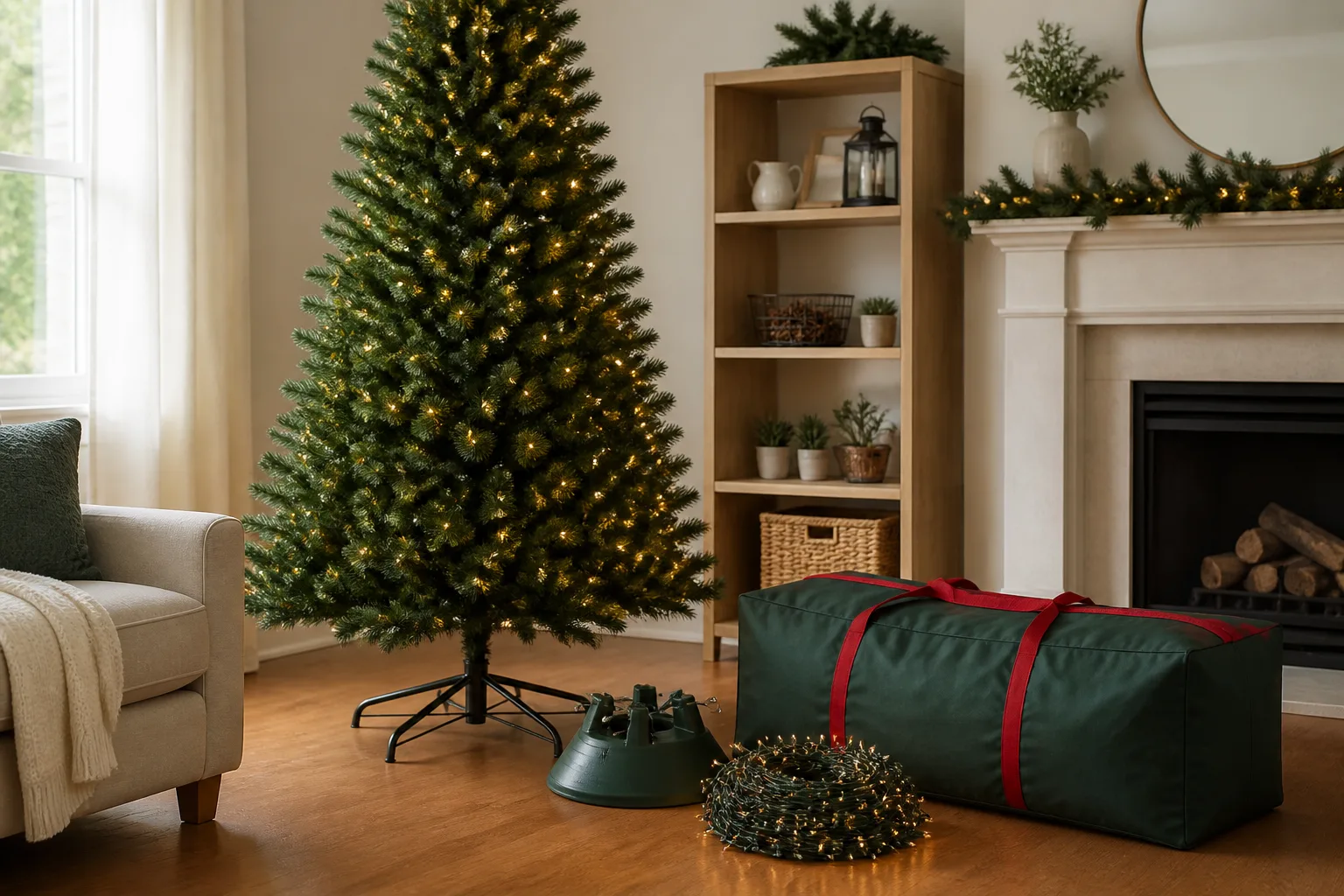
Spread over years, the math flips. If you use the same artificial tree for eight to twelve seasons without replacing it, annual cost often drops below a mid-grade live tree—especially if you would otherwise buy new lights, a heavy-duty stand, and tree-disposal bags every January.
| Year | Typical live tree path | Quality artificial path |
|---|---|---|
| Year 1 | Tree + stand + lights + disposal | Higher upfront tree purchase |
| Year 5 | Repeat annual spend stacks | Near break-even for many buyers |
| Year 10 | $500–$1,000+ cumulative common | $15–$40 effective annual cost if tree lasts |
These ranges assume you store the artificial tree carefully. Crushed branches and fried pre-lit wiring force early replacement—that is where faux owners lose the financial argument.
Hidden live-tree costs add up quietly: gas or delivery tips for farm runs, a stand upgrade after the cheap one buckles, replacement light strings when half the strand dies on December 20, rug cleaning after sap incidents, and pet or child mishaps tied to needle ingestion. None of those line items appear on the tree lot sign. Artificial buyers pay most pain upfront, then coast—provided storage discipline holds.
If you decorate multiple rooms, the math tilts further faux. A second six-foot tree for a bedroom or office duplicates annual live spend every year. One mid-grade artificial tree rotated between rooms—or a smaller secondary faux kept in a closet—often costs less over five years than two live purchases plus double disposal.
Environmental Impact Is Not a Simple Real-vs-Fake Scorecard
I will not pretend artificial trees are carbon-neutral holiday decor. They are plastic and metal, often manufactured overseas and shipped long distances. The Nature Conservancy notes that roughly 10 million artificial trees are purchased in the U.S. each season, with a large share imported, adding transport emissions. Most are not curbside recyclable and eventually land in landfills.
Real trees, meanwhile, come from working tree farms that keep land in forest production. For every tree harvested, growers commonly plant one to three seedlings, according to industry data cited by conservation groups. Live trees sequester carbon while growing and can be mulched or composted after the holidays in many municipalities.
What LCAs Actually Say About the Five-to-Twenty-Year Rule
Life cycle assessments framed by ISO 14040 principles generally find that real trees carry a lower carbon footprint for a single season. Artificial trees can catch up only if you keep them many years—commonly cited ranges run from about five to twenty-plus seasons, depending on transport distance, farm practices, disposal method, and how far you drive to buy a live tree.
Translation for decision-making: if you know you will move often, discard decor quickly, or want a new silhouette every few years, a live local tree may be the lower-impact choice. If you commit to one well-made tree for a decade and store it gently, artificial use spreads manufacturing impact across many holidays.
Driving distance matters more than people admit. A twenty-mile round trip to a cut-your-own farm every December adds fuel emissions that LCAs sometimes weight heavily. If your artificial tree ships once from a warehouse and then never moves again, transport amortizes differently than annual farm pilgrimages in a large SUV. Neither side wins automatically—you have to plug in your actual habits.
Landfill Risk, Shipping Emissions, and How I Store to Extend Life
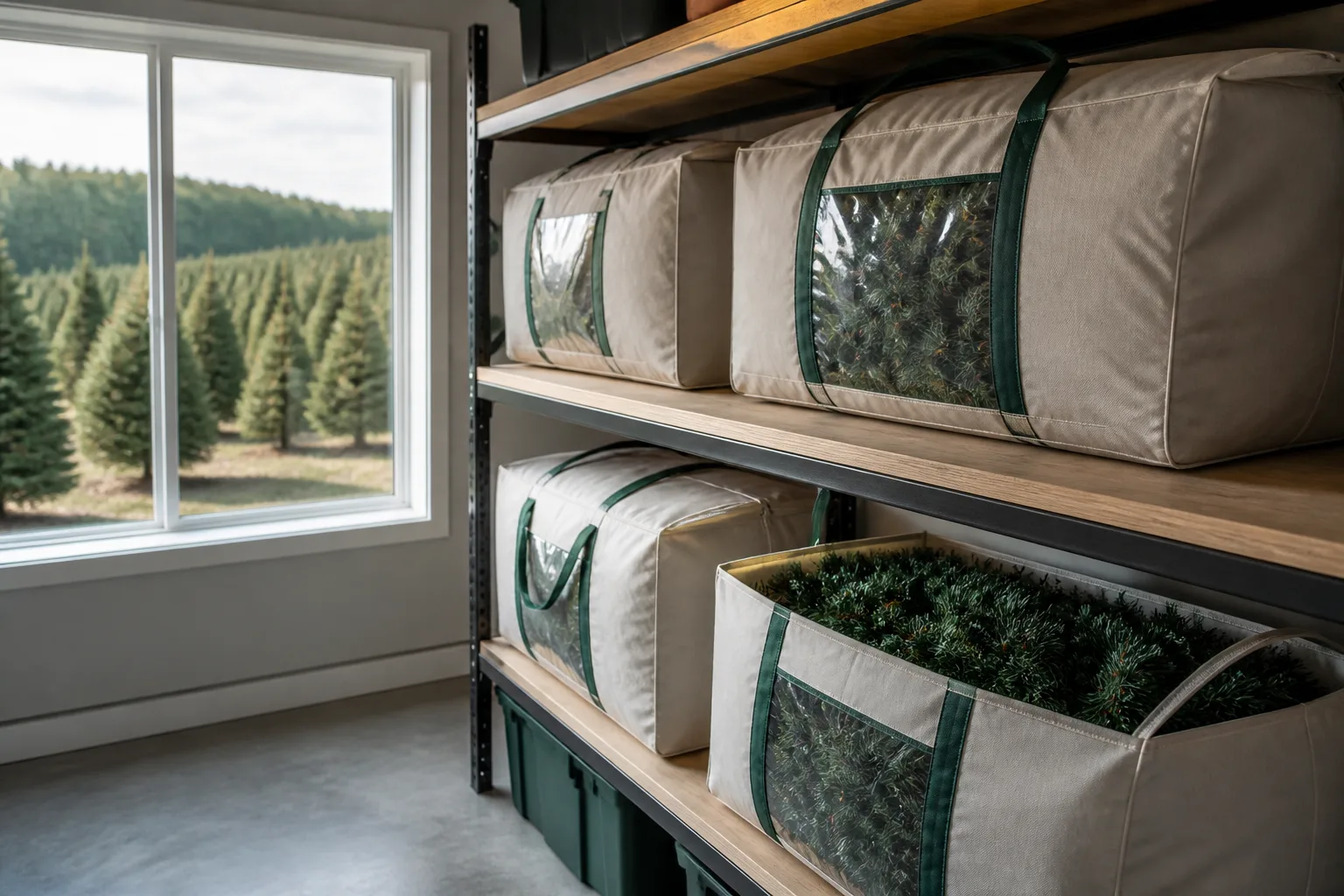
Environmental credibility for faux trees is mostly a lifespan game. I treat storage as part of sustainability: dust the branches, bag sections in labeled fabric or heavy-duty poly, and keep the tree off damp garage floors and away from attic heat that warps PE tips. A crushed, shedding tree replaced every three years is worse than almost any live-tree habit.
When a tree truly dies, look for municipal hard-plastic recycling days, charity accepts for craft programs, or responsible landfill as last resort—do not toss it curbside hoping magic happens. Our artificial tree storage guide walks through bag types, upright vs horizontal packing, and attic vs garage trade-offs that directly affect how many years you get from one purchase.
Health, Allergies, and Pets in a Busy Apartment
Real trees can carry mold spores and pollen on bark and needles—problematic if you have asthma or indoor allergies that spike in December. Artificial trees are not hypoallergenic forever; dust and stored cardboard smell can trigger reactions too. I wipe branches lightly before setup and run an air purifier the first night.
Off-gassing is the other indoor-air conversation. New artificial trees sometimes release a noticeable plastic smell the first season—usually strongest in the first forty-eight hours after unboxing. Unpack in a ventilated room, let branches air overnight, and avoid sleeping beside the tree that first night if you are chemically sensitive. The smell typically fades with use; persistent strong odors may signal low-quality PVC or heavy flame-retardant treatments worth returning if your retailer allows it.
Pets add another layer. Cats climb anything vertical with dangling wire. Dogs chew dropped needles and drink stand water. Artificial trees remove needle ingestion and toxic stand additives, but pre-lit wires and flocking still pose risks. Anchor the tree, hide plugs, and read how to keep cats out of your Christmas tree if you share the room with climbers. Live-tree households with sensitive pets sometimes compromise with a small cut tree on a table and a faux main tree—both can coexist.
What I Miss About Real Trees—and What I Do Instead
I miss the smell. No candle fully replaces cold air and fresh resin. I use high-quality balsam fir candles or a small live wreath in the entry, kept away from heat registers so it dries evenly. Some friends run a diffuser with pine essential oil for the first week—light touch, not a cloud that triggers headaches.
I also miss the ritual of choosing together. We turned that into ornament night instead of farm day: same cocoa, same playlist, zero sap. If nostalgia is your primary joy, keep one live element without forcing your entire December maintenance schedule around it.
Some households split the difference with a live tree outdoors on a covered porch or in a planter—visible through windows, zero indoor needle migration—while the interior tree stays artificial for daily life. That hybrid works in mild climates and fails fast where freezing pots crack or wind topples unsecured evergreens. Match the hybrid to your hardiness zone and anchoring ability, not to a photo you saw from a different climate.
Who Should Still Buy a Real Tree
Artificial is not universal. Buy real if you love the outing and have easy disposal, if you want maximum local farm support, if you refresh decor yearly anyway, or if a short ownership horizon makes LCAs favor live trees. Renters with no storage may prefer one live tree over cramming a nine-foot box into a closet. Rural households with compost piles or chipper access get more end-of-life value from real material.
Also choose real if you hate fluffing branches and will resent a faux tree that needs ten minutes of shaping to look alive. Honesty here saves money and guilt.
Cut-your-own traditions on protected public land are a different category entirely—permit systems, species rules, and fire-safety restrictions apply. Do not confuse a permitted wild harvest with a farm purchase; the logistics and environmental framing differ. For most suburban readers comparing lot trees to big-box faux models, the farm-vs-storage decision above is the relevant fork.
A Practical Switch Checklist for First-Time Faux Buyers
Before you click buy, run this list—most regrets come from skipping measurements or storage planning.
-
Measure ceiling, doorway, and storage path with tape, including turns on stairs.
-
Pick PE-forward tips if realism matters; save budget PVC for secondary rooms.
-
Decide pre-lit vs unlit based on how often you change light style.
-
Buy a stand matched to artificial poles, not a water reservoir meant for live trunks—see our Christmas tree stand comparison for live vs faux bases.
-
Order storage at the same time as the tree; original boxes die fast.
-
Declutter the room first so setup is not fighting summer clutter—our pre-tree declutter checklist shortens that job.
-
Plan trim style so a quality green foundation carries ornaments—dated tinsel and neon flock fight even great faux branches.
Measure Twice, Store Smart, Fluff Once
On setup day, wear gloves for the first fluff—wire tips poke. Work from the inside out, bending branches slightly up and out like a umbrella inversion. Step back every few minutes; symmetry errors show at distance, not up close.
After takedown, remove ornaments before compressing branches so hooks do not tear PE molds. Coil pre-lit wires loosely; tight bends stress copper. Slide the bagged tree onto a shelf or rolling duffel rather than dragging it across concrete. Those habits are boring. They are also why my family tree is past its second decade while neighbors replace sagging discount models every fourth year.
First-year buyers often underestimate trunk diameter. Measure the closet opening and compare to the packed bag width listed on the product page—not the fluffed display width in photos. A tree that fits the room but not the storage path becomes a year-round hallway obstacle, and frustration leads to early disposal. That is bad for your wallet and worse for the landfill math this guide already covered.
When you decorate, treat the tree like a design anchor, not a plastic afterthought. Warm lights tucked deep, collected ornaments instead of matchy sets, and natural textures beat shiny filler—our outdated trimmings guide explains what designers retire in 2026 and what still looks timeless on faux or live greenery.
Conclusion
I stopped buying real Christmas trees because artificial fit my space, schedule, and allergy reality without pretending pine scent is the only valid holiday signal. The better question is not “real or fake?” but which choice you will actually maintain well for how many years. Buy a high-quality artificial tree, store it like gear you want to reuse, and keep one live accent if you miss the forest. Or buy local live trees with a compost plan and skip faux entirely. Both paths work when you match the tree to your home—not to someone else’s nostalgia post.



