Why Are My Petunias Wilting? 4 Causes and the Right Fix
Why are your petunias wilting? Learn how to tell underwatering from root rot, pests, disease, and heat stress—and fix the cause before more growth fails.
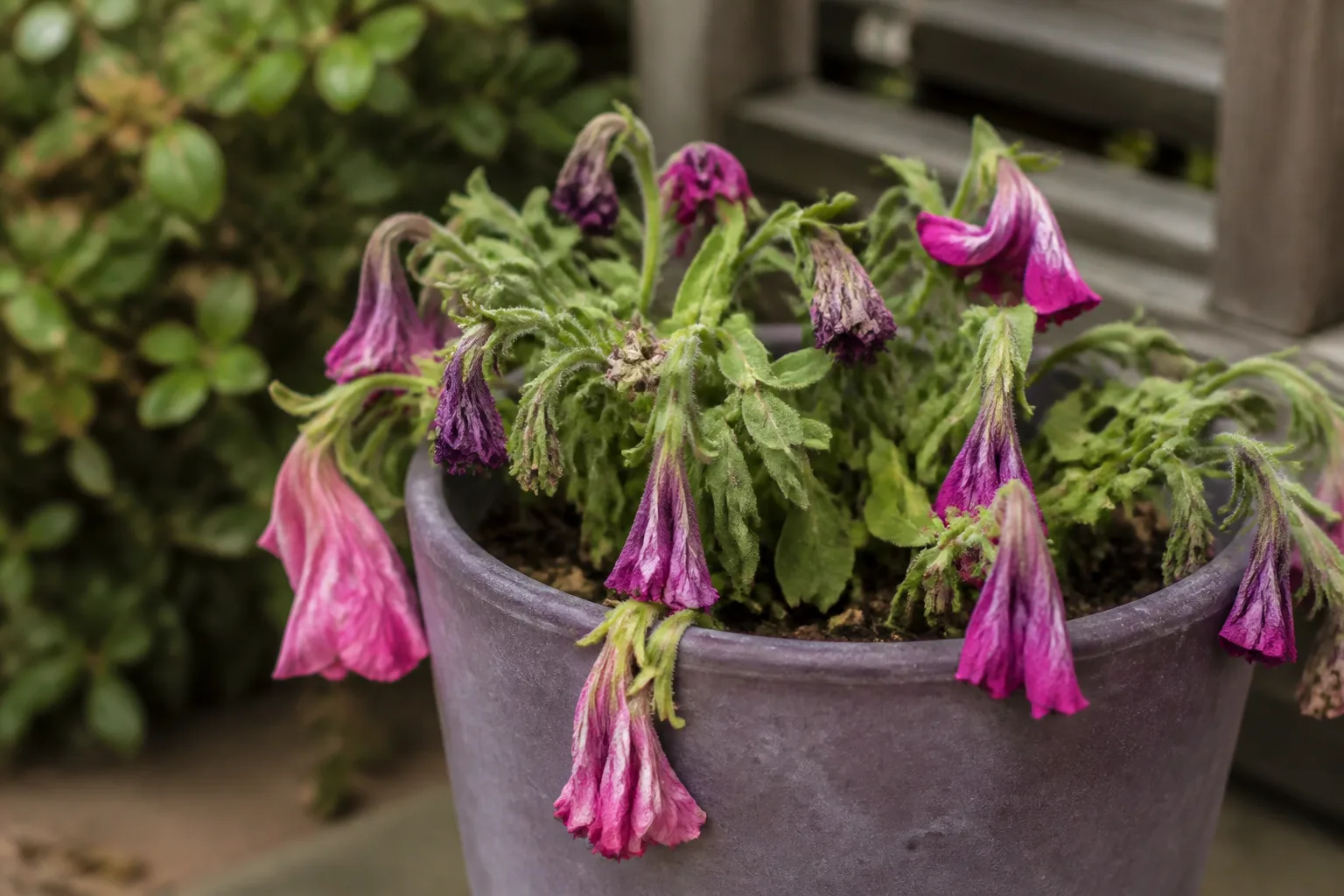
Petunias can wilt because they are thirsty, but they can also wilt when their roots are sitting in water and failing to take it up. The same limp flower can also be the visible result of aphids, spider mites, a wet-weather disease, or a hot, windy afternoon that temporarily overwhelms a small container.
Start with the root zone before you water, prune, or fertilize. Dry soil plus firm green stems calls for a thorough drink; wet soil plus yellowing or a sour smell calls for a drainage and root check; visible insects or spreading spots call for a pest or disease response. That simple order prevents the most common rescue mistake: adding water to a petunia whose roots are already drowning.
Garden petunia (Petunia x hybrida) is a tender perennial grown as an annual in many climates. North Carolina State Extension describes it as a full-sun to partial-shade plant that prefers light, well-drained soil, has moderate drought tolerance, and can be affected by aphids, root rot, gray mold, and mosaic virus. NC State Extension’s petunia profile is a useful baseline, but the right rescue still depends on whether your plant is in a hanging basket, a pot, or a garden bed.
Start with a 60-Second Wilt Triage
Before changing anything, look at the plant and its growing conditions together. Lift a container if you can, push a finger 1 to 2 inches into the mix, and inspect one stem and the undersides of a few leaves. In a bed, check the soil at root depth rather than relying on a dry crust at the surface.
| What you see | Most likely direction | First move |
|---|---|---|
| Dry mix, light pot, crisp leaves, whole plant limp | Underwatering or rapid dry-down | Rehydrate slowly and completely |
| Wet mix, yellow lower leaves, persistent wilt | Overwatering, poor drainage, or root disease | Stop watering and check drainage |
| Afternoon wilt with evening recovery | Heat, wind, or a container that dries too fast | Check moisture at the same time each day |
| Sticky leaves, curled tips, stippling, or fine webbing | Sap-sucking pests | Inspect with a hand lens and rinse if appropriate |
| Brown spots, gray fuzz, white growth, or one branch collapsing | Fungal disease or infected tissue | Remove affected material and improve airflow |
Read Soil Moisture Before You Water
The surface is not the root zone. A pot may look dry on top while the center is still wet, or water may run straight through a shrunken, water-repellent root ball while the roots remain dry. In a hanging basket, hold the basket from below and learn its weight after a thorough watering; a sudden lightness is a useful warning, but confirm it with a finger check.
Containers need more frequent inspection than beds because a small volume of mix loses water quickly through evaporation and drainage. Epic Gardening’s petunia watering guidance makes the same practical distinction: pots and baskets may need checks every few days or more often during hot, dry weather, while garden plants usually have a larger moisture buffer. Use a calendar as a reminder to inspect, not as permission to water regardless of the soil.
Use Stem, Leaf, and Timing Clues
Firm green stems and some new growth are encouraging even when the flowers are drooping. Soft, collapsing stems at the soil line, widespread yellowing, or a plant that stays wilted overnight points to a more serious root or disease problem. If only one branch is affected, inspect that branch for a lesion, chewing, or mold before treating the whole plant.
Timing is also diagnostic. A petunia that sags in intense afternoon sun but recovers by evening may be losing water faster than its roots can replace it. A petunia that is still limp the next morning, especially in wet soil, is not asking for a routine drink. The University of Minnesota Extension’s petunia diagnostic guide separates wilt-and-brown, wilt-and-die, and whole-plant wilt symptoms because the pattern changes what you should inspect next. Its petunia symptom index is useful when the clues do not fit neatly into one category.
Cause 1: Underwatering and Fast Container Dry-Down
Underwatering is the most common, and usually the most recoverable, cause of a wilted petunia. It is especially likely in a small pot or hanging basket exposed to full sun, hot paving, or steady wind. Trailing and spreading petunias can also outgrow the amount of mix around their roots, so a container that was fine in May may dry dramatically faster by midsummer.
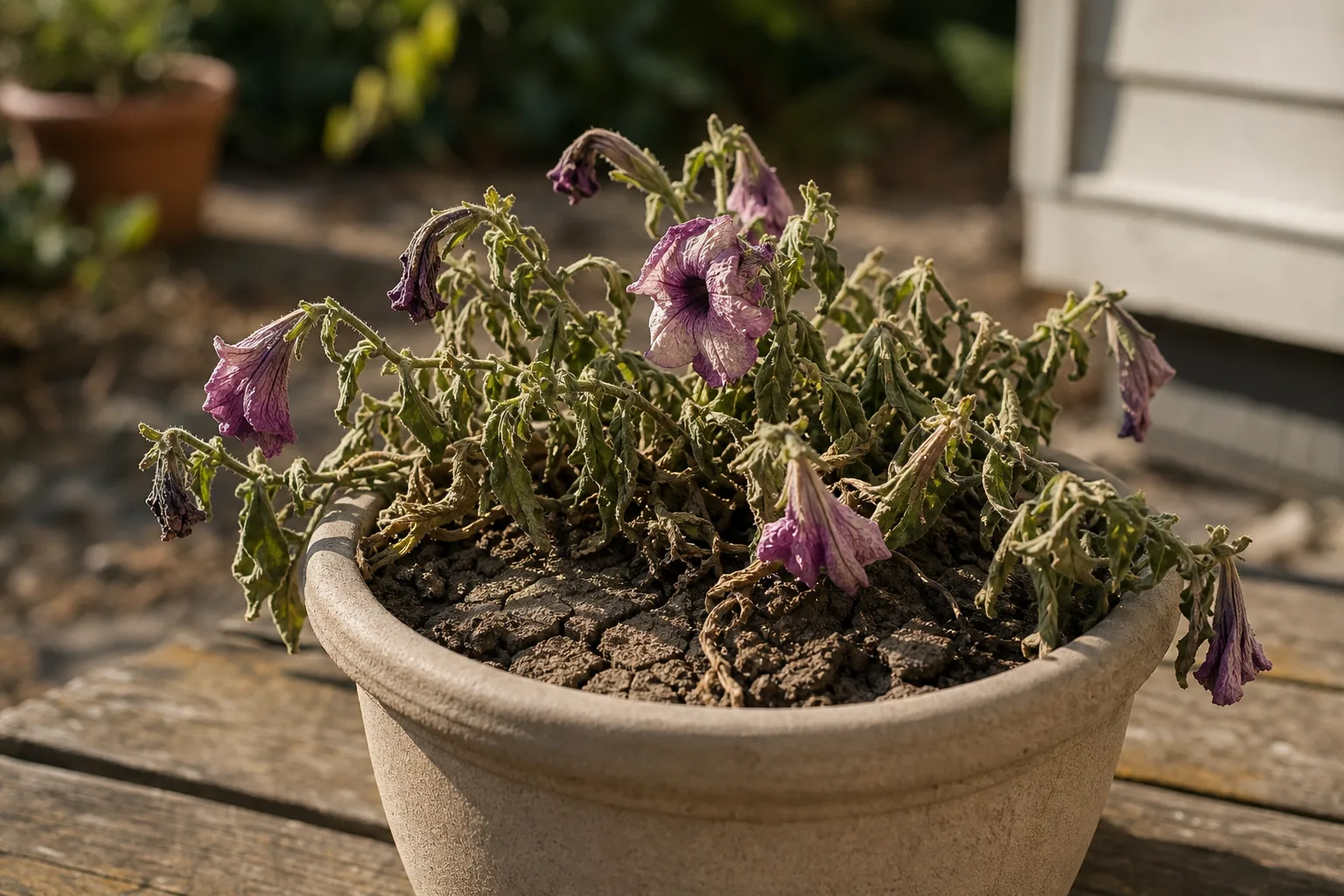
Dry-stressed leaves may feel thin or crisp, the flowers may hang without yellowing first, and the pot may feel unexpectedly light. The mix may pull away from the container wall or resist water, which creates a deceptive situation: water appears at the drainage hole, but the root ball has not actually rehydrated.
How to Rehydrate a Dry Petunia
Give a dry petunia a slow, thorough soak rather than a quick splash. Pour a little water over the surface, wait for it to absorb, then repeat until water begins to drain from the bottom. Let the pot finish draining; do not leave it standing in a full saucer.
If water keeps channeling down the sides, set the pot in a shallow basin of water for about 20 to 30 minutes, then remove it and allow it to drain fully. This is a rescue technique for a compacted or water-repellent mix, not a permanent routine. A plant should not sit with its root ball submerged because that removes the air roots need.
Move a severely wilted container out of harsh reflected afternoon heat for the first recovery period, but keep it in bright light. Do not fertilize while the mix is bone-dry; concentrated fertilizer salts can irritate already stressed roots, and fertilizer cannot make a dehydrated root ball absorb water more evenly.
The leaves that crisped during the dry spell will not become fresh again. Judge the rescue by firmer stems, new leaf growth, and less rapid afternoon collapse over the next several days. Remove tissue that is fully brown after the plant has regained turgor, rather than cutting healthy green growth while it is still difficult to tell what is alive.
Prevent the Next Dry-Down
Check baskets and small pots daily during a hot, windy stretch, especially when the plant is in full sun. Check larger pots and garden beds less often, but still adjust after rain, a heat wave, or a major change in wind. A pot that needs water twice in one day is giving you a container-size or placement signal, not a reason to pour on a fixed amount automatically.
Use a container with an open drainage hole and enough mix to buffer a day of heat. If the root ball has completely filled the pot and dries within hours, repot one size larger rather than jumping into an oversized container that stays wet around a small root system. In beds, a thin organic mulch layer can slow evaporation, but keep it away from the stems and do not use mulch to disguise a low, waterlogged site.
Cause 2: Overwatering, Poor Drainage, or Root Rot
Overwatering does not mean that one heavy rain ruined a healthy plant. It means the root zone stays saturated long enough to exclude air, whether the cause is frequent irrigation, a blocked drainage hole, compacted soil, a saucer that never empties, or a pot placed under a roof downspout. Roots need both moisture and oxygen; when the air spaces fill with water, a plant may wilt because damaged roots cannot move water upward.
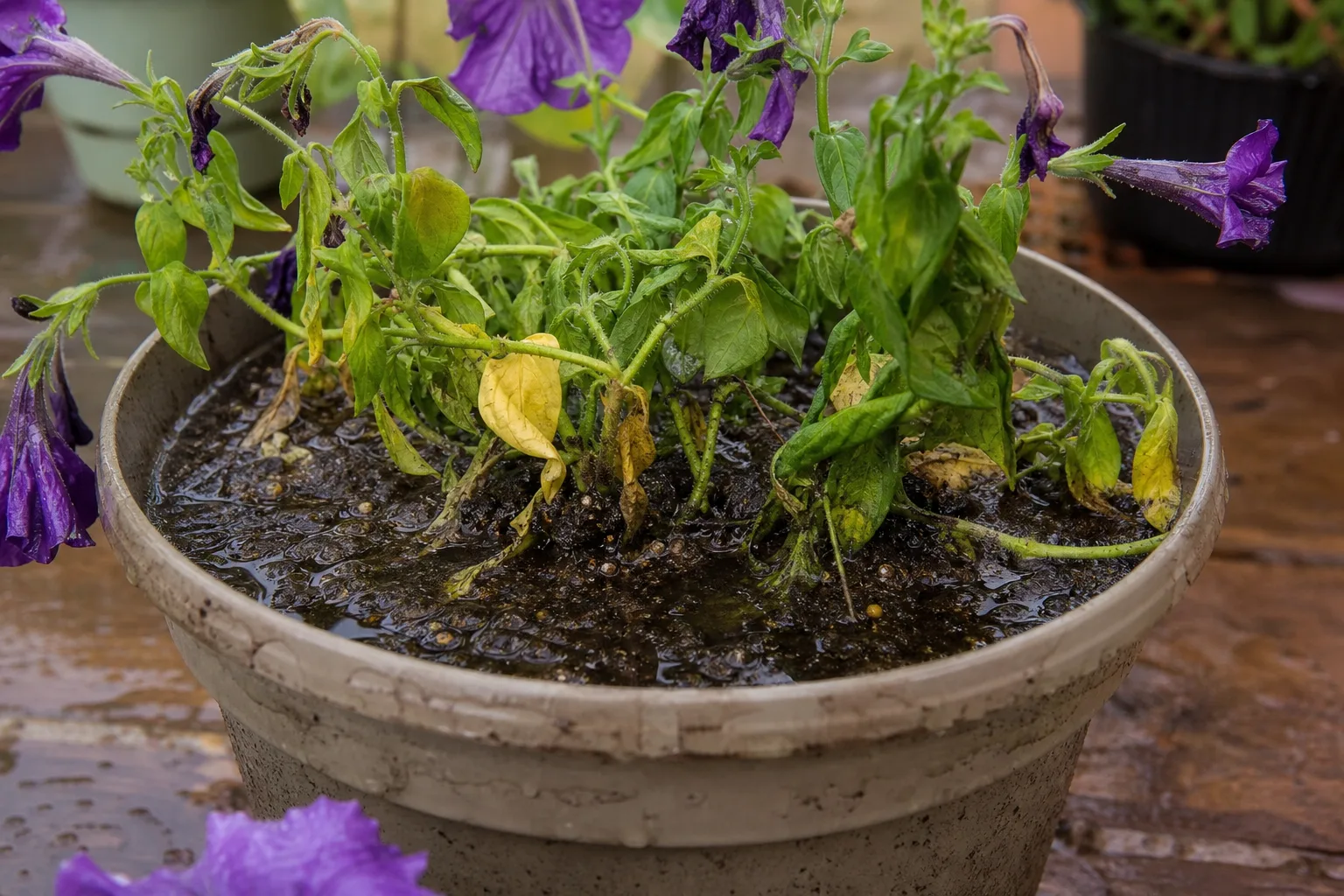
Persistent wetness is more informative than the fact that you watered yesterday. A wilted petunia with yellow lower leaves, soft growth, algae on the soil surface, or a sour smell deserves a drainage check before another drink. If the soil is merely moist and the plant perks up overnight, heat stress or a fast-drying container may still be the better explanation.
Signs the Roots Are Failing
Root trouble often appears above ground late because the plant can use its remaining healthy roots for a while. Warning signs include persistent wilt in wet mix, stunted new growth, yellow leaves that continue to appear, a dark or soft stem base, and roots that are brown or black, soft, and easy to pull apart. The University of Minnesota Extension lists black root rot on petunias with yellowing and wilt, stunting, and dark sunken root lesions; it also lists gray mold and white mold as causes of wilted or browning foliage.
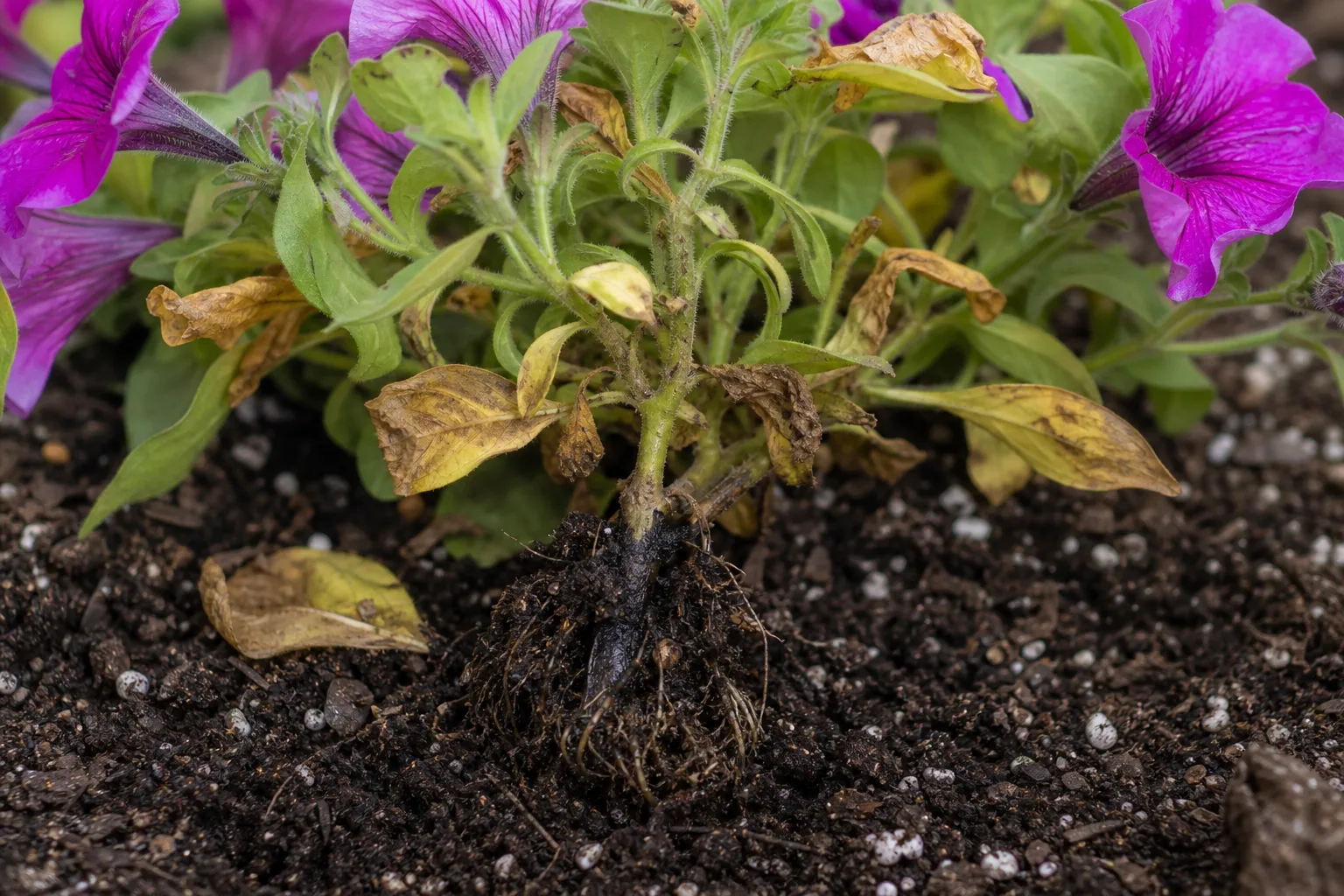
Do not diagnose a named pathogen from wilt alone. The RHS guide to Phytophthora root rot notes that it can look very similar to waterlogging and other root problems, and that laboratory examination may be needed to separate them. For a home rescue, the practical first question is whether the root system is still firm and functional; the exact pathogen matters most when the problem is spreading, recurring in a bed, or affecting valuable plants.
What to Do About a Soggy Pot
Stop supplemental watering, empty the saucer, and move a container out of rain while the root zone drains. Check that the drainage hole is open and that compacted roots or a cachepot are not blocking it. Do not add a layer of gravel inside the pot as a shortcut; it does not create a missing drainage hole and can leave the usable soil column shallower.
Unpot the petunia when the mix stays wet for days or the plant is declining despite corrected drainage. Keep firm roots and trim only roots that are clearly dead with clean shears. Repot into fresh, airy potting mix in a clean container with a drainage hole, settle it with a light watering, and wait to fertilize until the plant is stable and producing healthy growth.
In a garden bed, do not keep irrigating a low spot simply because the leaves look thirsty. Improve the planting position for the next crop with a raised or mounded site, redirect roof runoff, and avoid crowding. RHS root-rot guidance emphasizes that improving drainage reduces risk, while severe infections may require removing the plant and replacing contaminated soil rather than repeatedly treating the same saturated pocket. The Missouri Botanical Garden’s root, stem, and crown rot overview also notes that underground infections are difficult to manage once symptoms appear late.
Cause 3: Pests That Steal Vigor
Pests are less likely than a watering mistake to cause sudden whole-plant wilt, but they can weaken a petunia until it droops, stops growing, or fails to replace damaged leaves. Inspect the newest shoots, flower buds, leaf undersides, and stem joints before assuming the problem is underground. A hand lens makes tiny pests much easier to distinguish from dust or soil.
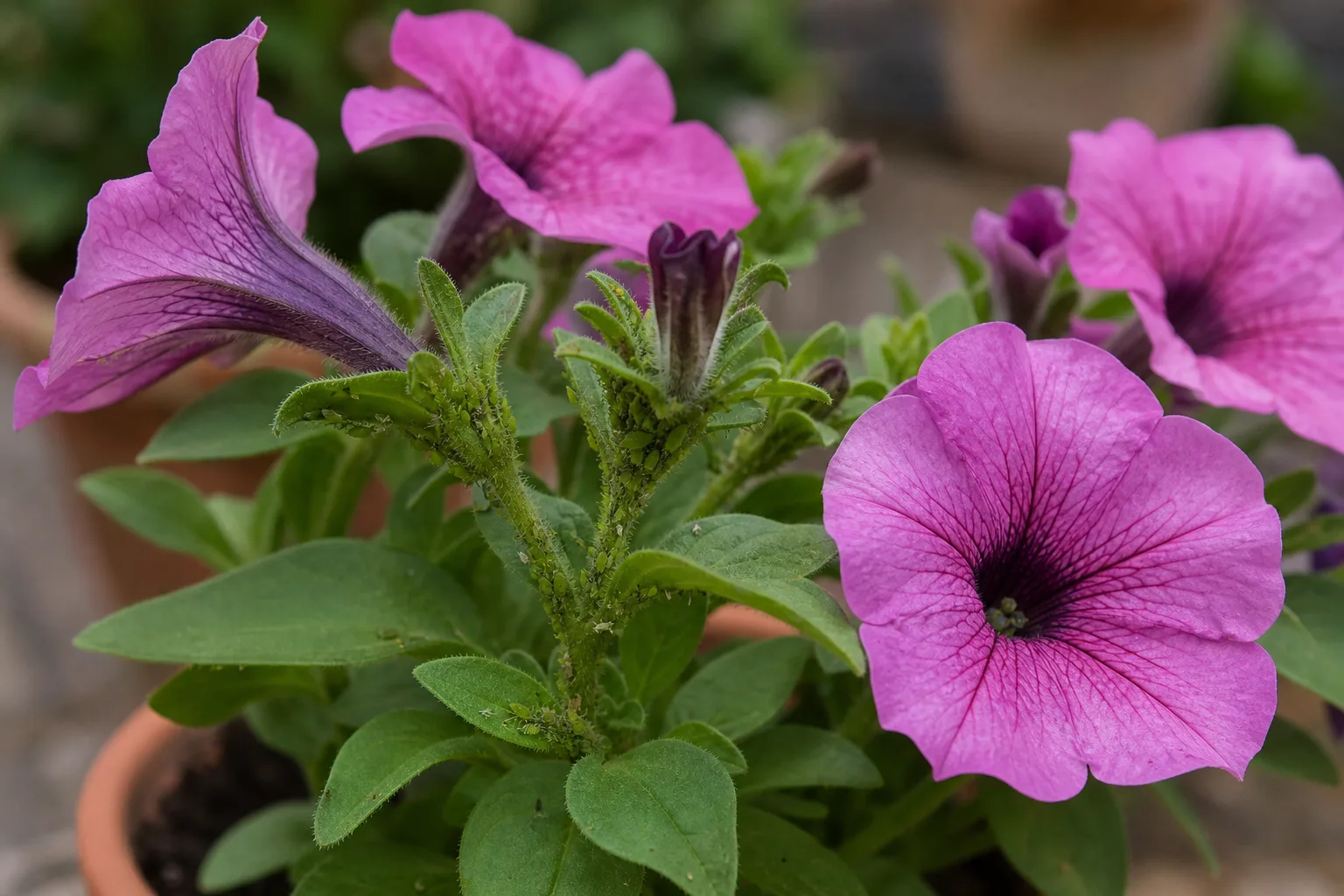
Aphids and Spider Mites
Aphids gather in colonies on soft new growth and flower buds. Look for pear-shaped insects, curled or distorted tips, white cast skins, sticky honeydew, or black sooty mold growing on that residue. The RHS explains that aphids suck plant sap, can weaken growth, and may transmit viruses, but also warns that a few aphids are part of a functioning garden food web and do not automatically require a pesticide.
For a small colony, rinse the affected growth with a firm stream of water early in the day and repeat the inspection after several days. Remove a heavily infested tip if the plant has plenty of healthy growth. The RHS aphid guide recommends tolerating small populations where possible and encouraging natural enemies. If the infestation is persistent, use only a product labeled for the plant and pest, follow its directions, and avoid spraying open flowers when pollinators are active. Do not substitute dish detergent for a formulated insecticidal soap; household detergents vary and can burn foliage.
Spider mites are more common in hot, dry, dusty conditions. Their clues are fine webbing, pale stippling, bronzing, curled leaves, and a decline that continues even though the pot moisture looks reasonable. Rinsing the undersides of leaves can reduce an early population, but repeat checks matter because one treatment rarely catches every life stage. Avoid moving a drought-stressed petunia straight into intense sun while its foliage is wet.
Budworms, Thrips, Slugs, and Root Aphids
Ragged holes and missing petals point to chewing pests rather than an irrigation problem. Tobacco budworms feed inside petunia buds and flowers; slugs and snails often leave fresh damage overnight; thrips can scar petals and distort new growth. Inspect at dusk or early morning, hand-pick what you can identify, and remove badly damaged flowers. A spray chosen without identifying the pest adds stress without improving the diagnosis.
Root aphids are a less obvious possibility when the plant wilts despite a reasonable watering routine. They live in the soil and can cause wilting, stunting, and discolored foliage; white waxy material on roots or ants moving around the pot are clues, although drought and root rot can look similar. The RHS root-aphid guide recommends checking roots of young plants and washing old mix away during repotting when root aphids are suspected. If most of the root system is affected, taking a healthy cutting may be more realistic than trying to save contaminated soil.
Cause 4: Fungal Disease and Wet Foliage
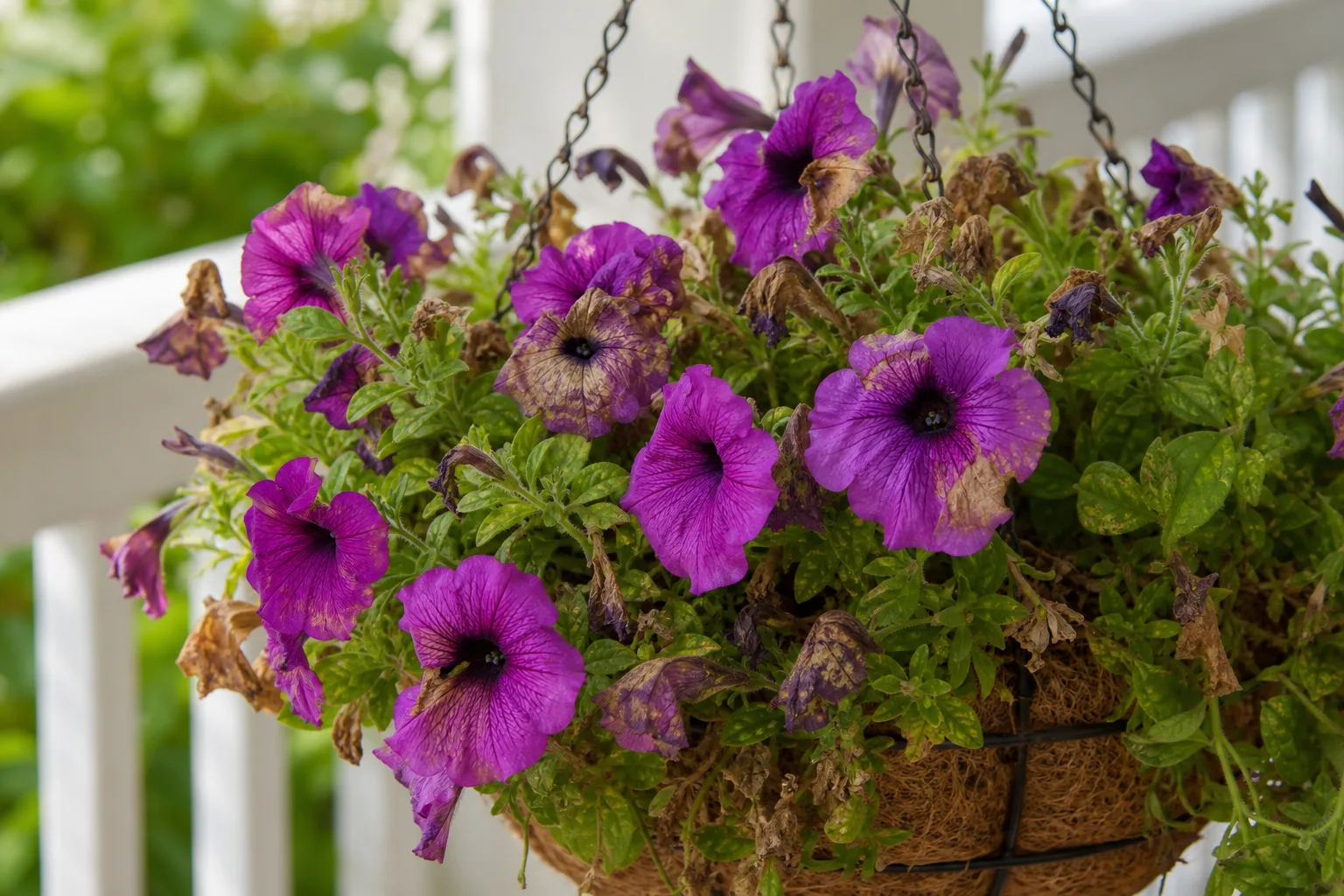
Disease becomes more likely when wilt is accompanied by spots, mold, lesions, premature flower drop, or a problem that spreads from one branch to another. Cool, wet weather can encourage gray mold, while stagnant humid air, crowded stems, dropped flowers, and repeated overhead watering keep foliage wet and create better conditions for disease. Watering a leaf once does not automatically cause a fungal infection; the pattern of lingering moisture and poor airflow is what matters.
How to Separate Disease from a Watering Problem
Gray mold, or Botrytis, can start as brown watery spots on petals and leaves, followed by gray fuzzy growth under humid conditions. White mold may leave pale cottony growth on infected stems. Black root lesions with yellowing and persistent wilt point below ground, while a one-sided decline, mottled leaves, distorted flowers, or weak shoots raises concern about a virus or wilt disease rather than a simple dry spell.
University of Minnesota Extension’s petunia diagnostic pages identify gray mold as a cool, wet-weather problem that can brown and wilt leaves and flowers. Epic Gardening’s reviewed petunia disease guide likewise recommends reducing leaf wetness, removing fallen blooms and diseased tissue, and improving airflow. These clues are more useful than calling every brown flower “fungus” or every limp leaf “underwatering.”
Remove badly affected leaves, stems, and fallen flowers and put them in the trash when disease is suspected; do not add them to home compost. Water at the soil line in the morning, space plants so air can move through the canopy, clean shears between plants, and isolate a container that may be spreading a problem. Do not take cuttings from a petunia with unexplained mottling or distorted flowers. If symptoms continue to spread after moisture and sanitation are corrected, ask a local extension service or plant diagnostic clinic for help and be prepared to remove the plant.
Heat, Light, and Wind Can Make Wilt Look Worse
Heat stress can be the amplifier behind an otherwise manageable watering problem. Petunias flower best with strong light; NC State Extension lists full sun as six or more hours of direct sunlight, but a container on hot concrete or beside a reflective wall can lose water much faster than the same pot in a garden bed. Wind increases that loss by pulling moisture from leaves and drying the mix.
If a petunia is limp only during the hottest part of the afternoon and recovers after sunset, check the soil during the wilt and again the next morning. If the mix is dry, improve the watering routine. If it is still moist and the plant recovers overnight, give the pot temporary protection from reflected heat or harsh afternoon exposure while keeping enough bright light for growth. Do not solve heat stress by moving a shaded, leggy plant directly into the most intense sun; make a gradual placement change.
Too little light usually creates long gaps between leaves, weak stems, and fewer flowers rather than a sudden collapse. Move a shaded container toward brighter conditions gradually and give the roots time to adjust. A petunia with healthy green leaves but few blooms needs a light and grooming assessment, not an emergency drench.
A 7-Day Recovery Plan for Wilting Petunias
Day 1: Correct the first confirmed problem.
Check the root-zone moisture and drainage. If the soil is dry, rehydrate slowly and let the pot drain. If it is wet, stop watering, empty the saucer, and protect the pot from more rain. If roots are exposed and mushy, inspect before deciding whether repotting is justified.
Days 2–3: Remove damage and reduce stress.
Remove flowers and leaves that are fully dead, diseased, or covered in an identified pest. Rinse a small aphid or mite population when conditions allow, and inspect again rather than assuming one rinse finished the job. Keep the plant bright but out of the harshest reflected heat while it is recovering, and improve airflow around the canopy.
Days 4–7: Watch new growth, not old flowers.
Check the plant at roughly the same time each day. Firmer stems, new leaves at nodes, fresh buds, and a slower return of afternoon wilt are signs that the correction is working. Do not keep changing soil, location, water, fertilizer, and pruning all at once; a stable week makes it possible to tell whether the root zone is actually improving.
Wait to fertilize until the plant is hydrated, draining normally, and holding healthy growth. If it is actively growing but the container mix is depleted, apply a complete flowering-plant fertilizer at the label rate. Avoid doubling products or feeding a plant with damaged roots; nutrients cannot replace missing roots and excess salts can intensify stress.
Replace the petunia when the base is collapsing, most roots are soft or gone, every growing point is brown, or virus-like mottling and distortion continue to spread. A short remaining growing season can also make a severe rescue a poor use of time. Saving a plant is worthwhile when firm green tissue and enough warm, bright weather remain; it is not necessary to keep a failing root system alive indefinitely.
Prevent Petunia Wilt All Season
Build prevention around the same clues used for diagnosis:
- Match watering to the container. Check small pots and baskets more often than beds, then soak the root zone when it is drying rather than watering by habit.
- Protect the drainage path. Use an open hole, airy mix, and an empty saucer. Keep containers out of standing water and correct low, compacted garden spots.
- Water at the soil line. Morning base watering limits unnecessary leaf wetness and gives foliage time to dry before night.
- Give enough light without baking the pot. Aim for about six hours of direct light, then adjust afternoon exposure in extreme heat or against reflective surfaces.
- Leave room for airflow. Respect the mature spread of the cultivar and remove dropped blooms from dense foliage.
- Scout weekly. Turn over leaves, inspect buds, look for honeydew or webbing, and check the soil line before a small problem becomes a plant-wide decline.
- Groom with restraint. Deadhead spent flowers and shorten leggy green stems, but do not hard-prune a plant with mushy tissue or suspected spreading disease.
Conclusion: Fix the Root Zone First
When petunias wilt, the most useful first question is not “How much water should I add?” It is “What is happening around the roots right now?” A dry root ball, a saturated pot, a hot windy basket, aphids on new growth, and gray mold on wet flowers can all produce a similar visual collapse, but they need different actions.
Read the soil, inspect the stems and leaves, and correct one confirmed cause at a time. If the roots are functional and the plant still has green growing points, a thorough rehydration, better drainage, pest cleanup, or temporary heat protection can restore the display. If the base is mushy, the roots are mostly destroyed, or disease is spreading, removing the plant is often the honest fix that protects the rest of the garden.