Thrips on Alocasia Zebrina: Zebra-Stem Checks & Fixes
Quick answer
Thrips on Alocasia Zebrina rasp the glossy arrow blades and emerging spears, leaving silvery-white streaks and tiny black varnish-like specks—often worst on the softest new growth at zebra-striped petiole bases. First step: isolate the pot, shake a suspect leaf over white paper to confirm narrow jumping insects, then rinse accessible leaf surfaces before applying any spray.
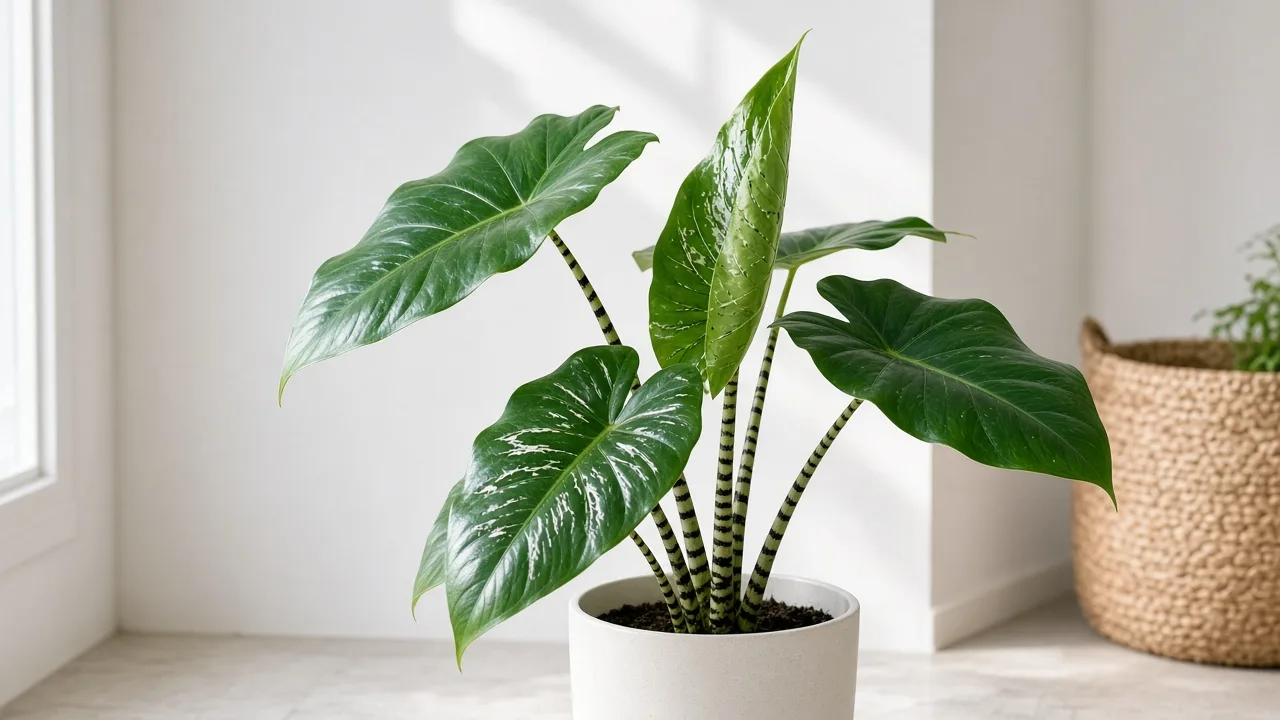
Thrips on Alocasia Zebrina: Causes, Checks & Fixes
This guide covers thrips on Alocasia Zebrina. See also the general Thrips guide, watering, and light pages for this plant.
Thrips on Alocasia Zebrina: Causes, Checks & Fixes
Quick answer
Thrips on Alocasia zebrina rasp sap from the softest unfurling arrow blade and glossy leaf tissue at the base of zebra-striped petioles—leaving silvery-white streaks marked by tiny black excrement specks on the upper surface. The narrow insects are only about 1/16 inch long and jump quickly when disturbed, which makes the paper-tap test more reliable than a casual glance at the glossy top side.
For how thrips rasp cell tissue, why they favor new growth, and when repeated treatment is needed in general, see our thrips pest guide. On Zebrina, the practical pattern is scrape-like silvering on the central unfurling spear, black varnish-like dots on glossy blades, and extra urgency because this upright Philippine species holds only a few leaves at a time—permanent scarring on one new arrow is a major setback on a fast-growing but corm-sensitive plant.
First step: isolate the entire pot from neighboring aroids, hold white paper under a suspect leaf, tap the zebra-striped petiole, and confirm narrow jumping insects or creamy larvae before rinsing or spraying anything.
When to use this page vs other Alocasia Zebrina guides
This page is the pest-first entry for rasping insects that scar glossy arrow tissue.
| Pattern | Read next |
|---|---|
| Fine pale stippling with delicate webbing | Spider mites |
| Soft pear-shaped clusters and sticky honeydew | Aphids |
| Rippled or puckered new blades without confirmed insects | Distorted leaves |
| Silver streaks with open chewing holes and frass | Caterpillars or holes in leaves |
| Cupped mature blades, no black specks | Curling leaves |
| Yellow lower leaves, wet mix, mushy petioles | Overwatering or root rot |
| Crisp brown edges, no insects | Low humidity or brown tips |
What thrips look like on Alocasia Zebrina
Thrips are slender cigar-shaped insects up to 2 mm long with narrow fringed wings folded along the back. On Zebrina they attack tissue that is still expanding:
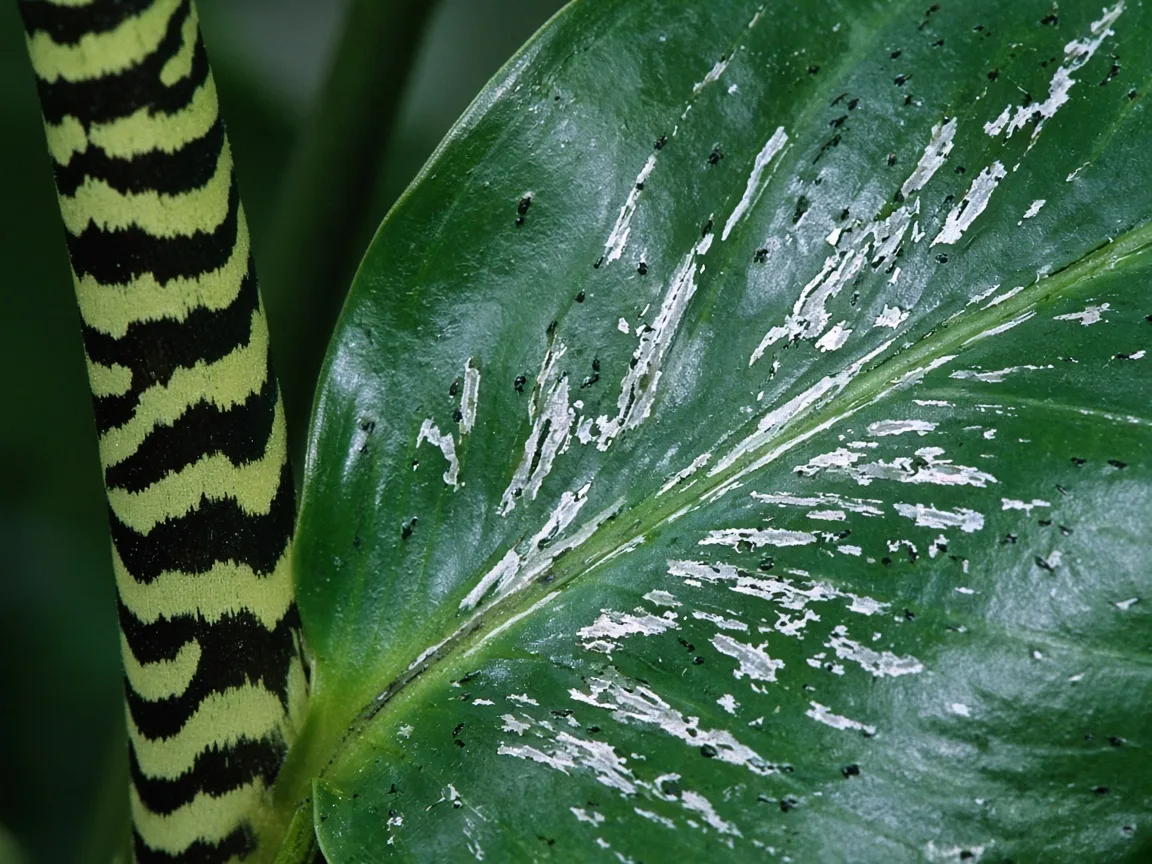
Silvery rasping scars and black varnish-like specks on glossy arrow tissue—compare with firm black-and-white banding on the petiole above.
- Silvery-white streaks on the glossy upper blade — Scraped cell surfaces that catch light at an angle; often scattered rather than uniform
- Tiny black varnish-like specks — Thrips excrement on the feeding site, not fungal spores
- Scarred or rippled unfurling spear — Feeding on developing shoot-tip tissue distorts growth before the arrow blade hardens
- Creamy-yellow larvae on tender tissue — Wingless nymphs slower than adults but causing the same silver scarring
- Quick-jumping narrow insects on white paper — Adults leap when the petiole is tapped; they are not the slow soft-bodied clusters of aphids
The damage often looks worst on the central unfurling leaf because thrips prefer soft, easy-to-pierce tissue. Mature glossy blades can show scattered streaks while the plant still looks presentable from across the room—inspect at petiole height, not from the doorway.
Inspect zebra-striped petiole junctions first
Zebrina is identified by its black-and-white banded petioles, and those striped stems are where every pest check should start. Thrips hide in the tight junction where a glossy arrow blade meets the zebra petiole, above the soil line and below the oldest outer leaves. Lift each long petiole gently and inspect both sides of the stripe pattern at the blade base: black specks collect on the glossy surface and are easy to miss against the dark bands when viewed from above.
Use this inspection order:
- Central unfurling spear — Shine a light into the visible seam without forcing the rolled blade open
- Glossy upper surface at the petiole junction — Silver streaks and black specks show here before stippling spreads outward
- Paper-tap test — Hold white paper under a suspect leaf and tap the striped petiole; watch for narrow insects that jump or crawl
- Apparently healthy outer leaves — Thrips often start on one spear and spread before the damage is obvious on mature blades
- Neighboring pots — Thrips move between shelves; check other aroids that shared the same light
A firm striped petiole with silver scarring only on the blade usually means leaf feeding, not stem rot. Soft, collapsing stripes at the soil line point to overwatering or root rot—a different emergency than rasping.
Why Zebrina’s few leaves make thrips urgent
Indoor Zebrina typically carries only three to six arrow blades at once. The RHS notes that alocasias drop older leaves as fresh ones emerge—normal turnover on this species. That growth rhythm means thrips on the one central unfurling spear can scar a large fraction of the visible plant before you notice stippling on lower mature leaves.
Unlike compact jewel alocasias, Zebrina pushes long striped petioles with broad glossy blades in warm bright conditions. Soft nitrogen-rich new growth—especially after heavy fertilizer or a move to brighter light—gives thrips more tender tissue to colonize. The underground corm can stay firm while the canopy looks damaged; do not interpret a firm corm as proof that thrips are harmless on the emerging spear.
Confirm thrips before treating lookalikes
| Pattern on Zebrina | More likely cause | Deciding check |
|---|---|---|
| Silvery streaks + black specks + jumping insects on paper tap | Thrips | Hand lens on glossy blade near petiole junction |
| Fine pale stippling + delicate webbing below | Spider mites | Moving specks and cast skins on undersides, not black varnish dots |
| Sticky honeydew + soft pear-shaped clusters | Aphids | Slow insects in dense groups on unfurling spear |
| Open holes with frass pellets on white petiole bands | Caterpillars | Chewing wounds, not scrape-like silvering |
| Rippled new blade without insects or specks | Distorted leaves from care stress | No paper-tap insects; check watering and light |
| Several yellow leaves above heavy wet mix | Yellow leaves from root-zone stress | Pot stays heavy; petiole bases soften |
When evidence is ambiguous, keep the plant isolated and repeat the paper-tap test in bright light rather than spraying on suspicion alone.
First fix: isolate and rinse accessible tissue
Once thrips are confirmed, carry the isolated pot to a sink or shower before reaching for any product. Cover the mix surface so the stream does not excavate chunky aroid soil, support each long petiole, and direct lukewarm water across the glossy upper and lower surfaces of every blade—including the accessible part of the unfurling spear. Work from blade tip toward the petiole junction while angling runoff away from the crown.
Thrips can be dislodged with a gentle spray of water, but rinsing is population reduction, not proof of eradication. The Zebrina-specific limit is its underground corm and crowded growing point. Do not fill the crown with water, saturate the pot repeatedly, or leave the plant standing in runoff. Return to the normal dry-down check in the Alocasia Zebrina watering guide; a pest rinse should not quietly become an extra soil watering.
Wear gloves when handling cut or bruised tissue—Zebrina sap contains irritant calcium oxalate crystals like other alocasias.
Protect the emerging spear without tearing it
The rolled emerging spear deserves inspection because thrips shelter beside the sheath and scar tender tissue as it opens. Shine a light into the visible seam and rinse only what you can reach without prising the spear apart. Forced opening tears the blade and makes later distorted-leaves diagnosis harder.
If thrips are visible on the exposed seam, wipe or rinse that surface gently. Do not pour soap, oil, or homemade mixtures into the crown. A clean spear that is merely slow to open may reflect cool conditions, dormancy, or low light—check the Alocasia Zebrina light guide before treating slow growth as continuing thrips.
Escalate with one labeled product, not a mixture
If live thrips remain after physical cleaning, choose a commercial insecticidal soap or horticultural oil only when its current label permits thrips, the plant or indoor ornamental use, and your intended application site. The label controls concentration, coverage, interval, protective equipment, ventilation, and disposal.
Spot-test a small section of one mature glossy blade and watch for injury before expanding coverage. Do not treat a heat-stressed or drought-stressed Zebrina, and keep it out of intense sun while sprayed foliage is wet. These are contact treatments—coverage on the glossy blade surface matters; increasing concentration is not a substitute.
Follow the product’s repeat interval rather than inventing a calendar. Thrips eggs and soil-dwelling pupal stages can survive the first pass, so one clean-looking day is not an endpoint. Continue paper-tap checks between label-permitted applications and stop if the plant shows spray injury on glossy tissue.
Judge recovery by the next clean spear
Existing silvery streaks, ripples, and black-speck scars will remain visible on unfurled arrow blades. Do not keep escalating treatment because an old leaf fails to turn glossy green again. Recovery means active pest signs stop: paper taps show no jumping insects, fresh black specks do not appear on clean tissue, and damage does not expand onto previously unmarked blades.
On an actively growing Zebrina, the best long-term evidence is a new spear that opens without fresh scrape marks. Its blade should expand with normal glossy color while its striped petiole remains firm at the crown. The RHS alocasia growing guide notes that alocasias can lose foliage during winter dormancy and produce fresh leaves when growth resumes, so a dormant plant may not provide a quick replacement leaf.
During that pause, rely on repeated negative paper-tap tests and a firm crown and corm. Do not force growth with extra fertilizer or water. If the plant loses leaves while its mix stays heavy or petiole bases soften, switch from pest treatment to the root-rot guide.
When rescue puts the collection at risk
Dense scarring across every unfurling spear, thrips on multiple pots, or larvae deep inside an inaccessible rolled spear requires a stricter decision. Get help from a local extension service or qualified pest professional when identification is uncertain or available products do not cover indoor ornamental use.
Removing heavily scarred leaves may make coverage possible, but do not strip every blade from a small Zebrina merely to make spraying easier. Disposing of severely infested houseplants is reasonable when one declining plant repeatedly reinfests a larger collection.
Prevent thrips on the next Zebrina spear
Make unfurling-spear inspection part of normal watering rather than waiting for a silvered canopy. Rotate the pot, lift each arrow blade at the zebra-striped petiole base, and look for black specks beside the newest growth. Leave enough space around long petioles so blades do not rest on neighboring plants.
Quarantine new additions for several weeks and inspect nearby aroids if one pot tests positive. Keep Zebrina in stable bright indirect light while following its normal watering rhythm. The Alocasia Zebrina overview provides the seasonal baseline needed to distinguish a resting corm from pest-driven decline.
Related Alocasia Zebrina guides
- Alocasia Zebrina overview — use for normal seasonal growth and leaf-turnover baseline.
- Alocasia Zebrina watering — use when repeated rinsing makes it difficult to judge the corm’s next watering.
- Distorted leaves — use for rippled unfurling blades when thrips are not confirmed.
- All Alocasia Zebrina problems — use when the symptom table and repeat inspection do not confirm thrips.