Aphids on Alocasia Zebrina: Zebra-Stem Checks & Fixes
Quick answer
Aphids on Alocasia Zebrina colonize the softest unfurling arrow blades and the bases of zebra-striped petioles—often with sticky honeydew on glossy leaf undersides. First step: isolate if needed, wear gloves, and rinse or wipe aphids off new growth and petiole axils before reaching for sprays.
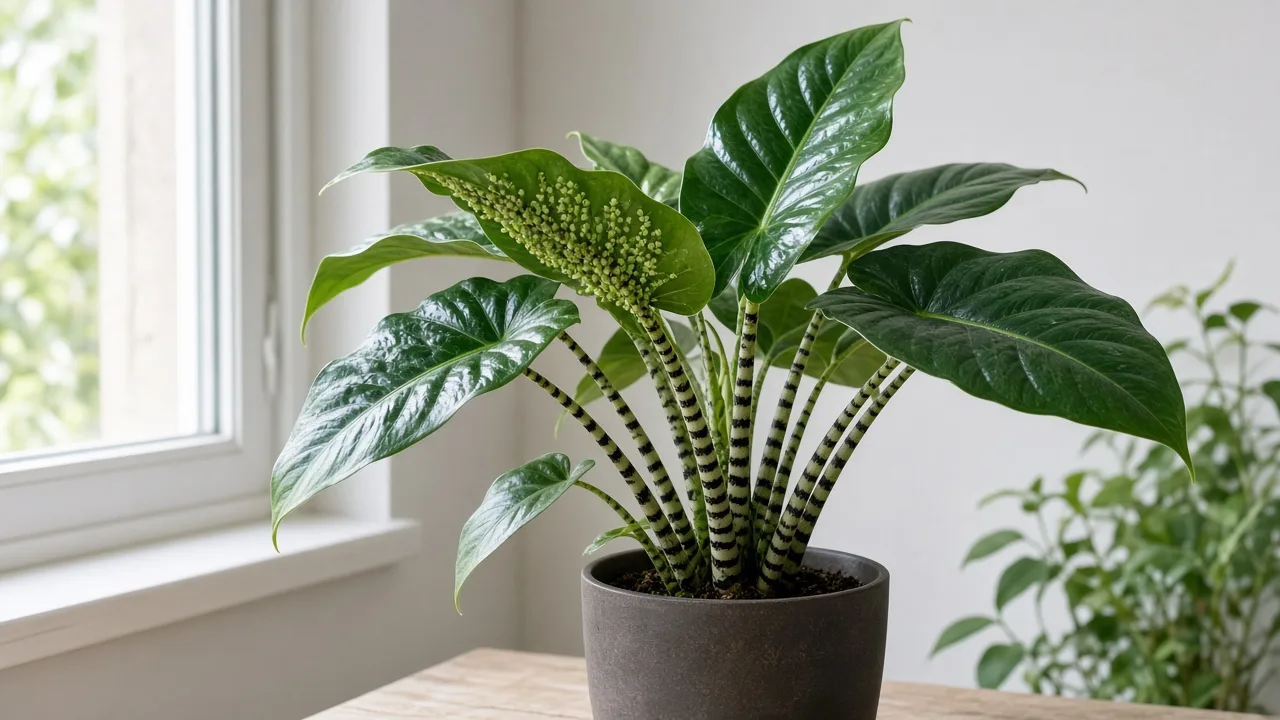
Aphids on Alocasia Zebrina: Causes, Checks & Fixes
This guide covers aphids on Alocasia Zebrina. See also the general Aphids guide, watering, and light pages for this plant.
Aphids on Alocasia Zebrina: Causes, Checks & Fixes
Quick answer
Soft-bodied aphids on Alocasia zebrina almost always show up on the tenderest unfurling arrow blade and glossy leaf undersides at the base of zebra-striped petioles—often before you notice anything wrong on the glossy surface facing the window. They suck sap, leave sticky honeydew that can feed sooty mold, and can pucker or stunt new blades while they are still soft.
For how aphids reproduce, why ants defend them, and when water knockdown works in general, see our aphids pest guide. On Zebrina, the practical pattern is warm-season clusters on the central unfurling leaf, sticky residue on long striped petioles, and extra urgency because this upright Philippine species holds only a few leaves at a time—losing one distorted spear is a major setback on a fast-growing but corm-sensitive plant.
First step: isolate the plant if other aroids sit nearby, put on gloves, and rinse or gently wipe aphids off the unfurling spear and glossy leaf undersides under lukewarm running water—then re-inspect in three days before spraying anything.
When to use this page vs other Alocasia Zebrina guides
This page is the pest-first entry for soft-bodied sap feeders on new arrow growth.
| Pattern | Read next |
|---|---|
| Stippled pale dots with fine webbing | Spider mites |
| White cottony patches in petiole axils | Mealybugs |
| Silvery scarring on glossy blades | Thrips |
| Distorted new leaves without confirmed insects | Distorted leaves |
| Cupped or curled blades, no stickiness | Curling leaves |
| Yellow lower leaves, wet mix, mushy petioles | Overwatering or root rot |
| Crisp brown edges, no insects | Low humidity or brown tips |
What aphids look like on Alocasia Zebrina
Aphids are small pear-shaped insects, often less than 1/8 inch long, that feed in dense groups on tender tissue. On Zebrina they prefer the tissue that is still expanding:
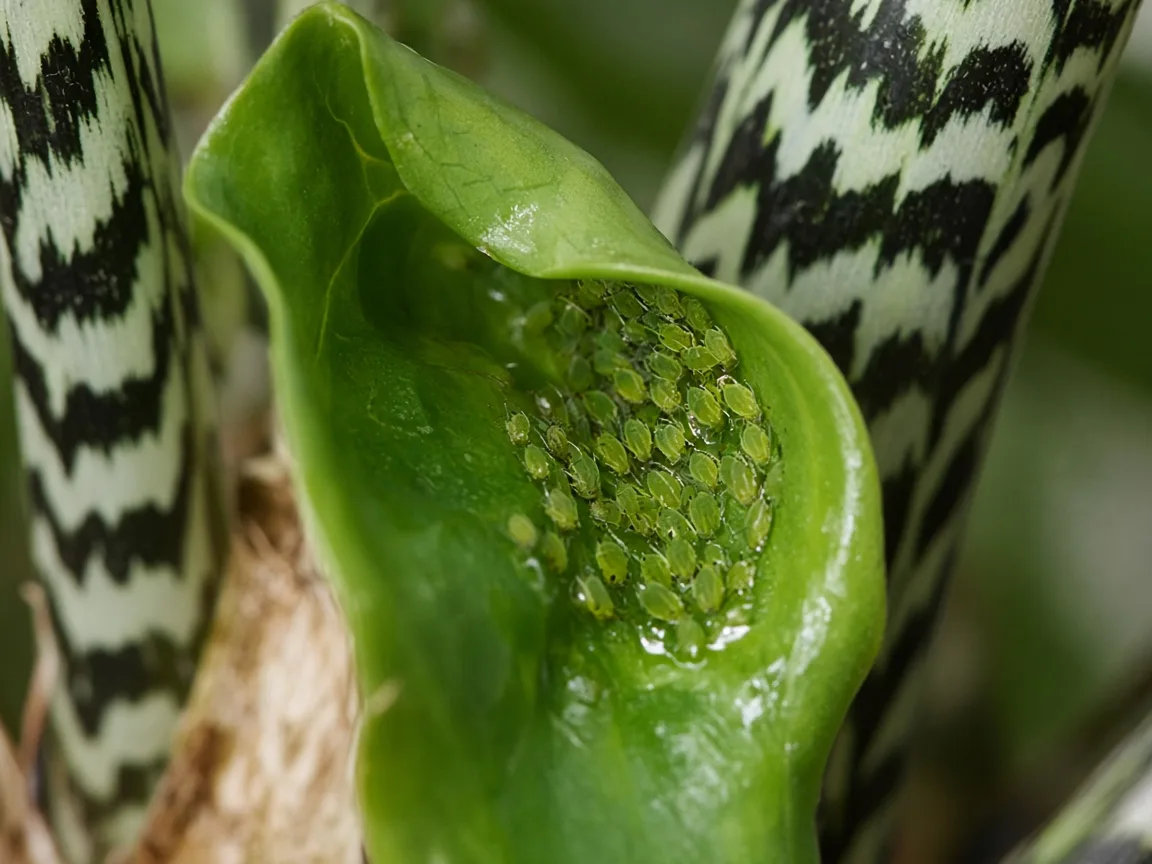
Pear-shaped aphids packed into a petiole axil on a glossy arrow leaf underside—compare with firm striped stems above.
- Clusters on the central unfurling spear — Soft new flush emerging from the corm, often green, yellow, brown, or black depending on species
- Sticky shine on glossy undersides and striped petioles — Honeydew collects on the leaf back and drips down the black-and-white banded stem
- Puckered or undersized new arrow blades — Feeding distorts leaves while they are still soft; glossy tissue may look wrinkled or uneven
- Ant trails on the pot rim or shelf — Ants harvest honeydew and protect colonies from lady beetles and lacewings
- Black sooty coating on lower glossy leaves — Fungus growing on dried honeydew, not black spots from fungal leaf disease
Healthy Zebrina leaves are glossy, arrow-shaped, held on long zebra-striped petioles. Mature lower blades can look perfect while the unfurling spear is infested—do not assume the plant is clean because the glossy surface facing the room looks fine.
NC State Extension notes that alocasias should be monitored for aphids and mealybugs alongside spider mites. Zebrina is not exempt because it is a statement plant—it is often grown in the same warm, humid corners that aphids love.
Where aphids hide on zebra-striped petioles and unfurling arrow blades
Alocasia zebrina is an upright Philippine alocasia with a rhizomatous corm and a short crown. Aphids follow the softest growth on the plant, not the firm glossy blades you see from across the room.
The central unfurling spear is the primary hideout—the rolled arrow leaf still wrapped around itself at the center of the crown. Colonies tuck into the glossy underside before the blade opens flat.
Petiole axils where each arrow leaf meets the corm concentrate aphids on the side facing the window or the leaf that grew fastest last season. Honeydew drips down the black-and-white striped petiole and can coat several inches of stem below the colony.
The soil line and corm crown can harbor aphids when colonies spread from a sticky petiole base. Inspect where striped stems emerge from the mix—especially if ants are climbing the pot.
Window-shelf neighbors share warm humid air. Aphids can walk or drift from other aroids on the same bench—quarantine new Zebrina plants before placing them beside established specimens.
Inspect every leaf separately, including the one still unfurling. One sticky spear beside three clean mature blades means a localized outbreak, not a whole-plant care failure.
Why losing one leaf matters on a few-leaf Zebrina
Most healthy Zebrina plants in good light carry three to six leaves at a time. Unlike a sprawling pothos, this species does not mask pest damage with dozens of blades—and the RHS notes that leaf drop is normal as fresh ones emerge.
When aphids colonize the only unfurling spear, you may lose the plant’s entire new growth cycle for the month. A distorted arrow leaf stays visible for weeks because alocasias grow in visible flushes and drop older leaves seasonally.
Heavy feeding on soft tissue can also weaken the corm if the plant is already stressed from overwatering or winter dormancy. A firm corm below the surface can still push clean striped growth in spring—but only if you stop the colony before it spreads to every axil.
Treat early colonies as urgent on this species not because aphids are uniquely deadly, but because each leaf is a large fraction of the whole plant.
Rinsing tall Zebrina without flooding the corm
Zebrina’s long striped petioles and glossy arrow blades change how you knock aphids off. Do not soak the crown or let rinse water pool in the leaf sheath—trapped moisture at the corm encourages rot on this rot-sensitive Philippine species.
Rinse or wipe—do not flood the pot. Aim lukewarm running water at the glossy underside and petiole axils while supporting the long leaf from below. Let excess water run off, then blot the petiole base gently with a dry cloth the same day.
Tilt the pot so runoff does not flood the soil. Zebrina needs water when the top 2–3 cm of mix is dry. Repeated heavy spraying into the pot can stress a rot-prone corm—see the watering guide for dry-down checks.
Support long petioles while rinsing. The weight of a wet arrow blade can bend or snap a striped stem if you blast water from above without holding the leaf.
Air-dry in bright indirect light the same day. Water sitting in the unfurling spear sheath after a heavy rinse is worse than the aphids were—gently open the tip enough to let moisture escape without forcing a stuck blade.
Isolate fallen leaves and cut petioles. A dropped infested blade in a cachepot can spread insects to neighboring aroids.
Why Alocasia Zebrina gets aphids
Soft unfurling arrow blades. Aphids feed on tender new plant growth. Each warm-season flush produces a soft rolled blade on a long striped petiole—ideal habitat before the leaf hardens glossy.
Warm humid growing conditions. Zebrina wants 60–75% humidity in bright indirect light—often supplied by humid corners, bathroom shelves, or grouped plant benches. Stable room temperatures let aphid populations build year-round without the natural enemies that curb them outdoors.
Indoor stability without predators. Houseplant collections lack the lady beetles, lacewings, and parasitic wasps that normally curb aphid numbers outdoors. A single winged aphid can start a new colony on the next unfurling spear.
Ant protection. Ants on pot rims or window sills defend honeydew sources on petiole bases, keeping colonies larger than they would be outside.
Nitrogen-rich soft shoots. Heavy early fertilizer can push lush spears that attract aphids. Cross-check the fertilizer guide if colonies exploded right after feeding.
Neighboring infested plants. Aphids drift on air currents from other houseplants on the same bench. Quarantine new Zebrina and inspect shared window shelves weekly.
How to confirm the cause
Work through these checks before you treat:
- Location on the plant — Dense soft insects on unfurling spears and glossy undersides suggest aphids. Fine webbing on the same tissue suggests spider mites. White cottony patches suggest mealybugs.
- Hand-lens inspection — Pear-shaped bodies with cornicles (tiny tail pipes) and long antennae confirm aphids. Bronze or swollen mummy aphids mean parasitic wasps are already working.
- Honeydew test — Sticky glossy undersides or striped petioles that feel tacky point to sap feeders. Dry crispy edges without insects point to low humidity.
- Leaf comparison — One sticky spear vs every axil affected separates localized aphids from a whole-plant stress pattern tied to not enough light.
- Ant activity — Ants climbing the pot or nearby wall often appear before you spot the colony on the unfurling blade.
- Shake test — Tap an infested petiole over white paper. Aphids fall as slow-moving specks. Whiteflies would fly—see whiteflies if that happens.
If you see only a small colony and parasitic wasp mummies nearby, confirmation may mean monitor rather than spray immediately.
First fix for Alocasia Zebrina
Isolate the plant if other aroids are nearby, then rinse the unfurling spear and glossy undersides of every leaf under lukewarm running water—wipe petiole axils gently with a damp cloth while wearing gloves—and re-inspect in three days with a magnifier before spraying anything.
Hold the pot tilted so runoff does not flood the soil. Aim at leaf undersides and axils, not the corm. Support long striped petioles so wet arrow blades do not snap. Let the plant air in bright indirect light the same day.
This single step knocks many aphids off sturdy plants without stacking chemicals on day one. Repeat every two to three days while live aphids remain on inspection.
Do not reach for insecticidal soap, horticultural oil, or systemic products on day one if colonies are small and lady beetles or lacewing larvae are visible nearby.
Step-by-step recovery if rinsing is not enough
If live aphids remain after two rinse cycles:
- Prune heavily distorted spears — UC IPM recommends pruning infested leaves when aphids hide inside curled tissue contact sprays cannot reach. On Zebrina, sacrifice one puckered spear rather than let the colony spread to every axil.
- Apply insecticidal soap or horticultural oil — These products smother aphids on contact when applied thoroughly to glossy undersides. Test one leaf first—some aroids are sensitive to oils on soft new tissue.
- Manage ants — Sticky traps on pot rims or ant baits away from the plant help natural enemies reach colonies.
- Hold fertilizer — Do not feed a stressed alocasia while pests are active. Resume at half strength only after two clean new leaves unfurl.
- Scout weekly — Check unfurling spears and glossy undersides until you see two consecutive clean inspections.
Avoid broad-spectrum sprays that kill lady beetles and lacewings. Indoor plant pest guides emphasize starting with the least toxic option that reaches the pest.
Recovery timeline
Mild cases often stabilize within one to two weeks after the first thorough rinse, judged by a clean unfurling spear with glossy arrow tissue.
Distorted arrow blades from heavy feeding usually do not flatten—they remain puckered until the plant drops them naturally. Success means the next spear opens normally, not that old tissue repairs.
If the corm is firm and you see a new striped petiole within three to four weeks after treatment, the plant is recovering. A soft mushy corm with no new spear past mid-spring suggests deeper stress—cross-check root rot before assuming aphids alone caused the decline.
During winter dormancy, when Zebrina may drop all leaves, aphid pressure usually drops too. Resume scouting when spring growth returns.
Mistakes to avoid
- Soaking the crown while rinsing — Trapped water at the corm sheath encourages rot on this species; rinse undersides and blot petiole bases dry.
- Spraying only the glossy leaf top — Colonies live on undersides and in axils at striped petiole bases.
- Flooding the corm while rinsing — Saturated mix after repeated sprays mimics overwatering on a rot-prone species.
- Fertilizing during an active infestation — Soft nitrogen-rich shoots attract more aphids.
- Stacking repotting, pruning, and pesticide on the same day — Make one correction, wait a week, read the response.
- Assuming an empty winter pot means aphids are gone — Inspect again when the corm pushes spring growth.
How to prevent aphids next time
Scout unfurling spears and glossy undersides weekly during spring and summer—the same season Zebrina adds leaves in bright indirect light per the light guide.
Quarantine new plants for two weeks before placing them on a shared window bench. Inspect neighboring aroids, not just the Zebrina itself.
Manage ants on pot rims so natural enemies can reach colonies. Lady beetles and lacewings feed on aphids when ants are not protecting honeydew sources.
Avoid heavy nitrogen fertilizer that pushes soft lush spears. Feed lightly at half strength during active growth only, as described in the fertilizer guide.
Keep the plant in chunky aroid mix that dries predictably—the soil guide pairs with proper watering so new growth is firm, not weak and aphid-prone.
Related Alocasia Zebrina guides
| Guide | When to use it |
|---|---|
| Overview | Whole-plant culture, dormancy, and leaf-count expectations |
| Problems hub | Browse all Zebrina issue pages |
| Watering | Dry-down checks so rinse runoff does not mimic chronic wet mix |
| Spider mites | Fine webbing and stippling on glossy blades—common in dry air |
| Mealybugs | White cottony patches in petiole axils |
Related tool
Use the Pest Identifier Tool to narrow causes for aphids on this plant before changing multiple variables at once.