Curling Leaves on Banana: Causes, Checks & Fixes
Quick answer
Curling leaves on Banana usually mean the huge paddle blades are folding from drought, cold, or heat stress—or from sap feeders on the cigar leaf. First step: finger-test the top 2–3 cm of mix and lift the pot; if dry and light, water deeply once and watch the next unfurling leaf.
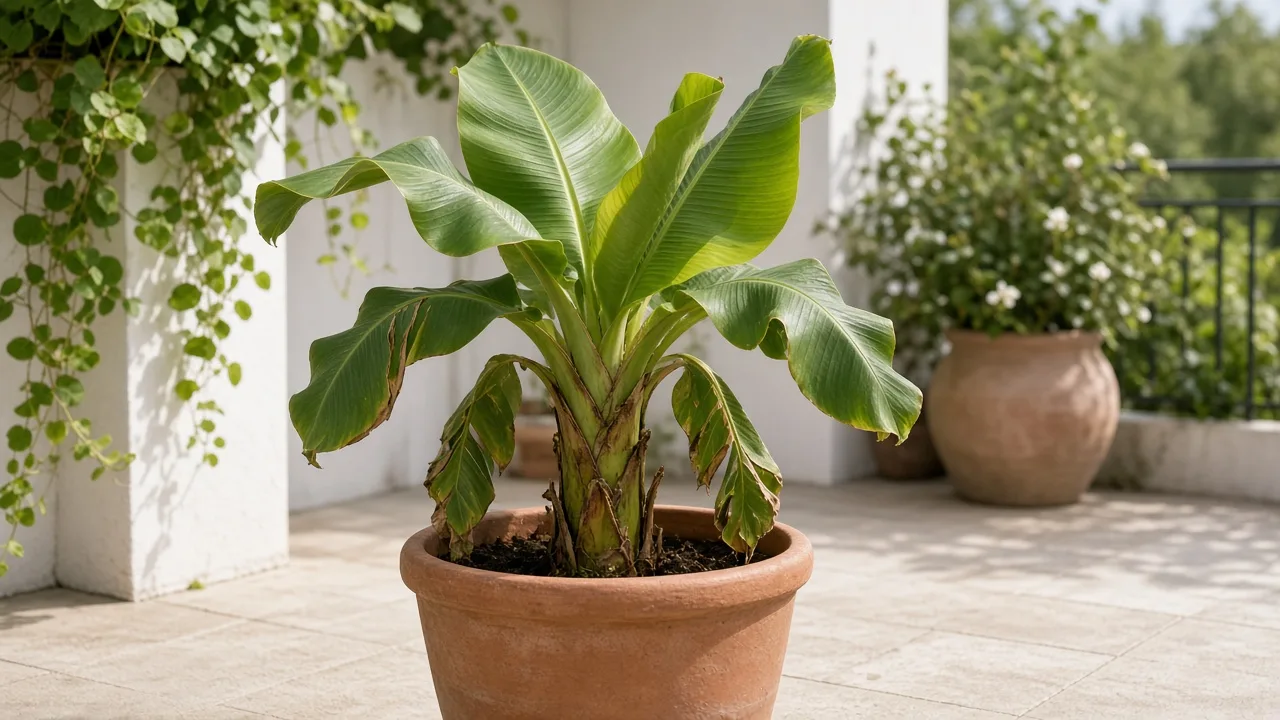
Curling Leaves on Banana: Causes, Checks & Fixes
This guide covers curling leaves on Banana. See also the general Curling Leaves guide, watering, and light pages for this plant.
Curling Leaves on Banana: Causes, Checks & Fixes
Quick answer
Curling leaves on Banana (Musa acuminata) are usually a moisture or temperature signal on a plant with enormous, thin paddle blades that lose water quickly in heat. UF/IFAS lists drought stress symptoms as folding of the leaves, pale green to yellow color, and premature leaf death — not the tight cupping you see on succulents, but a visible roll or fold along the midrib on one or more paddles.
First step: finger-test the top 2–3 cm of mix and lift the pot. A light container with dry surface mix means underwatering — water deeply once and let excess drain. A heavy, wet pot with yellowing lower leaves means stop watering and check drainage before the rhizome rots. For general curl mechanics, see our curling leaves hub. On Banana, the fold pattern on paddle leaves and the condition of the emerging cigar leaf tell you which branch to follow.
When to use this page vs other Banana guides
- Underwatering on Banana — light pot, dry mix throughout, crisp folded paddles
- Overwatering on Banana — heavy wet pot, yellow lower leaves, soft base
- Drooping leaves on Banana — whole paddles hang without tight midrib fold
- Wilting on Banana — sudden collapse with stem softness
- Low humidity on Banana — brown leaf margins with curl near heating vents
- Aphids on Banana — sticky residue and dark insects on the cigar leaf
- Not enough light on Banana — pale stretched growth without obvious fold
What curling looks like on Banana
Healthy banana paddle leaves lie flat and arch gracefully from the pseudostem. Curling breaks that plane in ways that map to specific stresses:
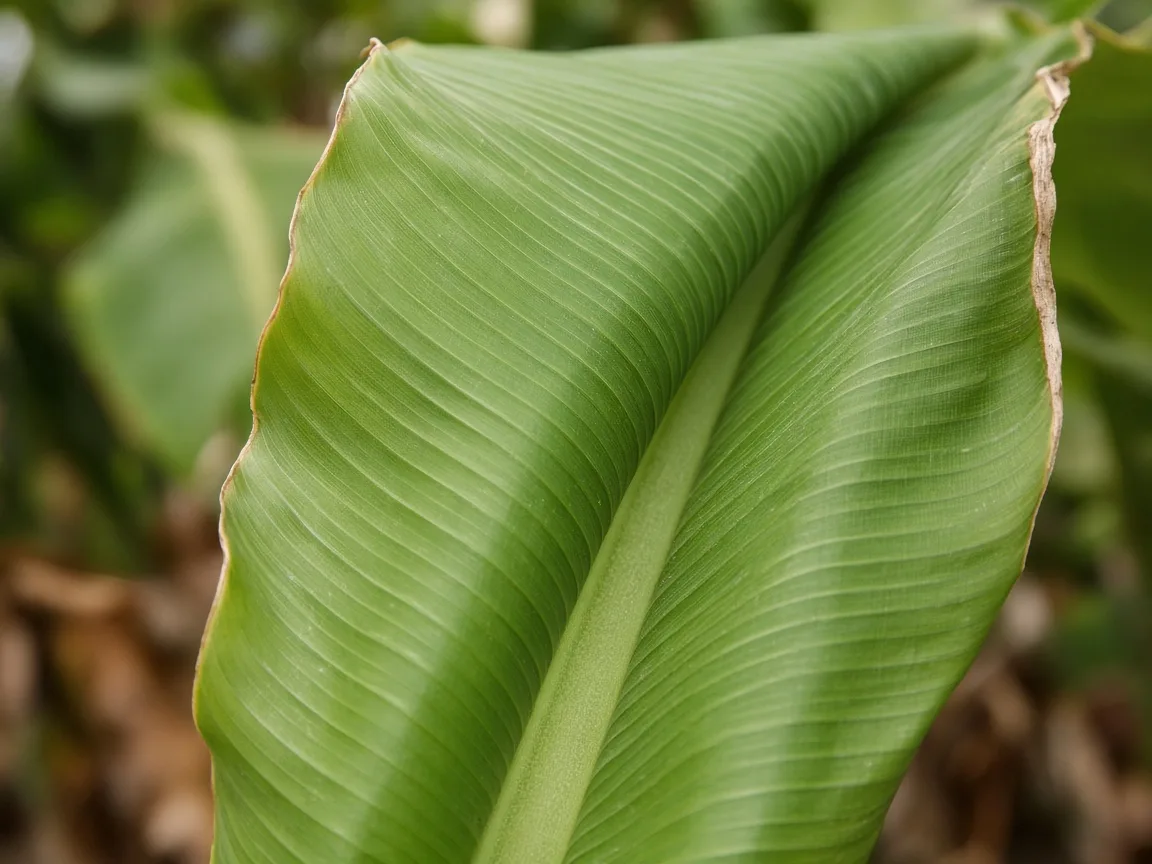
Upward fold along the midrib on a drought-stressed paddle leaf — compare with flat blades on the same pseudostem once watering is corrected.
Drought fold (most common indoors and in hot containers):
- Paddles fold upward or inward along the midrib before they droop
- Pot feels noticeably light; top 2–3 cm of mix is dry
- Leaf color stays green at first, then shifts pale green to yellow on older blades
- Pseudostem base stays firm; the cigar leaf at the top may still look normal
Cold or chill fold:
- Curl appears after a cold night, draft, or unheated room below about 16°C (60°F)
- Growth slows below 60°F and stops near 50°F on bananas
- Older paddles yellow; new growth may stall or show narrow blades after severe chill
- Indoor plants near winter windows are high risk
Heat and dry-air curl:
- Margins curl on paddles facing hot afternoon sun or a heating vent
- Temperatures at or above 98°F (37°C) can cause leaf scorch
- Soil moisture may be adequate but transpiration outpaces root uptake in dry wind
- Often paired with low humidity indoors
Pest curl:
- New growth curls, puckers, or stays narrow while older paddles look fine
- Banana aphid feeding causes curled, shriveled foliage, often on the cigar leaf and pseudostem sheaths
- Sticky honeydew, ants on the pot rim, or stippling from spider mites point away from pure water stress
Reading fold vs droop on paddle leaves
Banana is a fast-growing tropical herb with leaves that can reach 6–10 feet long on mature specimens. That surface area makes Musa acuminata one of the first houseplants to show water stress visually — but the signal is fold before flop.
Unlike compact houseplants where curl and wilt look similar, banana paddles typically crease along the midrib when the rhizome cannot supply enough water fast enough. NC State Extension notes bananas should not be allowed to dry out and need organically rich, moist, well-drained soil in full sun. Container growers who treat banana like a drought-tolerant succulent see fold within hours on a sunny terrace.
The cigar leaf — the tightly rolled new blade emerging from the pseudostem center — is your best recovery indicator. If drought was the cause, the next cigar leaf should unfurl flat within one to two weeks after moisture stabilizes. If pests or chill damaged the growing point, the cigar leaf stays twisted or fails to open even when soil moisture looks correct.
Why Banana gets curling leaves
Common triggers tied to this species’ growth rhythm:
Underwatering and uneven moisture — Bananas need about 1 to 1.5 inches of water per week during active growth and 4 to 6 inches per month in production settings. Hot container plants can dry the top 2–3 cm in a day or two. Alternating drought and heavy soaking stresses the rhizome and produces repeated fold cycles on the same paddles.
Cold and chilling injury — Bananas flourish at 78–82°F shoot growth. Cool indoor corners, garage overwintering, or outdoor nights below 16°C (60°F) slow water uptake and stiffen leaf tissue, which reads as curl or edge burn before full yellowing.
Heat, wind, and low humidity — Broad paddles lose water fast in dry wind. Indoor heating in winter pulls humidity away from leaf margins. Heat scorch curls exposed blades even when the pot weight feels normal.
Sap-feeding pests on soft new tissue — Rapid warm-season growth produces a constant supply of tender cigar leaves and sword suckers — prime targets for aphids and thrips. Pest curl concentrates on new blades, not random older paddles.
Root-zone failure from chronic wet soil — Less common as a first symptom, but continuously wet soil causes stunting and yellowing. A rotting rhizome cannot move water; paddles curl and then wilt despite wet mix. Cross-check with root rot if the base softens.
How to confirm the cause
Work through these checks in order:
- Pot weight and finger-test — Lift the container. Light pot plus dry top 2–3 cm confirms drought. Heavy pot that stays wet for days points to overwatering, not a need for more water.
- Pseudostem base — Press the lowest sheath near soil line. Firm means drought or heat curl is still manageable. Soft or darkened tissue escalates to root problems.
- Pattern on the plant — Random older paddles folded with a light pot = drought. Only newest leaves twisted with sticky residue = aphids or thrips. All paddles after a cold night = chill injury.
- Cigar leaf inspection — Peel back the top sheath slightly. A flat emerging leaf after watering confirms drought recovery underway. Persistent twist with insects inside confirms pests.
- Environment scan — Note heating vents, winter window chill, afternoon sun on wet leaves, and recent repot or move. Bananas hate changing water, light, and location on the same day.
- Drainage check — Water should exit drainage holes within minutes. Saturated mix for days in a cachepot causes yellow curl unrelated to drought.
| Sign | Underwatering | Overwatering | Cold stress | Pests |
|---|---|---|---|---|
| Pot weight | Light | Heavy | Normal | Normal |
| Top 2–3 cm mix | Dry | Wet | Variable | Variable |
| Pseudostem base | Firm | Soft or sour | Firm | Firm |
| Main symptom area | Older paddles fold first | Lower yellow paddles | After cold exposure | Cigar leaf and new blades |
| Sticky residue | No | No | No | Often yes |
First fix for Banana
If the pot is light and the top 2–3 cm of mix is dry: water deeply once until excess drains freely, then empty any cachepot saucer.
That single correction is the right first move for the majority of container bananas showing drought fold. Use room-temperature water, soak until it runs from drainage holes, and return the plant to bright light so foliage dries quickly. Do not mist the crown repeatedly — wet sheaths in low airflow invite rot on this moisture-loving but crown-sensitive species.
If the pot is heavy and mix stays wet: do not water. Move to the brightest spot you can provide, confirm drainage holes are open, and let the top third of the mix dry before the next drink per the Banana watering guide. Escalate to root rot checks if the pseudostem base softens.
If curl followed a cold night: move to a frost-free spot above 16°C (60°F) and hold off feeding until new growth looks normal. Do not prune all paddles at once — the plant needs leaf area to recover.
If insects are on the cigar leaf: isolate and rinse colonies first per the aphids guide before adjusting water or fertilizer.
Step-by-step recovery
After the first targeted fix, continue in this order:
- Stabilize moisture for two weeks — Check the top 2–3 cm every two to three days in warm growth; weekly when cool. Aim for evenly moist, never bone dry to soggy swings.
- Watch the next cigar leaf — A flat unfurling blade within 7–14 days means the rhizome is supplying water again.
- Adjust placement — Shift away from heating vents or scorching afternoon glass. Outdoor plants may need afternoon shade in hot dry climates while keeping morning sun.
- Raise humidity indoors if margins crisp — Grouping pots or a pebble tray helps leaf edges; see low humidity for winter rooms.
- Treat confirmed pests on schedule — Water rinses on sheath colonies, then labeled soap if needed; do not stack repot, prune, and pesticide on the same day.
- Hold fertilizer until new paddles emerge clean for two weeks. Feeding a stressed banana pushes soft tissue pests and heat stress prefer.
Recovery timeline
Within 24–72 hours of correcting drought, partially folded paddles often begin reopening if margins are not crispy.
One to two weeks of stable moisture should produce a clean cigar leaf on a firm pseudostem. That is the primary success marker.
Older folded blades may keep a slight crease until they are replaced by new paddles — cosmetic, not a sign of ongoing stress.
Worsening signs include fold spreading to every paddle while the pot stays heavy, pseudostem softening at the base, cigar leaf failing to open after three weeks of corrected care, or virus-like bunchy tops after aphid activity outdoors. Those patterns need different guides, not more water.
Lookalike symptoms
| What you see | Likely cause | Where to read next |
|---|---|---|
| Midrib fold on multiple paddles, light pot | Underwatering | This page / underwatering |
| Yellow lower leaves, heavy wet pot | Overwatering | Overwatering |
| Whole paddles hang straight down | Drooping, not curl | Drooping leaves |
| Sudden limp collapse | Wilting / root failure | Wilting |
| New leaf twist with honeydew | Aphids | Aphids |
| Pale stretched leaves, weak petioles | Low light | Not enough light |
| Brown tips with margin curl | Humidity / salt | Brown tips |
What not to do
Do not water on a schedule without checking the top 2–3 cm — bananas in cool rooms need far less than terrace plants in July.
Avoid misting the pseudostem crown repeatedly to “fix humidity.” Wet sheaths in dim corners invite rot.
Do not fertilize folded leaves hoping they will uncurl. Fix moisture, warmth, or pests first.
Skip pruning all paddles after one dry spell. The plant needs photosynthetic area to refill the rhizome.
Do not move from full outdoor sun to a dark corner the same day you increase watering — scorch and shock compound curl.
Avoid repotting immediately unless root rot is confirmed. Repot plus drought recovery on the same week stalls the cigar leaf.
Banana care cross-check
Curl recovery sticks when baseline care matches this species:
- Water — evenly moist root zone per the watering guide; reduce in cool weather
- Light — full sun outdoors or brightest indoor spot; weak light prolongs dry-down mistakes
- Soil — rich, well-drained mix per the soil guide; stagnant wet compost damages rhizomes
- Warmth — protect from drafts; growth stalls below about 16°C (60°F)
- Pest scouting — inspect cigar leaf and sheaths weekly during warm growth
How to prevent curling next time
Learn your pot’s dry-down speed before problems repeat. A banana that needs water every two days on a sunny balcony may need only weekly checks in a cool sunroom.
Keep regular moisture during active growth without leaving the mix saturated. Use a heavy container that will not tip when paddles catch wind.
Quarantine new plants and inspect the cigar leaf before placing them beside other tropicals. Aphid curl is easier to stop on one pseudostem than on a grouped patio display.
When moving containers indoors for winter, reduce watering as growth slows and keep plants away from heating vents that crisp margins overnight.
When to worry
Most curl on container bananas is drought or placement stress and responds to one correct watering or a warmer spot. Escalate when:
- Pseudostem base softens while soil stays wet — possible rhizome rot
- Every paddle folds within days on a heavy pot — root uptake failure, not surface dryness
- Cigar leaf stops unfurling for three weeks after moisture correction — growing point or pest damage
- Water-soaked brown patches appear after freeze exposure — chill injury beyond simple fold
- Bunchy, brittle new leaves follow aphid activity outdoors — virus suspicion; do not share suckers
A firm rhizome with one clean new paddle after correction means the plant is salvageable even if older blades stay creased.