Drooping Leaves on Banana: Causes, Checks & Fixes
Quick answer
Drooping leaves on Banana usually mean the broad paddles lost turgor from thirst in a light dry pot, saturated mix starving roots of oxygen, afternoon heat on a huge leaf canopy, or wind drying exposed blades—not a generic houseplant wilt. First step: lift the container and finger-test the top 2–3 cm while reading whether the cigar leaf at the crown still looks green and upright.
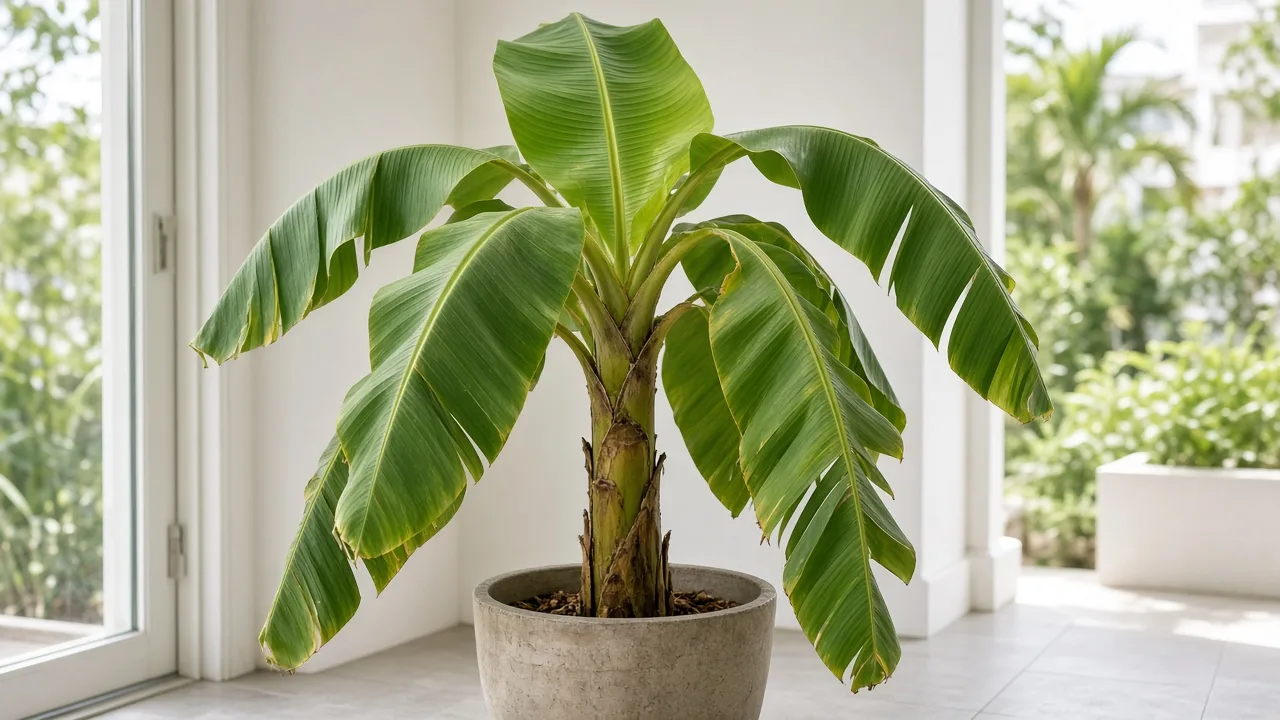
Drooping Leaves on Banana: Causes, Checks & Fixes
This guide covers drooping leaves on Banana. See also the general Drooping Leaves guide, watering, and light pages for this plant.
Drooping Leaves on Banana: Causes, Checks & Fixes
Quick answer
Picture two common balcony scenes. In the first, every broad paddle hangs at a sharper angle than yesterday, the pot feels feather-light, and a finger pushed 2–3 cm into the mix comes out dusty—the pseudostem is still firm, but the plant is thirsty. In the second, paddles look limp while the pot stays heavy days after watering, lower blades are yellowing, and squeezing the base 10 cm above the soil yields slightly—the roots are failing on wet mix even though the leaves look like they need water.
That split is what makes drooping leaves on Banana different from the same symptom on a peace lily or pothos. Musa acuminata is a fast-growing tropical herb with a huge transpiring leaf canopy on fibrous roots confined in a pot. Limp paddles here are almost always a root-zone or environment signal, not a leaf problem you can mist away. For how turgor loss works in general, see our drooping leaves guide. On Banana, lift the pot and read the cigar leaf at the crown before you water, repot, or prune.
First step: lift the container off the saucer and finger-test moisture in the top 2–3 cm. Do not water, feed, or repot until you know whether you are on the dry-thirst side or the wet-rot side.
When to use this page vs other Banana guides
This page is the paddle-posture entry for folded or hanging foliage while the pseudostem may still look upright.
| Pattern | Read next |
|---|---|
| Whole pseudostem collapses or feels hollow | Wilting |
| Soft mushy base with wet soil | Root rot or overwatering |
| Light pot, dry mix, crispy margins forming | Underwatering |
| Yellow lower paddles on wet soil | Yellow leaves |
| Pale stretched growth before limpness | Not enough light |
| Brown tissue after droop | Brown leaves or brown tips |
| Dry indoor heat with bronze stippling | Low humidity or spider mites |
What drooping leaves look like on Banana
Healthy banana paddles are large, arching, and held at a graceful angle from the pseudostem—not bolt upright, but not hanging straight down either. When turgor drops, the change is obvious on such big blades.
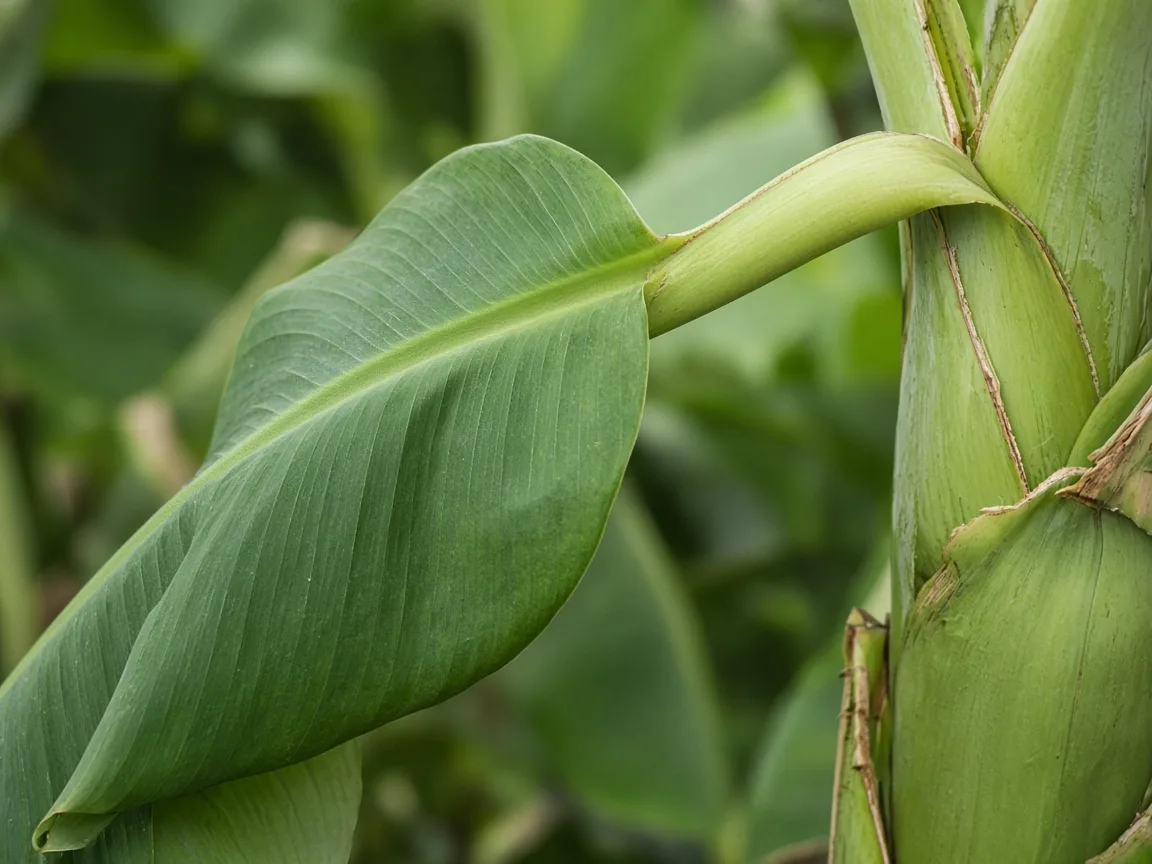
Folded paddle margins and a sharper downward hang along the petiole—compare with the still-green cigar leaf at the pseudostem crown.
Thirst droop (dry pot):
- Paddles fold lengthwise like a closed fan, especially in hot afternoon sun
- Pot feels light; top 2–3 cm of mix is dry
- Pseudostem firm; cigar leaf still green and upright
- Margins may start pale before full yellowing
Wet-soil droop (root stress):
- Paddles hang limp while soil stays wet and heavy
- Lower leaves yellow first; sour smell possible at the base
- Pseudostem may still feel firm early, then softens if rot advances
- Cigar leaf may stall or brown before unfurling
Heat and wind droop:
- Tallest paddles limp in mid-afternoon on an otherwise healthy plant
- Often follows windy days that dry and shred leaf tissue
- Firm pseudostem; pot weight normal for recent watering
- Recovery by evening or after shelter supports environmental wilt
Chill droop:
- Paddles go limp after a cold night below about 16°C (60°F)
- Growth slows in cool conditions per UF/IFAS
- May progress to water-soaked tissue if exposure continues
Paddle fold vs pseudostem collapse
Searchers often lump both under “drooping,” but on Banana they mean different urgency levels.
Paddle fold affects the broad blades while the trunk-like pseudostem stays upright and solid. Causes are usually water uptake—too little in the mix or too much saturation damaging roots—or temporary heat and wind stress on the huge leaf surface.
Pseudostem collapse is the whole stem leaning, buckling, or feeling hollow. UF/IFAS notes severe drought stress may cause choking and pseudostem collapse, and continuously wet soil can also weaken the base until the plant topples. If the stem softens, move to wilting and root rot protocols—not more surface watering.
The cigar leaf—the tightly rolled new paddle at the crown—is your best early signal. Green and pushing upward on a firm stem supports paddle-level stress. Stalled, brown, or limp cigar tissue on a heavy wet pot points to rhizome-zone failure.
The pot-weight and 2–3 cm dry-down test
Banana pots are often top-heavy, so surface dustiness lies. The mix can look dry on top while the core stays saturated—a setup for lower-paddle droop on a firm-looking pseudostem until roots fail.
Pot weight: Lift the container. Light with folded paddles and a firm base fits drought during warm growth. Heavy days after watering fits saturation or poor drainage.
Finger depth: Probe the top 2–3 cm as your watering guide recommends. Dry throughout with a light pot fits thirst. Cool and damp for three or more days during slow winter growth fits overwatering.
Pseudostem squeeze: Press the lowest green sheath 10–15 cm above the soil through a towel. Firm and solid: roots may still be functional. Soft, squishy, or darker: suspect rot; do not water.
RHS lists limp banana leaves as a sign of under- or over-watering and advises checking the compost before adjusting—exactly this three-part check.
Why Banana gets drooping leaves
Musa acuminata needs organically rich, moist, well-drained soil and loses water rapidly through enormous paddles. Drooping happens when roots cannot deliver enough water to maintain cell pressure—whether soil is too dry or roots are damaged by excess moisture.
Underwatering and drought fold
Bananas are very sensitive to drought. UF/IFAS describes drought stress symptoms as folding of the leaves, pale green to yellow color, and premature leaf death. A container on a hot terrace can go from moist to crisis in a single sunny day because the restricted root volume cannot match canopy demand.
This is not a succulent that stores water in thick tissue—the pseudostem sheaths hold some reserve, but prolonged thirst still folds paddles before the stem collapses.
Overwatering and oxygen loss
Banana is not flood tolerant. Stagnant water kills roots quickly; continuously wet soil causes stunting and leaf yellowing. Damaged roots cannot take up water, so paddles lose turgor despite wet mix—the classic “wet wilt” that sends owners back to the watering can.
Winter overwatering is especially risky. RHS advises reducing irrigation when container plants move indoors and letting compost dry slightly between drinks while growth slows below about 16°C.
Wind and heat on exposed paddles
Continuous wind may dry leaves and distort the crown. On balconies without shelter, shredded or wind-stressed paddles droop in afternoon heat even when soil moisture is adequate. NC State recommends protecting banana from strong winds that damage large leaves.
Chill and slowed uptake
Growth slows below 16°C (60°F) and stops near 10°C (50°F) per UF/IFAS. Cold roots take up water poorly; paddles on a windowsill may droop after a cool night while soil still feels moist. Overwatering a chilled plant compounds the problem.
How to confirm the cause
| Pattern | Pot weight | Top 2–3 cm | Cigar leaf | Pseudostem base |
|---|---|---|---|---|
| Drought fold | Light | Dry | Green, upright | Firm |
| Wet-root droop | Heavy | Wet for days | Stalled or browning | Firm early, may soften |
| Heat/wind wilt | Normal | Normal dry-down | Green | Firm; recovers by evening |
| Chill droop | Normal to heavy | Moist | May stall after cold | Firm or bruised, not spongy |
- Lift the pot and note weight versus your last deep watering.
- Probe 2–3 cm down—not just the dusty surface crust.
- Read the cigar leaf at the crown for green active growth.
- Squeeze the pseudostem base gently for softness or sour smell.
- Check recent weather—windy terrace week, heat wave, or cold night near glass.
- Watch overnight recovery—heat wilt firms by morning; wet-root droop stays limp on heavy soil.
First fix for Banana
Lift the pot and route to one correction based on moisture, not symptom alone.
- Light dry pot + firm base + folded paddles: one deep soak until water drains freely, then resume even moisture per watering—not daily splashes on a dry surface only.
- Heavy wet pot + yellowing lower paddles: stop watering, confirm drainage holes are open, and move to a brighter warm spot to speed dry-down—see overwatering before repotting.
- Afternoon limpness only, firm stem, normal pot weight: shelter from wind, avoid pruning healthy paddles the same day, and check again at dusk.
- Droop after cold exposure: move above 16°C away from drafts; reduce water while growth is slow.
Do not fertilize a drooping plant until new paddles unfurl cleanly for several weeks.
Step-by-step recovery
If limp paddles persist after the first correction for one week:
- Drought: soak once, then maintain even moisture without leaving the pot saturated—match soil drainage to the container size.
- Rot suspicion: stop water; inspect roots only if the base stays soft—repot into fresh airy mix if tissue is actively decaying.
- Wind: relocate to a sheltered corner or add a temporary screen; trim only fully dead shredded strips.
- Chill: keep rhizome zone warm; delay heavy leaf removal until the cigar leaf resumes growth.
- Monitor new paddles from the crown over four to eight weeks—clean unfurling confirms recovery.
Recovery timeline
- Hours to 1 day: Drought fold on a firm pseudostem often firms after one thorough soak.
- 1–3 days: Heat and wind wilt on otherwise healthy plants after shelter.
- 1–2 weeks: Wet-soil stress after corrected dry-down and stable watering rhythm.
- Several weeks: Chill-injured or severely drought-stressed plants before a new paddle unfurls cleanly.
Judge recovery on the cigar leaf and the next unfurling paddle, not on old blades that already folded. Persistent limpness on wet heavy soil means the rhizome zone still needs rescue.
Lookalikes to rule out on Banana
| What you see | Likely cause | Next page |
|---|---|---|
| Yellow lower paddles on wet soil | Oxygen loss at roots | Yellow leaves |
| Whole stem buckles | Advanced wilt or drought collapse | Wilting |
| Crispy margins after fold | Prolonged thirst | Underwatering |
| Bronze stippling, fine webbing | Spider mites in dry heat | Spider mites |
| Pale stretched petioles before droop | Low light stretch | Not enough light |
Wet wilt vs dry fold: Both look limp. Heavy pot and wet probe mean stop water; light pot and dry probe mean soak.
What not to do
- Do not water automatically when paddles droop on soil that has stayed wet for days.
- Do not mist paddles as a substitute for correcting root-zone moisture—banana needs soil water, not leaf humidity alone.
- Do not repot and soak on the same day unless you have confirmed active rot and removed decaying tissue.
- Do not strip every paddle from a stressed plant in one session—the canopy supports recovery until new growth opens.
- Do not place a chilled drooping plant in hot afternoon sun immediately—temperature shock can worsen limp tissue.
How to prevent drooping next time
Check pot weight every two to three days during hot active growth per your watering guide. Shelter broad paddles from constant wind where RHS recommends wind protection for container plants. Keep the plant frost-free and reduce winter irrigation when growth slows.
Use freely draining but moisture-retentive soil in a pot with open drainage holes, and give full sun where possible so the root system and canopy stay in balance. A top-heavy banana in a small plastic pot tips and stresses petioles before roots fail—upgrade container size or stake if lean is the recurring pattern.
Related Banana guides
- Overview — warmth, light, and moisture baseline
- Problems hub — all sibling symptoms
- Watering — dry-down checks for thirsty paddles
- Wilting — pseudostem collapse protocol
- Root rot — soft base rescue