Wilting on Banana: Causes, Checks & Fixes
Quick answer
Wilting on Banana means the pseudostem or whole crown lost structural turgor—not just one paddle hanging lower. First step: squeeze the pseudostem 10 cm above the soil line and lift the pot; a firm stem in a light dry container wants a deep soak, while a soft stem on heavy wet soil needs watering stopped and rhizome inspection.
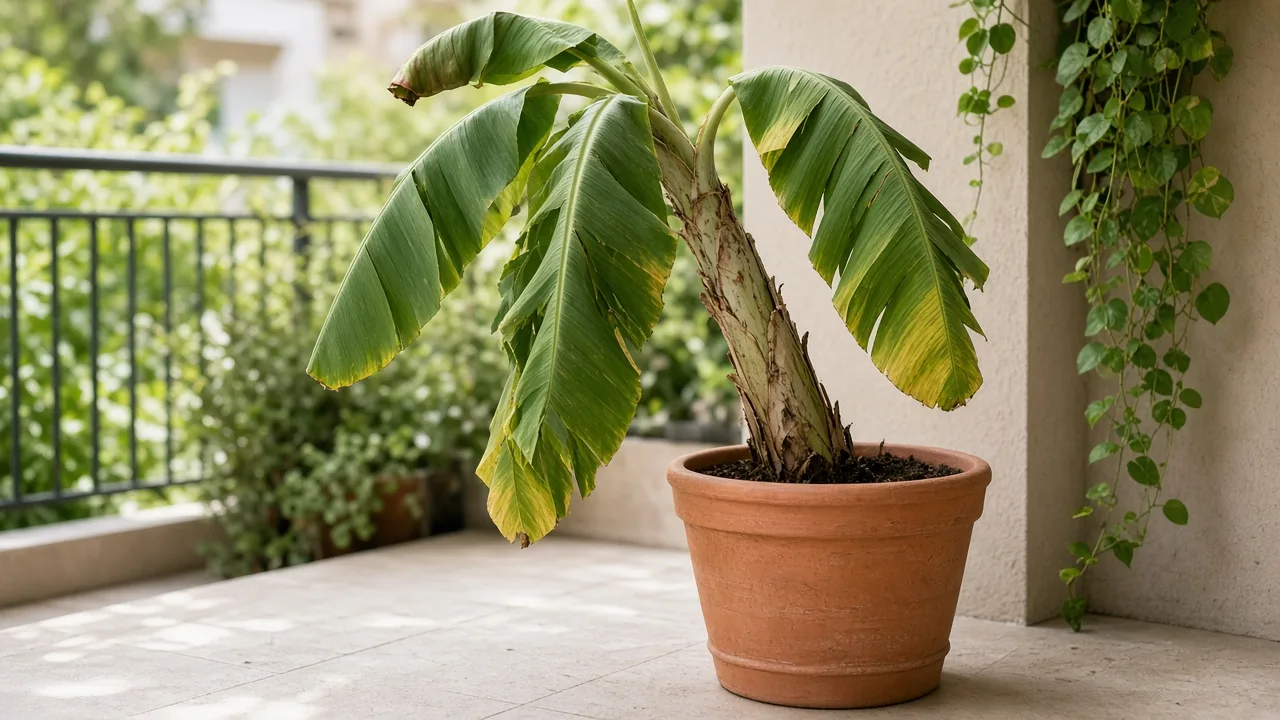
Wilting on Banana: Causes, Checks & Fixes
This guide covers wilting on Banana. See also the general Wilting guide, watering, and light pages for this plant.
Wilting on Banana: Causes, Checks & Fixes
Quick answer
Wilting on Banana (Musa acuminata) is not the same as a few paddles hanging at a steeper angle. It means the pseudostem—the trunk-like column of overlapping leaf sheaths—lost enough turgor to lean, buckle, or collapse, often with the cigar leaf at the crown going limp too. That structural failure usually traces to a break in the water pathway at the rhizome and fibrous root zone, not a cosmetic leaf issue you can mist away.
For how wilting works when roots lose access to water or oxygen in general, see our wilting symptom hub. On Banana, squeeze the pseudostem 10 cm above the soil and lift the pot before you water, repot, or cut anything.
First step: grip the pseudostem above the soil line—firm tissue in a light, dry container calls for one deep soak after the top 2–3 cm dries; soft tissue on heavy wet soil means stop watering and plan a rhizome inspection within a day or two.
When to use this page vs other Banana guides
This page is the structural-collapse entry when the pseudostem itself fails, not only paddle posture.
| Pattern | Read next |
|---|---|
| Paddles fold but pseudostem stays stiff and upright | Drooping leaves |
| Light pot, dry mix, crispy margins before collapse | Underwatering |
| Yellow lower paddles on persistently wet soil | Overwatering or yellow leaves |
| Mushy rhizome, sour smell, brown roots on inspection | Root rot |
| Pale stretched growth before weakness | Not enough light |
| Bronze stippling with limp new growth | Spider mites or low humidity |
What wilting looks like on Banana
Healthy container bananas carry a stiff, upright pseudostem and push a tight cigar leaf from the crown. Wilting changes that silhouette: the column leans or lists, the cigar leaf wilts before it unfurls, and multiple paddles hang at the same downward angle instead of one outer blade folding in afternoon sun.
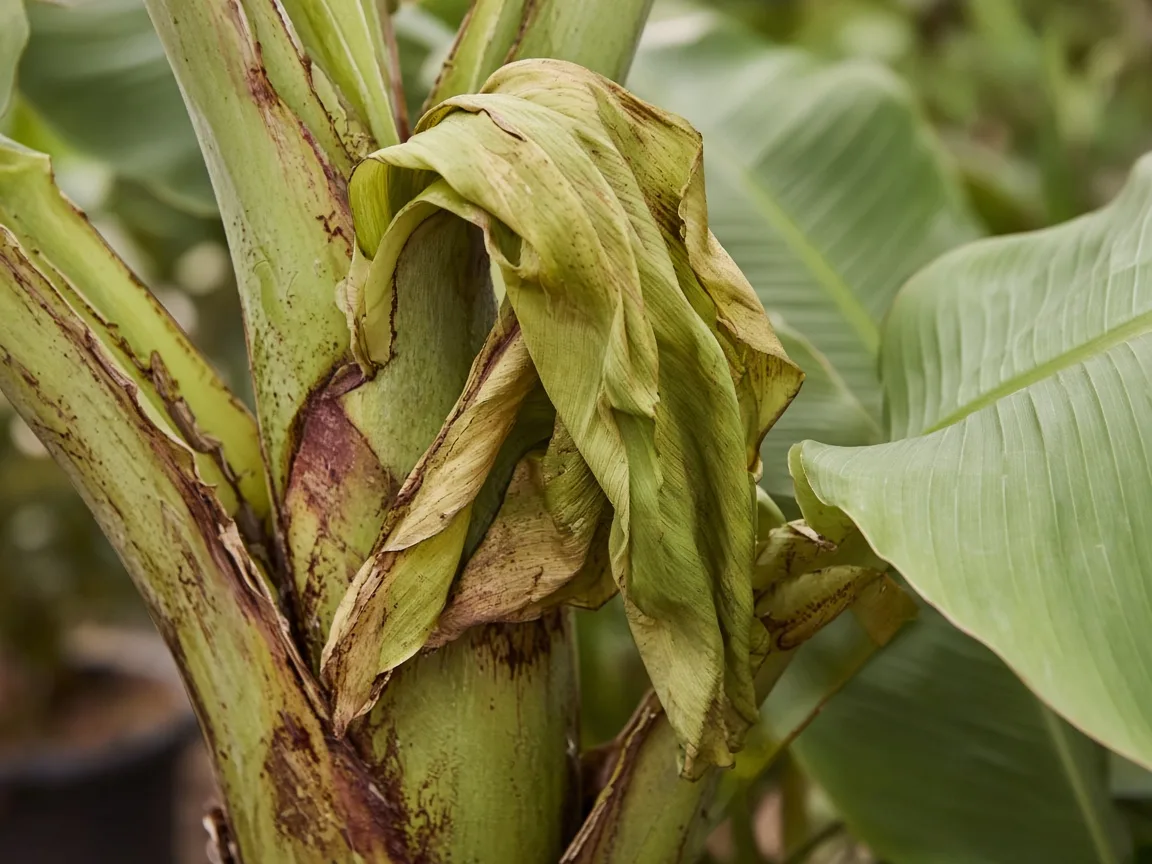
Wilting at the crown—limp cigar leaf and loss of stiffness in the upper pseudostem sheaths compared with firm tissue lower down.
Dry-collapse wilt (thirst advanced to structure):
- Pseudostem still mostly firm but the whole plant leans; pot feels very light
- Top 2–3 cm of mix is dusty; margins on lower paddles may be pale or crisp
- Cigar leaf may fold closed but stays green at first
- Often follows several missed waterings during hot active growth
Wet-collapse wilt (root uptake failure):
- Pseudostem feels soft or hollow 10–20 cm above soil, especially on the side facing the pot wall
- Mix stays damp for days; lower paddles yellow while upper tissue still looks thirsty
- Sour or musty smell from drainage holes
- May follow cool indoor weather with summer watering rhythm
Chill or wind structural wilt:
- Sudden lean after a cold night below about 16°C with slowed growth
- Wind-shredded paddles plus listing pseudostem on an exposed balcony
- Soil moisture may be normal; damage is environmental, not calendar thirst
Vascular wilt (less common indoors, serious):
- Progressive yellowing from oldest paddles upward until only the youngest leaf remains
- Brown or black streaking in cut pseudostem tissue
- One pseudostem collapses while suckers at the mat edge still look green—for now
If paddles alone droop but you can still press a firm pseudostem between thumb and finger, use the drooping leaves guide first. Wilting on this page means the support column is failing.
Why Banana wilts
Banana is a giant tropical herb, not a woody tree. Its pseudostem is a stack of water-filled leaf sheaths on an underground rhizome with hundreds of fibrous adventitious roots. That architecture moves enormous volumes of water to huge paddles in heat. When roots cannot keep up—whether from drought, drowning, cold, or disease—the whole column loses pressure at once.
Severe drought and pseudostem collapse
UF/IFAS lists drought stress on banana as folding leaves, pale green to yellow color, premature leaf death, and in severe cases choking and pseudostem collapse](https://edis.ifas.ufl.edu/publication/MG040). Container plants on sunny terraces can cross from “droopy paddles” to “leaning pseudostem” in a few hot days because the confined root ball dries faster than the canopy transpires. Bananas require large amounts of water and are very sensitive to drought during active growth.
Saturated soil and rhizome oxygen loss
The same species that thirsts in heat is extremely susceptible to damage from flooding, continuously wet soils, and inadequate drainage. Wet mix excludes oxygen; fine roots die; the plant wilts despite wet soil because uptake failed—the same paradox seen in overwatered houseplants. On banana, wet-wilt often arrives with yellowing lower paddles and a softening base before the whole pseudostem lists.
Cool temperatures and slowed uptake
Growth slows below about 60°F (16°C) and stops near 50°F (10°C). A banana pushed outdoors too early or kept in a cold draft continues losing water through paddles while roots barely function. Chill injury can also distort fruiting and leaf emergence; combined with wet soil, collapse accelerates.
Wind load on a top-heavy canopy
NC State recommends protecting banana from strong winds that damage large leaves. Wind alone rarely kills roots, but a shredded canopy plus rocking pseudostem can list the plant in its pot. That looks like wilt until you find firm rhizome tissue and normal soil moisture—then shelter is the fix, not more water.
Panama disease and vascular wilt
In landscapes with infested soil, Panama disease (Fusarium oxysporum f. sp. cubense) colonizes roots and the conducting tissue of the pseudostem, causing progressive yellowing and death. UF/IFAS describes brown and black discoloration in the vascular system, often with odor, and notes there is no chemical cure—only resistant cultivars and clean planting material help. Indoor container plants rarely see Panama disease, but never reuse mix from a collapsed mat without inspecting cut stems for dark streaks.
How to confirm the cause
Work through these checks in order. You are separating thirst collapse from uptake failure before changing anything else.
-
Pseudostem squeeze test. Press the sheath 10 cm above soil with thumb and finger. Firm like a celery stalk favors drought or wind lean. Spongy or hollow favors wet roots, rot, or vascular disease.
-
Pot weight and top 2–3 cm moisture. Light pot plus dry surface strongly favors underwatering. Heavy pot plus damp surface for days favors overwatering or root rot.
-
Cigar-leaf status. A green cigar leaf that only folded on a firm stem often recovers after one proper soak. A brown or stalled cigar leaf on soft tissue means vascular damage is already advanced.
-
Smell and drainage. Sour odor, blocked holes, or standing saucer water support wet-collapse. No odor with dusty mix supports dry-collapse.
-
Recent environment. Cold night, repotting shock, wind event, or travel drought each leave a different timeline—match the story to the pattern.
-
Rhizome and sucker check (if wet-wilt suspected). Slide the plant partly out of the pot. Healthy rhizome tissue is firm and pale; mushy brown tissue with slimy roots confirms you are past a simple watering fix. Note whether a sword sucker beside the mother stem still looks upright—that mat may survive even if one pseudostem is lost.
Do not fertilize, repot, or remove the whole mat on day one unless the pseudostem base is already mushy.
First fix to try
One targeted move based on the squeeze test and pot weight—nothing else yet.
-
Firm pseudostem + light dry pot: Water deeply until excess runs from drainage holes, then empty the saucer. For shrunken mix pulled away from the pot wall, bottom-water in a tray until the surface darkens, then drain completely. That single rehydration is the correct first response—not repeated light sprinkles.
-
Soft pseudostem + heavy wet soil: Stop watering immediately. Move to the brightest frost-free spot with good airflow, clear saucer water, and inspect the rhizome within 24–48 hours if limpness continues. Do not add water because paddles look sad.
-
Firm pseudostem + normal moisture after wind or one cold night: Stake loosely if the plant lists dangerously, shelter from wind, and keep temperatures above about 16°C. Wait for the next cigar leaf before assuming root failure.
-
Dark vascular streaks on cut tissue or progressive yellowing up the pseudostem: Treat as possible Panama disease. Remove and discard the failed pseudostem (not into compost), sanitize tools, and do not reuse that mix for another banana.
Step-by-step recovery
After dry-collapse wilt
Once the top 2–3 cm is dry and the pot felt light, give one thorough soak per Banana watering guidance. Place the plant back in full sun or your brightest indoor position. Within several hours to one day, the pseudostem should stiffen and the cigar leaf should show life. Trim fully brown paddle sections only after turgor returns—they will not re-green.
Resume checking pot weight every two to three days in hot growth. Calendar watering fails on fast-draining terrace pots.
After wet-collapse wilt
- Stop watering and improve drainage and airflow.
- Unpot and rinse soil from fibrous roots under lukewarm water.
- Trim brown, mushy roots with clean scissors; wipe blades between cuts.
- Let cut surfaces air-dry briefly.
- Repot into fresh, gritty, moisture-retentive mix sized to the remaining root mass per Banana soil.
- Water lightly once to settle, then let the top 2–3 cm dry before the next drink.
- Remove the collapsed pseudostem if the base is hollow—it will not refirm. Leave firm sword suckers in place to replace it.
Severe cases where most roots are gone and the rhizome is soft may not be saveable. If a firm sword sucker with its own roots remains, sever it from the failing mother rhizome and pot it separately rather than trying to resurrect a hollow pseudostem.
After wind lean with healthy roots
Right the pot, add weight to the container base if top-heavy, and move to a sheltered corner. Check Banana light placement so paddles are not scorched while recovering. No extra watering unless the depth probe shows dryness.
Recovery timeline
Mild thirst wilt on a firm pseudostem often improves within hours to one day after a proper soak. Moderate dry-collapse may need two to four days before the cigar leaf unfurls cleanly. Wet-root recovery is measured in weeks: watch for a new upright sword sucker and firm rhizome tissue, not instant perkiness on old paddles.
Pseudostems that buckle or show vascular discoloration when cut do not straighten again. The mat recovers through replacement suckers, not by resurrecting the failed stem.
Lookalike symptoms
| What you see | Likely cause | Key difference |
|---|---|---|
| Paddles fold, pseudostem firm | Drooping leaves / early thirst | Column still stiff; see drooping leaves |
| Whole pseudostem lists, light pot | Dry-collapse wilt | Pot weight dropped; firms after one deep soak |
| Whole pseudostem soft, wet soil | Root failure / rot | Stays wilted after watering; yellow lower paddles |
| Afternoon paddle droop, firm by morning | Heat stress | Pseudostem never buckles; soil moisture even |
| Lean after wind, firm rhizome | Mechanical topple | Shelter fixes it without watering change |
| Yellowing up stem, brown vascular streaks | Panama / vascular wilt | Progressive; suckers may follow |
Mistakes to avoid
- Watering without the squeeze test — Banana wilts when overwatered as well as when dry. Wet-collapse gets worse when you add more water.
- Misting paddles instead of fixing roots — Surface moisture does not repressurize a hollow pseudostem.
- Removing the entire mat when one pseudostem fails — Healthy sword suckers on the rhizome often replace a collapsed stem.
- Repotting immediately into a much larger tub — Extra wet soil around a stressed rhizome prolongs oxygen starvation.
- Feeding a wilted plant — Hold fertilizer until new cigar-leaf growth looks healthy for two weeks in warm weather.
- Ignoring cold after wet soil — Cool roots plus saturated mix is a common indoor banana collapse trigger.
Banana care cross-check
Wilting prevention on Musa acuminata means keeping warmth, light, and moisture in sync.
- Water: Deep drinks when the top 2–3 cm dries in active growth; reduce sharply when temperatures fall below about 16°C per Banana watering.
- Soil: Organically rich but freely draining mix—banana wants moisture at the root zone, not stagnant soup (NC State).
- Light: Full sun or brightest indoor position drives predictable water use; dim corners slow drying and raise wet-wilt risk.
- Shelter: Wind breaks for balcony plants; avoid cold drafts on wet soil.
- Mat management: Favor sword suckers over weak water suckers when one pseudostem is spent.
How to prevent wilting next time
Build a simple rhythm: finger or dowel to 2–3 cm depth plus a weekly pot lift in hot months. Water only when dry at that depth—not because a reminder fired on your phone. Empty saucers after every deep watering.
Before summer heat, confirm drainage holes are open and mix has enough perlite or grit. Before winter indoors, reduce watering as growth slows rather than keeping a July schedule in a cool room.
After repotting, wait until the top 2–3 cm dries before the next thorough soak. After moving outdoors, harden off sun gradually but never let a newly placed terrace banana dry to structural wilt its first hot week.
If wilt repeats on wet soil despite careful intervals, treat rhizome health and drainage as the problem—not the cultivar. Banana is resilient when the root zone breathes and dries honestly between drinks.
When to worry
Escalate quickly if:
- The pseudostem base turns black, mushy, or smells sour
- Collapse spreads across the whole mat within a week while soil stays wet
- Cut pseudostem tissue shows brown or black vascular streaks
- The cigar leaf browns before unfurling and the squeeze test finds hollow sheaths
- Multiple sword suckers wilt at once after flood or repotting shock
Those patterns suggest advanced root rot or vascular disease. Salvage firm sword suckers with clean roots rather than nursing a hollow pseudostem.
Mild lean on a firm stem in a dry pot is the opposite urgency—rehydrate soon, but you usually have a comfortable window if the cigar leaf is still green.
Conclusion
Wilting on Banana is a structural alarm, not a single disease. The same listing pseudostem can beg for water after a hot dry spell or warn that fibrous roots are drowning in wet mix. Your best tools are the pseudostem squeeze test and pot weight, paired with the cigar leaf at the crown. Firm plus dry means one deep soak and drain; soft plus wet means stop watering and inspect the rhizome. Recovery on this herbaceous mat comes through firm replacement suckers, not by straightening a collapsed pseudostem.
Related Banana guides
- Banana overview
- Banana watering
- Banana light
- Banana soil
- Drooping leaves on Banana
- Root rot on Banana
- Overwatering on Banana
- Underwatering on Banana
- Banana problems
Related tool
Use the Plant Watering Calculator to narrow causes for wilting on this plant before changing multiple variables at once.