Distorted Growth on Barrel Cactus: Crown Checks & Fixes
Quick answer
Barrel cactus does not grow true leaves—distorted growth shows at the crown, new areoles, flower buds, or rib tips. First step: magnify the growing tip for mealybugs or aphids before changing water or light.
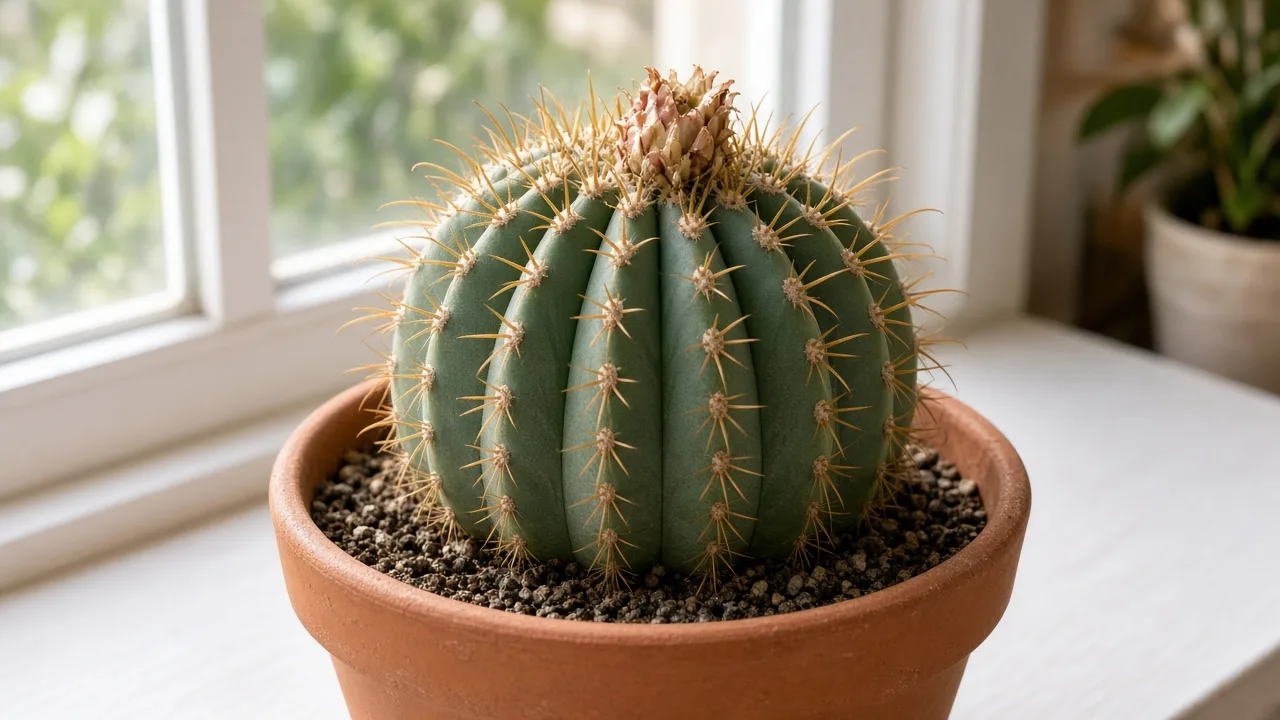
Distorted Leaves on Barrel Cactus: Causes, Checks & Fixes
This guide covers distorted leaves on Barrel Cactus. See also the general Distorted Leaves guide, watering, and light pages for this plant.
Distorted Leaves on Barrel Cactus: Causes, Checks & Fixes
Quick answer
Barrel cactus (Ferocactus) does not produce leaves—what growers call “distorted leaves” is almost always distorted crown growth: stunted flower buds, twisted new ribs, lopsided areole spines, or a crown that stops expanding symmetrically while the barrel below stays firm.
Sap feeders at the growing tip are the most common indoor trigger. Mealybugs and aphids weaken plants and slow growth by sucking sap from the only soft tissue this cactus offers—the crown and swelling buds. Wet mix softening the meristem and low light stretching ribs unevenly are the main non-pest causes.
For how twisted new growth develops on houseplants in general, see our distorted leaves guide. On barrel cactus, the diagnostic zone is the apical meristem where ribs converge—inspect there with magnification before you repot, fertilize, or soak the pot.
First step: photograph the crown in bright light, then dab any white cottony mealybugs or soft aphid clusters with a cotton swab dipped in 70% isopropyl alcohol—wear thick gloves and stabilize the pot first.
A firm ribbed base with distortion only at the top points to pests or light stress. A soft base on damp mix is a different emergency—see overwatering on barrel cactus or root rot before treating the crown as a pest problem.
When to use this page vs other Barrel Cactus guides
This page covers misshapen new growth at the crown and upper ribs—not every barrel symptom.
| Pattern | Read next |
|---|---|
| White cottony patches in areole crevices | Mealybugs |
| Soft pear-shaped insects at flower buds | Aphids |
| Hard brown bumps that do not move | Scale insects |
| Fine webbing and yellow stippling on ribs | Spider mites |
| Pale stretched body reaching toward glass | Leggy growth or not enough light |
| Soft base, translucent lower tissue, wet mix | Overwatering |
| Natural spiral ribs on a labeled F. herrerae | Species trait—not a care failure |
What distorted growth looks like on Barrel Cactus
Healthy Ferocactus keeps a symmetrical ribbed barrel with spine clusters spaced evenly down each rib. Distortion breaks that geometry at the growing tip first:
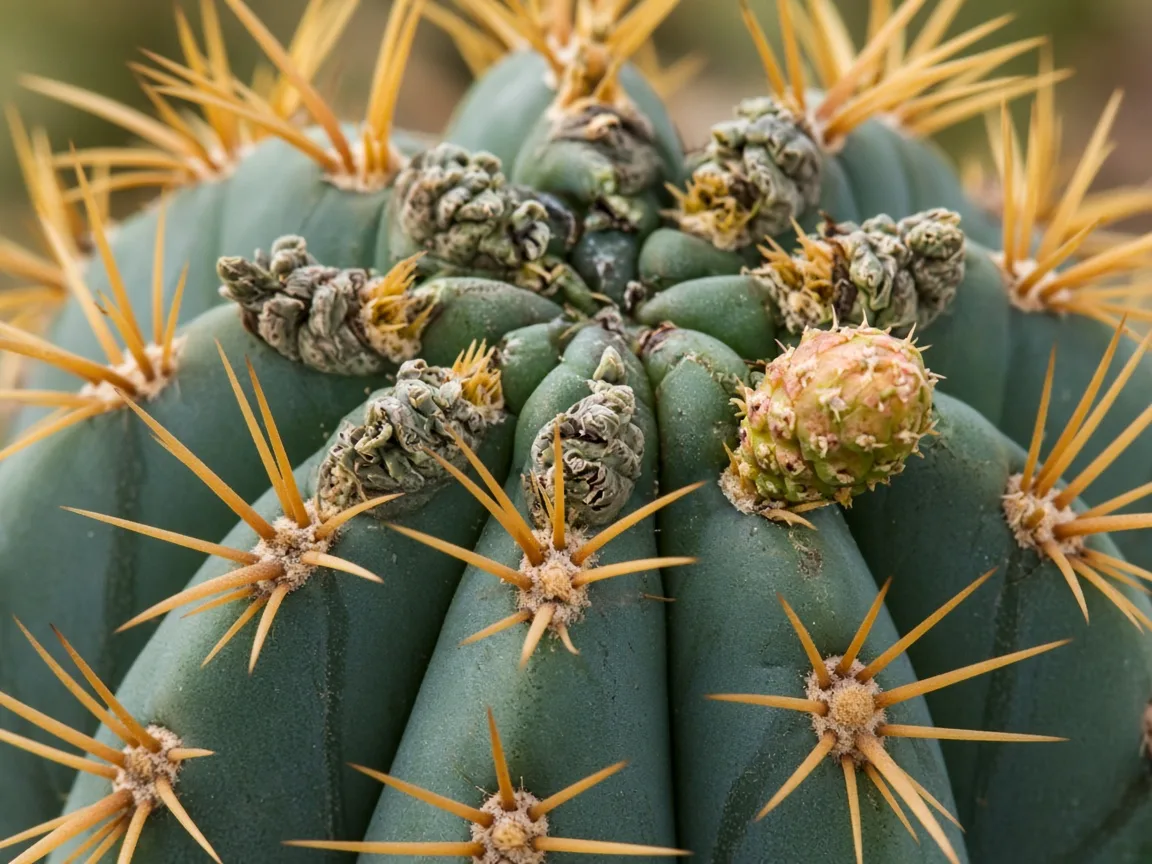
Stunted, uneven new areoles at the crown—compare with straight parallel ribs on the hardened barrel below.
Pest-related distortion:
- Crown stops expanding evenly; one side of the bloom ring looks sunken
- Flower buds abort, twist, or fail to open symmetrically
- New spine clusters emerge smaller on one rib than its neighbors
- Sticky honeydew or white wax on upper ribs and wool at the tip
- Black sooty mold on honeydew—not stem rot
Water and rot distortion:
- Crown tissue soft or sunken while ribs below feel firm
- New growth pale, thin, or lopsided after repeated soaking
- Follows persistent damp mix or water pooling in the growing tip
Light-related distortion:
- Ribs stretch taller on the window side; crown leans or grows unevenly
- Pale blue-green skin and wide gaps between spine clusters
- Often paired with slow growth and a lightweight dry pot
Mechanical meristem damage:
- Sudden twist or flat spot on one rib ring after impact or repotting knock
- Firm tissue; no pests; neighbors on the same ring look normal
NC State Extension notes that flowers bloom in a crown-like formation in late spring to early summer—distorted buds during that window are a strong clue that sap feeders or crown moisture stressed the meristem while tissue was still expanding.
Why the crown distorts before the barrel does
Ferocactus is built for desert rock: a single apical meristem adds rib height slowly, preferring full sun and bone-dry rest between soakings. The barrel below is hardened stem; only the crown and upper areoles stay metabolically active enough to show distortion.
Pests follow soft tissue. Mealybugs hide in crowns and protected stem areas on cactus and houseplants. By the time a rib hardens, feeding damage is locked in as twist or stunted spine rows. Aphids on swelling flower buds produce the same pattern with honeydew on upper ribs.
Wet crowns deform slow growers. Overwatering does not create “leaves”—it softens the meristem so the next rib ring emerges weak or asymmetric. That overlaps with fungus gnats and mold on soil when mix stays damp too long.
Low light etiolates ribs, not blades. Without enough direct sun, the plant reaches—ribs lengthen unevenly and the crown may look lopsided long before the base fails. Match exposure to the light guide before assuming pests.
Species twist is not damage. Ferocactus herrerae is described with a natural twisting growth habit—confirm your tag before treating genetic spiral as distortion from care stress.
Spine-safe crown inspection (the barrel-cactus check)
Unlike leafy houseplants, you cannot flip a blade to inspect undersides. Use this order:
- Brace the pot — Heavy terracotta and fishhook spines tip easily; wedge the pot before leaning in.
- Photograph the crown — Phone zoom beats face-level inspection near spines.
- Skewer the mix — Dry skewer through the pot per the watering guide; note whether base ribs are firm.
- Magnify the meristem — Hand lens on the topmost areoles and any wool or bud swellings.
- Honeydew wipe — Tissue on an upper rib; returning stickiness within a day means active sap feeders.
- Compare rib symmetry — Run eyes down parallel ribs; distortion limited to the top two areole rows supports crown-local causes.
Wear protective gloves when handling barrel cactus—curved spines puncture fabric. Kitchen tongs wrapped in paper towel can tilt small pots without gripping spines directly.
Confirm the cause: pests, rot, light, or species
| What you see | Base / mix | Pests visible | Likely cause |
|---|---|---|---|
| Warped buds, sticky upper ribs | Firm, dry skewer | Yes | Mealybugs or aphids |
| Hard brown bumps, no honeydew | Firm | Scale under wax | Scale insects |
| Fine webbing, yellow rib stippling | Firm, dry air | Mites on shake test | Spider mites |
| Soft crown, sour damp mix | Soft or wet | No | Overwatering / rot |
| Leaned stretch, pale skin, dry pot | Firm | No | Not enough light |
| Even spiral on tagged herrerae | Firm | No | Normal species form |
| One rib kink after knock | Firm | No | Mechanical meristem injury |
Confirmed diagnosis — Visible pests or honeydew at the crown plus asymmetric new areoles on a firm base. Suspected — Twist without insects may need two weeks of stable full sun and corrected watering before you declare the meristem saved.
First fix: alcohol dab at the crown, then reassess
Isolate the pot from other succulents. Dab visible mealybugs or aphids with 70% isopropyl alcohol on a cotton swab—the lowest-risk first fix for a spiny crown. Touch each insect and the wax trail beside it. UC IPM recommends dabbing houseplants with alcohol solutions for mealybugs, patch-testing first on a small areole if you are unsure about phytotoxicity on your species.
Do not soak the whole crown on the first visit. Pooled water at the meristem invites rot on a plant evolved for dry air. If alcohol clears insects but buds stay twisted, wait for the next growth flush—old distorted tissue will not reopen.
If pests persist after three dab cycles
- Follow the dedicated mealybug or aphid guides for repeat timing
- A brief targeted rinse of only the crown in morning sun can knock crawlers—tilt so water runs off ribs, never sits in the tip
- Avoid stacking repot, fertilizer, and pesticide the same week—you need to read which variable changed growth
If the base is soft or mix is wet
Stop watering, confirm drainage, and escalate to root rot protocol. Distorted crown on mushy tissue is not fixed by pest spray alone.
If light is the issue
Move to the brightest safe exposure—south or west window or supplemental grow light—and rotate the pot weekly so ribs develop evenly per the light guide. Do not jump from deep shade to scorching midday glass without acclimation—see sunburn if skin bleaches.
What not to do
- Do not fertilize a twisted crown before firming roots and confirming pests are gone—soft nitrogen-pushed tips attract mealybugs that prefer new growth.
- Do not carve the meristem to “correct” twist unless you are removing confirmed rot with sterile tools.
- Do not repot on day one unless roots are failing or mix is waterlogged—transplant shock on slow-growing Ferocactus can pause crown expansion for months.
- Do not mistake species spiral for emergency care on F. herrerae and similar cultivars.
Recovery timeline on slow rib growth
Barrel cactus adds height slowly. After pests are controlled and care is stable, expect one to two new areole rows—often 8–16 weeks in warm bright conditions—before you can judge whether distortion stopped. Warped flower buds from heavy feeding are lost for that bloom cycle; success is a symmetric next crown flush, not reopened old buds.
Improving signs: Firm crown, even new spine clusters, dry skewer between soakings, no fresh honeydew.
Worsening signs: Crown softening, twist spreading down multiple rib rings, black mush at the tip, or firm base suddenly shrinking—unpot and inspect roots immediately.
How to prevent distorted crown growth
Align care with desert biology: mineral soil, full sun, and rare deep watering so the meristem stays firm. Quarantine new cacti two weeks and inspect crowns during spring and summer active growth.
Manage ants on bench legs—they protect honeydew producers from lady beetles. Keep pots out of traffic paths; one meristem knock can distort every rib ring above it for the life of the plant.
Monthly crown photos in warm months build a baseline so you notice stunted buds before wax colonies spread across the bloom ring.