Low Humidity on Fairy Castle Cactus: Causes, Checks & Fixes
Quick answer
Fairy Castle Cactus (Acanthocereus tetragonus) evolved for hot, dry coastal scrub and handles normal room humidity without a humidifier. Pinched ribs, slow growth, or tan patches on turrets more often trace to underwatering, radiator placement, or spider mites in a hot micro-climate. First step: run a dry skewer through the full root zone—if the mix is dry and ribs look shrunken, soak once per the watering guide before you change humidity.
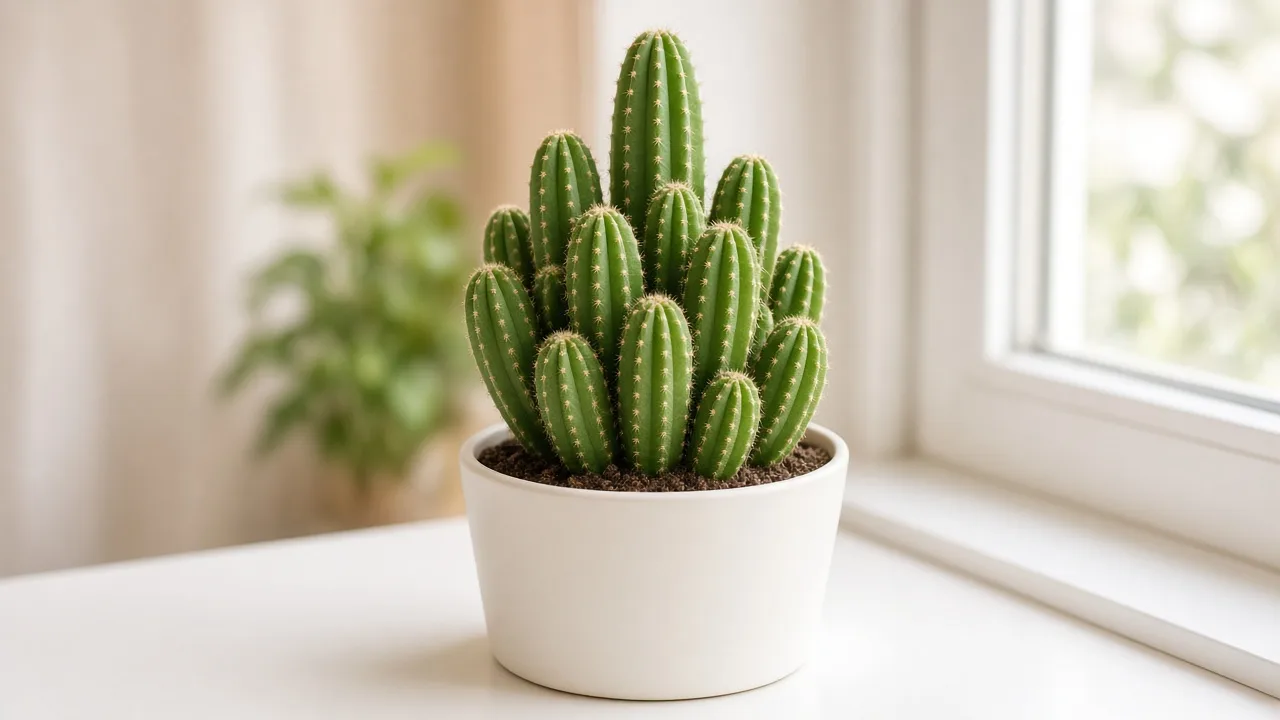
Low Humidity on Fairy Castle Cactus: Causes, Checks & Fixes
This guide covers low humidity on Fairy Castle Cactus. See also the general Low Humidity guide, watering, and light pages for this plant.
Low Humidity on Fairy Castle Cactus: Causes, Checks & Fixes
Quick answer
Fairy Castle Cactus (Acanthocereus tetragonus ‘Fairy Castle’) is a slow, monstrose columnar cactus built for hot, dry lowland habitats—not steamy rainforest air. Many cacti and succulents native to arid conditions adapt well to the low humidity in our homes and are strong houseplant candidates without humidifiers.
For how dry winter air damages thin leaves on tropical houseplants in general, see our low humidity hub. On Fairy Castle Cactus, “low humidity” is usually a red herring—pinched ribs, stalled turret tips, and tan stem patches more often trace to underwatering, a heating vent, or spider mites in a hot dry micro-climate.
First step: push a dry wooden skewer to the bottom of the pot. If it comes out clean and dry while ribs look shrunken, give one deep soak per the Fairy Castle Cactus watering guide before you buy a humidifier or mist the spines.
When to use this page vs other Fairy Castle Cactus guides
- Underwatering — use when ribs wrinkle, the pot feels light, and the skewer is dry throughout
- Overwatering or root rot — use when stem bases soften while mix stays wet
- Sunburn or scorched stems — use when tan or bleached patches appear after a sudden move to harsh sun
- Not enough light — use when pale, stretched turrets lean toward the window
- Spider mites — use when fine stippling or webbing appears on rib edges in the same hot dry corner
- Fairy Castle overview — species care, soil, and seasonal dry-down timing
What “low humidity damage” looks like on Fairy Castle turrets
This cactus does not carry broad leaves that crisp at the margins like a fern. Stress shows on ribbed columns and slow tip growth in the clustered “castle” shape.
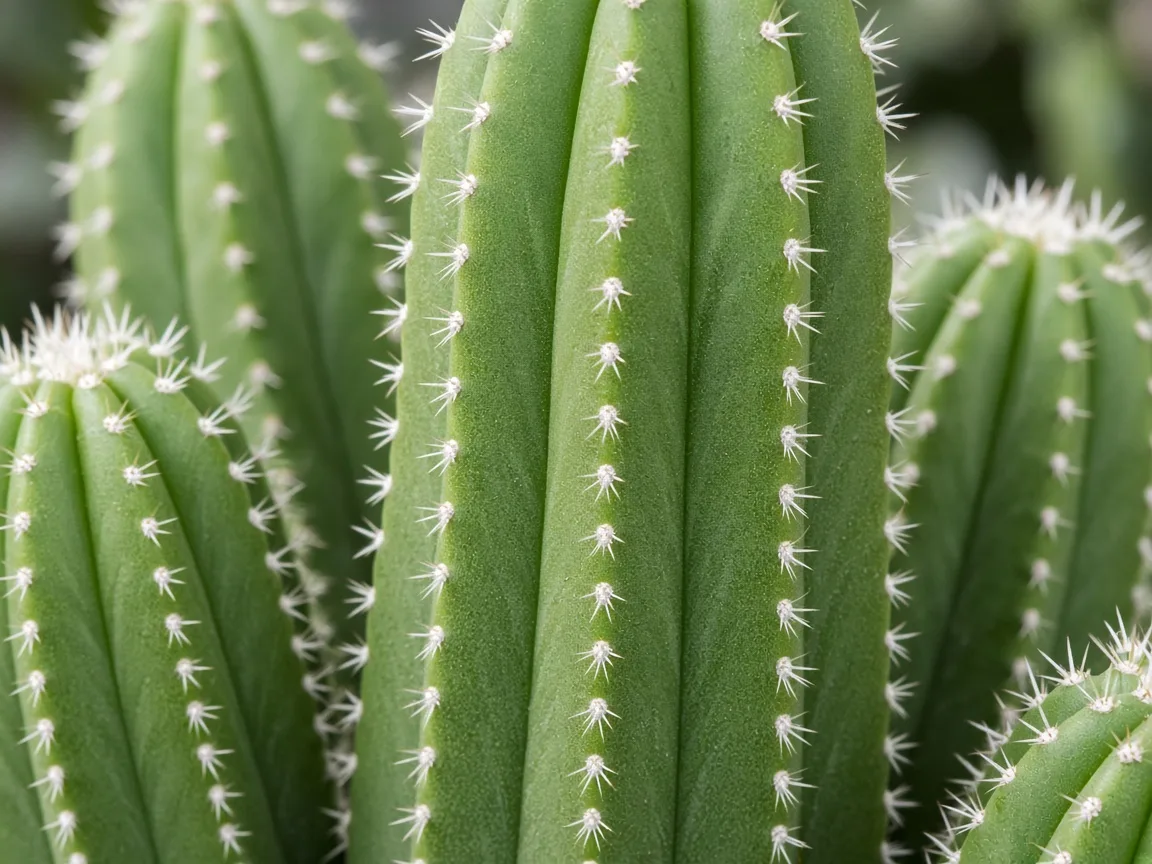
Low humidity on Fairy Castle Cactus—slightly shrunken ribs on otherwise firm green turrets; compare with plump tissue higher on the same stem.
When dry air is genuinely involved (uncommon indoors):
- Localized tan or papery patches on stem faces closest to a radiator, heat register, or fireplace mantel
- Slow, one-sided dulling on outer turrets while inner columns stay deep green
- Fine pale stippling along ribs in the same hot micro-climate—often spider mites riding dry air, not humidity tolerance limits
- Winter stall on tip growth when furnace air is both warm and dry, but stems stay firm and mix dries on schedule
Usually not low humidity:
- Ribs pinching inward on a light pot with dry mix deep down — drought; see underwatering
- Blackened, mushy bases on wet mineral mix — overwatering
- Bleached patches after a sudden shift to blasting south glass — sunburn
- Pale, skinny new turrets reaching sideways — weak light, not dry air
Rib shrink vs. room humidity: a cactus-only check
Leafy houseplants lose margin tissue when air is dry. Fairy Castle Cactus stores water in ribbed stems and can pull that tissue inward when roots run dry—growers often label the wrinkles “humidity” when the skewer says otherwise.
| What you see | Stem / pot clues | First suspicion |
|---|---|---|
| Ribs look sucked in, columns still firm | Light pot; skewer dry to the bottom | Underwatering |
| Tan patch on one stem face | Pot normal weight; vent within 3 ft | Heat blast or local dry air |
| Soft base, sour smell | Heavy pot; wet mix 7+ days | Overwatering |
| Stippling + silk on rib edges | Warm, dry sill | Spider mites |
| Whole cluster pale and stretched | Dim room; sparse new tips | Not enough light |
Acanthocereus tetragonus ‘Fairy Castle’ uses typical succulent soak-and-dry watering—allow the mix to dry completely between drinks. That rhythm matters more than misting when winter air is dry.
Why Fairy Castle Cactus rarely needs extra humidity
Wild A. tetragonus grows in coastal hammocks, sandy thickets, and hot lowland scrub where air is often warm and dry. The Fairy Castle cultivar is a slow monstrose clone of that species—same drought logic, smaller turrets, and even less leaf surface to lose moisture through.
Penn State Extension notes that while many houseplants want humidity above typical heated-home levels, some cacti and succulents are exceptions. PlantTalk Colorado adds that cacti and succulents from arid regions adapt well to low indoor humidity—the opposite of tropical foliage plants covered on the low humidity hub.
Pushing humidity higher around a cactus in mineral mix can backfire. Slower evaporation at the soil line keeps the base damp longer and invites the soft rot problems covered on overwatering and root rot. Dry air with sharp soil drainage is the safer side for this plant.
How to confirm the real cause
Work through these checks in order:
- Skewer dry-down — After your normal wait between waterings, push a dry skewer through the drainage hole or deep into the mix. If it emerges dusty dry while ribs look shrunken, drought is confirmed before humidity fixes.
- Pot weight — Lift the pot. A very light container with pinched ribs fits thirst; a heavy pot with firm ribs does not.
- Heat-path scan — Note distance to floor registers, radiators, and stove backsplash. Localized dry air beside heat sources stresses plants faster than a whole-room hygrometer reading suggests.
- Hygrometer at turret height — Readings in the 30–50% band match what most homes provide in winter. Below 25% for weeks can matter on tiny new divisions, but only after steps 1–3 are clean.
- Rib and areole inspection — Hold stems to the light. Pale dots and fine webbing mean mites—dry indoor air favors spider mite outbreaks on many houseplants, including cacti on sunny sills.
- Recent light changes — A move to stronger sun without acclimation causes tan scorch, not humidity loss. Cross-check the light guide if patches appeared right after relocation.
If stems stay firm, the skewer exits with slight moisture on your normal schedule, and no pests appear, your Fairy Castle is almost certainly fine in your current air.
First fix for Fairy Castle Cactus
Run the full-pot skewer test and relocate off the heat-register path as one placement correction—before misting, pebble trays, or a humidifier.
Slide the pot at least three feet from forced-air vents and radiator ledges. If the skewer was dry and ribs looked sucked in, water deeply once until a little runs from the drainage holes, then let the mix dry completely again per watering. Do not water again on a calendar while ribs still look plump.
If a hygrometer beside the turrets reads below 25% for days and stems stay firm on a correct dry-down schedule, a room humidifier can help humans and nearby tropical plants—but keep the cactus in gritty mix with airflow so the base does not sit in stagnant moist air. Pebble trays must hold pots above the water line so roots never soak; on Fairy Castle, skip trays entirely unless you are also correcting tropical neighbors.
If you find spider mites, treat the infestation—raising humidity will not clear mites and may worsen rot risk on stressed stems.
Lookalike symptoms to rule out
| Pattern | More likely cause than low humidity |
|---|---|
| Ribs deeply pinched, very light pot | Underwatering |
| Soft black base, wet mix | Overwatering |
| Bleached tan face after sun move | Sunburn |
| Thin pale towers leaning | Not enough light |
| White cottony clumps in axils | Mealybugs |
| Stippling with webbing | Spider mites |
Overwatering kills more Fairy Castle Cacti than dry winter air. When in doubt, wait an extra week and re-skewer before adding water or humidity.
Recovery timeline
Ribs pinched from thirst often re-plump within one to two weeks after one corrected soak and a return to full dry-down. Tan scorch or corky patches from heat or sun do not green up again—judge progress by firm new tip growth on turrets, not by old blemishes.
Expect visible new turret tips within several weeks in warm bright seasons; winter corrections may stall until days lengthen—avoid moving the pot weekly. Worsening signs: bases turning black on wet mix, columns keeling from root loss, or stippling spreading despite relocation—escalate to root rot or spider mites pages within the same week.
What not to do
Do not mist ribbed stems hoping to fix shrunken ribs—brief surface wetting does not change room RH and can leave spots on stems in dim winter light.
Do not run a humidifier beside a cactus in standard slow-draining mix; you risk the rot patterns on overwatering.
Do not water on a schedule because winter air feels dry—confirm dry-down with a skewer every time.
Do not fertilize stressed columns to “plump ribs”—salts on dry roots burn tissue. Wait until new growth looks normal for two weeks.
Handle spines carefully when inspecting ribs—the main household risk is physical injury from spines, not humidity-related foliage toxicity.
How to prevent dry-air misdiagnosis next winter
Keep Fairy Castle on a bright sill with airflow, not jammed above a floor register. Log skewer checks through heating season so drought is caught before ribs pinch. Scout rib edges monthly for mites when furnace air runs.
Match watering to season—winter dry air increases transpiration slightly, but mineral mix still dries slowly indoors; do not compensate with extra drinks unless the skewer confirms dryness.
For full species culture, see the Fairy Castle Cactus overview and all problem guides.
When to worry
Dry air alone rarely kills a healthy Fairy Castle quickly. Escalate within the same week if:
- Stem bases soften while mix smells sour — rot, not humidity
- Columns lean or keel after ribs were plump and soil was wet — root failure
- Stippling and webbing spread on multiple turrets — untreated mites
- Black spreading lesions appear after misting or a pebble tray — fungal entry on wet tissue
Firm green turrets, a stable skewer rhythm, and slow winter pause are normal. A humidifier running is not.
Conclusion
Low humidity is one of the least common problems on Fairy Castle Cactus. This coastal columnar cactus prefers ordinary to dry room air and adapts to the low humidity typical of heated homes better than tropical foliage plants. When ribs pinch or stems tan, diagnose skewer dry-down, vent placement, sun scorch, and pests before changing humidity. Keep soil gritty, skip the misting bottle, and judge recovery by firm new turret growth—not by whether a humidifier is running.