Drooping Leaves on Guava: Causes, Checks & First Fix
Quick answer
Before watering a drooping guava, check the root zone 3–5 cm below the surface. A dry root ball points to water stress; soil that stays wet or smells sour calls for a drainage and root check instead of another soak.
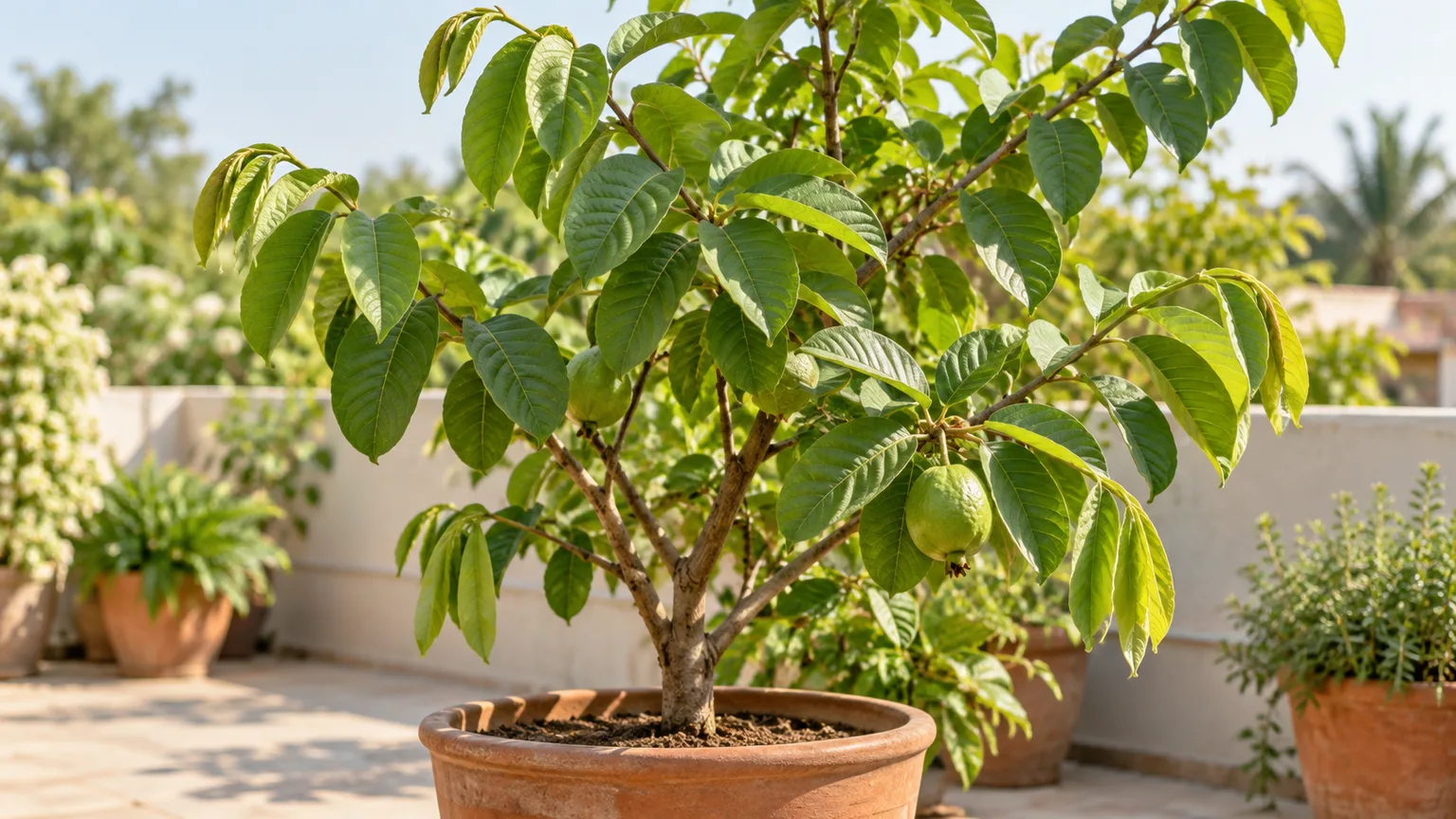
Drooping Leaves on Guava: Causes, Checks & Fixes
This guide covers drooping leaves on Guava. See also the general Drooping Leaves guide, watering, and light pages for this plant.
Drooping Leaves on Guava: Causes, Checks & Fixes
Quick answer
Before watering a drooping guava, check the root zone 3–5 cm below the surface. If that layer is dry and the pot feels light, water slowly until the full root ball is wet and excess water runs freely from the drainage holes. If the soil is damp or saturated, do not add more water yet; look for slow drainage, a sour smell, or a pot that remains heavy for days.
Guava can tolerate drought once established, but a young tree and its soft new shoots are less buffered than a mature tree in open ground. A container also holds less soil than a garden bed, so sun, wind, rain, pot size, and root growth can change how quickly it dries. The fastest useful next step is a moisture check, not a guessed watering schedule. For the general symptom mechanics, see our drooping-leaves guide; this page focuses on what the pattern means on Guava.
What drooping leaves look like on Guava
Guava has opposite, oblong leaves with a strong midrib and prominent side veins, as described in Epic Gardening’s Guava profile. Drooping may show as limp leaves hanging below their usual angle, soft new shoot tips that bend, or a canopy that looks less firm than it did the day before. Note whether the whole canopy changes together or one section declines while the rest stays firm; that distribution is more useful than the word “drooping” by itself.
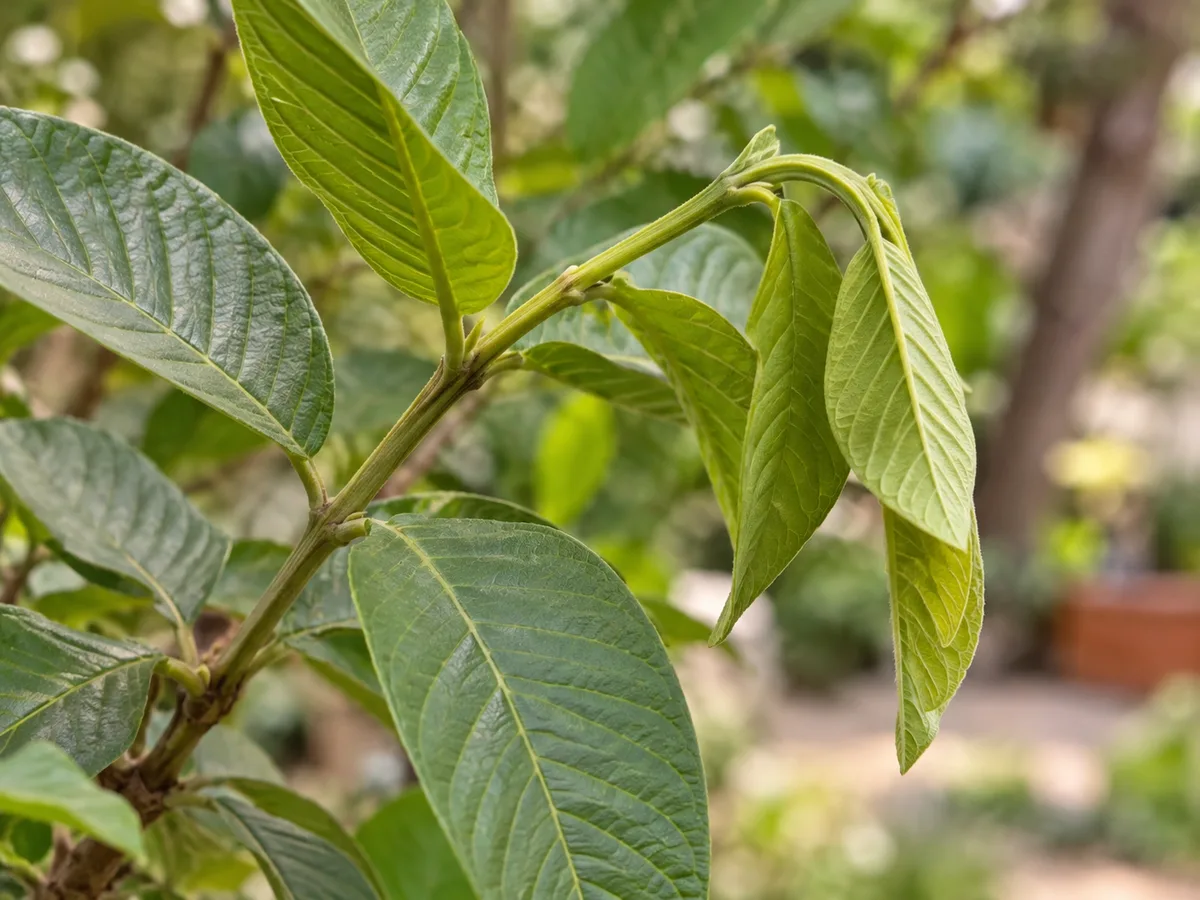
Soft guava leaves that remain limp beyond the hottest part of the day deserve a root-zone check.
A brief afternoon sag is different from a tree that remains limp the next morning. If a guava on a sunny terrace looks loose at the hottest hour but firms again later, record the timing and check the soil before changing its care. If the newest leaves wilt, several branches are involved, or the plant continues to decline in cooler hours, treat the symptom as persistent and inspect the root zone.
Why Guava gets drooping leaves
Drooping is a symptom, not a diagnosis. On Guava, start with whether water is unavailable to the roots, whether saturated soil has impaired those roots, or whether a temporary heat and wind load is greater than the tree can replace during the day.
Dry soil can wilt soft Guava growth
UF/IFAS notes that drought can wilt Guava’s immature, soft wood and leaves even though established trees tolerate prolonged dry periods and may slow or stop active vegetative growth; drought during flowering and fruit development can also reduce fruit set or size, while prolonged flooding can lead to leaf drop, chlorosis, and stem dieback. These Guava water-stress patterns are described in its Guava growing guide. “Drought-tolerant” does not mean that a young potted tree should be left to dry completely. The Guava overview explains how the tree’s full-sun, warm-weather growth changes its water demand.
A container exposed to a bright terrace, hot paving, or dry wind can lose moisture much faster than a sheltered pot. Check the mix rather than using droop as a watering signal: a dry layer below the surface, a lighter pot, and soft but otherwise green leaves fit short-term water stress better than wet soil and a sour smell.
Wet soil can leave Guava roots unable to supply leaves
If the root zone stays saturated, roots lose access to the air they need and may die; damaged roots then cannot supply water normally, so above-ground wilt can occur even while the soil is wet. The Missouri Botanical Garden’s overwatering guidance explains why waterlogged roots can cause loss of vigor and why a dry surface does not tell you what is happening deeper down.
In a pot, blocked holes, a cachepot holding runoff, dense mix, or repeated watering before the root ball dries can reproduce that wet-root problem without a flood. For the mix and drainage side of this diagnosis, use the Guava soil guide.
Full sun and hot wind can make a temporary midday slump
Guava is a warm-climate fruit tree that is normally grown in full sun, not a shade-loving indoor foliage plant. Gardening Know How’s container-growing guide recommends full sun and adequate drainage for a potted Guava. On a hot, dry, windy afternoon, leaf water loss can briefly outpace uptake; UF/IFAS notes that hot, dry wind during a leaf flush can distort or damage tender new leaves and that saline soil or water can brown leaf margins and cause leaf drop (Guava stress profile). A young tree recently moved from shade to exposed sun is more vulnerable than one already acclimated to the site.
Missouri Botanical Garden notes that plants often wilt in hot sun and may recover later as the sun moves (overwatering and wilt guidance). If Guava firms up by evening or the next cool morning and the root zone is not dry, do not respond with an extra soak. Instead, watch the next day’s pattern and check whether the new leaves are scorched, distorted, or simply relaxed during peak heat. If the exposure itself changed, the Guava light guide covers acclimation and reflected terrace heat.
Guava wilt disease is a later concern, not the first guess
Guava wilt is a recognized disease of the species, but a drooping leaf alone cannot distinguish it from drought, a waterlogged root ball, cold injury, or ordinary heat load. Purdue’s guava profile documents fungal wilt associated with gradual decline and tree death in some growing regions. Take the risk more seriously if decline continues through cooler parts of the day despite an appropriate moisture level, then spreads to yellowing, leaf loss, or dead branches.
Do not treat a tree with a fungicide just because it is limp. If the decline is progressive, especially on an in-ground tree or several Guavas in the same bed, contact a local extension service or plant clinic for a diagnosis. The underlying cause matters: a watering correction will not cure a pathogen, and a disease treatment will not repair roots that are suffocating in waterlogged soil.
Check these signs before you change care
Use this order so the first observation can narrow the cause instead of triggering several unnecessary treatments:
- Record the timing and spread. Is the droop limited to the hottest afternoon, present first thing in the morning, or advancing from one branch? Note whether it began after a dry spell, several rainy days, a move into stronger sun, or a cold night.
- Check below the surface. Feel or probe 3–5 cm down in a container; the top crust can dry while the root ball remains wet. For an in-ground Guava, check soil near the outer canopy rather than digging against the trunk.
- Compare pot weight and drainage. A very light pot plus dry mix supports thirst. A heavy pot that stays wet, water in the saucer, or a sour smell suggests poor aeration. Check that every drainage hole is open before deciding to repot.
- Look at the affected tissue. Soft green new leaves after a dry spell differ from crispy margins after heat or salt stress. Inspect the undersides of leaves and young stems for visible pests, sticky residue, or fresh feeding damage, but do not use an insecticide when no pest is present.
- Inspect roots only when the pattern justifies it. If a container stays wet for days and the Guava continues to decline, slide the root ball out carefully. Healthy roots should be firm; widespread dark, soft roots or a foul smell support root damage, but root color varies with mix and is not a diagnosis on its own.
The check is most useful when you compare the plant with its own recent conditions. For example, rain can keep an outdoor pot wet even while warm sun makes the leaves look thirsty, and an established in-ground tree may show a different response from a young container tree. If the signs point to a routine moisture mismatch, follow the Guava watering guide for a seasonal check rather than copying a weekly schedule.
First fix: check Guava’s root-zone moisture
First, check whether the mix 3–5 cm below the surface is dry. If it is dry, water the Guava slowly and thoroughly until water runs from the drainage holes, then let the excess drain away. If the mix is moist or wet, do not water it again; clear any standing runoff and correct the drainage problem before considering another soak.
A slow soak is more useful than several small splashes that wet only the top of a root-bound pot. If water runs down the sides while the center stays dry, pause briefly and water again in stages so the root ball can absorb it. Do not keep repeating the soak once the mix is evenly moist. A tree with healthy roots may regain some firmness after the root zone is rehydrated, but a wilted canopy that stays limp in wet soil needs root and drainage diagnosis rather than a larger dose of water.
For a young Guava planted recently, do not let the original root ball dry out completely while the surrounding garden soil is still damp; nursery mix and native ground can dry at different rates. For an established tree, irrigate across the active root area rather than pouring water directly against the trunk. Avoid changing the light, pruning the canopy, applying fertilizer, and repotting at the same time: each adds stress and makes it harder to learn whether the moisture correction worked.
Why container Guava needs its own moisture check
A container Guava has a bounded root ball, less soil volume, and no access to moisture beyond the pot. Epic Gardening describes Guava as shallow-rooted and advises checking soil beneath the surface before watering. Those traits explain why the same sunny site can be manageable for an in-ground tree but demanding for a small pot.
If the pot dries very quickly despite correct watering, check whether roots have filled the container or whether water is bypassing the root ball. Roots circling densely, emerging from several drainage holes, or a pot that dries within a day are reasons to compare the plant with the Guava repotting guide. Repot only when the root pattern or failing mix supports it, preferably as warm growth begins; a larger pot is not the first response to drooping by itself.
For a Guava that is newly outdoors, distinguish strong light from sudden exposure. Full sun suits an acclimated tree, but foliage grown under shade net may not be ready for the sharpest afternoon sun and dry wind. Step exposure up gradually and protect a small container from reflected heat while retaining the light Guava needs. Use the Guava light guide if the problem followed a move or seasonal change.
Recovery: follow the next Guava growth, not the old leaves
A short-lived afternoon slump that lifts as temperatures ease is different from a root problem that leaves the tree limp through the next cool morning. After correcting a dry root ball, check the soil again before the next watering. If the Guava begins holding its newer leaves and the droop stops spreading, keep the routine steady rather than adding fertilizer to force a faster response.
Leaves that are badly scorched, yellowed, or dried will not become unmarked again. Those leaves may remain loose or drop while the tree redirects growth; the more useful sign is whether the stems remain firm and the next flush opens normally. Assess the next flush after its leaves have expanded rather than judging recovery from a tender shoot on its first day.
Wet-root decline takes longer to assess because restoring drainage does not replace roots that have already died. If a container is persistently saturated, correct the source of standing water and allow the mix to dry at a reasonable pace; do not strip healthy roots or repot into a much larger pot without evidence. Recheck the canopy over the following weeks. Continued yellowing, branch dieback, or a sour root ball despite corrected drainage warrants a local plant-health diagnosis.
Lookalike symptoms and when to escalate
| What you see on Guava | More consistent with | Next check |
|---|---|---|
| Leaves sag mainly during the hottest hours, then lift later; soil is moist below the surface | Temporary heat load | Track the next cool morning before watering again. |
| Soft leaves and shoot tips follow a dry period; the pot is light or soil is dry below the surface | Water stress | Give one thorough soak, then reassess the root ball before the next watering. |
| Droop persists while soil is wet; yellowing, slow growth, or sour-smelling mix develops | Poor drainage or root injury | Stop routine watering and inspect drainage; check roots only if decline continues. |
| One part of the tree keeps declining, or droop progresses to leaf loss and branch dieback | Possible disease or local stem/root injury | Photograph the pattern and contact an extension service or plant clinic. |
If drooping or browned leaf margins follow a change in irrigation water or fertilizer, compare the mix and water-quality guidance in the Guava soil guide before treating the problem as simple thirst. A blackened or broken branch, cold damage after an unusual chill, or visible pests calls for a different diagnosis; persistent whole-tree collapse is urgent because Guava wilt disease can be difficult to distinguish from root stress by appearance alone. If drooping appears with yellowing, pests, or leaf spots, compare it with the broader Guava problems hub before treating a cause.
Prevent drooping leaves on Guava
- Match checks to weather and pot size. Check more often during hot, dry, windy periods and less often during cool or rainy weather. Water only when the Guava root zone has begun to dry; do not water simply because the leaves dipped at noon.
- Keep container drainage dependable. Use a free-draining mix, open holes, and a saucer that is emptied after watering. A sunny Guava pot should drain after a soak instead of sitting in runoff. The Guava soil guide covers the mix and drainage decisions in more detail.
- Give the tree strong light gradually. Guava is a full-sun fruit tree, but move shade-grown foliage into stronger sun over several days. Wind shelter can protect tender flushes from drying, hot gusts without turning the tree into a low-light indoor plant.
- Adjust for establishment and fruiting. A newly planted tree and a container tree need closer root-zone checks than a mature in-ground tree. Avoid a prolonged dry spell while flowers set and fruit develops.
- Reassess after seasonal changes. Monsoon rain, winter slowdown, a new pot, or a move onto a hotter balcony alters how quickly the root ball dries. Keep a short note of watering and weather for two weeks if drooping recurs, then adjust one condition at a time.
When to use this page vs other Guava guides
Use this page when Guava leaves or soft shoots droop and you need to distinguish dry soil, saturated roots, heat, and progressive decline. For the whole-tree care baseline, start with the Guava overview. When the moisture check points to irrigation timing, compare it with the Guava watering guide; use the Guava light guide when the symptom followed sun or wind exposure. If the mix stays wet or drainage is questionable, continue with the Guava soil guide rather than adding more water.
Related Guava guides
- Guava care overview — use for the tree’s overall light, warmth, and growing context.
- Guava watering guide — use when the soil-depth check or watering history points to drought or excess moisture.
- Guava soil guide — use when runoff, compaction, or slow dry-down is the main concern.
- Guava light guide — use when drooping began after a move into stronger sun or hot wind.
- Guava repotting guide — use only when a container is root-filled, unstable, or drying unusually fast.
Related tool
Use the Plant Problem Diagnosis Tool to organize the moisture, light, and symptom clues for Guava before making a second change.