Lettuce Propagation: Sowing, Seedlings and Seed Saving
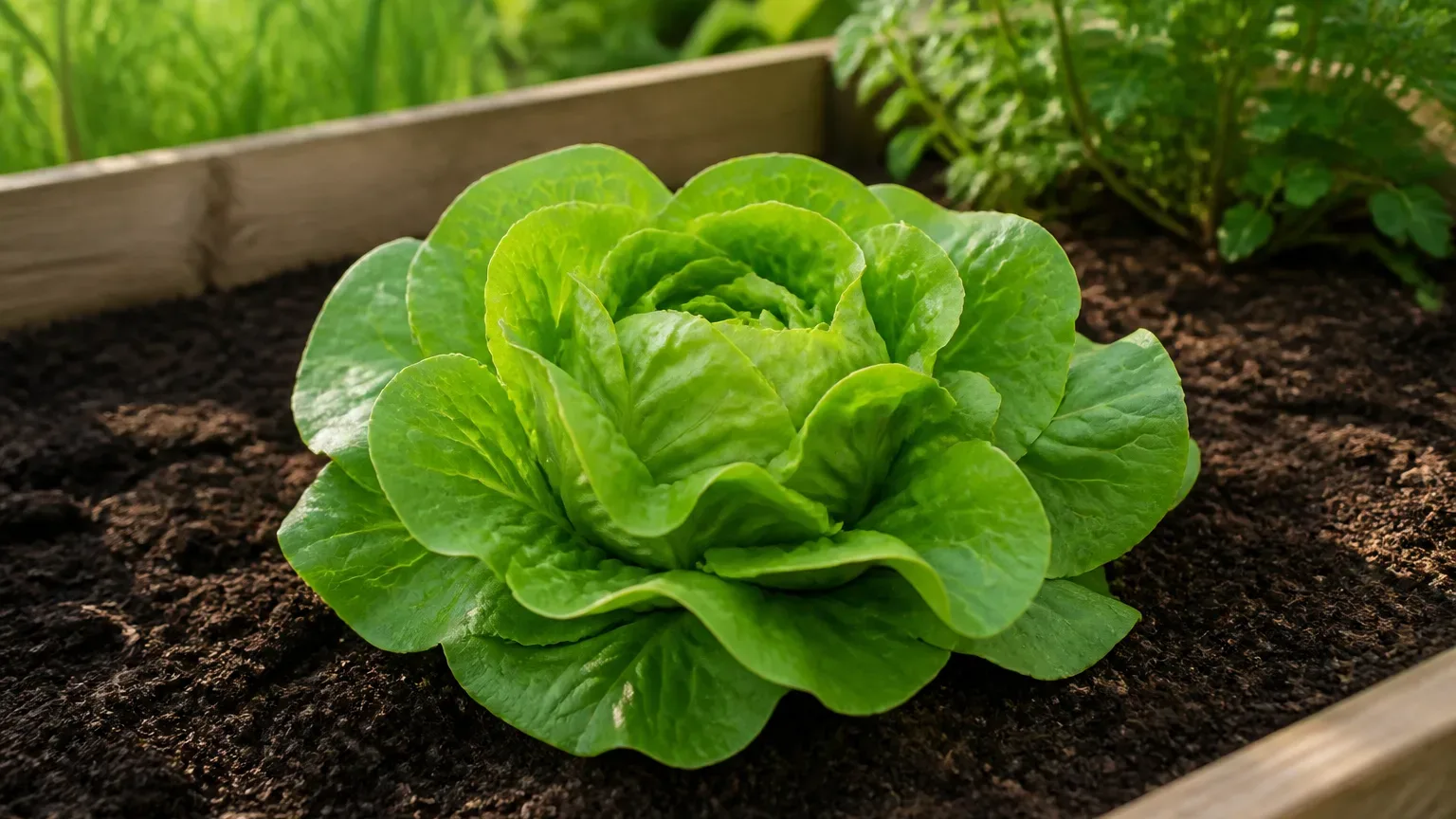
Lettuce Propagation: Sowing, Seedlings and Seed Saving
Lettuce Propagation: Sowing, Seedlings and Seed Saving
Lettuce is propagated most reliably from seed. The seed is small, the crop grows quickly, and one sowing often matures all at once, so success depends less on elaborate equipment than on cool timing, shallow sowing, even moisture, and repeated small batches. In warm Indian lowlands, the first question is not “Which tray should I buy?” but “Can I give the seed and seedlings a genuinely cool growing window?”
This guide covers Lactuca sativa from sowing through transplanting, then explains the separate job of allowing selected plants to flower for seed. For the crop’s wider growth habit and cultivar groups, begin with the Lettuce overview.
Lettuce propagation: the quick answer
Sow fresh lettuce seed thinly on moist, fine-textured seed mix or prepared garden soil, cover it only lightly, and keep the surface damp without sealing it into stagnant humidity. Direct sowing avoids root disturbance; modules give better control over heat, rain, and pests. Move module-grown seedlings once they are sturdy and have several true leaves, before roots become crowded.
For a steady kitchen supply, sow a short row or a few cells every about two weeks while conditions remain suitable. The RHS recommends small, regular sowings rather than one large batch, especially for heading types that must be harvested within a narrower window.
Why seed is the best propagation method
Lettuce is a cool-season annual: it germinates, forms a leaf rosette or head, flowers, sets seed, and finishes its life cycle. It does not normally produce offsets, runners, or durable divisions. A cut lettuce base may push a few leaves using stored reserves, but that is regrowth from an already harvested crown, not a dependable way to produce a vigorous, full new crop.
Seed also preserves the practical differences among looseleaf, butterhead, romaine, and crisphead cultivars. The NC State Extension profile for Lactuca sativa documents these crop forms and their differing sizes and maturity patterns. Read the packet rather than applying one spacing or harvest date to every lettuce.
Choose the sowing window before the container
Lettuce propagation works best when the whole seedling phase can remain cool. A few cooler hours at sowing cannot compensate for persistently hot days and nights after emergence. Hot, dry weather can both inhibit germination and push established plants toward premature flowering, so shade is a useful heat-management tool, not permission to sow through any season.
Use local conditions rather than imported calendar months. In a mild hill climate, sowing may be possible across a long season; in a hot lowland city, autumn and winter are usually the dependable windows. If an unseasonal warm spell arrives, delay a large sowing, test a few seeds first, or germinate a small module tray in the coolest bright place available.
Timing lettuce sowing in India and other warm climates
In much of the Indian plains, start when daytime heat is easing and nights are becoming reliably cooler. Continue small sowings through the cool season, then stop when germination becomes erratic or young plants rush upward instead of building a compact rosette. High-elevation and genuinely mild regions can use a wider window, while very warm coastal locations may have only a brief practical season.
Choose cultivars described for the intended season, but treat “heat tolerant” as relative. USDA research still describes lettuce as a cool-season crop and evaluates heat tolerance as a cultivar-dependent breeding trait, not immunity to warmth (USDA Agricultural Research Service).
Direct sowing versus starting in modules
Direct sowing is simplest when the bed or final container is already well drained, protected from pounding rain, and easy to keep evenly moist. It avoids transplant shock and works especially well for looseleaf lettuce that will be thinned or harvested young. Its weaknesses are less control over surface temperature, washout, soil crusting, slugs, birds, and uneven spacing.
Modules are useful when outdoor soil is too warm, rain is intense, or you need to protect a small quantity of seed. Sow one or two seeds per small cell and thin to the stronger seedling rather than keeping a congested clump. Individual cells let you move each plug with less root disturbance, a benefit also noted in the RHS module guidance.
Do not raise lettuce in a tiny cell for weeks merely because the weather outside remains unsuitable. A root-bound, stretched seedling does not regain lost time easily. If the season is still too hot when plugs are ready, restarting a smaller batch later is often better than holding stressed plants indefinitely.
How to sow lettuce seed step by step
Fill a tray, modules, or final container with pre-moistened medium and level the surface without compressing it hard. Scatter seed thinly or place one to two seeds per cell. Cover lightly, label the cultivar and date, then water with a fine rose or from below so the seed is not displaced.
Keep the surface evenly moist and check it at least daily in a breezy or warm location. Once seedlings emerge, give them bright light and airflow; remove any humidity cover rather than maintaining greenhouse-like wetness around the stems. Thin crowded seedlings early, keeping the strongest correctly spaced plants.
Sowing depth and seed-starting medium
Outdoors, the RHS advises sowing lettuce about 1 cm deep, while indoor seed trays use a thin sowing in moist seed compost. In practice, use the packet’s direction for the named cultivar and avoid burying these small seeds under a thick, heavy layer. A light covering that stays moist is safer than a deep hole that remains airless.
Use clean, fine, free-draining seed-starting medium rather than dense garden soil in a tray. The medium should hold enough water for the shallow seed zone but release surplus through open drainage holes. For the crop’s final root-zone requirements after establishment, see the Lettuce soil guide.
Moisture, light, and the first true leaves
Before emergence, moisture belongs in the medium, not as standing water in a saucer. After emergence, bright light supports compact seedlings, while prolonged weak light produces thin stems that are easily confused with disease collapse. The Lettuce light guide explains how to balance useful sun with afternoon heat.
Cotyledons are the first simple seed leaves. Wait for true leaves with the characteristic shape of the cultivar before judging the seedling’s form, then thin or transplant while the plug still holds together. Keep the medium damp during this stage but do not water by a fixed daily volume; use the checks in the Lettuce watering guide.
Germination temperature and hot-weather failure
Lettuce seed can remain sound yet fail to sprout when the seed zone is too warm. The RHS specifically warns that high summer temperatures prevent some cultivars from germinating and suggests evening sowing, cool water, and temporary shade during hot spells. This response varies with cultivar, seed age, and temperature history, so one rigid “perfect” number is less useful than watching the actual seed-zone conditions.
If a batch fails, do not keep flooding it. Move the next small test sowing to a cooler location, use fresh seed, and compare emergence before committing the whole packet. Lettuce germination is strongly shaped by both temperature and light physiology, a relationship established in plant-science research on lettuce seed (Plant Physiology archive).
Thin or transplant seedlings without stalling them
Thin direct-sown lettuce before leaves overlap heavily. Final spacing depends on whether you want baby leaves, open looseleaf rosettes, or full hearts; heading cultivars need substantially more room than a cut-and-come-again patch. Cut unwanted seedlings at the surface if pulling them would disturb the roots you intend to keep.
For modules, water the tray first, lift the plug by its root ball, and plant at the same depth it was growing. Do not bury the central growing point. Transplant in a cool part of the day, water the root zone in, and shelter plants briefly from harsh afternoon sun or drying wind. Lettuce is usually moved once into its final place, so the Lettuce repotting guide focuses on plugs and final containers rather than repeated pot upgrades.
Succession sowing for a continuous crop
Succession sowing means starting several small batches instead of one large batch. A practical baseline is a short row or a few modules every fortnight during suitable weather, which matches the RHS schedule for continuous harvests. Adjust the interval: cool, slow weather may justify a slightly longer gap, while a household harvesting baby leaves can use smaller but more frequent batches.
Stop sowing when the season is no longer suitable. “Every two weeks” is not a command to waste seed during extreme heat. Restart when cooler conditions return, and overlap the final old batch with the first new one so a single failed tray does not create a long harvest gap.
Prevent damping-off and seedling collapse
Damping-off is not the same as a dry, wilted seedling. Affected lettuce may rot before emergence or collapse at a narrowed, discoloured stem base. The Connecticut Agricultural Experiment Station identifies Rhizoctonia, Pythium, and Fusarium among organisms associated with lettuce seed decay and damping-off, and recommends clean pots and sterile potting medium (Connecticut CAES lettuce disease guide).
Reduce risk by cleaning reusable trays, starting with fresh medium, sowing thinly, providing airflow after emergence, and letting excess water drain. Do not attempt to rescue a contaminated tray by transplanting apparently healthy seedlings into the next batch; discard collapsed material and the affected medium, clean the container, and begin again. Avoid home-mixed fungicide remedies: product registrations and edible-crop labels vary by place.
Bolting for harvest versus bolting for seed
For leaf production, bolting is failure: the stem elongates, the plant diverts energy toward flowers, and the leaves become progressively bitter. Lettuce is an annual responsive to day length, and stress can advance flowering; the RHS bolting guide identifies lettuce among long-day annual crops. Research on leaf lettuce also supports high temperature as a major environmental driver of bolting (Frontiers in Plant Science).
For seed saving, however, flowering is intentional. Choose healthy, true-to-type plants before they bolt and leave them unharvested. Do not save only from the earliest plant to bolt in a leaf crop unless early bolting is the trait you want to perpetuate; selection starts with which plants you allow to reproduce.
How to save lettuce seed
Reserve more space than a harvest plant needs because the flowering stem grows taller and branches. Support it if wind or monsoon showers threaten to lodge it, and keep foliage as dry and well ventilated as practical. The seed heads do not all mature on the same day, so inspect repeatedly and collect from dry, mature heads before weather scatters them.
Rub or shake the dry heads into a clean container, remove as much chaff as practical, and let the seed finish drying in shade with airflow. Store only fully dry seed in a labelled, moisture-resistant container in a cool, dark place. Record cultivar and harvest year; the RHS cautions that lettuce seed does not store especially well and recommends fresh seed for more reliable germination.
Open-pollinated, hybrid, and cultivar limits
Save seed when you can identify the cultivar and understand how it was bred. Open-pollinated cultivars are the practical choice for retaining recognisable parental traits, while seed collected from an F1 hybrid may be viable but can segregate into plants unlike the purchased parent. Oregon State Extension makes this distinction explicit in its seed-saving guide.
Even open-pollinated seed is not automatically identical. Unplanned crossing, accidental mixing, and saving from too few or unrepresentative plants can shift a strain over time. If preserving a named cultivar matters, flower only one lettuce cultivar at a time or follow a seed-saving protocol designed for your space; do not rely on an invented universal isolation distance. For casual home growing, label saved seed as an experiment and expect some variation.
When to use this page vs other Lettuce guides
Use this page when you are choosing seed, sowing a batch, managing germination, transplanting plugs, planning succession, or saving seed. Use the Lettuce overview for cultivar forms and whole-crop expectations, and the light guide when seedlings stretch or outdoor heat makes site choice difficult.
Once seedlings are established, switch to the watering guide for moisture checks and the soil guide for the final root zone. The repotting guide is specifically useful for deciding when a plug is ready for its one move into a final container or bed.
Related Lettuce guides
- Lettuce overview — identify the crop type and match expectations to looseleaf, butterhead, romaine, or crisphead growth.
- Lettuce light guide — prevent stretched indoor seedlings while managing heat outdoors.
- Lettuce watering guide — keep the shallow root zone moist without saturating trays or beds.
- Lettuce soil guide — build a moisture-retentive but freely drained final medium.
- Lettuce fertilizer guide — feed established leafy growth without overloading young roots.
- Lettuce repotting guide — move modules once and minimise root disturbance.
Conclusion
Reliable lettuce propagation is a sequence: sow fresh seed shallowly in a cool window, keep the medium evenly moist and aerated, thin early, transplant young plugs once, and repeat small batches only while the season remains suitable. When seedlings fail, diagnose heat, saturation, weak light, and damping-off separately instead of responding to every problem with more water.
Seed saving is a different goal from leaf harvest. Let carefully selected plants bolt, collect only mature dry seed, and recognise that F1 hybrids and uncontrolled cultivar mixing may not reproduce the parent faithfully. That distinction turns bolting from an unwanted end to the crop into a deliberate start for the next generation.