Yellow Leaves on Lettuce: Causes, Checks & Fixes
Quick answer
Yellow leaves on lettuce usually start on the oldest outer leaves and point to nitrogen hunger, wet or dry shallow roots, or heat pushing the plant toward bolting. First step: push a finger 1–2 cm into the soil beside the rosette and look at the heart leaves — dry soil gets one deep soil-level watering, wet soil gets a pause on watering, and spotted leaves with pale fuzz underneath need airflow and dry foliage instead.
Yellow Leaves on Lettuce: Causes, Checks & Fixes
This guide covers yellow leaves on Lettuce. See also the general Yellow Leaves guide, watering, and light pages for this plant.
Yellow Leaves on Lettuce: Causes, Checks & Fixes
Quick answer
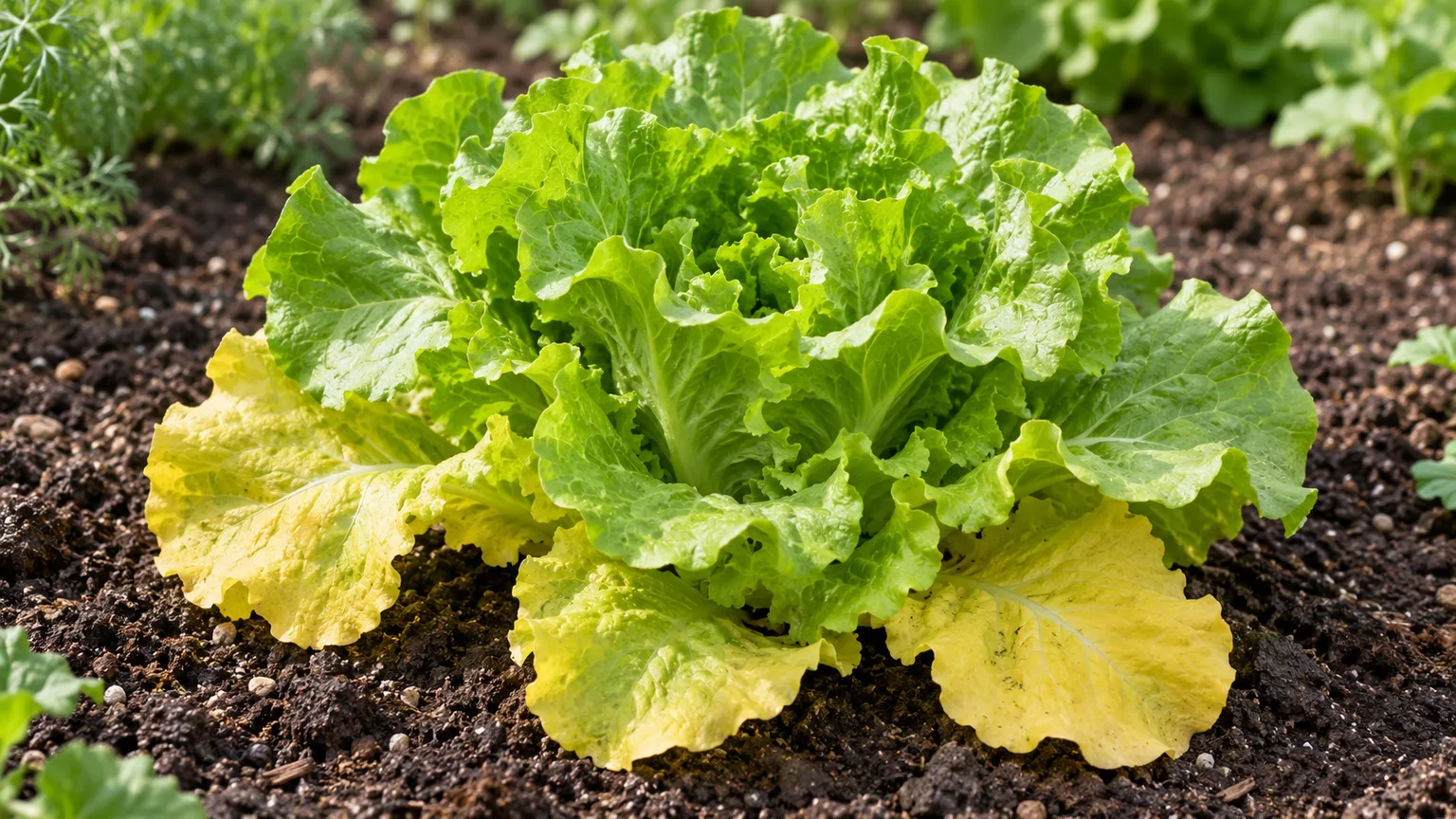
Yellow leaves on lettuce (Lactuca sativa, lettuce overview) almost always start on the oldest outer leaves while the heart stays green a while longer. That outside-in pattern fits a fast leaf crop: the plant pulls mobile nutrients like nitrogen from old leaves to feed new ones, and the shallow root system feels every wet-dry swing in the top centimetres of soil.
First fix: push a finger 1–2 cm into the soil beside the rosette and part the leaves to look at the heart. Dry and crumbly means one deep watering at soil level, done for the day. Soggy or sour-smelling means no water until the top layer begins to dry, plus a drainage check. Yellow patches with pale fuzz on the leaf undersides mean keep foliage dry and open up airflow instead of feeding or spraying anything yet.
When to use this page vs other Lettuce guides
| Pattern | Meaning | Read next |
|---|---|---|
| Uniform pale outer leaves, heart still growing | Nitrogen hunger or moisture swing | Stay here; feeding section below |
| Whole rosette limp on wet soil, soft crown | Too much water | Overwatering or root rot if the base softens |
| Limp leaves that stay limp after the day cools, dry soil | Too little water | Underwatering |
| Centre elongating upward, leaves bitter | Bolting in heat or long days | Lettuce overview for succession timing |
| Yellow angular patches, pale fuzz underneath | Downy mildew | Stay here; disease section below |
| Curled distorted heart leaves, sticky residue | Aphids feeding in the heart | Aphids |
| Seedlings yellowing then toppling at soil line | Damping-off | Lettuce overview for fresh-sow guidance |
| Pale stretched plants in dim spot | Weak light | Not enough light and leggy growth |
What yellow leaves looks like on Lettuce
On a healthy plant the rosette or head is an even green from outer wrapper leaves to the heart. Yellowing breaks that uniformity in recognisable ways, and each pattern narrows the cause before you touch water or fertiliser.
- Oldest outer leaves pale first — the lowest wrapper leaves fade to an even yellow-green while inner leaves stay green. Classic nitrogen hunger or the plant cannibalising old leaves during moisture or heat stress.
- Whole-plant wash-out on wet soil — many leaves go limp and pale together, lower ones first, often with slowed growth. Roots are suffocating rather than feeding.
- Yellow angular patches between veins — blocky yellow areas bounded by leaf veins, sometimes turning brown, mostly on older leaves. Yellow angular spots on upper surfaces mark downy mildew.
- Pale fuzz on leaf undersides — flip a spotted leaf: a fluffy growth develops on lower leaf surfaces beneath the yellow patches when mildew is active.
- Heart leaves curl and distort — the centre puckers, twists, or stalls while outer leaves yellow. Aphids cluster on the undersides of leaves and suck the youngest tissue first.
- Centre stretches upward, flavour turns bitter — the rosette elongates into a stalk, lower leaves yellow, and eating quality collapses. That is bolting, not a deficiency.
- Seedling stems pinch at the soil line — young plants yellow, then collapse. Damping-off in wet seedling mix, a serious disease of young seedlings rather than a feeding problem.
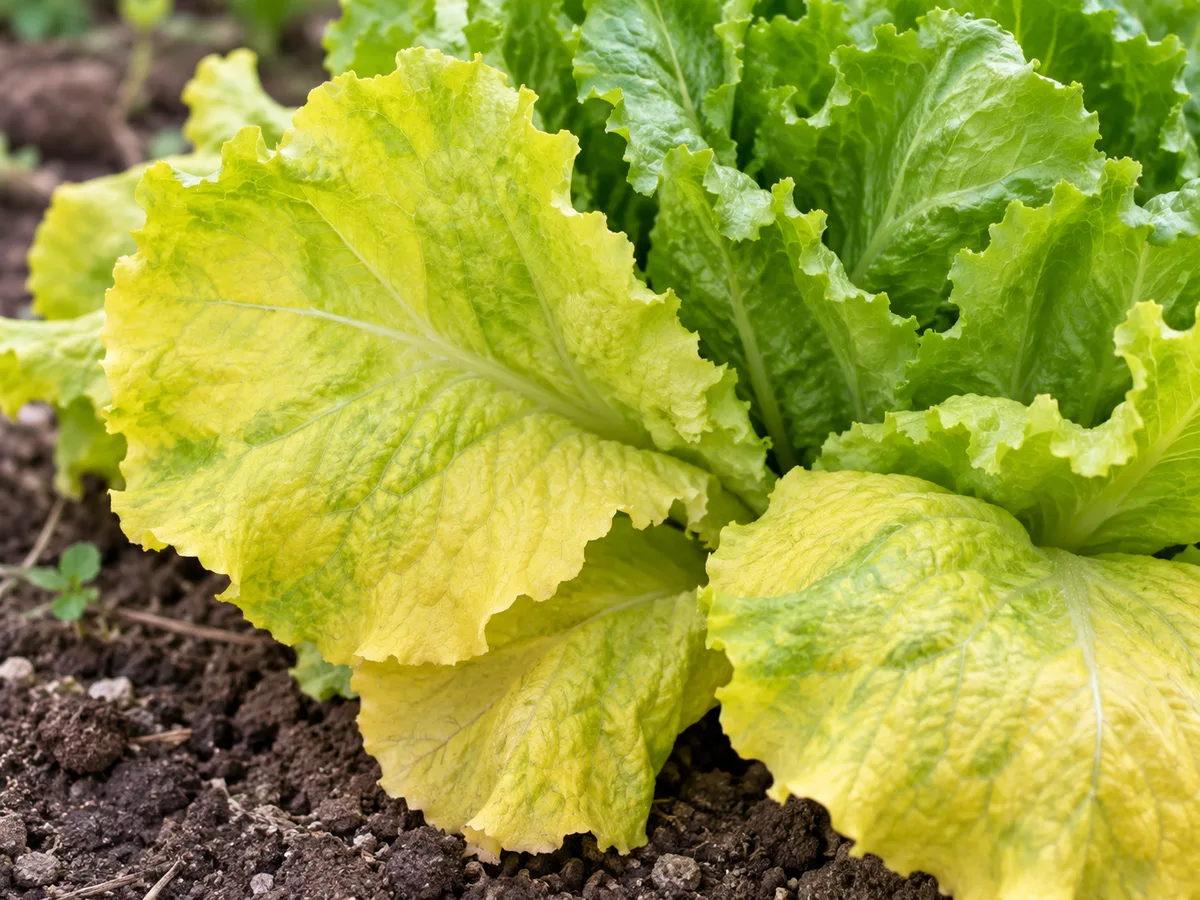
Outer wrapper leaves paling while the heart stays green — compare this pattern with spotted or distorted leaves before deciding on water, feed, or harvest.
Outer leaves first: nitrogen hunger in a fast leaf crop
Lettuce builds harvestable leaves in 30 to 80 days depending on type, which makes it a heavier nitrogen feeder than its size suggests — it requires high levels of nitrogen to keep producing leaf tissue. When nitrogen runs short, the plant dismantles chlorophyll in the oldest outer leaves and ships the nitrogen to the growing heart, so the rosette pales from the outside in while the centre still looks acceptable.
This pattern is nearly diagnostic on lettuce and would read differently on a slow succulent, where a single old leaf yellowing means little. Suspect hunger over disease when the yellowing is uniform rather than patchy, affects the lowest leaves first, growth has slowed but stems stay firm, and no fuzz, spots, or insects are visible. Container plants show it first: frequent watering leaches nutrients from a small volume of mix, and a soil pH of 6.0 to 7.0 keeps those nutrients available — well outside that band, uptake stalls even when fertiliser is present.
Confirm by checking your feeding history. Beds enriched with compost before planting and given a light balanced liquid feed or compost tea every two to three weeks rarely show this pattern; unamended containers watered daily through a hot spell show it within weeks. Do not reach for granular fertiliser scattered over the rosette — concentrated granules can burn tender leaves, so liquid feed applied to moist soil is the safer correction described in the lettuce fertiliser guide.
Wet shallow roots: overwatering on a 1–2 cm root zone
Lettuce roots occupy a thin surface layer, so this plant experiences drought and saturation faster than deep-rooted vegetables. The practical check is correspondingly shallow: feel the upper 1–2 cm and water when it begins to dry, as described in the lettuce watering guide. When mix stays saturated, roots lose oxygen, chlorophyll production fades, and yellowing starts with the lower, oldest leaves, turning the whole blade pale green, then yellow, then brown without the spotting that marks infection.
For how chronic wet mix damages roots in general, see our yellow leaves symptom guide. On lettuce, the pattern usually shows up as limp pale outer leaves on heavy soil days after watering, sometimes with algae or mould on the surface and a slowed heart. Tell it apart from drought by feel: overwatered leaves feel soft and soggy, underwatered ones feel thin and crispy, and the pot or bed stays heavy rather than feather-light.
Containers need daily attention in warm windy weather because they swing both ways — bone dry by evening, then waterlogged if the saucer never drains. Make sure pots have open drainage holes, empty saucers after watering, and keep mulch a finger’s width from stems so the crown stays dry. If the crown itself is soft or smells sour, stop here and work through root rot on lettuce before any feeding, since fertiliser on rotting roots only adds salt stress.
Heat, long days, and bolting: yellowing that means harvest, not treatment
No other common lettuce problem behaves like bolting, and misreading it wastes fertiliser and sprays on a plant that has finished its productive life. As days lengthen and warmth builds, lettuce switches from leaf production to flowering: the centre elongates into a stalk, lower leaves yellow, and flavour turns bitter. Both high temperatures around 70 to 80 degrees F and dry soil can trigger bolting, so a heat wave plus one missed watering can end a planting in days.
Read the centre, not just the colour. A rosette whose heart is rising into a cone or visible stalk, with small pale upper leaves and milky sap when snapped, is bolting — feeding will not reverse it. Looseleaf types tolerate warmth better than romaine, which handles it better than crisphead, but no type powers through persistent heat; afternoon shade only delays the inevitable. NC State guidance for summer-grown plants is three to four hours of sun daily with shade for the rest of the day, which stretches the harvest window without cancelling the plant’s heat response.
The correct response to confirmed bolting is the harvest knife, not the fertiliser bottle. Pick remaining tender outer leaves immediately, pull the plant once bitterness sets in, and succession-sow for the next cool window. Keep a two-week sowing rhythm during suitable weather so one bolting batch never means an empty salad bowl. Yellowing on a plant with a flat open heart and no stalk elongation is a different problem — work the moisture and feeding checks instead.
Spots, fuzz, and sap-suckers: downy mildew and aphids in the heart
Two living causes yellow lettuce in ways water and feed never explain, and both reward a close look inside the rosette. Downy mildew thrives when foliage stays wet in cool damp weather with poor airflow — crowded beds, overhead watering late in the day, and heading types that trap humidity in the heart. Aphids prefer the same sheltered centre, where tender growth and protection from predators let colonies build fast.
For mildew, flip suspect leaves. Yellow patches on top with pale downy growth beneath, starting on older outer leaves and spreading inward during damp spells, confirm it more reliably than any guess about nutrients. For aphids, part the heart leaves and look for clusters of small soft-bodied insects, sticky honeydew, and curling or distorted young leaves. Both problems spread fastest in still air, so spacing, morning-only watering at soil level, and removing the worst affected outer leaves are the opening moves — see aphids on lettuce for colony treatment and the lettuce spacing and airflow notes before reaching for any spray. Keep harvested leaves destined for the table free of spray residues by favouring row covers, strong water jets for aphids, and resistant varieties next sowing.
Seedlings deserve a special mention. If young plants yellow and keel over with pinched brown stems at the soil line, that is damping-off in wet seedling mix — discard affected seedlings, improve drainage, and re-sow rather than attempting rescue feeds.
How to confirm the cause
Work these checks in order on a dry morning, before watering changes what you see:
- Leaf position — oldest outer leaves evenly pale points to nitrogen or moisture; yellow patches between veins points to mildew; distorted heart points to aphids or bolting.
- Leaf undersides — flip three spotted or pale leaves and look for pale fuzz (mildew) or insect clusters (aphids) with a hand lens if needed.
- Soil at 1–2 cm beside the rosette — dry and crumbly suggests drought; wet and heavy days after watering suggests saturation. Check drainage holes and saucers on containers.
- Pot or bed weight and smell — heavy with a sour note means oxygen-starved roots; feather-light means drought.
- Centre shape — flat open heart means the plant is still in leaf mode; rising cone or stalk means bolting regardless of leaf colour.
- Feeding history — no compost at planting and no liquid feed for a month in a fast-growing container crop favours nitrogen hunger, provided moisture is even.
- Recent weather — heat wave plus missed watering favours bolting and bitterness; cool damp still spells favour mildew.
- Growth response — firm stems and a heart still pushing new leaves mean recovery is realistic; a soft crown or collapsed seedlings mean act today.
The first fix to try
Do the 1–2 cm finger test beside the rosette, then take the single matching action and stop.
Dry soil with limp thin leaves gets one deep watering at soil level in the morning — soak until excess drains, empty the saucer, and change nothing else that day. Wet heavy soil with pale soggy leaves gets no water until the top layer begins to dry, plus cleared drainage holes and mulch pulled back from the crown. Spotted leaves with underside fuzz get dry foliage and wider spacing, not water or feed. A rising stalk with bitter leaves gets harvested, not treated. One check, one action — then watch the heart for a week before deciding anything further.
Use the Yellow Leaves Diagnosis Tool to narrow causes for yellow leaves on this plant before changing multiple variables at once.
Step-by-step recovery
Once the first fix is in place, follow the branch you confirmed:
For nitrogen hunger: water the soil lightly first if dry, then apply a half-strength balanced liquid fertiliser or compost tea to moist soil, keeping it off the leaves. Repeat no sooner than two weeks later per the lettuce fertiliser guide. Old yellow wrappers will not re-green — harvest them and judge by the next leaves out.
For overwatering: hold water until the top 1–2 cm begins to dry, confirm drainage holes run freely, and empty saucers within 30 minutes. Remove only fully yellow mushy outer leaves; keep partly green ones working. If the crown softens, move to root rot on lettuce.
For underwatering: soak deeply once at soil level, mulch lightly between plants (not against stems), and shift containers to morning sun with afternoon shade in heat. See underwatering on lettuce if limp leaves do not firm up by evening.
For bolting: harvest usable outer leaves now, pull bitter plants, and sow the next batch for the coming cool window rather than nursing a stalked plant.
For mildew or aphids: strip the worst affected outer leaves into the bin (not compost), water only at soil level in the morning, and space or thin for airflow. Treat remaining aphids per aphids on lettuce; choose resistant varieties and row covers next planting for mildew-prone beds.
Recovery timeline
Lettuce answers fast because it grows fast. Correctly watered plants firm up within a day; correctly fed plants push visibly greener heart leaves within one to two weeks. Mildew-spotted leaves will not heal — success means spots stop appearing on new leaves over the next week of dry foliage and airflow.
Signs you are winning: the heart keeps producing green leaves, fewer outer leaves yellow each week, and soil wets and dries on a predictable rhythm. Signs of trouble: yellowing climbs into the heart, the crown softens, spots spread despite dry foliage, or seedlings keep collapsing — escalate to wilting or drooping leaves triage and consider re-sowing, since a short-season crop is often cheaper to replace than to rescue.
Mistakes to avoid
Do not fertilise a plant sitting in soggy soil — roots without oxygen cannot use nutrients, and salts make the damage worse. Do not overhead-water in the evening when mildew is suspected; wet foliage overnight is exactly what the pathogen needs. Do not spray harvest-ready leaves with anything you would not eat, and observe label waiting periods on anything you do use. Do not keep nursing a bolted stalk in the hope leaves sweeten — bitterness does not reverse. And do not confuse one or two naturally ageing outer wrappers on an otherwise vigorous plant with a crisis; continuous loss across many leaves is the pattern that needs action.
How to prevent it next time
Build the bed before problems start: work compost into the top 15–20 cm, confirm drainage, and space to the seed packet’s final distance so air moves between rosettes — heading types need room, looseleaf can stand closer. Water at soil level in the morning, checking the top 1–2 cm daily in warm weather per the lettuce watering guide, and use a light organic mulch between rows. Feed lightly every two to three weeks during active growth following the lettuce fertiliser guide, choose bolt-tolerant varieties for shoulder seasons, and give afternoon shade once heat builds per the lettuce light guide. Rotate beds so lettuce does not follow lettuce, and succession-sow every couple of weeks so ageing plants are replaced while still productive. Rich airy ground preparation is covered in the lettuce soil guide.
Related Lettuce guides
- Lettuce overview — type differences, cool-season timing, and succession sowing baseline
- Lettuce problems hub — browse all 16 common issues on this crop
- Lettuce watering — the 1–2 cm check, container rhythm, and seasonal intervals
- Lettuce soil — compost-rich mix, drainage, and pH 6.0–6.7
- Lettuce light — full sun in cool weather, afternoon shade in heat
- Lettuce fertiliser — compost base plus light liquid feeding every 2–3 weeks
- Overwatering on lettuce — heavy pots, wet crowns, and the dry-down ladder
- Underwatering on lettuce — limp leaves on dry soil vs rot confusion
- Root rot on lettuce — soft crown rescue when wet-soil yellowing advances
- Aphids on lettuce — heart colonies, honeydew, and wash-off treatment
- Wilting on lettuce — whole-plant wilt triage beyond yellowing alone
- Drooping leaves on lettuce — turgor loss vs structural decline
- Brown tips on lettuce — tipburn and edge damage companions
- Not enough light on lettuce — pale stretch in dim positions
Scope note: use this page when leaves yellow but the plant’s structure is intact. Use overwatering when soil stays wet and the crown softens, underwatering when dry soil matches limp leaves, aphids when the heart curls with visible insects, and the overview when the centre is elongating into flower — that plant is finishing, not failing.
Related tool
Use the Yellow Leaves Diagnosis Tool to narrow causes for yellow leaves on this plant before changing multiple variables at once.