Aphids on Lettuce: Causes, Checks & Fixes
Quick answer
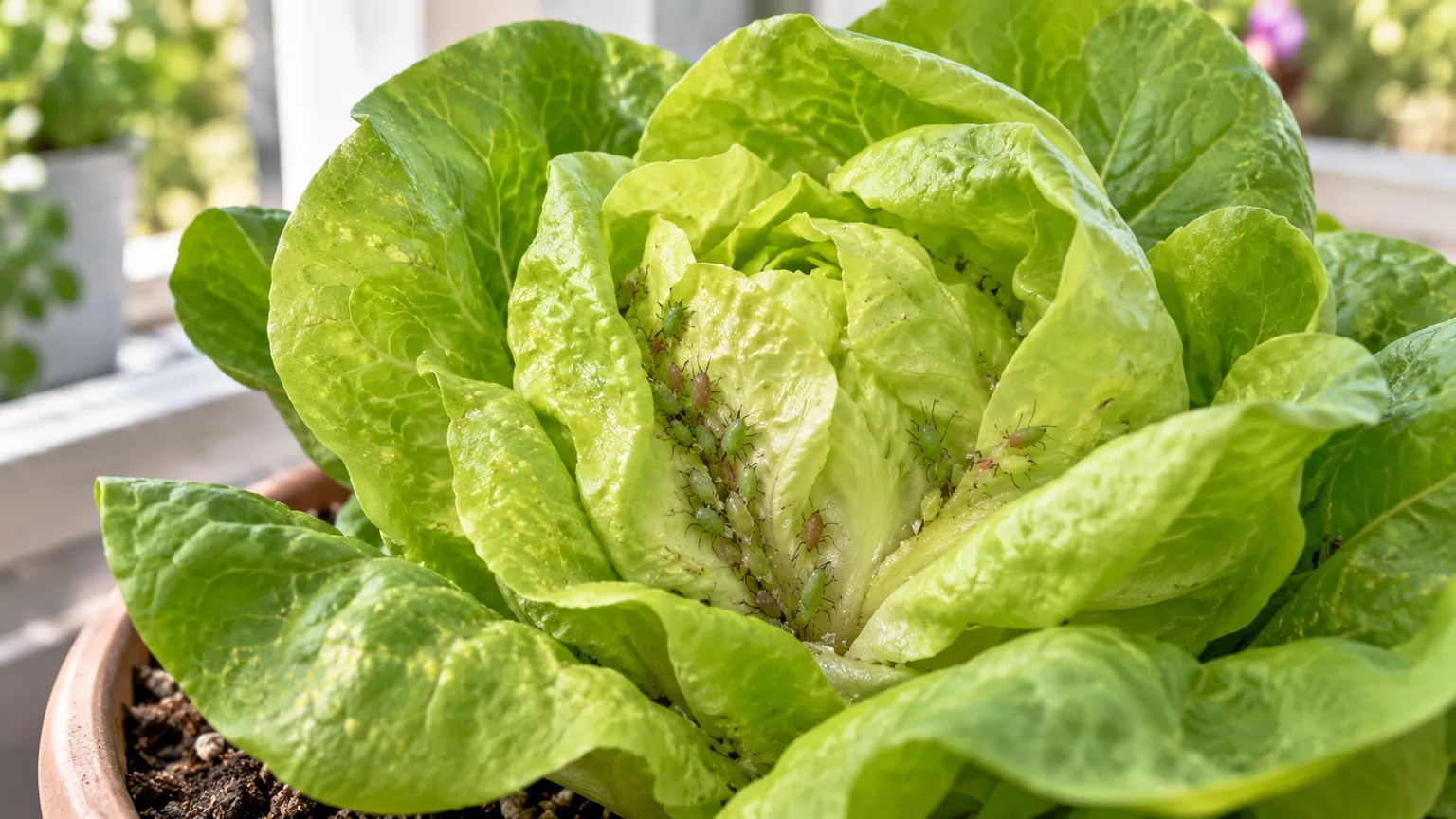
Aphids on lettuce hide deep in the heart and under young leaves, causing curling, honeydew, and stalled heads. First step: isolate the planting and blast leaf undersides and the crown with a strong stream of water, then recheck the heart in 48 hours before any spray.
Aphids on Lettuce: Causes, Checks & Fixes
This guide covers aphids on Lettuce. See also the general Aphids guide, watering, and light pages for this plant.
Aphids on Lettuce: Causes, Checks & Fixes
Quick answer
Aphids on lettuce (Lactuca sativa) are different from aphids on herbs or houseplants because they hide where you harvest. The currant-lettuce aphid feeds deep inside the plant, toward the center on younger leaves, and in head lettuce it is found almost exclusively at the heart. You can have a clean-looking outer rosette with a packed colony in the center.
First step: isolate the pot or row section and blast leaf undersides and the crown with a strong stream of water. Rinse from below and into the heart, let plants dry with airflow, then recheck the heart in 48 hours. Only treat further if live aphids still cling deep inside. For how aphids behave across houseplants in general, see our aphids guide. On lettuce, the pattern usually shows up as stalled hearts, curled young leaves, and sticky residue on an edible crop — not just speckled old foliage.
When to use this page vs other lettuce guides
| What you see | Read next |
|---|---|
| Packed insects in heart + sticky leaves | Stay here — foliar aphids |
| Daytime wilt + soft heads + woolly roots | Root check then Wilting |
| Fine webbing + stippled leaves, few visible insects | Spider Mites |
| White cottony clusters in axils | Mealybugs |
| Yellow outer leaves, no insects found | Yellow Leaves |
| Routine moisture and spacing | Watering guide |
What aphids look like on lettuce
On lettuce, look at the newest tissue first. Part the heart gently with clean fingers and inspect the base of young leaves and the undersides of wrapper leaves.
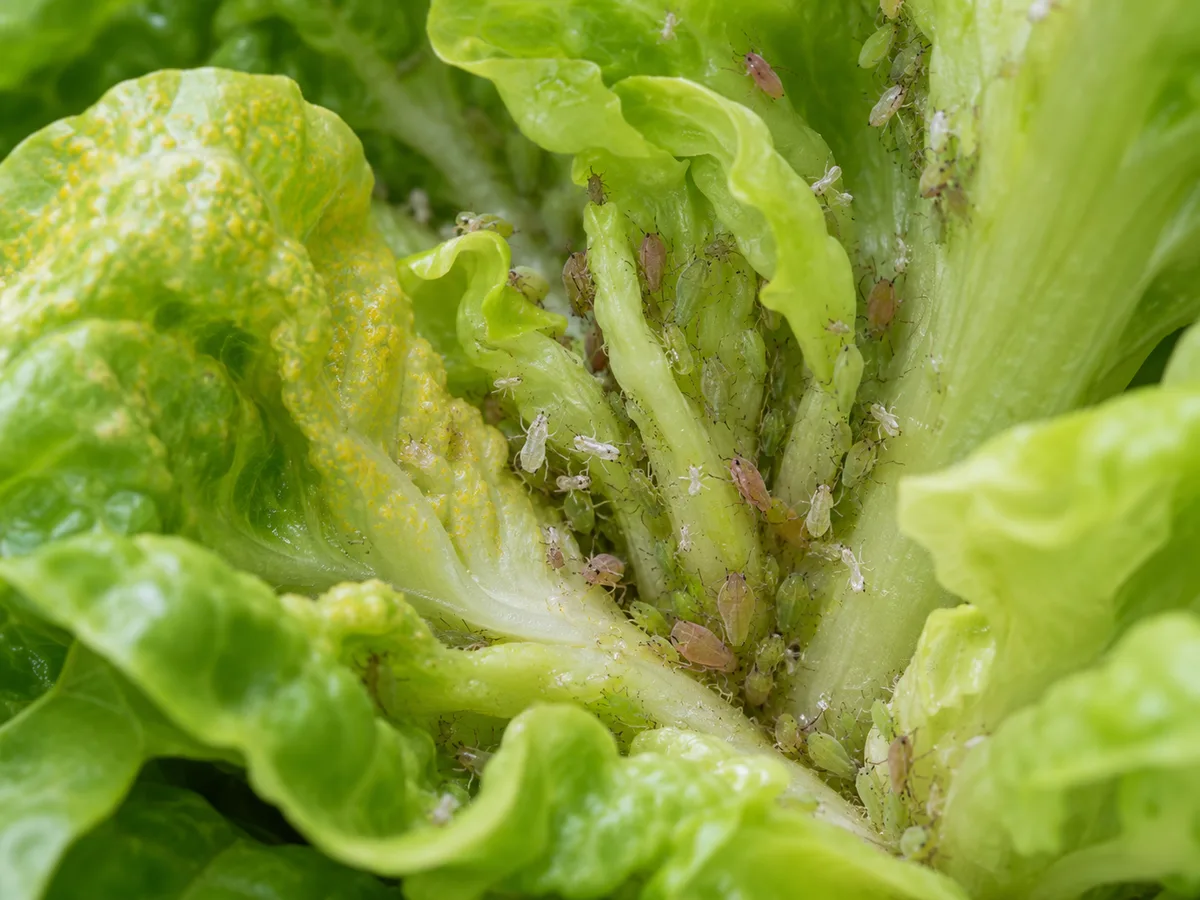
Aphids packed deep in a lettuce heart — check young leaf bases and undersides, not just outer leaves.
Typical signs include:
- Colonies on young leaf bases and undersides — small, soft-bodied, pear-shaped insects in yellow, green, orange, or pink, often preferring newer growth.
- Lettuce aphid color forms — ranging from green to orange to pink with black markings on the joints of the legs and antennae.
- Curled, cupped heart leaves that refuse to flatten, with stunted or asymmetric head growth in dense populations.
- Sticky honeydew and black sooty film — feeding aphids produce large amounts of honeydew, a sweet sticky material that can become covered with dark sooty mold growth.
- White cast skins shed on leaf surfaces, plus ants trailing up stems to tend honeydew.
- Yellowing and wilt-like flagging — infested leaves turn yellow and may wilt even when soil moisture is correct.
Because lettuce is eaten whole, even a moderate colony makes the head unappetizing long before the plant dies. Wash all harvested leaves and discard the worst-hearted heads rather than trying to sterilize them on the plant.
Why lettuce gets aphids
Lettuce is a fast, tender, cool-season annual with soft leaves and a short harvest window. That combination — succulent young hearts plus very short life cycle aphids that increase rapidly — lets a few winged arrivals become a heart infestation within days during mild weather.
The heart-hiding habit on heading vs looseleaf types
The key lettuce-only trait is where they feed. Foliar lettuce aphids sit deep in the crown rather than forming obvious colonies on exposed leaf tops. Monitoring requires care in order not to miss early infestations that are hidden within the lettuce. Butterhead, romaine, and crisphead types trap aphids between tightly folded leaves; looseleaf types show them sooner on open rosettes but still concentrate them at the growing point. If you only glance at outer leaves, you will call the plant clean and miss the colony you are about to eat.
Soft nitrogen-pushed growth and cool-season crowding
Lettuce pushed with heavy nitrogen produces extra-soft foliage that encourages reproduction — high levels of nitrogen in the foliage encourage aphid reproduction. Close spacing for heads, successive sowings, and warm shoulder seasons keep young tissue continuously available. Dry, dusty beds with weeds and nearby composites let nymphs and adults carry over, since lettuce aphids pass the winter as nymphs and adults on lettuce, radicchio, Nicotiana spp., and some other composites.
Virus risk on an edible leaf crop
Aphids cause additional problems on lettuce by transmitting viruses. NC State Extension notes aphids transmit several viruses including lettuce mosaic, and field guides list mottling and distortion after aphid feeding as disease flags. A curled, mottled heart after aphids is not just cosmetic — it can mean the head will never form normally even after insects are gone.
How to tell foliar aphids from lettuce root aphids
Daytime wilt on lettuce is the fork in the road. Foliar aphids curl hearts and leave honeydew on leaves; root aphids attack below the soil line and mimic drought.
- Foliar aphids: insects visible in the heart or on undersides, sticky leaves, cast skins, ants on foliage. Soil moisture is usually normal and roots look white.
- Lettuce root aphids: clustered colonies covered with a white powdery wax on roots, short antennae and undeveloped cornicles, masses of white, woolly material on rootlets. Tops may wilt during the day, heads remain soft and fail to develop properly, and rootlets turn brown and die.
Gently lift one edge of a container plant or loosen soil beside one garden plant and look at the upper roots. White wool plus daytime wilt that does not resolve after watering points underground, not to a foliar spray. Root aphids are worst where lettuce grows near Lombardy poplars, their overwintering host — avoid that pairing or choose resistant varieties in recurring spots.
How to confirm the cause
Check in this order on a dry morning so honeydew and insects are undisturbed:
- Open the heart — spread wrapper leaves and look into the crown with a 10x lens. Live pear-shaped insects packed at young leaf bases confirm foliar aphids.
- Flip outer leaves — check undersides for colonies, yellow stippling, and white shed skins.
- Feel for honeydew — sticky film on leaves or fingers, black soot, or ant trails support aphids over thrips or sun stress.
- Note head progress — stalled, asymmetric, or soft hearts with insects inside fit aphids; firm clean hearts with outer yellowing fit yellow leaves or water issues instead.
- Rule out roots — if tops wilt by afternoon but no insects are found above ground, inspect roots for woolly wax before spraying foliage.
- Check neighbors — winged adults spread fast; scout adjacent lettuce, radicchio, and weeds the same day.
First fix for lettuce
Blast with water first, then decide. Take the pot or row section away from clean lettuce if possible, tilt container plants sideways, and rinse stem tips, leaf undersides, and into the crown with a firm stream. Wash aphids from plants with a strong stream of water, but go gently on tender hearts — too much pressure tears leaves and packs debris deeper.
Do not start with fertilizer, repotting, or a broad insecticide on day one. Recheck the heart after 48 hours. WSU notes the wash may be ineffective on the low, dense foliage of lettuce, so a second rinse or hand-wiping of small localized clusters is often needed before any soap.
Step-by-step recovery
For light foliar colonies
- Rinse as above, then hand-wipe to help control small, localized infestations.
- Pinch off the worst-curled outer leaves and bag them — do not compost infested hearts on site.
- Recheck every two days for a week; rinse again while numbers fall.
- Harvest the oldest clean outer leaves first so the center keeps pushing.
For persistent heart infestations
- After two water treatments, apply a labeled insecticidal soap or horticultural oil only to affected plants, coating undersides and crown crevices. Soaps use potassium salts of fatty acid and work on contact.
- Spray in cool evening hours, never on heat-stressed midday lettuce, and follow the label rate and pre-harvest interval exactly.
- Apply when aphids first appear on the next succession — late sprays on packed hearts rarely reach insects.
- Wash all harvested leaves thoroughly before eating; discard heads with deep sooty mold.
For ants, beneficials, and nitrogen
- Control honeydew-feeding ants that protect colonies — sticky barriers on container rims or bed legs help.
- Preserve predators: encourage ladybird beetles, lacewings, syrphid fly larvae, and parasitic wasps and avoid broad-spectrum sprays that kill them. UC IPM notes syrphid fly larvae and green lacewing larvae attack lettuce aphid.
- Cut back nitrogen: switch to a slow-release or low-nitrogen fertilizer when practical and follow the lettuce fertilizer guide rather than pushing soft growth.
For suspected root aphids
- Do not foliar-spray repeatedly — it will not reach roots.
- Lift and inspect; trim dead brown rootlets, refresh mix in containers, and replant into clean soil.
- In beds, work soil deeply and let it dry thoroughly between crops where root aphids recurred, and keep new lettuce away from Lombardy poplars.
Recovery timeline
Light infestations rinsed early usually show clean new center leaves within one to two weeks. Packed hearts need two to three rinse-and-check cycles plus one targeted soap application; expect three weeks before heads firm normally, if they firm at all.
Judge by new growth, not old leaves: curled hearts stay curled, honeydew-coated leaves stay sticky until washed or picked. Worsening signs: winged aphids on most plants, spreading mottling or yellowing after insects are gone (possible virus), or soft heads that never firm — replace those plants with a fresh succession rather than nursing them.
Lookalike symptoms
- Spider mites — fine stippling and webbing on undersides, tiny moving dots but no pear-shaped colonies or honeydew.
- Mealybugs — white cottony masses in axils rather than translucent green-pink clusters in the heart.
- Fungus gnats and mold on soil — small flies or surface fuzz from wet mix; leaves lack honeydew stickiness.
- Tipburn and heat stall — brown papery margins on warm-weather hearts without insects; see brown tips and slow growth.
- Lettuce mosaic virus — mottling, vein clearing, and distortion that persists after aphids leave; pull and discard severely mottled plants.
Mistakes to avoid
Do not drench soil because hearts curl — that favors overwatering and root rot without touching heart colonies. Do not apply a broad-spectrum insecticide on day one; it kills the syrphids and lacewings that suppress aphids and can flare the outbreak. Do not fertilize with high nitrogen to push past stunting — soft growth feeds the next generation. And do not eat unwashed hearts from infested plants; always wash lettuce before eating.
How to prevent aphids next time
- Time the crop cool — use the lettuce overview seasonal window and light guidance; succession-sow every two weeks so one infested batch never ruins supply.
- Space for airflow — follow soil and watering spacing so hearts dry quickly after rinsing.
- Feed lean — keep nitrogen moderate per the fertilizer guide; lush overfed leaves are aphid nurseries.
- Scout hearts weekly — check crowns and undersides during mild spells; rinse at first insects rather than at harvest.
- Host flowers nearby — alyssum, coriander, and quick annuals feed adult syrphids; control ants and clear composite weeds around beds.
- Rotate and renew — do not follow infested lettuce with lettuce in the same soil; refresh container mix and see the problems hub for seasonal patterns.
When to worry
Treat the same day if hearts are packed, winged aphids drift between plants, ants farm multiple pots, or heads stall while neighbors grow. Persistent daytime wilt with woolly roots, or mottled distorted hearts after aphids, means pull and replace rather than spraying again. A few insects on one outer leaf with a firm growing heart can wait for one water blast and a 48-hour recheck.
Conclusion
Aphids on lettuce are a heart-hiding problem on an edible, short-lived crop. Open the crown, separate foliar colonies from woolly root aphids, lead with water rather than chemicals, and judge success by clean new center leaves and firming heads. Prevention is seasonal timing, lean feeding, weekly scouting, and fresh successions — not a single rescue spray.
When to use this page vs other lettuce guides
- Lettuce overview — cultivar choice, spacing, and cool-season timing behind prevention.
- Lettuce watering — steady shallow moisture so wilt checks mean something.
- Wilting and drooping leaves — use when daytime collapse dominates and no foliar insects are found.
- Yellow leaves — use when yellowing spreads without colonies, honeydew, or cast skins.
- Lettuce problems hub — browse all 16 issues on this crop.