Slow Growth on Lettuce: Causes, Checks & Fixes
Quick answer
Slow lettuce growth is usually heat stall, unthinned crowding, uneven shallow-root moisture, or low nitrogen — not a mystery disease. First, give the bed one deep, even watering at soil level; then check daytime heat, spacing, and leaf color before feeding or replanting.
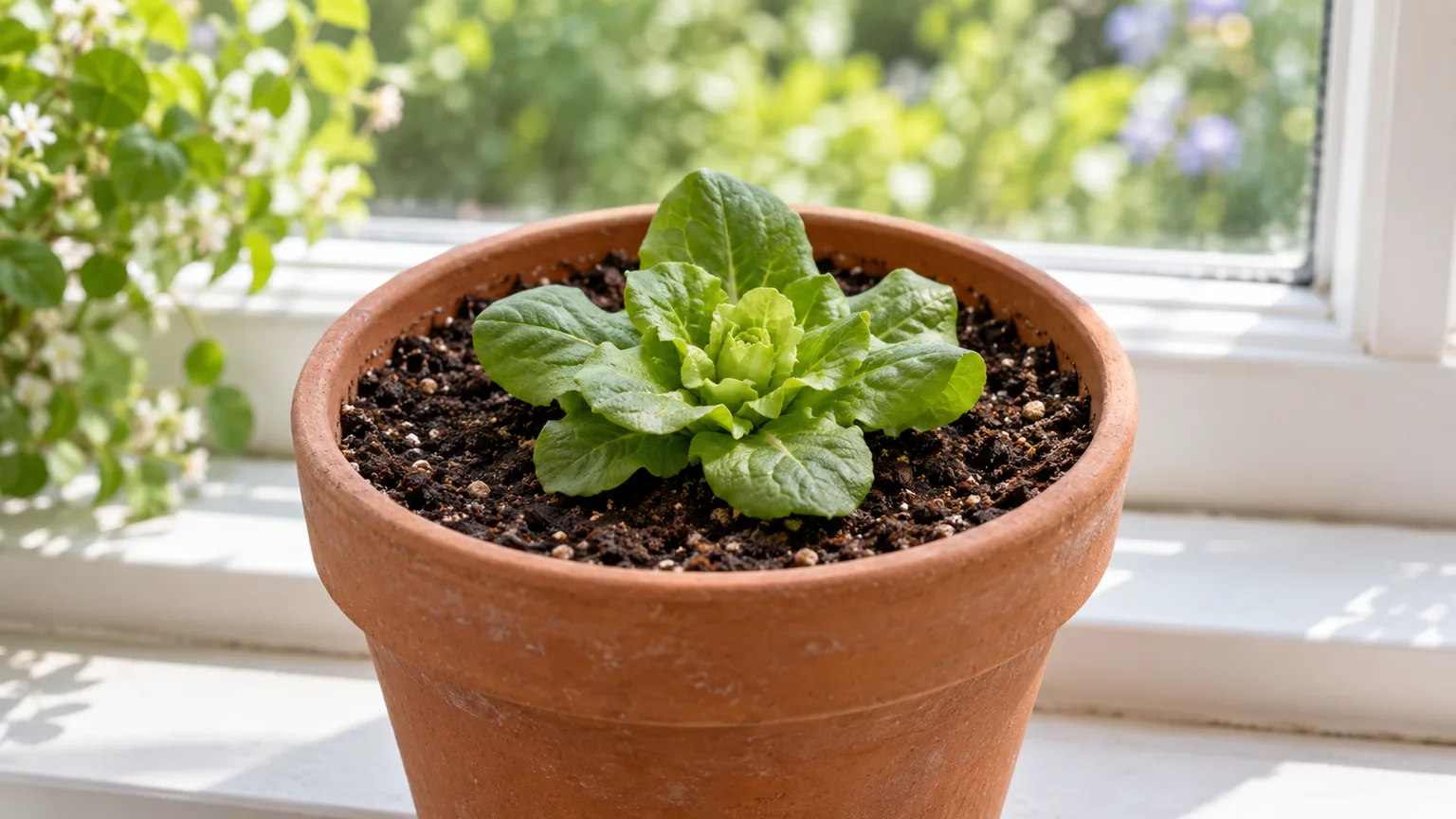
Slow Growth on Lettuce: Causes, Checks & Fixes
This guide covers slow growth on Lettuce. See also the general Slow Growth guide, watering, and light pages for this plant.
Slow Growth on Lettuce: Causes, Checks & Fixes
Quick answer
Lettuce that sits the same size for weeks is almost always reacting to heat, crowding, uneven water, or low nitrogen — not to a disease you need to spray. Because Lactuca sativa is a cool-season annual with shallow roots, even a few hot afternoons or one dried-out spell can pause leaf production while the plant waits for better conditions.
First fix: give the bed one deep, even watering at soil level, soaking the top 15 cm uniformly. Then leave the crop alone for 24 hours and read the response before feeding, thinning, or replanting. Water first because moisture stress is the fastest to rule in or out — fertilizer applied to dry, hot roots only adds salt stress to a stalled plant.
For the general mechanics of stalled growth on any plant, see our slow growth guide. On lettuce, the pattern usually shows up as a rosette that stopped adding center leaves, outer leaves that stay small and tough, or seedlings that never sized up after transplanting.
What slow growth looks like on lettuce
A stalled lettuce rosette stops producing fresh leaves from its center while existing leaves stay small, thick, or slightly dull. Looseleaf types quit pushing tender new foliage from the middle; heading types sit as loose, open rosettes that never begin closing toward the heart. Growth may look frozen for two or more weeks even though the plant is still green and upright.
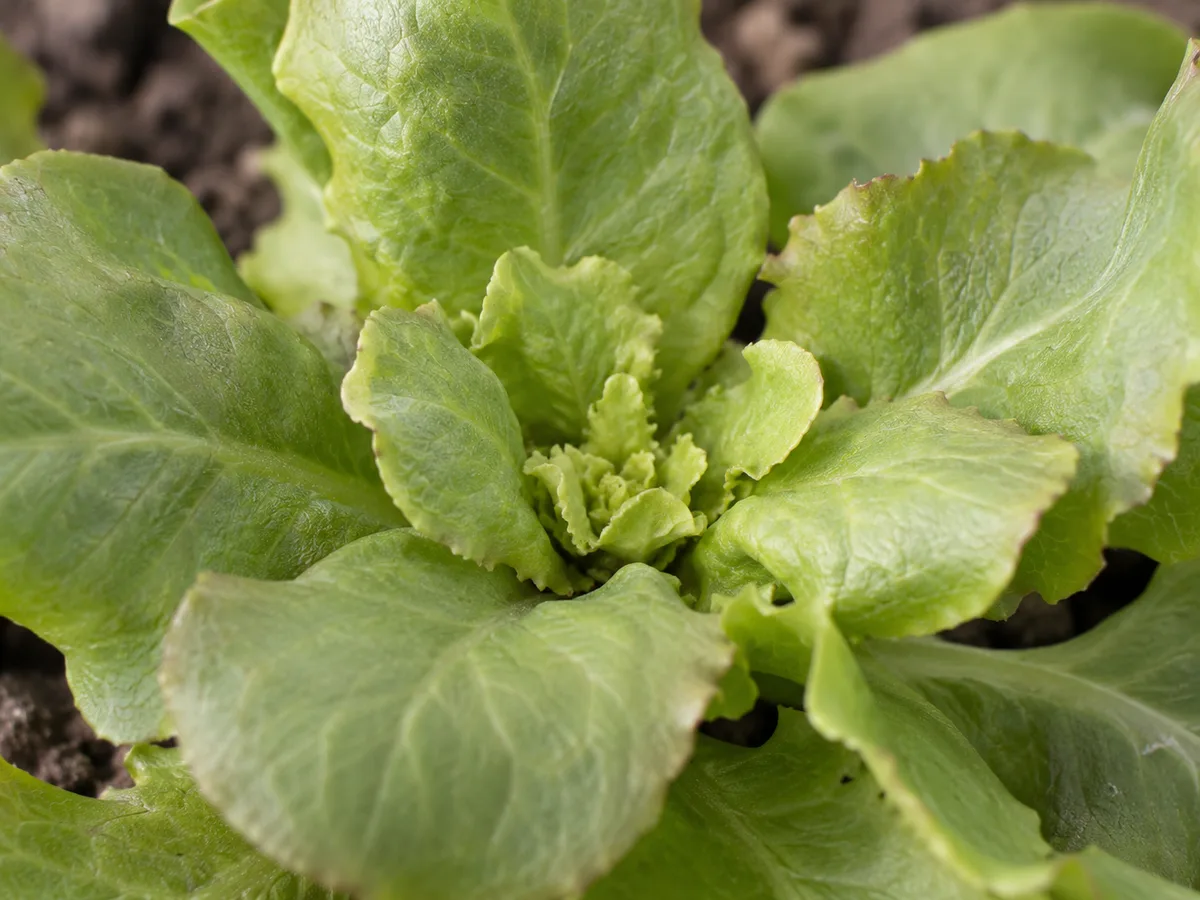
Stalled rosette with undersized center leaves and no new growth — compare with heat, crowding, and nitrogen checks below.
Seedling stalls look different: transplants with four to six leaves sit unchanged for weeks instead of doubling in size, sometimes with purplish or pale outer leaves. Do not confuse a paused crop with a finished one — a plant whose center stem is visibly lengthening is bolting, and that crop will not return to leaf production no matter how you water it.
Why lettuce stalls: the four usual causes
1. Heat stall in a cool-season crop
Lettuce grows best when temperatures stay below about 75°F (24°C), and high summer temperatures reduce growth and turn flavor bitter. NC State notes that temperatures of roughly 70–80°F combined with dry soil trigger bolting and stop useful leaf production. A balcony crop that grew fast in October and froze in size during a warm spell is experiencing heat stall, not a feeding problem.
Check the thermometer before anything else. If afternoons regularly exceed the mid-20s Celsius, the correct move is afternoon shade plus steady moisture and an early harvest of usable leaves — not fertilizer. The Lettuce light guide explains how to separate productive cool-weather sun from heat-management shade.
2. Crowding that was never thinned
Lettuce sown thickly and never thinned stalls because dozens of seedlings compete for the same shallow water and nutrients. Utah State recommends final spacing of 8–12 inches between plants with thinning when plants have three to four true leaves. Unthinned rows stay as a carpet of two-inch seedlings for weeks — each plant alive, none with room to build a rosette.
This is the most lettuce-specific of all slow-growth causes, and it is also the most fixable: thin ruthlessly to packet spacing, eating the thinnings, and the remaining plants usually resume growth within ten days. Crowded heading types suffer most; a crisphead given baby-leaf spacing will never form a heart. If your seedlings repeatedly fail before this stage, review sowing depth and timing in the Lettuce propagation guide.
3. Uneven moisture in shallow roots
Lettuce roots occupy the top few centimeters of soil, so alternating soak and drought hits this crop harder than deeper-rooted vegetables. Utah State warns that moisture fluctuations make leaves tough, slow head development, and add off-flavors — the classic stalled, leathery rosette. Containers are the worst offenders: a small pot can swing from saturated to bone-dry in a single hot day.
Feel the upper soil under the leaf canopy, not just the surface crust. Water at soil level when the top layer begins to dry, aiming for roughly 1–2 inches per week adjusted to weather, and keep water off dense heads late in the day. Limp afternoon leaves that recover by evening are heat response; limp leaves in dry soil need water now. The full moisture diagnosis is in the Lettuce watering guide.
4. Low nitrogen after the seed reserves run out
Seed-starting mix carries a seedling for only a few weeks; after that, pale green or yellowing older leaves plus stalled new growth point to nitrogen shortage. The RHS describes nitrogen deficiency as producing pale, stunted growth, and California’s official lettuce program treats nitrogen management as the central fertilization decision for leafy yield (see the CDFA lettuce fertilization guidelines). Utah State’s practical rule is a single nitrogen side-dress — about ¼ cup of 21-0-0 per 10 feet of row, four weeks after transplanting or at thinning.
Feed only after moisture, heat, and spacing check out. Practical growing guides also warn that the opposite error — heavy synthetic feeding — can burn delicate roots with excess salts and lock out water uptake, stalling the plant just as firmly as starvation. One modest side-dress, watered in, beats repeated guessing. Details are in the Lettuce fertilizer guide.
How to confirm the cause at home
Work through these checks in order on a cool morning, before watering:
- Thermometer check. Daytime highs above about 24–27°C with slow growth mean heat is the prime suspect. Shade cloth and harvest buy time; fertilizer does not fix heat.
- Spacing check. Can you fit a hand between rosettes? Seedlings closer than a few centimeters at the four-leaf stage are crowded — thin first, diagnose later.
- Moisture check. Push a finger 3–5 cm into the soil under the canopy. Dry and powdery means underwatering stall; soggy and sour-smelling with yellow outer leaves means excess water and possible root trouble (compare the Lettuce overwatering guide and underwatering guide).
- New-center check. Look at the very center of the rosette. Fresh tiny leaves mean the plant is still trying — fix the environment and it resumes. A rising thick stem with widening leaf gaps means bolting; harvest what is usable.
- Color check. Even green but small points to heat, crowding, or water. Pale overall with yellowing outer leaves after weeks of growth points to nitrogen — but only after the checks above pass.
- Pest check. Flip several leaves: clusters of aphids on undersides or chewed, slimy foliage (slugs) can stall young plants while leaving the cause invisible from above. The Lettuce aphids guide covers the most common sap-feeder stall.
Step-by-step recovery
- Deep even watering (day 1). Soak the root zone at soil level until the top 15 cm is uniformly moist and excess drains freely. This is your single first action — everything else waits 24 hours.
- Read the response (day 2). Leaves that perk up and soil that holds moisture point to water as the limiter; keep the rhythm steady. No change moves you to step 3.
- Thin to final spacing (days 2–3). Remove extras at three to four true leaves to reach packet spacing, about 20–30 cm for heading types. Eat the thinnings; do not transplant crowded adults repeatedly — lettuce is moved once to its final spot, as the Lettuce repotting guide explains.
- Cool the root zone. Add a light organic mulch around (not over) the crown, shift containers out of reflected afternoon heat, and give morning sun with afternoon shade in warm spells.
- Side-dress once if pale. Only when moisture, spacing, and heat are handled and older leaves are pale: apply one modest nitrogen side-dress to the side of the row and irrigate it in. Skip feeding entirely if the soil was recently enriched with compost.
- Re-sow if bolting. A lengthening center stem ends this crop’s leaf phase. Harvest usable leaves and succession-sow rather than nursing it.
Recovery timeline for lettuce
Lettuce is a fast crop, so feedback arrives quickly. Expect visible new center leaves within 7–14 days of correcting water, spacing, or nitrogen in cool weather. Leaf types commonly mature around 50–60 days from seed and head types around 70–80 days — measure your stall against that clock, not against a neighbor’s tomato.
Judge progress by fresh center growth and tender texture, not by old leaves getting bigger — they will not. If three weeks of correct cool-weather care produce nothing new, the root system or season is spent; re-sow. Remember the annual reality: succession sowing every two weeks during suitable weather beats forcing one tired rosette, a strategy laid out in the Lettuce overview.
Lookalike symptoms on lettuce
| What you see | More likely | Go to |
|---|---|---|
| Center stem rising, leaves bitter | Bolting from heat or maturity | Light + harvest promptly |
| Yellow outer leaves, wet soil, soft crown | Overwatering / root stress | Overwatering, Root rot |
| Limp leaves, dry soil, no recovery by evening | Underwatering | Underwatering, Wilting |
| Tall pale stems, sparse leaves reaching sideways | Too little light | Not enough light, Leggy growth |
| Curled crinkled leaves with visible insects | Aphids or other sap feeders | Aphids, Spider mites |
| Brown leaf edges inside the head | Tipburn from wet-dry swings | Brown tips |
| Seedlings collapsing at soil line | Damping-off disease | Propagation |
| Drooping whole plant after transplant | Transplant shock | Drooping leaves |
Pale-plus-small with no other symptom after heat, water, and spacing pass is the one case where the yellow leaves guide and a nitrogen check genuinely apply. And if the soil surface itself looks off — white crust, green algae, or mustiness — compare the mold on soil guide before blaming fertility.
Mistakes that keep lettuce stalled
- Feeding a hot, dry plant. Fertilizer on stressed roots adds salt burn; cool and water first. Excess salts can injure roots and block water uptake, mimicking the starvation you meant to fix.
- Sowing out of season. Shade and water delay heat stress but cannot make lettuce a summer crop in hot lowlands. Match sowing to the cool window.
- Skipping the thinning. Sentimentality over seedlings produces a permanent carpet of runts. Thin once, firmly.
- Shallow daily sprinkles. Wetting only the surface trains roots upward and guarantees midday wilt. Water deeply and less often, keeping the zone evenly moist — the soil guide shows mixes that hold moisture without waterlogging.
- Overpicking a looseleaf plant. Stripping most outer leaves at once removes the photosynthesis engine regrowth depends on. The RHS treats looseleaf lettuce as a cut-and-come-again crop for a reason: harvest a few outer leaves per plant and let the center keep working, as the pruning and harvest guide describes.
- Repotting an annual repeatedly. Each move costs a week of growth a short-season crop cannot spare. Transplant once, then succession-sow.
When to use this page vs other Lettuce guides
Use this page when the crop is green but undersized or frozen in size with no rising stem. If leaves are yellowing rather than merely small, start with yellow leaves; if the plant is limp, start with wilting. If the center is elongating, the question is no longer slow growth but bolting — harvest and re-sow. For single-variable deep dives, use watering, light, soil, and fertilizer after this page has pointed you at the right variable.
Related Lettuce guides
Start at the Lettuce plant hub for the full care cluster, and use the Lettuce problems hub to compare this stall against every documented issue. The most useful next pages are usually the Lettuce watering guide — because shallow roots make moisture the fastest check — and the Lettuce light guide, because it separates heat stall from true light shortage. For crop planning, read Lettuce propagation before the next sowing so spacing and timing are right from germination.
Conclusion
Slow lettuce growth is a report card on the growing setup, not a plant defect: too much heat, too many neighbors, swinging moisture, or exhausted nitrogen. Because the crop cycle is short — weeks, not years — the fastest path is to correct one variable at a time starting with water, confirm with new center leaves within two weeks, and re-sow without regret when the season or a bolted stem says the crop is done.
Related tool
Use the Plant Problem Diagnosis Tool to narrow causes for slow growth on this plant before changing multiple variables at once.