Lettuce Soil Guide: Mix, pH and Drainage
Lettuce Soil Guide: Mix, pH and Drainage
Lettuce Soil Guide: Mix, pH and Drainage
Lettuce has a compact, shallow root system and a short window in which to make tender leaves. Its soil therefore has to do two jobs at once: hold enough moisture to prevent repeated stress, yet empty excess water quickly enough to keep the crown and lower leaves out of stagnant conditions. A dense clay bed and a peat-heavy pot can both stay wet too long; loose sand can create the opposite cycle of drought and hurried watering.
The practical target is fertile, crumbly soil with steady moisture and free drainage. Utah State University Extension describes lettuce as a crop for fertile, well-drained soil rich in organic matter, while NC State identifies Lactuca sativa as a cool-season annual that prefers moist but well-drained loam. The details below translate that target into beds, grow bags and containers, including the adjustments needed during a wet monsoon spell.
The short answer: what lettuce roots need
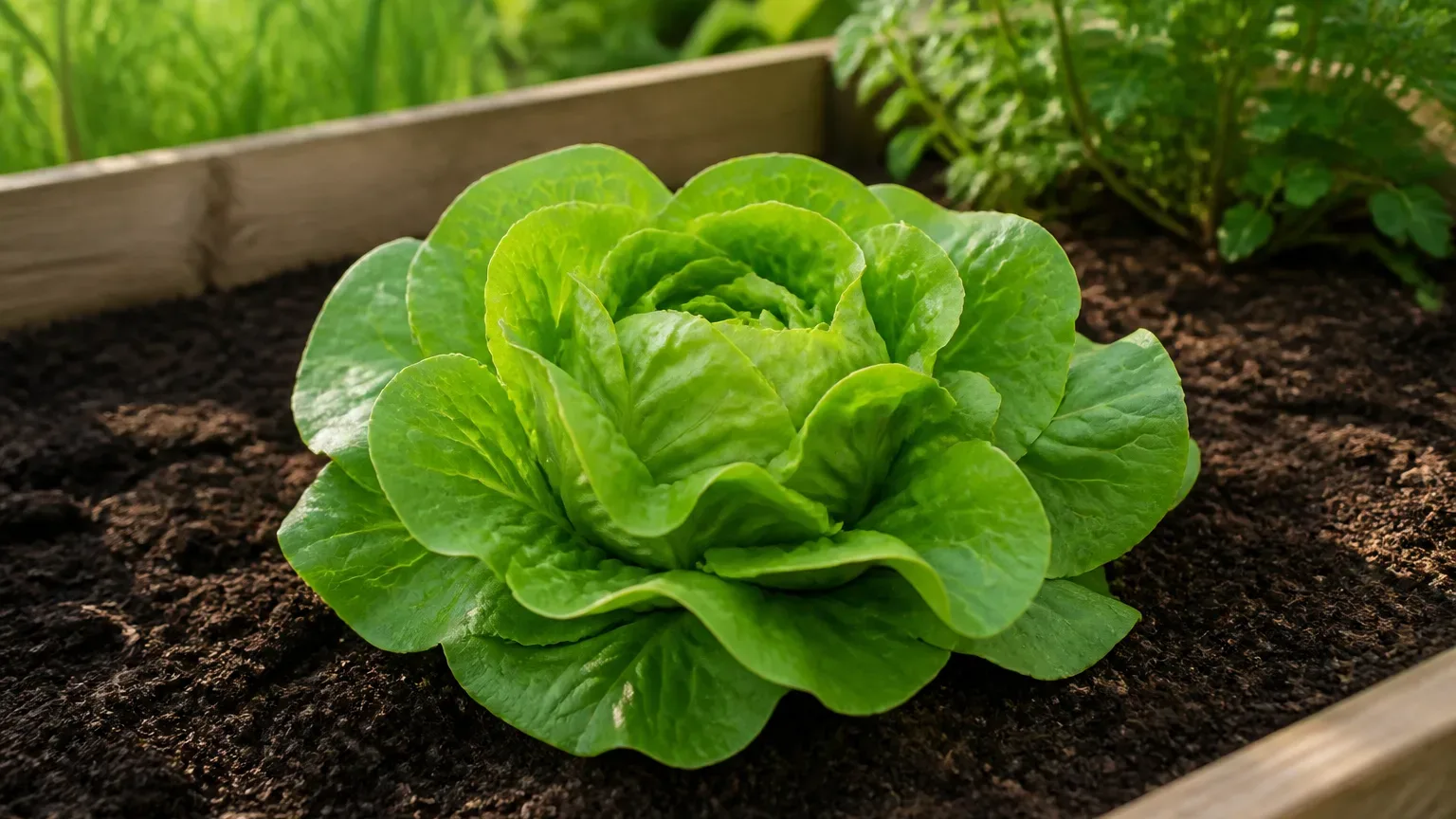
Good lettuce soil feels loose rather than sticky, accepts water without immediate ponding, and remains lightly moist after the free water drains. It should not form a hard crust around seedlings or collapse into a dense mass after several irrigations. For a quick check, squeeze a moist handful: it may hold together briefly, but should break apart when touched rather than staying as a slick lump.
Prepare the final root zone before sowing or transplanting. Lettuce is normally moved once into its final bed or pot, so correcting compaction after heads begin to form is difficult. Pair the soil setup with the Lettuce watering guide, because even the best mix fails if it is kept continuously saturated or repeatedly allowed to dry.
The ideal lettuce soil
Loam enriched with mature compost is an excellent starting point in a garden bed. In a container, use a manufactured potting medium rather than excavated garden soil: a pot has fewer drainage pathways, and fine field soil commonly compacts when confined. Maryland Extension’s container guidance recommends soilless growing media for containers, where pore space and drainage can be controlled more reliably.
Texture and drainage
Lettuce needs moisture retention, not waterlogging. Fine roots occupy the upper soil, so a bone-dry surface layer can interrupt growth quickly; on the other hand, a saturated crown zone encourages lower-leaf contact with wet soil and creates conditions favorable to disease. University of Minnesota Extension notes that lettuce damping-off and bottom rot are strongly linked with moisture, and recommends beds to improve moisture management.
Drainage is a property of the whole system, not a layer of stones at the bottom. Check the soil texture, the container holes, the surface grade and the place where runoff goes. If water leaves the root zone only to collect under a grow bag or beside a raised bed, the effective drainage remains poor.
Soil pH
Aim for slightly acidic to near-neutral soil, around pH 6.0–6.7. This sits within the broader 6.0–7.0 range that University of Minnesota Extension gives for most vegetables, where nutrients remain comparatively available. Test rather than trying to read pH from plant colour, because yellowing can also come from wet roots, low nitrogen, heat or disease.
Do not add lime, sulfur, coffee grounds or other pH modifiers by guesswork. A soil-test recommendation accounts for starting pH and texture; clay resists pH change more strongly than sand. In containers, replacing a badly unsuitable mix is usually more predictable than repeatedly dosing a small volume with homemade acidifiers.
Preparing an in-ground or raised bed
Loosen the bed before planting and remove rubble that blocks drainage. Blend mature, screened compost through the upper root zone instead of leaving a thick, wet pocket directly beneath seedlings. Utah State’s lettuce guidance advises testing first and, where compost supplies fertility, limiting the preplant addition to no more than one inch of well-composted material over the bed.
A raised bed helps where native soil drains slowly or monsoon water crosses the plot, but height alone is not enough. The bed needs an outlet, a stable path that does not wash soil onto leaves, and a surface that is level enough to wet uniformly. Avoid working saturated soil, which compresses pore space into clods that remain long after the surface appears dry.
Heavy clay
Do not try to turn clay into sand by adding a token amount of sand; an unbalanced blend can become even denser. Improve structure gradually with mature plant-based compost, keep foot traffic out of the growing area, and shape a raised planting surface. If the site remains wet for days after rain, use a constructed raised bed or containers rather than forcing a cool-season lettuce crop into an anaerobic patch.
Clay also holds nutrients, so repeated manure or fertilizer additions can overshoot. A soil test is particularly useful before adding phosphorus or changing pH. Use the Lettuce fertilizer guide for feeding decisions after the physical soil problem is fixed.
Fast-draining sand
Sandy soil needs organic matter for water and nutrient retention, but it still must drain. Incorporate mature compost across the root zone and use a thin, clean mulch between plants once seedlings are established. USU notes that organic mulches can cool soil and reduce water stress, useful when a dry spell follows cool planting weather.
Split nutrient applications rather than applying a large dose that can leach beyond shallow roots. Check moisture more frequently, especially around young transplants, but do not convert the bed into constantly wet soil with very frequent superficial sprinkling.
Building a container mix
Container lettuce is forgiving about depth but demanding about uniform moisture. Begin with fresh, good-quality potting mix that wets evenly, then add mature compost and a stable aeration component if the base product is fine and heavy. Do not use straight compost: it can shrink, hold too much water, vary widely in salts and nutrients, and provide less structural air space than a balanced medium.
A practical lettuce potting recipe
For a home mix, combine roughly 60% quality potting medium, 25% mature plant-based compost and 15% perlite or fine composted bark. Treat this as a starting recipe, not a laboratory formula. A coarse, bark-rich base may need less amendment; a fine coir or peat base may need more aeration.
Moisten and test a sample before filling every pot. Water should move through without running straight down a dry gap at the wall, and the drained mix should feel springy rather than muddy. If it stays glossy-wet when squeezed, add aeration; if it will not hold light moisture for even a short period, increase the moisture-retentive base.
Container depth and drainage
Many leaf lettuces can grow in about 15–20 cm of usable mix, while larger romaine and heading types benefit from more volume and wider spacing. Every container needs unobstructed holes, and it should stand where runoff can escape. A deep saucer left full after rain cancels the holes above it.
Choose width according to the lettuce type rather than crowding multiple heading plants into a small pot. See the Lettuce repotting guide for final transplant timing and spacing logic; this annual crop is normally planted into its harvest container once, not potted up repeatedly.
Fertility without excess
Lettuce grows quickly and benefits from fertile soil, especially adequate nitrogen, but rich does not mean heavily fertilized. Start with a soil or media test where possible, count compost and pre-charged potting mix as nutrient sources, and then respond to growth. Penn State Extension emphasizes that soil fertility and nutrient management directly affect vegetable yield and quality.
Too much soluble fertilizer can raise salts in a container and push soft growth without correcting drainage, heat or root disease. Pale plants in wet soil should be diagnosed before feeding. If the root zone smells sour or remains saturated, improve aeration and drainage first; fertilizer cannot make oxygen available to roots.
Compost, manure and food-crop sanitation
Lettuce is commonly eaten raw and its lower leaves sit close to the soil, so amendment hygiene matters more than it does for a non-edible ornamental. Prefer mature plant-based compost or a commercially processed, fully treated amendment with traceable labelling. Keep compost, tools and potting media protected from animal faeces and dirty runoff.
Avoid fresh or uncertain animal manure during the lettuce crop. University of Minnesota Extension explains that animal-based amendments can carry human pathogens and distinguishes fully treated products from raw or merely aged manure. If the treatment history is unknown, do not improvise a short waiting period around a fast lettuce harvest; use a verified product or plant-based compost instead.
Use clean containers and tools, especially for seedlings, and wash hands before handling harvest-ready plants. Soil amendments should improve the crop without creating a preventable contamination route. The Lettuce propagation guide covers clean sowing media and seedling establishment in more detail.
Managing lettuce soil through monsoon rain
In much of India, persistent monsoon weather is usually too warm and wet for ideal lettuce production. Where a cool high-elevation or protected-season crop overlaps heavy rain, focus on exclusion and drainage: use a ventilated rain shelter, raise containers off the ground, clear holes before each storm, and divert roof or path runoff away from beds. A cover must not become an unventilated humid tent.
Inspect the root zone after sustained rain rather than watering by habit. Remove collapsed lower leaves, keep soil from splashing into the head, and postpone fertilizer until drainage and active growth return. University of Minnesota’s lettuce disease guidance recommends clean equipment, avoiding overwatering, raised beds and airflow because moisture drives damping-off, bottom rot and slug pressure.
If outside floodwater has crossed an edible lettuce bed, treat it as a food-safety event, not ordinary irrigation. Do not assume washing can correct contamination from sewage, animal waste or unknown runoff. Discard visibly contacted harvest and seek local public-health or agriculture guidance before reusing the site.
Warning signs the soil is wrong
Soil that stays wet and smells stale, yellow outer leaves, a soft crown, seedling collapse, algae on the surface and lower leaves rotting where they touch the ground all point toward excess moisture or poor sanitation. Confirm by checking below the surface; the top centimetre may look dry while the lower pot remains saturated.
Repeated wilting soon after watering, hard crusting, water racing down the pot wall and small, tough leaves point toward poor wetting or insufficient water-holding capacity. White crust on a container surface suggests soluble salt accumulation. Correct the physical cause before adding more fertilizer, and replace contaminated or structurally collapsed media rather than trying to rescue it indefinitely.
Choosing DIY or bagged mix
Use bagged potting mix when consistency, sanitation and low weight matter, especially for balcony containers and seedling trays. Read the label: a mix that already contains compost or slow-release fertilizer needs different amendments from an inert coir-based product. Avoid products with a sour odour, active heating or unclear waste ingredients.
DIY mixes make sense when you know the inputs and can test a small batch. Mature screened compost, a reliable potting base and horticultural perlite or composted bark are easier to balance than garden soil, raw manure and random construction sand. For the plant’s broader seasonal needs, start with the Lettuce overview.
When to use this page vs other Lettuce guides
- Use this soil guide to choose or repair the root-zone mix, drainage, pH and amendment hygiene.
- Use the Lettuce watering guide when the mix is suitable but you need to decide when and how much to irrigate.
- Use the Lettuce fertilizer guide for post-plant feeding, deficiency clues and fertilizer timing.
- Use the Lettuce repotting guide when seedlings need their final spacing or container.
- Use the Lettuce light guide if growth is weak despite healthy roots and balanced fertility.
Related Lettuce guides
- Lettuce overview — whole-crop identity, season and cultivar context
- Lettuce watering — moisture checks for shallow roots
- Lettuce fertilizer — feeding without salt or nitrogen excess
- Lettuce repotting — moving seedlings to their final position
- Lettuce propagation — sowing and early seedling care
- Lettuce light — sun, shade and heat-management trade-offs
Conclusion
The best lettuce soil is not simply “rich.” It is a fertile, slightly acidic, well-aerated root zone that holds even moisture and releases the excess. Improve beds according to their actual texture, use proper potting media in containers, keep drainage routes open, and base pH or fertilizer corrections on tests rather than kitchen remedies.
For a raw-eaten crop, sanitation belongs in the soil plan: use mature, traceable amendments and keep animal waste and contaminated runoff away. During monsoon weather, protect the crop from direct rain, increase drainage and airflow, and stop if floodwater enters the bed. Those decisions give Lactuca sativa the quick, uninterrupted root growth it needs before heat or bolting closes the harvest window.