Overwatering on Lettuce: Soggy-Mix Checks & Fixes
Quick answer
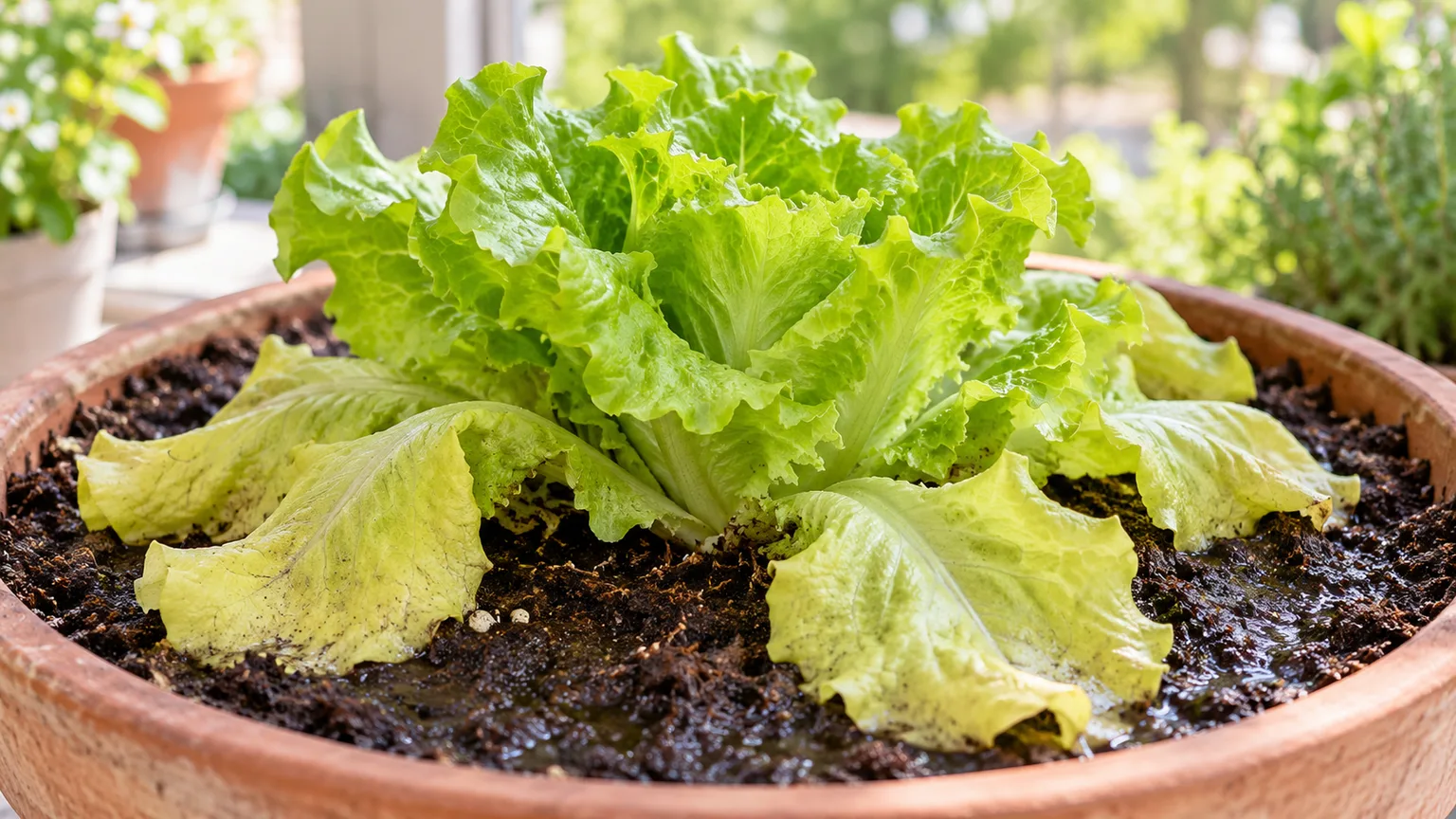
Overwatering on lettuce shows up as soft yellow outer leaves on a heavy pot while the mix is still wet. Lettuce roots sit in the top few centimeters of soil, so a saturated layer around the shallow crown suffocates them fast. First step: stop watering and push a finger 2 cm deep under the leaf canopy — if it feels wet and cool, let the top layer dry before watering again.
Overwatering on Lettuce: Causes, Checks & Fixes
This guide covers overwatering on Lettuce. See also the general Overwatering guide, watering, and light pages for this plant.
Overwatering on Lettuce: Causes, Checks & Fixes
Quick answer
Overwatering on lettuce is a shallow-root problem: Lactuca sativa feeds from the top few centimeters of soil, and that thin layer swings between perfect and airless faster than any deep-rooted vegetable. When the crown zone stays saturated, roots lose oxygen and die in waterlogged soil, and the outer leaves yellow while the pot still feels heavy.
For how chronic wet mix damages roots in general, see our overwatering guide. On lettuce, the pattern is yellow softening outer leaves plus a wet 2 cm root zone under the canopy — not crisp leaves on a light, dry pot.
First step: stop watering and test under the canopy. Push a finger or wooden skewer about 2 cm deep beneath the leaves. Wet and cool means wait; only water again once that top layer begins to dry.
When to use this page vs other Lettuce guides
| Pattern | Read next |
|---|---|
| Yellow soft outer leaves + wet soil (this page) | Stay here; escalate to root rot if the crown turns mushy |
| Limp leaves + light pot that perk up after watering | Underwatering |
| Whole plant wilted despite wet soil | Wilting |
| Leaves drooping but soil moisture unclear | Drooping leaves |
| Yellow leaves with dry soil or other patterns | Yellow leaves |
| Brown dry edges mostly on inner young leaves | Brown tips |
| Tiny flies hovering over damp mix | Fungus gnats |
| White fuzz on the soil surface | Mold on soil |
| Pale stretched growth in a dim spot | Not enough light |
What overwatering looks like on Lettuce
Lettuce shows excess water from the outside in. The oldest outer leaves sit closest to wet soil, so they yellow, soften, and lie flat first while the heart may still look green. Growth stalls because damaged roots cannot move water or nutrients upward even though the soil is full of both.
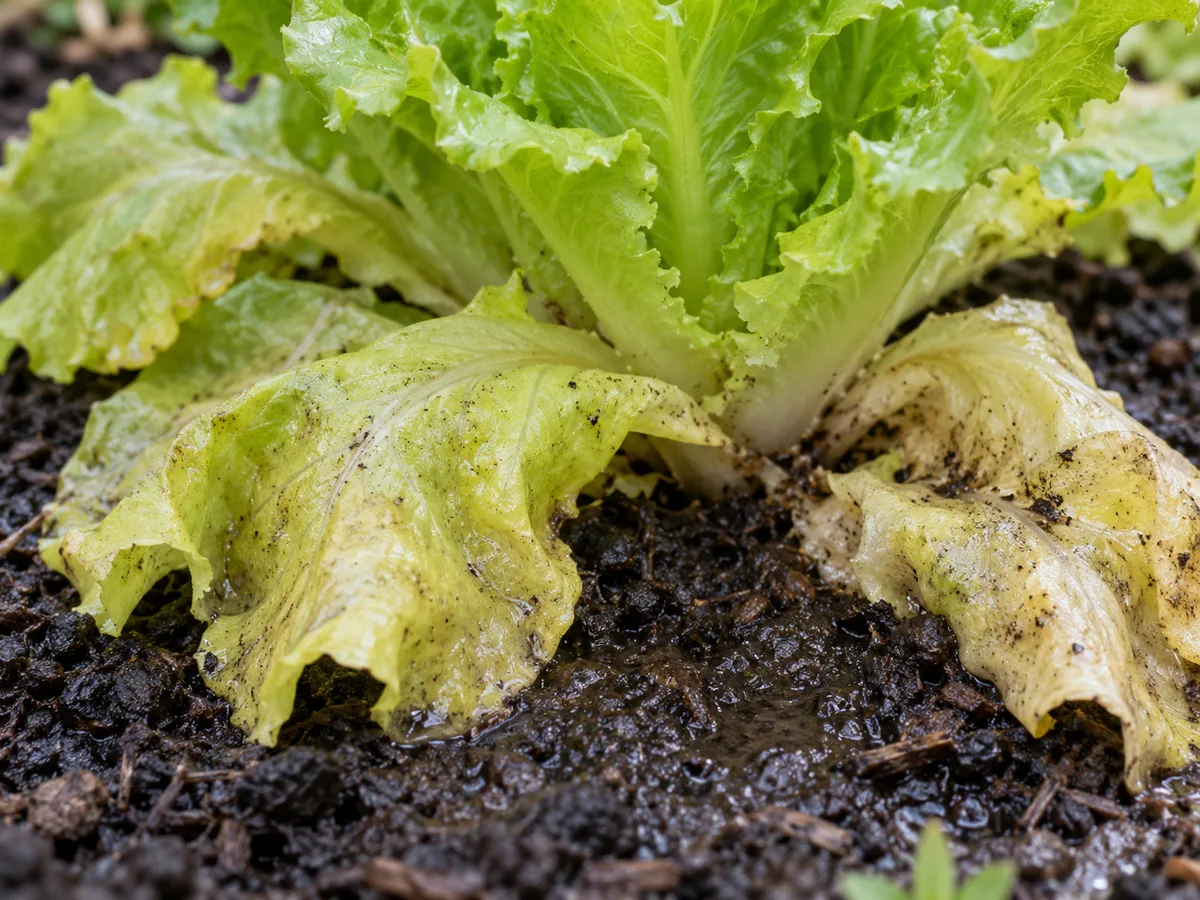
Overwatering at the soil line — yellowed outer leaves and a stressed crown on dark saturated mix while inner leaves still look green.
Early signs
- Heavy pot or soggy bed a day or more after watering
- Outer leaves yellowing and softening while inner leaves still look normal
- No new heart growth for a week or more in the growing season
- Algae, moss, or fungus gnats on the constantly damp surface — wet growing media attracts fungus gnats, so treat flies as a moisture warning and check fungus gnats if they persist
- Looseleaf harvests going limp within a day of picking, faster than fresh leaves should
Advanced signs
- Soft or translucent crown where leaves meet the soil
- Sour or rotten smell from the pot — soil that has sat too long without oxygen usually smells sour or rotten
- Brown slimy patches where lower leaves press against wet soil
- Seedlings keeling over at the soil line with pinched brown stems
- Whole rosette collapse within days of looking merely yellow
The crown-and-outer-leaf check
This check only works on rosette plants like lettuce, not on stemmed houseplants. The crown — the compressed stem base where every leaf attaches — is the single point of failure. Roots can be partly damaged and the plant still recovers, but a rotted crown kills the rosette.
Part the outer leaves gently and press the crown with a clean fingertip:
- Firm crown + yellow outer leaves + wet mix — Early overwatering. Remove the worst leaves, pause water, and the heart should resume.
- Firm crown + dry mix — Not overwatering. Look at underwatering or heat stress instead.
- Soft crown + wet mix — Advancing rot. Harvest anything usable now and plan a resow.
- Upright new leaves emerging from the heart — Recovery in progress, even if outer leaves still look rough.
On heading types, also peel back the lowest wrapper leaves. Water trapped between a tight head and soggy soil rots the base invisibly while the top looks fine.
Damping-off in seedlings vs bottom rot in mature plants
Lettuce fails differently at each life stage, and the distinction decides whether you wait or resow. Damping-off is a serious disease of young seedlings, while sclerotinia and mildews are the serious threats on mature plants.
Seedlings (trays and fresh sowings): Stems pinch to a brown thread at the soil line and whole rows topple within a day or two. This is damping-off, driven by wet seed-starting mix and poor airflow. There is no rescue for a toppled seedling — discard affected cells, thin for airflow, and resow into barely moist mix.
Mature plants (rosettes and heads): Lower leaves touching wet soil develop brown slimy lesions that creep upward. Clemson identifies gray mold, Rhizoctonia bottom rot, and Sclerotinia drop among the diseases of this crop, and all of them favor prolonged leaf wetness. Strip affected lower leaves, stop overhead watering, and give the bed air. A plant with a firm crown and clean heart can still produce after bottom leaves are removed.
Why Lettuce gets overwatering
Lettuce wants steady moisture without standing water around its shallow roots, and most overwatering comes from overshooting that narrow band.
Daily watering on autopilot. Shallow containers dry fast in wind, so growers adopt a daily habit — then a cool cloudy stretch arrives and the same habit waterlogs the root zone. Check the top 1–2 cm every time instead of watering by routine; the watering guide sets out the check method.
Heavy soil in shallow pots. Lettuce grows in pots only 15–20 cm deep, so a dense peat mix with no perlite or grit holds the entire root zone wet. Rich organic matter is good, but it must still drain — see the soil guide for a mix that holds moisture and lets excess go.
Watering over the head, into the head. Overhead watering in the evening wets lower leaves and fills the hearts of butterhead and crisphead types. Morning watering at soil level keeps foliage dry by nightfall.
Saucer and cachepot traps. Balcony pots sitting in full saucers after rain reabsorb runoff for days. Empty saucers after storms and confirm drainage holes run freely.
Tight spacing in humid weather. Dense beds hold humidity between rosettes, keeping lower leaves wet long after the soil surface looks fine. Heading types planted at full 8–12 inch spacing dry faster than crowded rows.
How to confirm the cause
Work through this checklist in order before changing anything:
- Lift the pot or squeeze a handful of bed soil — Heavy and molding together instead of crumbling means excess water.
- Probe 2 cm deep under the canopy — Wet and cool a full day after watering confirms the root zone never dried.
- Press the crown — Firm means early stage; soft means rot is advancing.
- Smell the drainage water or soil — Sour odor confirms oxygen-starved mix.
- Inspect the lowest leaves — Yellow soft blades on wet soil fit overwatering; brown dry margins on inner young leaves fit tipburn instead.
- Note recent weather — Days of rain or a cool overcast stretch after regular watering strongly favors overwatering.
First fix for Lettuce
Stop watering and expose the crown zone to air. Pull mulch back from stems, empty saucers, and if pots are waterlogged, tilt them to drain. Move containers where morning sun and breeze reach the soil surface.
That single pause lets you read the plant for two to three days without adding variables. If the crown stays firm and the top 2 cm dry out, resume careful watering. If the crown softens or seedlings keep toppling, move to the recovery steps below the same day.
Step-by-step recovery
Match the response to the plant type and stage — lettuce is not one uniform crop.
Seedlings with damping-off
- Discard toppled seedlings and the wettest mix around them.
- Thin survivors for airflow and water sparingly from below or with a fine mist.
- Resow into fresh barely moist mix if more than a third of the row failed — looseleaf types reach harvest in 30–60 days, so a fresh sowing often outruns a rescue attempt. The propagation guide covers clean sowing technique.
Looseleaf and butterhead rosettes
- Strip yellow outer leaves so the crown gets light and air.
- Hold water until the top 1–2 cm dry, then water at soil level in the morning.
- Harvest outer leaves early and often — picking keeps the crown open and turns stressed plants into meals rather than losses.
- Top-dress lightly with compost only after new heart growth resumes.
Romaine and crisphead types
- Peel back lower wrapper leaves and remove any slimy tissue touching soil.
- Water only at the base, never into the head — trapped heart water rots from inside.
- If the heart center pulls out soft or smells bad, harvest what is usable and resow; a rotted heart does not reform.
- Give heading types their full spacing next round so air moves between plants.
Recovery timeline
| Severity | What to expect |
|---|---|
| Mild (firm crown, few yellow leaves) | Top layer dries in 3–5 days; yellowing stops; new heart leaves within 1–2 weeks |
| Moderate (many yellow outers, firm crown) | 2–3 weeks of careful watering before confident new growth |
| Severe (soft crown, slime, seedling collapse) | Plant usually lost; resow and expect harvest in 30–60 days for looseleaf |
Judge success by upright new leaves from the heart, not by old outer leaves re-greening. Removed yellow leaves are gone for good; the center tells the story.
Lookalike symptoms
| What you see | Likely cause |
|---|---|
| Yellow soft outer leaves on wet soil | Overwatering (this page) |
| Limp leaves on a light dry pot that perk up after watering | Underwatering |
| Brown dry margins on inner young leaves of heads | Tipburn from calcium and water-stress swings — see brown tips |
| Bitter leaves with a tall flower stalk in heat | Bolting, not a water problem — check the overview for season timing |
| White powder or fuzz on leaves in damp air | Mildew — improve airflow and see mold on soil if the surface is affected |
| Whole plant limp on wet soil with sour smell | Advanced rot — root rot |
Tipburn deserves special attention because it confuses growers: it comes from calcium deficiency in growing tissue driven by water stress and low evapotranspiration, so both overwatering and underwatering swings can trigger it. USU Extension notes that wet and dry periods favor tipburn on inner leaves. Steady moisture prevents more tipburn than any spray.
Mistakes to avoid
- Watering because outer leaves yellowed on already-wet mix — the most common way a mild case becomes fatal
- Fertilizing a drowning plant before the crown firms up and new growth resumes
- Misting leaves every evening in humid weather, which keeps lower foliage wet overnight
- Repotting a stressed annual into a bigger pot instead of fixing drainage or resowing
- Composting slimy rot tissue back into beds where bottom-rot organisms persist
- Sowing the same tray again in the same wet mix after damping-off wiped it
How to prevent it next time
Keep lettuce in fertile, well-drained soil rich in organic matter — moisture-retentive yet free-draining, around pH 6.0–6.7. Water to supply roughly 1 to 2 inches per week, adjusted for rain and heat rather than fixed by calendar. Drip irrigation and a light mulch keep moisture even without wetting leaves.
In containers, choose pots with open drainage holes and empty saucers after watering. Roots that sit in oversaturated soil rot, causing wilting and yellowing, so check moisture daily in warm wind and back off in cool spells. Give plants sun without trapping summer heat — morning sun with afternoon shade in warm weather keeps uptake matched to watering.
Sow succession rows every two to three weeks in the cool season. A short-lived annual crop forgives a lost sowing when the next row is already up.
When to worry
A few yellow outer leaves on a firm crown after one heavy rain usually resolves with a dry-down pause. Escalate the same day when:
- The crown feels soft, translucent, or mushy
- The mix or drainage water smells sour
- Seedlings topple in patches at the soil line
- Brown slime spreads up from soil-touching leaves
- No new heart growth appears after two weeks of corrected watering
Lettuce is a fast crop, so a dead plant is a resowing decision, not a long rehabilitation. Save seed-starting effort for fresh mix and better drainage.
Related Lettuce guides
- Overview — cool-season culture, types, and harvest timing
- Watering — the 1–2 cm check method and seasonal rhythm
- Soil — rich yet free-draining mixes around pH 6.0–6.7
- Light — sun needs and afternoon shade in warmth
- Root rot — mushy-crown unpotting protocol when rot wins
- Yellow leaves — non-water causes of yellowing
- Problems hub — full symptom index
Conclusion
Overwatering on lettuce is a crown-zone and timing problem in a shallow-rooted annual: the top centimeters stay wet, oxygen drops, and outer leaves yellow while the pot feels heavy. Stop water, confirm with the 2 cm probe and the crown press, and separate seedling damping-off from mature bottom rot before acting. Firm crowns recover with air and restraint; soft crowns mean harvest and resow. Steady, checked moisture — not a fixed schedule — keeps the next sowing crisp.
Related tool
Use the Root Rot Risk Checker to narrow causes for overwatering on this plant before changing multiple variables at once.