Mealybugs on Lettuce: Causes, Checks & Fixes
Quick answer
White cottony clusters tucked between lettuce leaves are usually mealybugs. Dab every visible cluster with 70% rubbing alcohol on a cotton swab first, then treat survivors with insecticidal soap or neem, wash harvests thoroughly, and re-check hidden folds every few days for hatchlings.
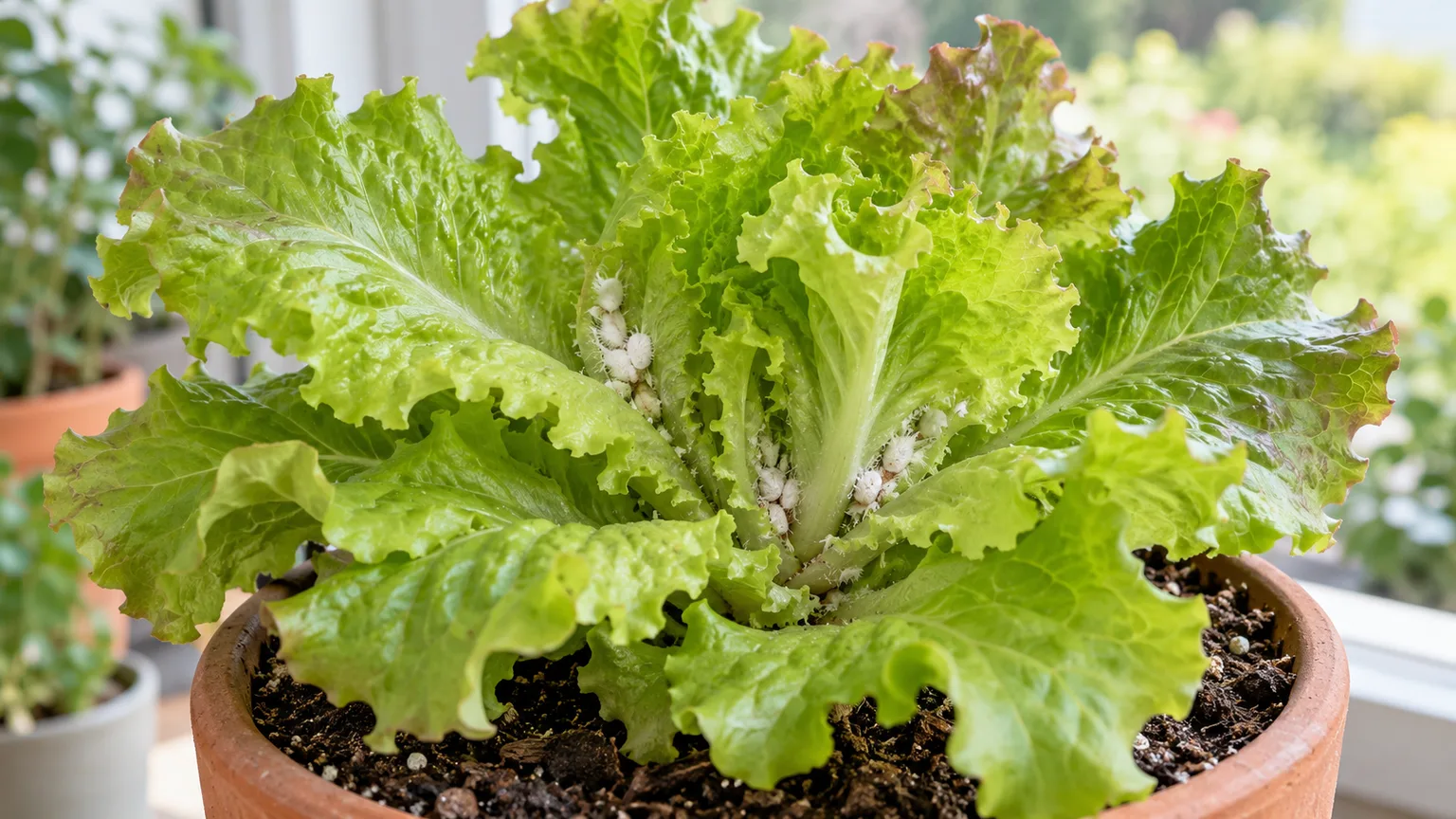
Mealybugs on Lettuce: Causes, Checks & Fixes
This guide covers mealybugs on Lettuce. See also the general Mealybugs guide, watering, and light pages for this plant.
Mealybugs on Lettuce: Causes, Checks & Fixes
Quick answer
White, cottony tufts wedged where lettuce leaves meet at the base are usually mealybugs — small, oval sap-sucking insects related to scale insects that hide a soft body under a waxy white coat.
First step: dab every visible cluster with 70% rubbing alcohol on a cotton swab, and strip the worst-coated outer leaves. Test the alcohol on one leaf first, then touch each tuft directly — it dissolves the waxy cover and kills the insects beneath. For how mealybugs behave on plants in general, see our mealybug guide. On lettuce, the rest of the job is harvest hygiene: wash what you pick leaf by leaf, treat survivors with insecticidal soap or neem, and re-check hidden folds every few days because eggs keep hatching.
What mealybugs look like on lettuce
On lettuce (Lactuca sativa, a cool-season rosette annual), mealybugs do not sit out in the open. Look for white cottony masses packed into the crown where leaves emerge, along midribs on leaf undersides, and around the stem base just above the soil. Adult females are only about 1/20 to 1/5 of an inch long, covered with white, powdery, waxy secretions, so a small tuft can hide dozens of insects plus yellow eggs.
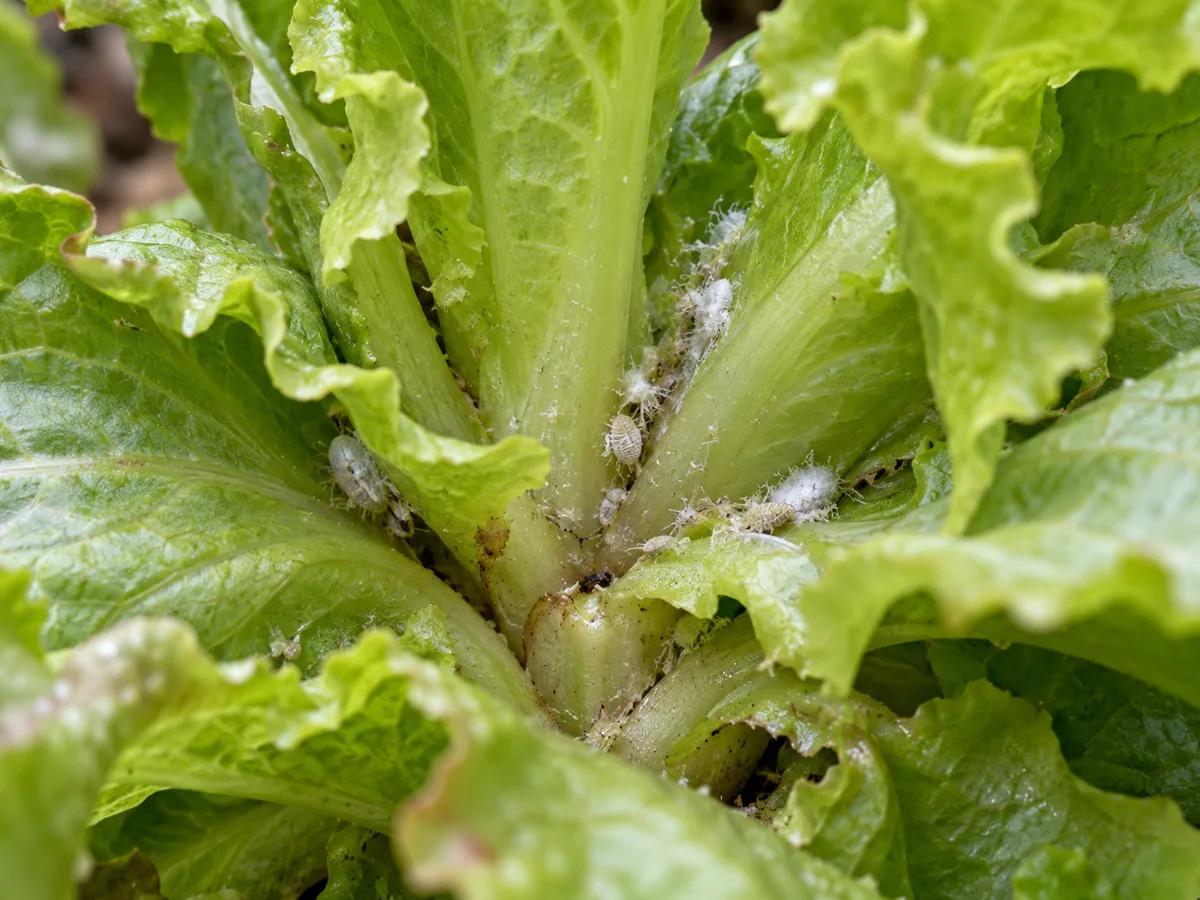
Macro view: cottony wax masses in the crown and leaf axils with slow-moving oval insects beneath — smear a tuft with alcohol to confirm.
Feeding shows up as stunted, pale new leaves emerging from the center, outer leaves yellowing while the soil is fine, and a sticky film on leaves below the colony. That stickiness is honeydew, and it grows black sooty mold that further ruins eating quality. Ants walking the plant are a strong secondary clue, since ants transport mealybugs from one plant to another and farm them for honeydew.
Where mealybugs hide on lettuce
This is the section that separates lettuce from generic houseplant advice. Three lettuce-only hiding spots:
- Inside the heart of heading types. Butterhead, romaine, and crisphead leaves wrap tightly, creating warm, still chambers where colonies build unseen. Peel outer leaves back to inspect the inner folds — mealybugs favor exactly these protected locations.
- Under soil-touching outer leaves. Lettuce grows as a ground-hugging rosette, and the lowest leaves rest on damp mix. Colonies settle on the undersides there, plus mealybug species that feed near the stem base, out of sight from above.
- In the crown of cut-and-come-again looseleaf. Every picked outer leaf leaves a small scar and axil at the crown. Successive harvests create a ring of crevices around the growing point — ideal shelter that a casual glance from above misses entirely.
Container lettuce on warm balconies is the highest-risk setup: pots sit close together, airflow is poor, and off-season heat pushes soft sappy growth that mealybugs prefer.
Why lettuce gets mealybugs
Lettuce is a cool-season crop that bolts and turns bitter around 21–27°C, especially when soil runs dry. Mealybugs are warm-weather insects that build fastest when lettuce is growing off-season — a summer balcony pot, seedlings raised in a warm greenhouse, or an overwintered plant kept cosseted. Heat-stressed, slow-growing lettuce cannot outgrow sap loss the way a vigorous cool-season rosette can.
Common lettuce-specific triggers:
- Nursery seedlings brought home uninspected. One infested plug introduces egg-laying females to the whole bed. Quarantine new plants for 2 or 3 weeks before placing them near clean crops.
- Excess nitrogen pushing soft growth. Rich feeding for fast leaves backfires: high nitrogen fertility favors mealybug reproduction. Follow the measured fertilizer guidance instead of extra doses.
- Crowded spacing and still air. Heading cultivars need room for air circulation and head development; crammed pots stay humid and undisturbed, which suits hidden colonies.
- Ants with free access. Balcony railings, shared trays, and soil bridges let ants shuttle crawlers between pots. Break the ant route and you slow the spread.
How to confirm the cause
Work in this order before spraying anything:
- Part the rosette. Pull outer leaves gently outward and look into the crown, leaf axils, and stem base. True mealybug masses sit in these joints as raised cottony clumps, not flat film on open leaf surfaces.
- Dab-test one tuft. Touch it with an alcohol-dipped cotton swab. Wax that smears brownish-yellow with tiny oval bodies inside confirms insects; powdery mildew wipes off as dry dust with no bodies.
- Check the sticky trail. Shiny honeydew on lower leaves, black sooty film, and ants point to sap-suckers. No stickiness and no insects means the yellowing likely comes from overwatering or underwatering instead.
- Read the growth pattern. Stunted central leaves with yellowing spreading outward fits sap-sucker feeding; uniform outer-leaf yellowing in wet soil points to root rot instead.
- Check the calendar. A summer-grown crop stalling with pale new growth in heat may also be pre-bolting. If the center is elongating upward rather than forming a rosette, heat — not pests — is the main story; see slow growth and not enough light to separate seasonal stall from pest damage.
Use this page when cottony masses and honeydew are present. Use the sibling guides above when the axils are clean but leaves still look wrong. The full cluster lives at all lettuce problems.
| What you see | More likely | How to tell |
|---|---|---|
| Cottony clumps in axils and crown, smear on dabbing | Mealybugs (this page) | Raised wax, insects beneath, honeydew, ants |
| Pear-shaped insects clustered on new growth, no wax filaments | Aphids | Soft-bodied, often green or black, wipe off easily |
| Fine stippling and webbing on leaf undersides | Spider mites | Tiny dots plus silk; shake a leaf over white paper to see movers |
| Yellow limp leaves, wet heavy soil, no insects | Overwatering or root rot | Soil stays soggy; crown may soften — check the watering rhythm |
| Flat white dust on open leaf surfaces, no bodies | Environmental residue or mildew, not mealybugs | Wipes dry with no insects; review light and airflow |
The first fix for lettuce
Dab every visible cluster with 70% rubbing alcohol on a cotton swab, then strip the worst-coated outer leaves. Do this before any spray: it kills insects on contact, dissolves the waxy shield, and instantly removes the egg masses that sprays struggle to penetrate. Bag stripped leaves and trash them — do not compost infested material. Wash hands and scissors after. Then wash remaining harvest leaves thoroughly before eating, since honeydew and wax sit on food you will consume.
Step-by-step recovery
After the alcohol dab, treat survivors in order — one method at a time so you can see what worked:
- Rinse with a firm water jet. Outdoors or over a sink, aim a forceful jet of high-pressure water into the crown and under outer leaves to dislodge eggs, crawlers, and adults. Repeat twice a week. Tip container plants so runoff does not pool in the heart — trapped water in a dense head invites rot.
- Apply insecticidal soap or horticultural oil. If dabbing and rinsing leave survivors, use insecticidal soap sprays or superior horticultural oil spray following label directions, coating leaf undersides and crown crevices thoroughly. These are contact materials, so coverage into the hiding spots matters more than the brand.
- Repeat on a schedule, not once. Mealybug generations overlap and eggs keep hatching, so two to three weekly applications are often needed to catch newly emerged nymphs before they wax over. Mark spray days on a calendar.
- Add neem for stragglers. A labeled neem spray in the evening, repeated weekly per the label, finishes insects missed in deep folds. Observe the label’s harvest interval before picking sprayed leaves.
- Block the ants. Sticky barriers on pot stands, saucers emptied of sugary runoff, and no soil bridges between pots stop ants re-seeding crawlers.
A 20 cm container of looseleaf lettuce on a sheltered balcony showed cottony tufts in three lower axils plus ants on the pot rim, a week after a nursery seedling joined the trough without quarantine. The grower dabbed all tufts with 70% alcohol, stripped two matted outer leaves, and isolated the pot. Twice-weekly water rinses plus two weekly evening soap sprays into the crown cleared visible insects; clean new leaves emerged from the center by week two, and outer harvests resumed after thorough washing in week three.
Recovery timeline
Lettuce is a fast annual — looseleaf types can be ready in 30–60 days — so judge it on a short clock. With the dab-plus-soap sequence and weekly checks:
- Days 1–3: No fresh wax after dabbing; ants decline once honeydew is washed off.
- Week 1–2: Central leaves emerge clean and expand normally in cool weather.
- Week 2–3: Outer harvests resume once new growth looks healthy; keep washing every pick.
Judge by clean new growth from the center and absence of fresh wax, not by old leaves looking perfect — scarred outer leaves stay scarred. If the crown is brown and mushy, the center has stopped producing, or colonies return after three full weeks of treatment, the plant is finished. Because lettuce is a short-lived crop, discarding a heavily affected plant rather than fighting on is a valid decision: trash it, scrub the pot with hot soapy water, refresh the top mix, and sow fresh seed. Succession sowing every couple of weeks in suitable weather gives a steadier supply than nursing one besieged plant.
What not to do
- Do not use systemic insecticides on lettuce. It is a salad crop picked and eaten raw; systemics move inside the tissue and cannot be washed off. Stick to manual removal, soap, oil, and neem per food-crop labels.
- Do not push fertilizer to “help it recover.” Extra nitrogen grows the soft tissue mealybugs want. Hold feeding until clean growth resumes, then return to the normal schedule.
- Do not blast water into a heading heart and leave it. Rinse, then shake the head gently and let it drain in airflow. Standing water in wrapped leaves invites the soft crown decay described in wilting and drooping leaves.
- Do not repot a struggling annual. Lettuce is transplanted once to its final bed or container; unpotting a stressed rosette damages the shallow root system that feeds every leaf. Re-sow instead.
- Do not confuse sap irritation with pest damage. Lettuce sap containing lactucin can irritate skin — wear gloves if it bothers you, but the milky sap itself is not a symptom of anything wrong.
How to prevent it next time
- Sow in the cool window. Lettuce produces its best leaves in cool weather with steady moisture; heat-stressed summer crops attract and succumb to pests faster. Check the seasonal timing in the lettuce overview.
- Space for airflow. Give heading types room to develop and keep looseleaf pots from touching. Air movement dries hiding spots and exposes colonies early.
- Water the soil, check the soil. Keep the even-moisture rhythm from the watering guide — upper 1–2 cm drying between drinks — in the fertile but free-draining mix from the soil guide. Stressed plants in soggy or bone-dry mix succumb faster.
- Quarantine and inspect. Isolate nursery seedlings for two to three weeks, check crowns weekly with leaves parted, and clear fallen outer leaves where crawlers shelter. Yellow leaves and brown tips guides help separate pest damage from water stress during checks.
- Invite the predators. Outdoors, lacewings, ladybugs, and the mealybug destroyer beetle Cryptolaemus keep outdoor colonies within bounds — another reason to avoid broad insecticides. control ants so they do not undo the predators’ work.
Related lettuce guides
- Lettuce overview — cool-season timing, cultivar types, and harvest windows this page assumes.
- All lettuce problems — full cluster hub when symptoms do not match mealybugs.
- Watering — the upper 1–2 cm check that keeps rosettes resilient.
- Soil — rich but free-draining mix around pH 6.0–6.7.
- Light — sun with afternoon shade in warmth; separates seasonal stall from pest stunting.
- Aphids — use when colonies lack waxy filaments and cluster on new growth instead.
- Spider mites — use for stippled leaves with webbing rather than cottony masses.
- Yellow leaves — use when yellowing has no insects, wax, or honeydew at all.
- Fungus gnats — use when tiny flies, not cottony masses, rise from constantly wet mix.
Related tool
Use the Pest Identifier Tool to narrow causes for mealybugs on this plant before changing multiple variables at once.