Root Rot on Lettuce: Causes, Checks & Fixes
Quick answer
Root rot on lettuce usually starts when the shallow root zone stays saturated and roots lose oxygen. First, stop watering and check the crown base and mix smell before changing anything else.
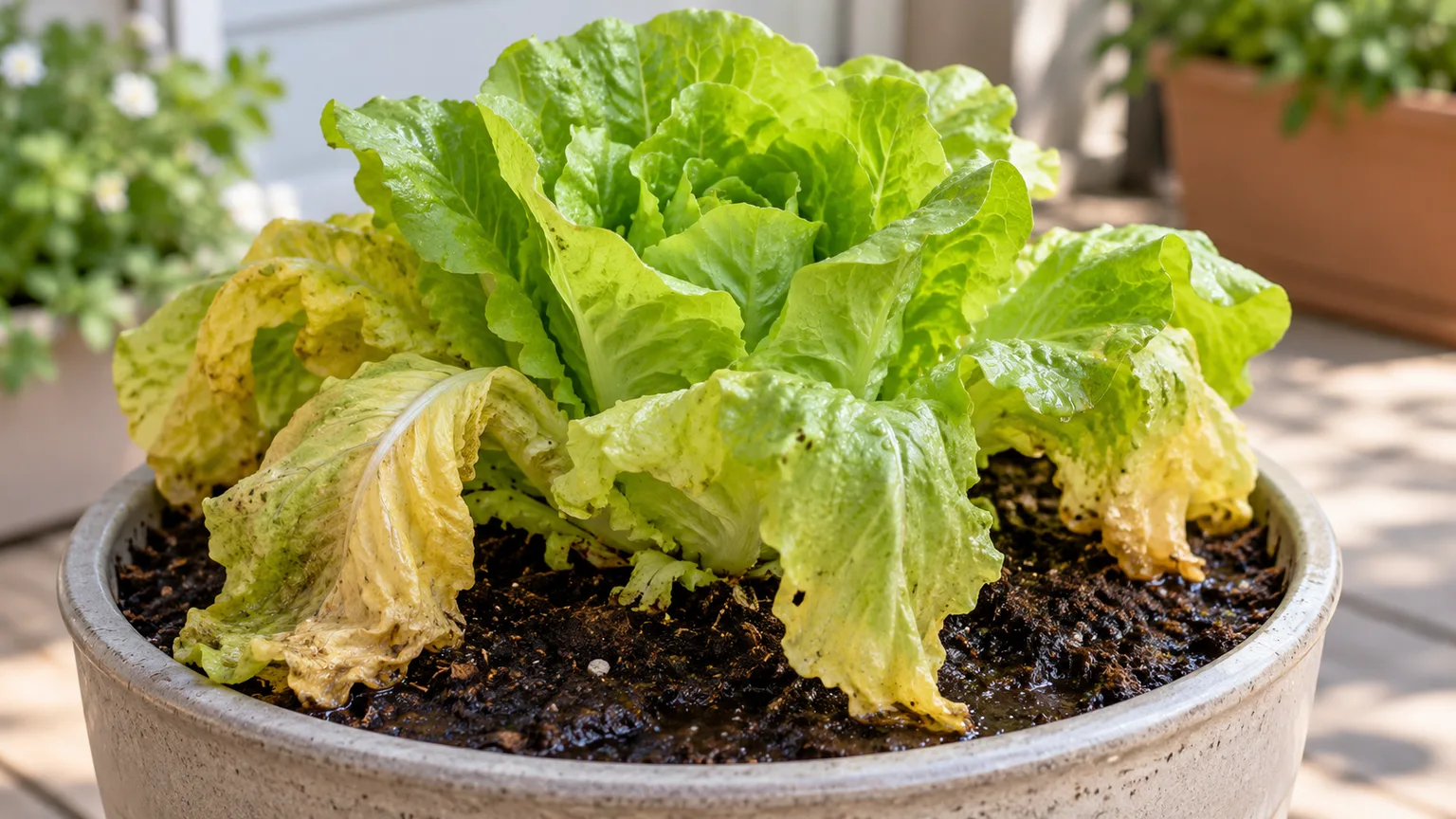
Root Rot on Lettuce: Causes, Checks & Fixes
This guide covers root rot on Lettuce. See also the general Root Rot guide, watering, and light pages for this plant.
Root Rot on Lettuce: Causes, Checks & Fixes
Quick answer
Root rot on lettuce is usually a wet-mix problem, not bad luck. Lactuca sativa feeds through a shallow root system occupying only the top few centimetres of soil, so a container that stays saturated quickly starves those fine roots of oxygen and invites decay organisms such as Pythium. Seedlings collapse at the soil line within days (damping-off); older rosettes stall, outer leaves yellow and wilt even though the mix is wet, and the crown base may turn soft and sour-smelling.
First fix: stop watering and inspect the crown base and the smell of the mix. Do that before fertilizing, spraying, or repotting — everything else depends on whether the crown is still firm. For the general mechanics of how waterlogged mix kills roots, see the root rot guide. The rest of this page is lettuce-only: shallow-root checks, rosette-crown diagnosis, damping-off versus mature-plant rot, and when to rescue versus resow.
What root rot looks like on lettuce
Lettuce shows root trouble from the outside in, and the signs differ sharply by plant age.
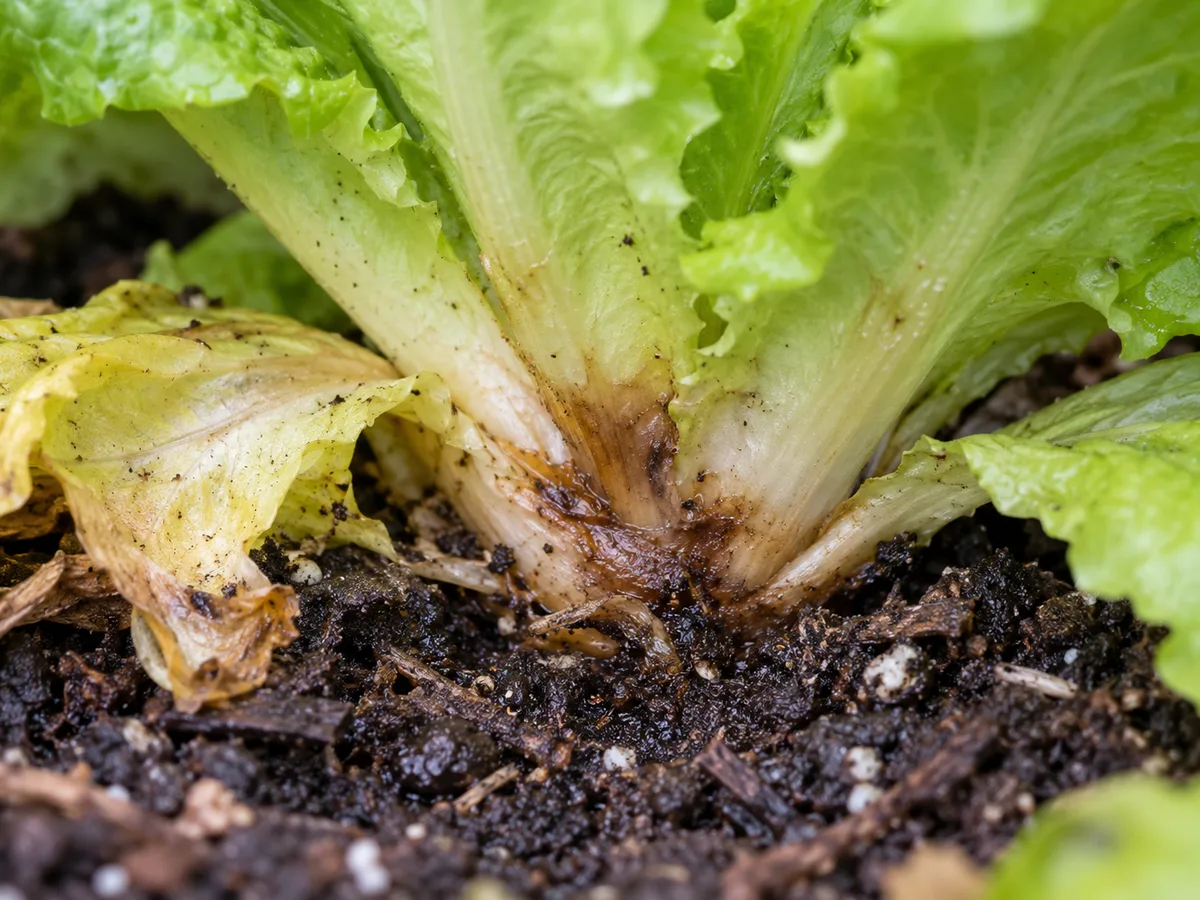
Soft, discoloured tissue at the soil line with stunted outer leaves — compare with firm white roots and a crisp crown on a healthy plant.
Seedling damping-off
In trays and fresh sowings, Pythium ultimum is the most common cause of damping-off on lettuce, with several related species also involved Bayer Vegetables agronomic spotlight. Before emergence, seeds simply rot and gaps appear in the row; after emergence, stems develop water-soaked, soft bands at the soil line, constrict, and seedlings topple Pacific Northwest Pest Management Handbooks. Because the pathogen survives in soil and debris and spreads via swimming zoospores in films of water, one overwatered tray can flatten a whole sowing.
Mature-plant root rot and wilt
On established rosettes, watch for stunting plus yellowing and wilting of the outer, older leaves while the mix is still moist — the classic Pythium wilt pattern, which can end in full plant collapse Bayer Vegetables agronomic spotlight. Below ground, infected roots turn soft and brown, and the root cortex may slough off when pulled, leaving string-like vascular strands. A dark yellow-to-brown discolouration on the taproot with reduced feeder roots points the same way.
Why lettuce rots: shallow roots, a soil-line crown, and wet cool-season soil
Three lettuce traits stack the odds. First, the root system is shallow and fine, drawing from the top layer of a 15–20 cm container; that layer swings fastest between moist and saturated, and it is exactly where excess water lingers after heavy watering. Roots in waterlogged soil die because they cannot absorb the oxygen they need, and the damage compounds the longer air is cut off.
Second, the edible crown sits at or just above the soil line inside a rosette that funnels water inward. Watering over the heart of a butterhead or romaine, or letting leaves trap moisture against the stem base, keeps crown tissue wet and invites both root and bottom-leaf decay. Harvest habit matters here: picking outer leaves opens airflow around the crown, while a dense untouched head in a wet container stays damp longest.
Third, lettuce is a cool-season annual usually sown into cool, moist conditions — precisely the cool, wet soils that favour Pythium infection and damping-off Pacific Northwest Pest Management Handbooks. Warm spells add a different trap: heat-stressed plants wilt, growers add more water, and the already-warm wet mix finishes the roots. Hydroponic growers meet the same pathogen from the other direction, since recirculating systems give zoospores an easy ride between plants CEAg World.
How to confirm it before you act
Work in this order and stop at the first decisive answer.
- Smell the mix at the crown. Soil that has gone too long without oxygen smells sour or rotten. A sour crown zone is the strongest home confirmation of rot conditions.
- Feel below the surface, not the surface. A dry top centimetre means little on its own, because the surface dries first while deeper mix stays wet. Push a finger or wooden stick 2–3 cm down beside the rosette — wet, cold, clinging mix days after watering supports the diagnosis.
- Press the crown base gently. Firm and green means the plant is still defensible; soft, translucent, or brown tissue at the soil line means decay has reached the stem.
- Lift one plant or plug and look at the roots. Healthy lettuce roots are pale and firm; rotted ones are brown, mushy, and shed their outer layer. If most roots are firm and white, treat it as a watering problem instead — compare with the overwatering guide.
- Tug-test older rosettes. Pythium wilt rots roots but leaves the crown intact, so plants do not snap off at the soil line when tugged — unlike Sclerotinia drop, where they break cleanly Bayer Vegetables agronomic spotlight. Use that distinction before assuming every wilt is root rot.
First fix for lettuce
Stop watering and get air back to the crown: move the container to bright, airy morning sun and keep water off the rosette heart.
One action, done immediately, because every extra litre poured onto oxygen-starved roots deepens the damage. Do not fertilize, spray, or repot on day one — stressed lettuce cannot use feed, and surgery on unconfirmed plants wastes the crop. Re-check the crown in 24 hours; firming tissue and a mix that is drying from the top are your early green lights.
Step-by-step rescue
Seedlings with damping-off
Pull and discard collapsed seedlings plus the wettest plug mix around them — they do not recover. Thin the survivors for airflow, water only at the tray edge with a fine stream, and resow a fresh succession rather than nursing a gappy stand. Lettuce germinates fast in suitable weather, and a new sowing in fresh mix usually outruns any rescue attempt.
Container rosettes with firm crowns
- Ease the plant out and shake off saturated mix without tearing the fine roots.
- Trim only roots that are brown, hollow, or slimy with clean scissors; keep everything pale and firm.
- Repot into fresh, organically rich but free-draining mix at the same crown height — never deeper — in a container with open drainage holes. Around 15–20 cm deep is plenty for leaf types; oversized pots hold water the trimmed roots cannot reach.
- Water once lightly at soil level, away from the heart, then wait until the upper 1–2 cm begins to dry before watering again, as the lettuce watering guide describes.
- Harvest outer leaves early to open the centre to air while the plant re-establishes.
When to start over instead
If the crown base is mushy all the way through, most roots slough apart, or the whole rosette collapses in wet mix, compost the plant and reuse nothing — refresh the mix and sow again. Because lettuce is a short-lived annual normally moved once to its final bed or pot and harvested within 50–80 days NC State Extension, replanting costs weeks, not a season. Succession sowing every couple of weeks during suitable weather, as the lettuce overview recommends, is itself a root-rot strategy: no single plant carries the whole harvest.
Recovery timeline
- Days 1–3: the mix surface dries, any sour smell fades, and no new leaves wilt. Continued spread means the crown is still decaying.
- Week 1–2: outer-leaf yellowing stops advancing and the heart looks perkier in the morning. Old yellow leaves will not re-green — judge by the centre, not the casualties.
- Weeks 2–4: new leaves emerge clean from the centre and roots hold the plant firmly when tugged lightly. Resume normal harvesting, and hold off heavy feeding until growth looks steady for two weeks.
If soft crown tissue keeps spreading or the plant collapses despite dry-down, assume the rot won and replant.
Lookalikes on lettuce
| What you see | More likely | How to tell |
|---|---|---|
| Wilt in wet mix, sour smell, mushy roots | Root rot (this page) | Crown soft; roots brown and sloughing |
| Wilt in wet mix, firm roots, heavy pot | Overwatering without rot yet | Roots pale; recovery within a day of dry-down |
| Limp leaves that revive by evening, light dry pot | Underwatering | Mix dry 2–3 cm down; see also wilting and drooping leaves |
| Yellow outer leaves, firm roots, fuzz on wet surface | Mold on soil or simple yellow leaves | No crown softness; the problem stays on foliage or the surface |
| Bitter leaves and a rising flower stalk in heat | Bolting, not rot | Stem elongates; leaves bitter but roots and crown firm — check the light guide and soil guide for seasonal placement |
Mistakes that make it worse
- Watering on a calendar instead of feeling the top 1–2 cm, especially as weather cools and pots dry more slowly.
- Overhead watering that ponds in the rosette heart; always water at soil level.
- Burying the crown deeper at transplant or when topping up mix.
- Reusing soggy mix from a rotted crop for the next sowing.
- Feeding a stalled plant to perk it up — fertilizer on dead roots burns what little function remains, and nutrients leach fast through lettuce’s thirsty containers Epic Gardening.
- Leaving pots standing in saucers or cachepots that hold runoff; empty them after every watering.
Prevention for the next sowing
Match the setup to shallow roots: containers 15–20 cm deep with drainage holes, an organically rich mix around pH 6.0–6.7 that holds moisture yet drains freely NC State Extension, and spacing that lets air move between rosettes. Indoor growers should keep containers where excess water drains away freely rather than pooling underneath, and hold humidity near 50–70% so foliage and mix surfaces dry between waterings Epic Gardening.
Water by check, not habit: feel the upper 1–2 cm and water at soil level when it begins to dry, checking daily in warm or windy weather and easing off in cool or cloudy spells. Give full sun in genuinely cool weather and morning sun with afternoon shade as heat builds, since dry heat plus wet soil is the combination that pushes plants toward bolting on one side and rot on the other. Sow little and often through the suitable window so each batch stays young and vigorous — young plants outgrow minor setbacks that finish an ageing, long-held rosette. The lettuce problems hub puts this page alongside the other common complaints to compare against.
When to use this page vs other lettuce guides
- Use this page when the mix smells sour, the crown base softens, roots are brown and mushy, or seedlings topple at the soil line.
- Use overwatering when the pot is heavy and leaves flag but roots and crown are still firm.
- Use wilting or drooping leaves when the main symptom is limp foliage and you have not checked the roots yet.
- Use yellow leaves when discoloration leads and the root zone checks out clean.
- Use mold on soil when the issue is surface fuzz and gnats rather than crown decay.
Related lettuce guides
- Lettuce overview — cultivar types, spacing, and harvest windows that set up every diagnosis above.
- Lettuce watering — the 1–2 cm check rhythm that prevents repeat saturation.
- Lettuce soil — mix, pH, and drainage choices for shallow roots.
- Lettuce light — sun-versus-shade calls that separate heat wilt from rot wilt.
- Overwatering on lettuce — the earlier stage of this same moisture problem.
- Lettuce problems hub — all 16 recorded issues when symptoms cross categories.