Wilting on Lettuce: Causes, Checks & Fixes
Quick answer
If your lettuce wilts in afternoon heat but stands firm by dawn, that is heat flop on a shallow-rooted cool-season crop, not a dying plant. If limp leaves persist into the morning, check soil moisture 5 cm down: dry means a deep morning soak, moist means root or disease trouble.
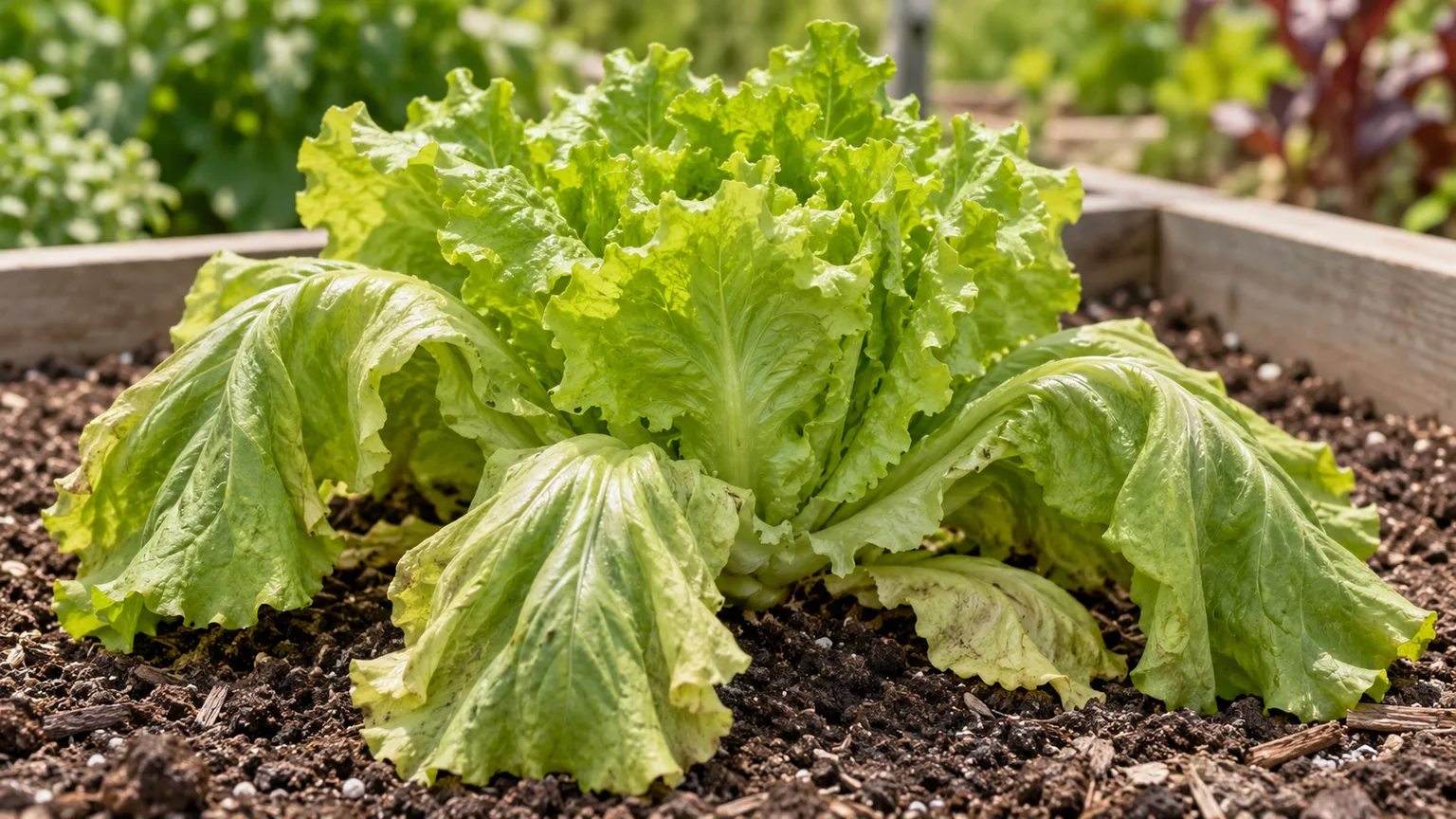
Wilting on Lettuce: Causes, Checks & Fixes
This guide covers wilting on Lettuce. See also the general Wilting guide, watering, and light pages for this plant.
Wilting on Lettuce: Causes, Checks & Fixes
Quick answer
Lettuce is an annual cool-season vegetable with a fine, shallow root system and tender leaves built for fast growth, not for heat. That biology makes one distinction more useful than any other: wilt that vanishes by morning is heat flop, while wilt still present at dawn is a water-pathway failure in the roots, the soil, or the stem.
First, check soil moisture 5 cm (2 inches) down before you add a drop of water. If it is dry, give one deep morning soak at the base and shade the plant through the afternoon. If it is already moist, do not water — move pots to airflow and morning sun, and inspect the crown and roots for rot or disease instead. For the general mechanics of wet-versus-dry wilt, see our wilting guide; on lettuce, the pattern almost always resolves into heat, shallow-root dryness, wet-soil suffocation, or soilborne wilt.
When to use this page vs other lettuce guides
This page is the symptom-first entry for limp, floppy lettuce foliage. Use it to decide which cause fits, then go deep on the matched guide.
- Underwatering — go here when the 5 cm check comes up dry and leaves crisp at the edges.
- Overwatering — go here when soil stays soggy and leaves are limp, soft, or translucent.
- Root rot — go here when wet-soil wilt comes with a musty crown smell or brown mushy roots.
- Drooping leaves — go here when the whole plant sags without classic wilt texture changes and you suspect light or transplant shock.
- Yellow leaves — go here when yellowing leads and wilting follows, especially on lower leaves.
- Brown tips — go here when leaf-edge browning on inner leaves suggests tipburn-type stress rather than true wilt.
- Watering guide — go here for the long-term even-moisture routine after this episode resolves.
- All lettuce problems — go here when you are unsure which symptom leads.
What wilting looks like on lettuce
On lettuce, wilt shows as leaves losing their crisp stance and flopping outward or downward from a rosette or head that stood firm the day before. Unlike droop from shade-seeking, true wilt changes leaf texture: leaves feel soft, papery, or limp between your fingers instead of cool and turgid.
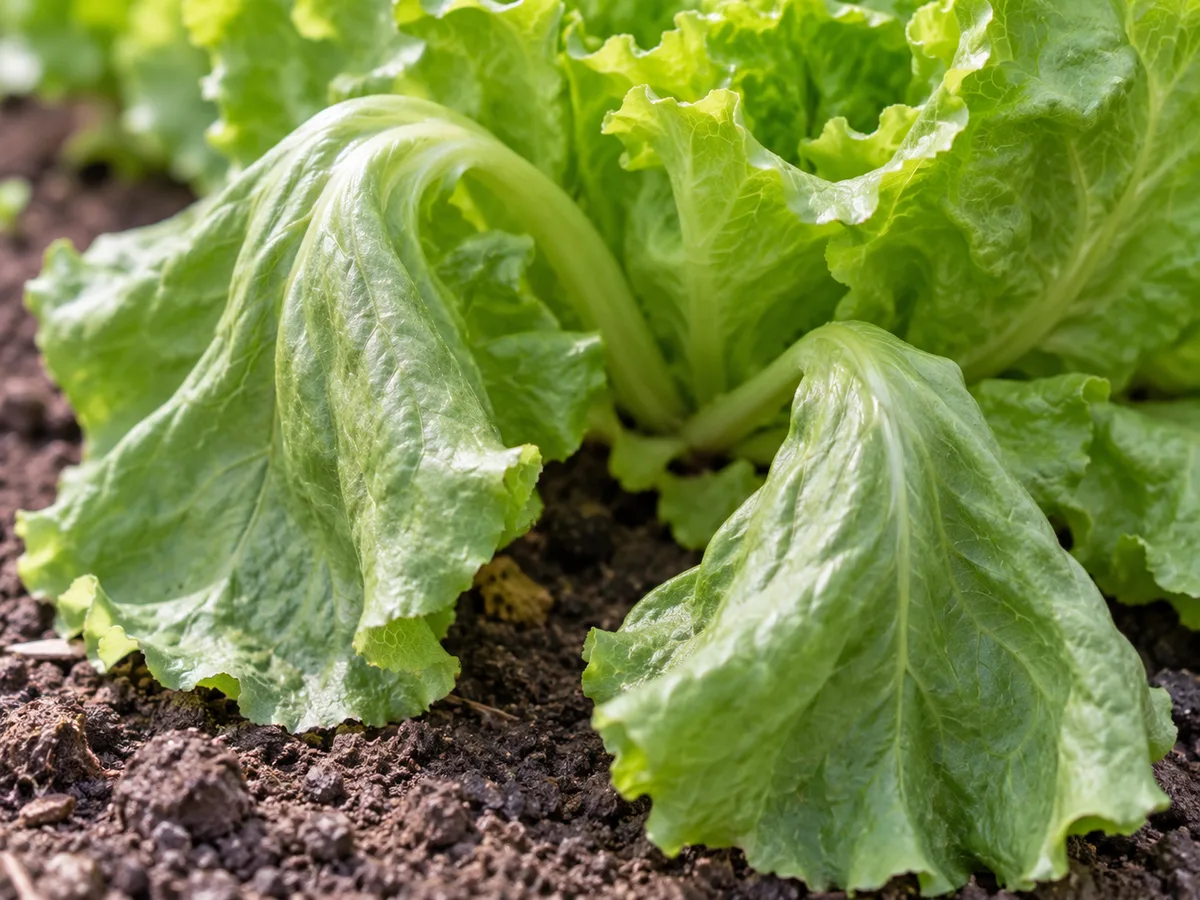
Close-up of limp lettuce outer leaves losing turgor — compare with firm new growth at the centre.
Typical lettuce wilt signs:
- Outer leaves flop first; the centre may still look firm in early stages.
- Afternoon-only flop that recovers overnight points to heat and transpiration overload.
- Persistent limpness at dawn points to roots failing to deliver water.
- Dry-soil wilt adds dull colour and crispy leaf margins; wet-soil wilt adds yellowing, translucency, or a sour smell at the crown.
- A rising central stalk with bitter, elongated leaves means the plant is bolting, and the flop is the crop finishing, not a rescue case.
The dawn test: heat flop or real water failure
This is the most lettuce-specific check on this page, and it works because of how lettuce is built. Utah State University notes lettuce grows best when temperatures do not exceed 75°F, and its shallow feeder roots cannot pull extra water as fast as big tender leaves lose it on a hot afternoon. So an afternoon flop with morning recovery is expected physiology in warm weather, not proof of underwatering.
Do the test in two visits. Note the wilt in the late afternoon, change nothing, and look again at first light. A practical lettuce checklist uses exactly this sequence: wilt in the afternoon but firm leaves at dawn means heat stress or transpiration overload, so the fix is shade and morning watering rather than an evening flood. Watering a heat-flopped plant at dusk because it “looked thirsty” is the most common way growers convert a passing flop into chronic wet-soil trouble.
No other common LeafyPixels vegetable reads quite this way. A tomato or pepper holds afternoon turgor far longer on deeper roots; lettuce, with its shallow active root zone, is the crop where the dawn test earns its keep.
Why lettuce wilts
Four lettuce-shaped causes cover nearly every case. Work them in order rather than treating all four at once.
Dry shallow root zone
Lettuce roots occupy a thin band of soil, so a dry surface crust often means the whole working root zone is dry — especially in small pots, terracotta, or windy balconies. Utah State advises 1–2 inches of water per week with drip or mulch to hold it, and warns that moisture fluctuations toughen leaves, slow head development, and spoil flavour. A plant that wilts every afternoon on a rigid every-three-days schedule is not getting steady access to water, even if each drink looks generous.
Heat and bolting: when wilt means the crop is finishing
Lettuce bolts — switches from leaf production to flowering — when heat, day length, or dry roots signal the season is ending. NC State describes lettuce as a cool-season annual for which high temperature plus dry soil accelerates the switch to flowering. Indoor and container growers see the same switch: growth stalls, a central stalk rises, leaves turn bitter and limp, and no amount of water reverses it.
Check the centre before you rescue. If a stalk is elongating and outer leaves taste bitter, harvest what is usable and sow a succession rather than nursing a finished plant. Heat-tolerant looseleaf types buy time, but no cultivar leafs forever once flowering starts.
Wet soil and root failure
Lettuce wilted in soggy soil is a classic uptake failure: saturated mix suffocates fine roots, decay follows, and the plant cannot drink from water surrounding it. Leaves go limp, soft, sometimes translucent or yellow, and the crown may smell musty. Oversaturated soil rots roots and produces exactly this wilting-plus-yellowing decline, while the same source notes dry soil wilts leaves the opposite way — so the finger test at depth, not the calendar, decides which you have. Pots without drainage, saucers left full, and monsoon downpours on already-wet beds are the usual setups; see overwatering and root rot once this pattern confirms.
Soilborne wilt diseases
When wilt persists in adequately moist soil with no drainage excuse, think pathogens. Two are worth knowing by name because they look different and demand different responses:
- Fusarium wilt is a soilborne fungus (Fusarium oxysporum f.sp. lactucae) that invades secondary roots and clogs the taproot’s vascular tissue, causing stunting, chlorosis, and wilting that worsens in warm conditions. A sliced taproot shows pink to reddish-brown internal discoloration — a check no watering adjustment can substitute for.
- Lettuce drop (Sclerotinia spp.) starts as wilting of outer leaves that spreads inward, with soft watery lesions and leaves collapsing onto the soil, followed by hard black fungal structures on tissue and soil. UF/IFAS notes this disease is commonly confused with Fusarium wilt and bacterial soft rot, so confirm by the lesion pattern rather than by wilt alone.
Both survive in soil and debris, which is why rotation and cleanup matter more than sprays for home growers.
How to confirm the cause
Follow this order — each step rules out one cause before you touch the plant.
- Dawn check. Firm at dawn means heat flop; limp at dawn means water-pathway failure. Do not skip this.
- Depth moisture test. Push a finger or pencil 5 cm into the root zone (at the pot’s edge for containers, under the canopy for beds). Dry means underwatering; moist-to-soggy means the roots, not the sky, are the problem.
- Bolting check. Look straight down into the centre for a rising stalk and taste one outer leaf. Stalk plus bitterness means a finishing crop.
- Crown and root inspection. Smell the crown. Lift one expendable plant or ease a pot specimen out: white firm roots mean the plumbing works; brown mushy roots with a sour smell mean rot. Slice a suspect taproot only if disease is on the table — pink-brown vessels point to Fusarium.
- Pest sweep. Check leaf undersides for aphids and the bed for slugs or snails after wet weather. Heavy sap-feeding or chewed crowns can wilt a plant that is otherwise watered correctly.
The first fix to try
Do the depth test first, then act on its answer only. If the soil is dry 5 cm down, water deeply at the base in the morning until the root zone is evenly moist, then shade container plants through the afternoon heat. If the soil is already moist, add no water: move pots into morning sun with free airflow, clear saucers and mulch touching the crown, and let the upper layer breathe while you inspect roots.
One verified reading beats three simultaneous corrections. Stacking a flood, a feed, and a repot on the same stressed rosette hides which problem you actually had.
Step-by-step recovery
- Stabilise today. Water or withhold water per the depth test. Remove only leaves that are yellow, slimy, or fully crisp — they will not recover and they trap humidity against the crown.
- Shade the heat cases. Give 30–50% midday shade with cloth, a taller companion crop, or by moving pots; water mornings only so foliage dries before night.
- Drain the wet cases. Empty saucers, clear blocked holes, and fork-air the bed surface without tearing shallow roots. Resume watering only when the top layer begins to dry, per the watering guide.
- Harvest around the damage. Looseleaf types are cut-and-come-again crops: pick usable outer leaves and leave the centre to regrow. Heading types rarely refill a damaged heart, so judge them on new centre growth, not repaired outer leaves.
- Remove disease cases. Pull plants with spreading watery collapse or confirmed vascular discoloration; do not compost them. Rotate that spot to a non-host crop and start fresh seed in clean mix.
- Watch for 10–14 days. Recovery means wilt stops spreading and new centre leaves emerge firm. No improvement in two weeks, or wilt spreading plant to plant, means replace rather than persist.
Lookalikes on lettuce
| What you see | More likely | Go here |
|---|---|---|
| Whole plant sags, texture normal, recent transplant or dim spot | Transplant or light shock | Drooping leaves, not enough light |
| Wilt plus yellowing from the lower leaves up | Nutrient or sustained wet stress | Yellow leaves |
| Brown dry margins on inner leaves of a closing head | Tipburn-type calcium delivery failure, since calcium rides the transpiration flow and water stress cuts its transport | Brown tips |
| Tall stalk, loose head, bitter taste | Bolting in heat | Leggy growth |
| Sticky leaves, curled hearts, ants on the plant | Aphid colony drain | Aphids |
| Fine webbing plus stippled limp leaves in dry air | Mite feeding | Spider mites |
Mistakes to avoid
- Flooding a dusk flop. Afternoon wilt that would have recovered by morning becomes root suffocation after a panicked evening soak.
- Feeding a wilted plant. Fertiliser does not fix water delivery and burns stressed fine roots; feed only after new centre growth resumes.
- Overhead watering a diseased bed. Splashing spreads soft rot and drop fungi leaf to leaf; always water the soil.
- Repotting on day one. Disturbing shallow roots of a heat-flopped plant adds transplant shock to heat stress. Repot only for confirmed rot in foul mix.
- Composting collapsed plants. Soilborne wilt fungi persist in debris; bin or discard diseased material instead.
Lettuce care cross-check
Wilt is often the bill coming due for a care mismatch. Recheck the big three against your setup: the watering guide for even moisture without swings, the light guide for sun that ripens leaves without baking shallow pots, and the soil guide for a fertile, free-draining mix that holds moisture yet breathes. Containers deserve special attention — shallow pots swing fastest, so mulch the surface and keep drainage holes and saucers managed daily in hot weather.
How to prevent it next time
Grow lettuce as the short cool-season annual it is: sow for autumn through early spring in warm lowlands, choose bolt-tolerant looseleaf cultivars for short seasons, and space plants 20–30 cm so air moves between rosettes. Mulch 2–3 cm with straw or shredded leaves to keep the shallow root zone cool and even, and irrigate in the morning on moisture readings rather than weekdays. Rotate bed positions yearly and clear old crowns promptly, since both Fusarium and drop fungi wait in soil and residue. Succession-sow every two weeks in season so a finished or failed planting is a gap, not a disaster.
FAQs
How can I confirm wilting on lettuce?
Check the same plant at dawn: firm leaves mean heat flop, while limp leaves mean a real water-pathway problem. Then push a finger 5 cm into the soil to separate dry-root wilt from wet-soil wilt before you treat anything.
What should I check first for wilting on lettuce?
Check soil moisture at depth, the time of day the wilt appears, and whether a central flower stalk is rising. These three checks separate heat flop, underwatering, overwatering, and bolting without disturbing the plant.
Will wilted lettuce leaves recover?
Leaves that flop from afternoon heat or one dry spell usually firm up overnight once watered. Leaves that are yellow, translucent, slimy, or attached to a bolting stem will not turn tender again: harvest what is usable and judge recovery by new centre growth.
When is wilting on lettuce urgent?
Act the same day when wilt persists in wet soil, outer leaves collapse inward with watery lesions, the crown smells musty, or the whole planting wilts despite watering. These patterns point to root failure or soilborne disease rather than simple thirst.
How do I prevent lettuce wilting next time?
Sow for the cool season, space plants 20 to 30 cm apart, mulch to hold even moisture, and water deeply in the morning so the shallow root zone never swings between soggy and dry. Replace ageing or bolting plants instead of nursing a finished crop.
Related lettuce guides
- Lettuce overview - cool-season timing, looseleaf vs head types, and bolting limits
- Watering - even-moisture routine for shallow roots after wilt resolves
- Light - sun exposure that ripens leaves without baking containers
- Soil - fertile, free-draining mix that holds moisture yet breathes
- Underwatering - dry-depth confirmation and deep-soak recovery
- Overwatering - soggy-soil protocol when the depth test comes up wet
- Root rot - trim-and-repot surgery when roots are mushy and sour
- Drooping leaves - sag without texture change from light or transplant shock
- Yellow leaves - lower-leaf yellowing that precedes or follows wilt
- Brown tips - inner-leaf edge browning from tipburn-type stress
- Aphids - sap-feeding colonies that wilt hearts and spread virus
- All lettuce problems - full symptom index when more than one problem overlaps
Related tool
Use the Plant Problem Diagnosis Tool to narrow causes for wilting on this plant before changing multiple variables at once.