Leggy Growth on Monstera Siltepecana: Causes, Checks & Fixes
Quick answer
Leggy Monstera siltepecana has unusually long bare stem sections between small, sparse leaves, often because the growing tip receives too little usable light. First, move it gradually into brighter indirect light; trailing plants can also keep their normal small silver juvenile leaves, so compare internode spacing before pruning.
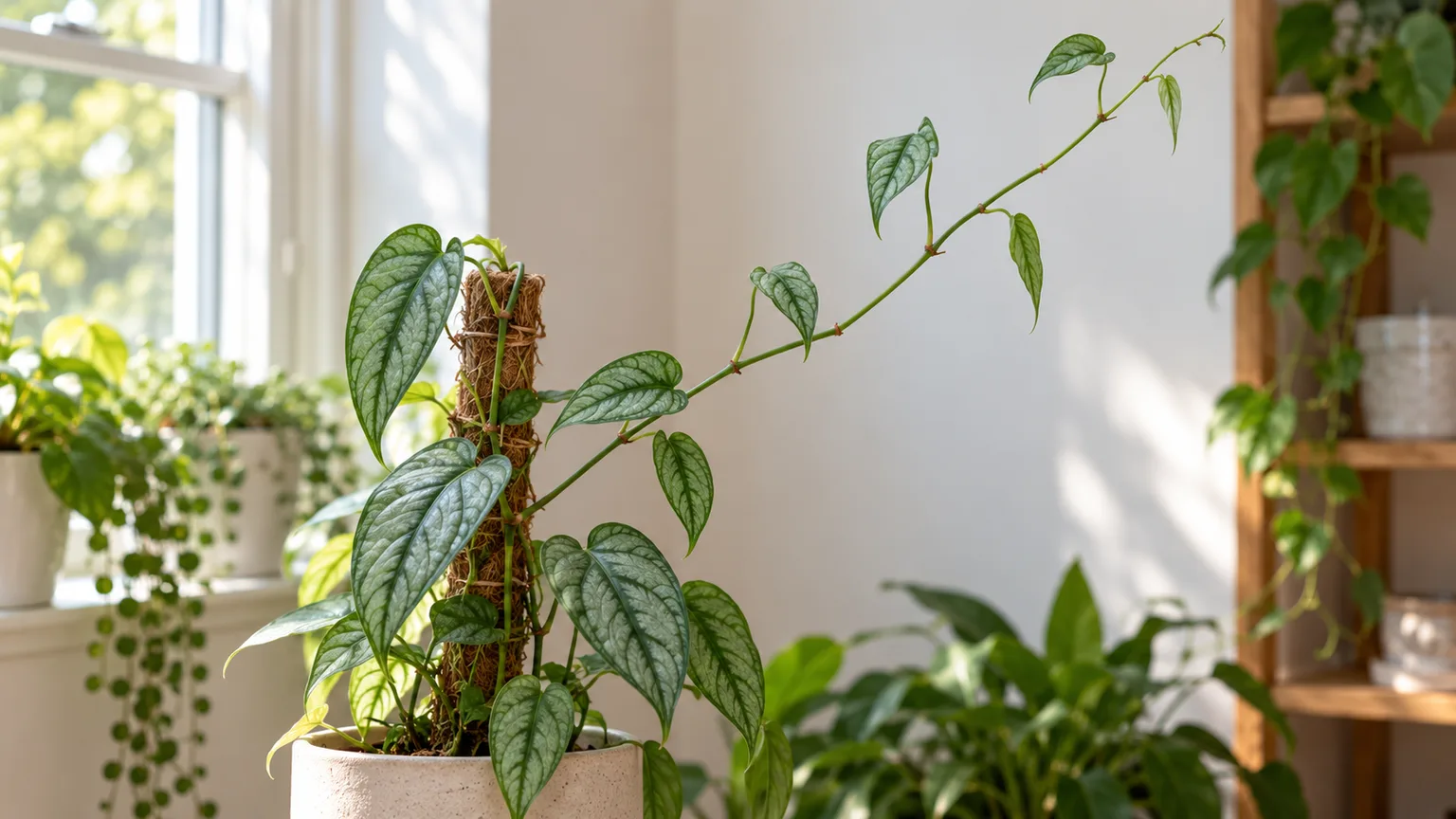
Leggy Growth on Monstera Siltepecana: Causes, Checks & Fixes
This guide covers leggy growth on Monstera Siltepecana. See also the general Leggy Growth guide, watering, and light pages for this plant.
Leggy Growth on Monstera Siltepecana: Causes, Checks & Fixes
Quick answer
Leggy growth on Monstera siltepecana usually means the vine is extending through long bare sections while producing small, widely spaced leaves, most often because the growing tip does not receive enough usable light. First, move the plant gradually into brighter indirect light. Do not cut the vine or add fertilizer before checking the newest growth pattern: this species naturally keeps small silver juvenile leaves when it trails, and small leaves alone do not prove a problem.
What leggy growth looks like on Monstera siltepecana
A stretched siltepecana looks like a sparse vine: several stem sections run between leaves, the leaves sit farther apart than they did on earlier growth, and the newest tip may produce smaller leaves or pause between them. The spacing is often clearest when you look along the whole stem rather than at one leaf. The relevant clue is a change in the vine’s pattern, not a single standard distance between nodes; a fast climbing stem can have longer spaces than a compact young plant without being unhealthy.
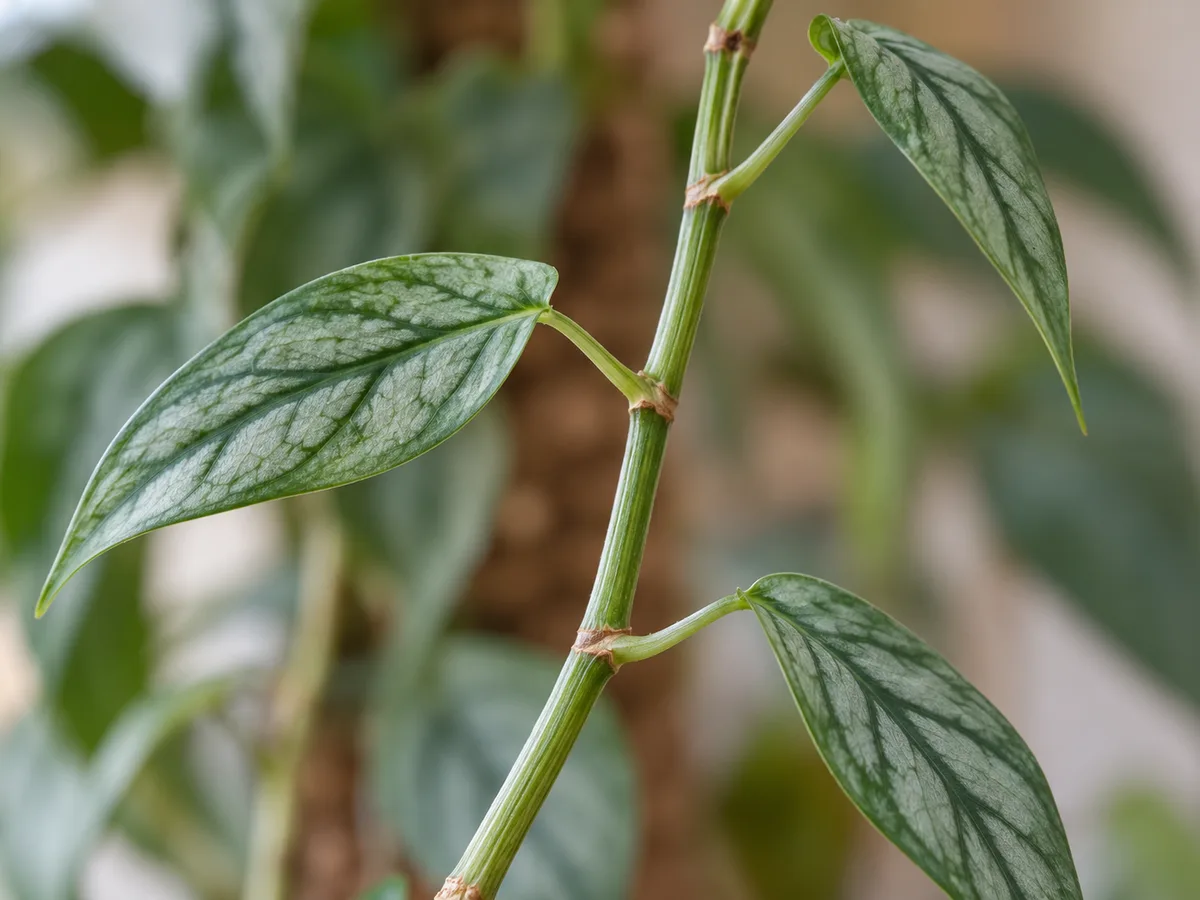
On a stretched siltepecana vine, the leaf nodes sit farther apart, leaving each silver-green juvenile leaf isolated along the stem.
The species has two distinct leaf stages. NC State Extension describes juvenile leaves as small, lance-shaped, and silver-green with dark veins; mature leaves become larger, greener, and may develop fenestrations as the plant climbs. That means a healthy trailing vine can still look small-leaved and silver. It is the combination of unusually long bare stem, sparse placement, and weaker new growth that points toward leggy growth.
Normal shingling versus a stretched vine
Siltepecana often grows with its juvenile leaves held close to a surface when climbing, or it can trail from a shelf or hanging pot. A trailing plant may keep producing silver juvenile leaves instead of transitioning to larger adult foliage. NC State’s species profile specifically notes that trailing or basket-grown plants can remain juvenile, while staking and climbing support the transition to larger leaves. A lack of holes is therefore not evidence of legginess by itself.
Compare the newest three or four nodes with older sections on that same vine. If the new internodes are becoming progressively longer while leaf size or density declines, investigate the light and recent conditions. If the spacing is steady, leaves remain firm, and the tip continues making healthy leaves, the plant may simply be expressing its normal juvenile, trailing form. Do not judge it against a photograph of a mature climbing plant; the same species can look very different depending on maturity and how it is grown.
Why Monstera siltepecana gets leggy
The growing tip is short on usable light
Low light is the leading cause to investigate when a siltepecana develops a new run of long, sparsely leafed stem. The growing tip may be far from a window, shaded by a curtain or other plants, or receiving much less light in winter than it did when the previous leaves formed. NC State states that inadequate light commonly causes leggy growth in this species. The symptom can develop gradually, so the room may not feel dark to you even when the vine is stretching toward a brighter area.
Look at where the most recent leaves point and whether one side of the plant is exposed to a window while the opposite side sits in shade. A plant can lean toward a light source without every long internode being a diagnosis, but one-sided stretching plus increasingly sparse new leaves is a stronger clue. The Spruce’s siltepecana care guide describes long stems with widely spaced leaves as a low-light warning in this species. Epic Gardening’s houseplant leggy-growth guide likewise identifies thin stretched stems and small leaves as a common light-related pattern across houseplants.
Siltepecana prefers bright, indirect light. An east-facing window or a brighter position near a filtered south- or west-facing window can work, depending on the room, season, and how hot the sun becomes on the leaves. Avoid responding to a dim corner by placing the plant suddenly in harsh direct sun; The Spruce’s care guidance recommends bright or filtered light for this species, and NC State warns that direct sunlight can scorch its leaves. The useful target is a brighter leaf-level environment, not a fixed compass direction or a single number of hours.
Small silver leaves can be normal juvenile growth
A young siltepecana is not supposed to look like a mature Monstera deliciosa. Its juvenile leaves are narrow, silver-green, and dark-veined; they may remain small for a long time if the vine trails. Even a plant that is healthy and well-watered may not produce fenestrated adult foliage while it grows downward or across a shelf. If your plant has compact spacing and firm leaves, focus on the growth habit you want before assuming that it needs a rescue.
The distinction matters because adding a moss pole will not fix a true light shortage, and increasing light will not automatically make juvenile leaves fenestrate overnight. A support may encourage the plant to climb and develop larger adult leaves over time, but maturity, stable growth, and the plant’s actual position all matter. If you like the silver juvenile form, it is fine to keep the vine trailing; the goal is healthy spacing and steady growth, not forcing adult leaves.
Climbing support changes form, not the light diagnosis
Monstera siltepecana is a climbing aroid, so a board, trellis, or pole can keep a long vine organized and give new growth a surface to follow. Its stems may wander or arch when there is nothing to attach to, which can make the plant look untidy even when the leaves are healthy. That is a support question rather than proof of etiolation. A bare, elongated section that formed in low light will remain elongated even after you attach the vine to a pole.
If you want a shingling display, position the stem against a flat, stable support and loosely secure the stem near a node with a soft tie. Leave the leaf stalks free to turn toward the light; do not bind them against the pole. If you want a hanging plant, let it trail and evaluate whether the newest nodes stay reasonably close together. In either form, place the growing tip where it receives suitable indirect light. Support directs the vine; it does not substitute for a better-lit position.
Water and fertilizer can confuse the picture
Poor light is the first suspect when long internodes appear, but check the whole plant before changing several things. A pot that stays wet for many days, a sour smell, yellowing leaves, or a soft stem suggests a separate root-zone issue rather than legginess alone. Siltepecana grows best in moist but well-drained, aerated mix; its watering guide explains how to judge dry-down for this plant, and the soil guide covers mix structure. If symptoms include yellowing and persistently wet soil, use those moisture and mix checks before assuming the vine just needs more light.
Do not feed extra fertilizer to make a sparse vine fuller. Fertilizer cannot replace light, and a growth spurt after a heavy feed can make it harder to separate normal extension from an environmental problem. If the plant has been recently repotted, moved, or pruned, note that timing as context; let it settle and watch what the next leaves do rather than treating each change as a new deficiency. If symptoms include yellowing and persistently wet soil, check moisture and mix structure before assuming legginess is the only issue.
How to confirm the cause before changing care
Use the newest growth to verify the diagnosis. Older stem sections record the conditions from months ago and will not change shape, so a long old vine does not tell you whether the plant’s current spot is adequate. Work through these checks in order:
- Compare node spacing. Follow one stem from an older, denser section to the newest tip. Look for a sustained change toward longer gaps, fewer leaves, or smaller new leaves. Do not expect every node to be evenly spaced; compare the plant with its own earlier growth.
- Check the light at the tip. Notice how much unobstructed daylight reaches the newest leaves over the day. A vine tucked behind a curtain, several feet back from a window, or shaded by taller plants may receive much less light than the room seems to have. Also note whether growth changed after autumn, a move, or a new obstruction appeared.
- Read the direction of growth. If the newest stem and petioles consistently orient toward one window, the plant may be trying to reach that brighter area. Rotate the pot only when it helps distribute light across the foliage; turning the plant every day can make it harder to compare new growth and will not solve a generally dim location.
- Check leaf and stem firmness. Healthy leaves should feel firm for the plant, and the growing tip should not be collapsing. Soft, dark, or foul-smelling stem tissue, especially near the soil line, calls for an urgent root and stem check. A wandering vine can be normal for a climbing Monstera; soft tissue is the concern.
- Review moisture without using it as a legginess test. Feel the top few centimeters of mix and lift the pot to judge whether it is still heavy from watering. A dry, light pot may need watering if the mix has dried through its normal range; a persistently wet pot should not be watered again just because the leaves are small. Water stress can weaken growth, but it does not create the same diagnostic pattern as repeated long internodes.
- Inspect the newest leaves for other symptoms. Curling, stippling, visible pests, or yellow patches point to a different or additional issue. If the plant mainly has faded or weak growth without clearly stretched internodes, compare its current position with the light guidance below. If it has stopped growing without a sparse, elongated vine, use the normal growth and seasonal context in the plant overview instead of treating legginess.
You can make a quick record by taking a photo of the newest section beside a ruler or by noting how many leaves appeared over a few nodes. The measurement is for comparing your plant with itself, not for deciding that any particular number of centimeters is abnormal. Repeat the same observation after the light correction and compare the next leaves. If the next node is compact and the leaf is firm, you have a useful sign that the change is helping even though the older vine still looks stretched.
The first fix: move it into brighter indirect light
If the checks point to low light, first move the pot or climbing support to a brighter position with indirect or filtered light. Choose a spot where the leaves receive strong ambient daylight without hot direct sun striking them for long periods. Keep the same pot and mix for now so you can tell whether the light adjustment changes the next growth. For additional species-specific placement advice, see the Monstera siltepecana light guide.
Make a large light change gradually. A plant kept far from a window should not go straight into midday sun; move it closer in stages over several days, or diffuse the brightest exposure with a sheer curtain. Epic Gardening recommends easing houseplants into a substantially brighter position to reduce the risk of leaf scorch; this gradual light adjustment advice is especially sensible for a siltepecana with thin juvenile leaves. If the adjustment is modest, such as shifting the pot from a shaded shelf to a bright indirect window, a slow relocation may not be necessary.
Keep the growing tip, rather than only the base of the plant, in mind when placing the vine. If you use a pole or board, orient it so the newest leaves face the light instead of hiding behind the support. A hanging vine may need to sit closer to the window than the pot itself does, particularly when the trail runs below a shelf. Do not lean the leaves directly against hot glass or a heater; make the goal brighter indirect light rather than heat.
After moving it, keep watering according to how quickly the mix dries in the new position. A brighter spot can change dry-down, but the plant’s need for water still depends on pot size, temperature, season, and the mix. Do not water on a fixed schedule to encourage faster growth, and do not fertilize while you are still trying to see whether the new light conditions solve the problem. One measured change gives you a cleaner read on the response.
Prune only after light is corrected
Pruning removes the old stretched shape; it does not make that stem section compact again. Give the plant time to begin active growth in the brighter position before making a large cut, especially if it has only a few healthy leaves. If you like the long trailing look, you may not need to prune at all. The global leggy-growth guide covers the general problem; for siltepecana, first decide whether you want to keep the vine’s juvenile form or shorten it to encourage a tidier outline.
If you do prune, use clean, sharp shears and cut just above a healthy node. Leave enough leafy stem on the parent plant to keep it stable, and avoid removing several long sections at once. According to The Spruce’s siltepecana pruning guidance, prune in spring or summer while the plant is actively growing and avoid taking more than about a quarter of the plant at once; treat that as a ceiling, not a target. If the plant is already weak or has very few leaves, wait until it has made healthy new growth before shaping it.
A healthy cut section can be kept as a propagation attempt if it includes a node, because the node is where a new growing point and roots can develop; The Spruce’s cutting instructions describe placing stem nodes in the propagation medium. Do not discard the parent vine until a cutting has rooted and begun to grow; rooting can take weeks and is not a guaranteed rescue. Keep a cutting in bright indirect light and avoid keeping its medium soggy. If the parent has too little healthy growth to support both pruning and recovery, prioritize the parent’s light and root condition first.
Recovery: what will change and what will not
Already elongated internodes do not close up when the light improves, and leaves do not migrate closer together along the vine. If you keep the full stem, the old sparse section will remain visible. The meaningful recovery signal is the pattern of new nodes: the next leaves should arrive with healthier spacing and remain firm, while the vine continues to extend without becoming increasingly bare. Epic Gardening’s leggy-growth advice likewise explains that moving a plant to brighter light does not shorten growth that has already stretched.
Do not use an exact number of days as the pass/fail test. Growth slows in cool or darker seasons, and a recently moved plant may take time to resume producing leaves. Watch across the next active growth cycle. Progress may first appear as a firm growing tip or a compact new node; the plant does not need to produce adult fenestrated leaves for its light correction to be successful.
If new leaves keep getting smaller and more widely spaced after the plant has settled into brighter indirect light, reassess the actual light at the growing tip and check whether it is being shaded by the support or nearby foliage. Also check the root zone if the pot remains wet, the stem softens, or leaves yellow and drop. When an old bare vine is the only concern and the plant otherwise grows well, pruning is a cosmetic choice. When the tip is dying back or the stem is rotting, treat that damage separately and preserve any firm healthy nodes if you want to attempt a cutting.
Lookalikes and when to use another guide
| What you see | More likely interpretation | Next step |
|---|---|---|
| Small silver leaves, firm stem, steady node spacing on a trailing vine | Normal juvenile growth, not necessarily legginess | Keep the trailing form if you like it; see the siltepecana overview for juvenile and adult growth context. |
| Long bare spaces and sparse new leaves, especially after the plant was moved farther from a window | Leggy growth, most likely from inadequate light | Use the light-first correction above, then compare the next nodes. |
| Faded leaves or weak growth with no clear increase in internode spacing | A light problem that may not yet be leggy growth | Follow the Monstera siltepecana light guide. |
| Yellow leaves with constantly wet mix or a soft lower stem | Root-zone stress may be occurring alongside weak growth | Recheck the watering guide and soil guide. |
| No new leaves for a long period, but no stretched vine | Slow growth or dormancy conditions, rather than legginess | Compare the plant’s current form with the siltepecana overview. |
Use this page when the main issue is the vine’s spacing and sparse leaves. Use the separate Monstera siltepecana problems hub when more than one symptom is present and you need to choose which problem to troubleshoot first. If discoloration is the main change, assess that symptom and the root-zone conditions before calling the vine leggy; a yellow leaf plus a long internode is not enough by itself to diagnose root rot or a nutrient problem.
Prevent another leggy stretch
Give the new growing tip a stable bright indirect position before the vine begins its next run of growth. When you bring a siltepecana home or move it to a different room, observe the new leaves for several weeks instead of judging the mature sections that formed elsewhere. Seasonal daylight can change substantially; a position that worked in summer may become too dim after nearby trees leaf out or the sun angle shifts. If the newest nodes begin stretching again, reassess light before changing water or fertilizer.
Choose a support that matches the form you want. A vertical board or pole can give the climbing vine a stable path and help it develop larger adult foliage as it matures; a hanging pot can preserve the silver juvenile look. A support may make the plant easier to position near light, but it cannot make a dark spot bright. Keep enough clearance for the growing tip and check that dense foliage from neighboring plants is not shading it.
Keep the care routine consistent while you evaluate growth. Water when the mix has dried through the top layer appropriate to the pot and season, and use an airy mix that does not stay waterlogged. Feed during active growth according to the plant’s established care plan rather than adding fertilizer as a response to long internodes. Trim only when the shape bothers you or when damaged growth needs removal; routine severe cuts can remove the very leaves the plant needs to recover.
A simple seasonal photo of the same vine can help you notice whether the newest growth is getting more compact or more stretched. Photograph the nodes from a similar angle and include the window or support if it affects the plant’s position. This gives you a useful comparison without needing a light meter or a rigid internode target. Adjust one environmental factor at a time and keep the change that produces steady, well-spaced new growth.
Related Monstera Siltepecana guides
Use the pruning guide when you decide to shorten a healthy vine after correcting the light, and the repotting guide if the pot or mix needs attention. To calculate optimal foot-candles and window distance for your space, use the light requirement calculator. The light, watering, and soil guides linked above cover placement and root-zone checks; the plant overview describes the normal juvenile and adult forms. This page is specifically for long, sparse stem growth; it does not treat normal silver juvenile leaves as a disease.