Slow Growth on Monstera Siltepecana: Causes & How to Boost
Quick answer
Slow growth on Monstera siltepecana usually results from insufficient light below 1,500–2,000 lux (150–200 fc), temperatures dropping below 18°C (65°F), or a trailing habit that lacks vertical climbing support. For active growth, provide 5,000–10,000 lux of bright indirect light. Before adding fertilizer, inspect root volume and health, as root-bound rootballs or waterlogged roots will stall leaf production regardless of feeding.
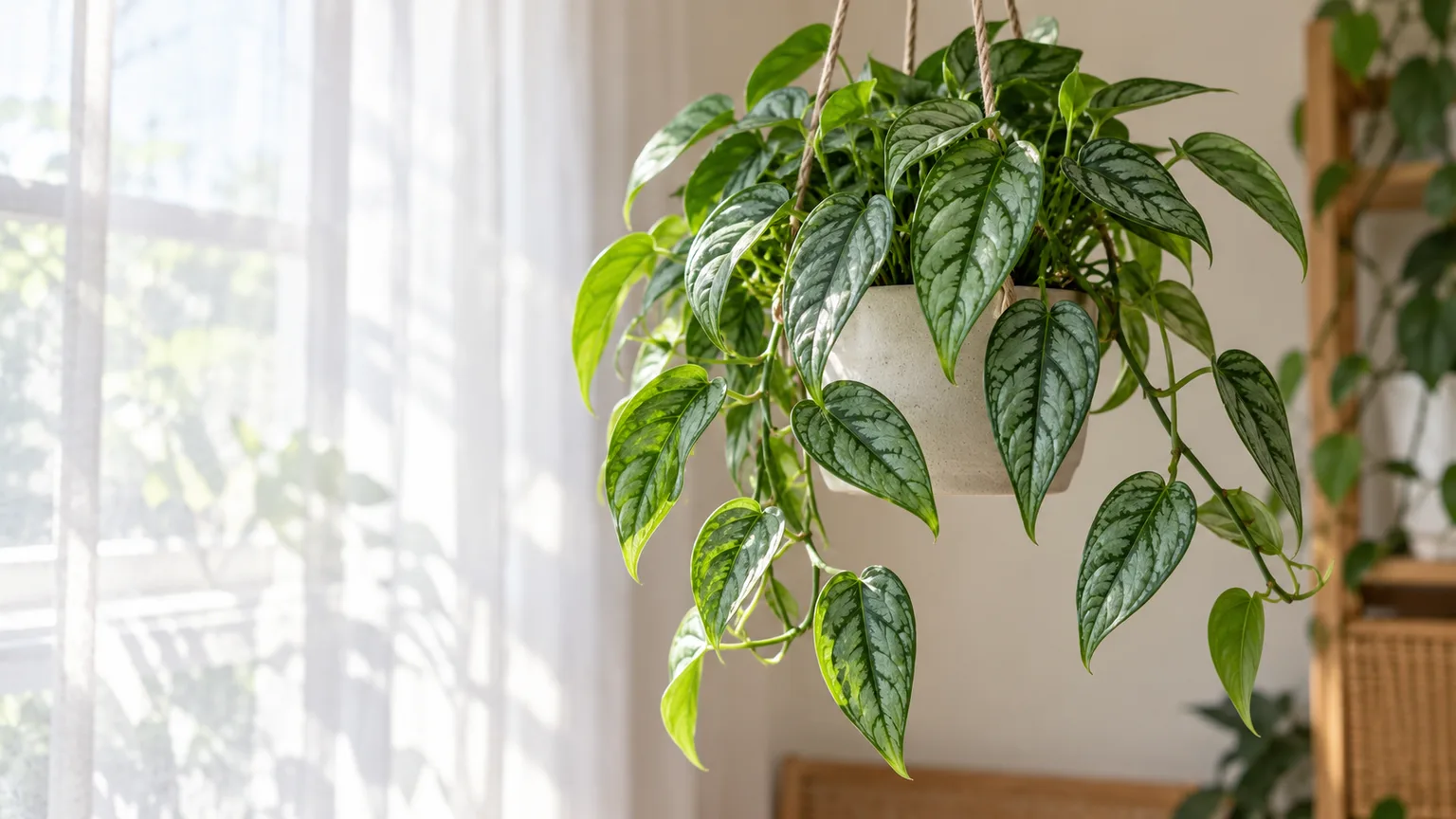
Slow Growth on Monstera Siltepecana: Causes & How to Boost Growth
This guide covers slow growth on Monstera Siltepecana. See also the general Slow Growth guide, watering, and light pages for this plant.
Slow Growth on Monstera Siltepecana: Causes & How to Boost Growth
Quick answer
Slow growth on Monstera siltepecana occurs when one or more essential cultural factors—usable light, ambient temperature, root volume, or climbing structure—fall below the species’ metabolic threshold. Naturally a vigorous neotropical climber, this plant can produce fresh foliage every few weeks under favorable conditions. When growth halts, the primary bottleneck is typically light falling below 1,500 to 2,000 lux (roughly 150 to 200 foot-candles)—the metabolic compensation point where photosynthetic gains merely match basal respiration. Active vegetative expansion requires 5,000 to 10,000 lux (500 to 1,000 foot-candles) of bright indirect light, room temperatures above 18°C (65°F), adequate container space, and vertical climbing support.
Before applying fertilizer to force new foliage, inspect the apical terminal shoot and lift the rootball. Stacking liquid feeds onto a dormant, light-starved, or root-constricted siltepecana will not trigger vegetative extension; instead, it frequently burns tender root tips and creates toxic soluble salt buildup in the container.
What slow growth looks like on Monstera siltepecana
Recognizing genuine growth cessation on Monstera siltepecana requires looking past individual leaves to evaluate the terminal bud, internode cadence, and adventitious node development along the main vine. A healthy, actively vining siltepecana maintains an elongating terminal spear, with emerging juvenile leaves rolling out in steady progression. When growth halts, the terminal shoot tip freezes in an immature, enclosed sheath, remaining static for weeks or months during what should be peak growing season.
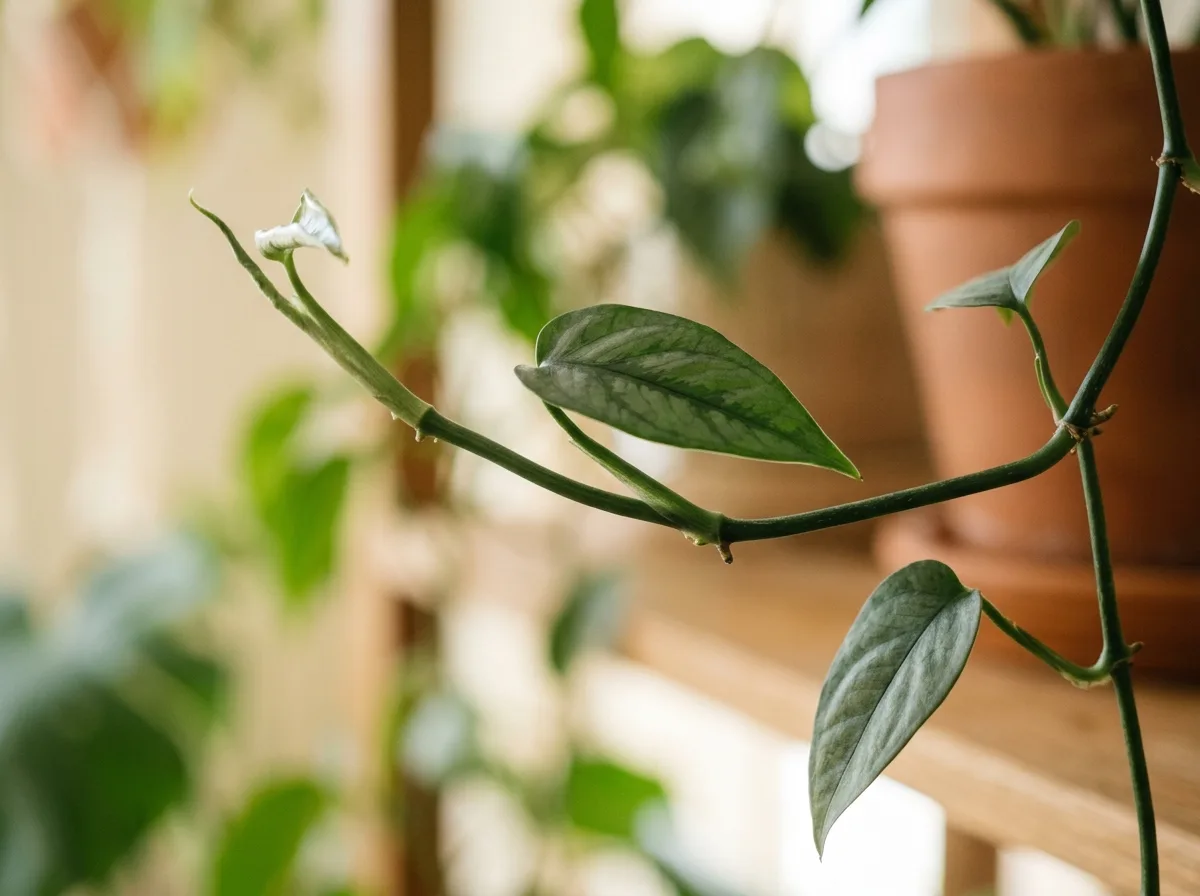
On a stalled Monstera siltepecana vine, the apical shoot tip ceases unfurling new foliage, leaving compact silver-patterned leaves clustered around an inactive terminal bud.
In addition to a dormant apical bud, stalled siltepecana vines exhibit distinct physical indicators:
- Arrested shoot development: The cataphyll or petiole sheath encasing the next leaf bud appears firm but dormant, refusing to swell, lengthen, or unfurl across successive weeks.
- Progressive leaf miniaturization: If the plant manages to produce a new leaf prior to stalling completely, that leaf is conspicuously smaller, paler, and thinner than the mature silver-shield foliage lower on the stem.
- Aborted aerial root nubs: The adventitious root nodes along the stem remain dry, brown, microscopic nubs rather than developing plump, active, green-tipped anchoring roots.
- Stagnant container water consumption: The potting mix stays damp significantly longer than usual—often stretching past 10 to 14 days without drying—because non-growing foliage and dormant roots consume minimal water through transpiration.
- Compressed, stunted internodes: Nodes near the vine tip form very close together without stem extension, giving the terminal section an abnormally clustered, dense appearance.
Understanding the difference between healthy juvenile growth and true stagnation is vital for this species. NC State Extension notes that Monstera siltepecana displays two distinct morphological phases: juvenile foliage that is lance-shaped, silver-green, and dark-veined, followed by broad, green, fenestrated adult leaves when the plant climbs. A trailing basket plant that steadily produces small, healthy silver leaves is not failing; it is simply operating within its juvenile growth habit. Stagnation occurs only when that production completely halts or leaf quality rapidly deteriorates.
Primary causes of stalled growth on Monstera siltepecana
For an overview of how general environmental deficits halt vegetative development across houseplant species, refer to our global slow growth guide. On Monstera siltepecana, however, growth stalls stem from specific physiological and cultural dynamics tied to its native habitat as an epiphytic climber in the tropical rainforests of Mexico and Central America.
Sub-threshold light intensity (<1,500–2,000 lux / <150–200 fc)
Monstera siltepecana requires abundant photon energy to fuel its vigorous vining metabolism. University of Florida IFAS Extension emphasizes that tropical foliage houseplants require specific minimum light intensity thresholds for active photosynthesis (typically 200 to 500 foot-candles for moderate growth), below which vegetative extension completely stalls. While tolerant of moderate ambient shade in living spaces, siltepecana placed in dim corners, north-facing alcoves, or rooms set several meters back from exterior windows receives insufficient photosynthetically active radiation (PAR).
When light falls below approximately 150 to 200 foot-candles (roughly 1,500 to 2,000 lux), the plant reaches its photosynthetic light compensation point—the threshold where carbohydrate synthesis only equals cellular respiration. Below this level, the plant cannot synthesize surplus carbohydrates to support new cellular division at the shoot apex. It enters a state of metabolic maintenance, preserving existing foliage while suspending vegetative growth. For active, vigorous leaf production, provide 500 to 1,000 foot-candles (5,000 to 10,000 lux) of bright indirect light. If you are uncertain about the foot-candle levels in your growing area, calculate optimal window distance and light exposure using our light requirement calculator. To explore placement strategies and seasonal daylight shifts, review our Monstera siltepecana light guide.
Cold temperatures and winter dormancy (<18°C / 65°F)
As an equatorial aroid, Monstera siltepecana thrives in temperatures between 20°C and 29°C (68°F to 85°F). RHS houseplant guidelines note that tropical indoor foliage plants require warm daytime temperatures and slow dramatically when ambient conditions drop below 18°C (65°F). Sustained exposure to temperatures below 16°C (60°F) paralyzes root function and induces cold-induced dormancy.
In many indoor environments, winter brings a double challenge: shorter day lengths coupled with cool ambient drafts from uninsulated windows or exterior doors. Cold air resting on the container chills the root zone, slowing enzymatic activity and water uptake even if room thermostats register a comfortable temperature. Until warmth returns to both the foliage and the root system, terminal leaf emergence remains dormant.
Trailing habit vs vertical climbing support
One of the most overlooked growth inhibitors for Monstera siltepecana is its growth orientation. NC State Extension explains that trailing plants in hanging baskets tend to remain in their smaller juvenile shingling phase, whereas vertical staking triggers significant leaf sizing and robust stem extension.
When siltepecana trails freely over the edge of a pot, gravity and lack of contact support trigger a hormonal conservation mode. The vine allocates fewer resources toward large leaves and thick stems, eventually hitting a physiological growth plateau. Conversely, Wisconsin Horticulture Extension explains that climbing Monstera species utilize adventitious aerial roots to absorb moisture and nutrients from climbing supports, driving accelerated leaf expansion and rapid internodal growth.
- Hydrophobic Coco Coir vs. Moist Sphagnum Moss Poles: While many commercial supports use coco coir totems, smooth coir fiber quickly becomes hydrophobic and sheds water. Adventitious aerial roots cannot penetrate dry coco coir, turning into shriveled brown nubs that offer purely mechanical support without vascular hydration. A mesh-backed sphagnum moss pole, kept consistently damp, holds capillary water that aerial roots can readily penetrate and branch into, creating a functional secondary root system that powers large adult leaves.
- Skototropic Flagelliform Runner Shoots: Under acute light deficits or when searching for a tree trunk to ascend, Monstera siltepecana exhibits skototropism (growth directed toward darkness or silhouettes of host trees). Instead of producing normal foliage, the vine initiates long, thin, leafless “runners” (flagelliform shoots) with stretched internodes and tiny, aborted scale leaves. Growers often mistake these leafless runners for a dying vine, but it is an evolutionary survival mechanism designed to cross open ground in search of a climbing support. Prune back the runner shoot to a healthy leaf node and provide a vertical moss pole in brighter light.
Severe root-bound container confinement
Monstera siltepecana produces an extensive network of coarse, fibrous roots. Over 12 to 18 months in a container, these roots vigorously colonize the potting substrate. UF/IFAS guidance underscores that containerized plants become root-bound when roots circle the pot wall, restricting nutrient uptake and causing vegetative stalling.
When the root system outgrows the pot volume, the root mass consumes almost all organic substrate, leaving dense, spiraling roots pressed tightly against the container walls. In this condition, the potting mix can no longer hold sufficient moisture or oxygen. Water channels straight through crevices down the sides of the pot without hydrating the inner core. Starved of functional root-media contact, the plant suspends new leaf production to prevent moisture stress. If your plant has been in the same container for more than a year, consult our Monstera siltepecana repotting guide for root evaluation techniques.
Chronic root dehydration or saturated root asphyxiation
Moisture extremes at either end of the spectrum will immediately arrest shoot growth. In under-watered containers, desiccation of fine feeder root hairs prevents water and dissolved minerals from ascending the vascular xylem to the terminal bud. The shoot tip curls inward, hardens, and halts.
Conversely, waterlogged, heavy potting media deprives root cells of dissolved oxygen, leading to anaerobic conditions and pathogenic root dieback. When roots suffer from fungal decay or suffocating compaction, the plant loses its hydraulic capacity to push new growth. If you observe yellowing lower foliage alongside stalled growth, check our Monstera siltepecana problems hub to rule out early root rot or severe moisture stress.
Soil nutrient depletion vs fertilizer salt accumulation
While Monstera siltepecana is not a heavy feeder, prolonged cultivation in container media eventually exhausts reserves of nitrogen, phosphorus, potassium, and vital micronutrients like magnesium and iron. Without bioavailable nitrogen, cellular synthesis stalls. However, an even more common mistake is over-fertilizing a stalled plant.
Missouri Botanical Garden warns against applying fertilizer to stalled or stressed container houseplants, which exacerbates root stress through soluble salt accumulation. When fertilizer salts accumulate in peaty potting mixes without regular leaching, the osmotic gradient reverses, drawing moisture out of root cells and burning root tips. For safe feeding intervals and dilution rates, consult the Monstera siltepecana fertilizer guide.
How to confirm why your Monstera siltepecana stopped growing
Rather than altering multiple care parameters simultaneously, work methodically through this six-step diagnostic sequence to pinpoint the exact bottleneck.
Step 1: Check Light Intensity at Apical Tip (Need 500–1,000+ fc / 5,000–10,000 lux)
   │
   ├── Below 200 fc (2,000 lux) ──► Relocate to bright indirect window / Add full-spectrum LED
   │
   └── Adequate ──► Step 2: Measure Temperature (Need >18°C / 65°F)
                      │
                      ├── Below 18°C ──► Eliminate cold drafts; warm room / use seedling heat mat
                      │
                      └── Warm ──► Step 3: Inspect Apical Shoot Tip & Cataphyll
                                     │
                                     ├── Brown/Crisp ──► Mechanical damage or severe underwatering
                                     │
                                     └── Green/Intact ──► Step 4: Unpot & Inspect Root Volume
                                                            │
                                                            ├── Dense spiraling roots ──► Pot-bound; repot up 2–5 cm
                                                            ├── Dark, mushy roots ──► Root rot; prune & refresh mix
                                                            │
└── Healthy roots ──► Step 5: Check Climbing Support & Feed History- Assess photic intensity at the growing tip: Use a light meter or reliable smartphone sensor app held directly at the height of the terminal vine tip during midday. An active siltepecana requires between 500 and 1,000 foot-candles (roughly 5,000 to 10,000 lux) of diffused natural light. If readings hover below 150 to 200 foot-candles (1,500 to 2,000 lux), the plant cannot synthesize enough carbohydrates to exceed basal respiration, confirming light deficit as the primary growth bottleneck.
- Verify ambient and root-zone temperatures: Place a minimum/maximum digital thermometer near the base of the container. Confirm that nighttime temperatures do not drop below 18°C (65°F). Check for cold air currents pouring off single-pane window glass or cooling drafts from nearby entryways.
- Inspect the apical cataphyll: Examine the terminal growth point under magnification. If the sheath is plump, green, and hydrated, the plant is simply idling due to environmental cues. If the tip is blackened, withered, or desiccated, mechanical injury, thrips feeding, or chemical burn has killed the terminal bud, requiring an auxiliary node lower on the stem to take over.
- Perform a rootball extraction check: Slide the rootball gently from its nursery pot. Examine the outer surface:
- Root-bound confirmation: Thick, white-to-tan roots encircle the bottom and sides, forming a solid net with virtually no visible loose potting mix.
- Root rot confirmation: Roots appear dark brown or black, feel slimy, slide apart when pulled, and emit a sour, stagnant odor.
- Healthy dormant roots: Roots are firm, fleshy, tan or cream-colored, with white growing tips, distributed evenly through airy, coarse substrate.
- Evaluate media moisture dry-down cycle: Record how many days elapse between watering and when the top 3 to 5 cm of mix dries out. If drying takes longer than 12 days in a warm room, the mix is too water-retentive or compacted, stifling gas exchange. If the pot dries out completely within 48 hours, the root-to-soil ratio is too high.
- Audit climbing status and node anchoring: Check whether the vine is dangling unsupported or pinned against a vertical surface. Inspect the nodes: are adventitious root nubs penetrating moist sphagnum moss, or are they dry and suspended in open air? Unsupported trailing vines naturally slow once stems reach maturity.
The first fix: optimize photon delivery and root room before feeding
When your Monstera siltepecana stops producing new leaves, your first action must be to move the plant into bright, filtered indirect light (5,000–10,000 lux / 500–1,000 fc) and verify root room before administering any fertilizer.
Increasing usable light immediately reactivates photosynthetic carbohydrate production, signaling the apical meristem to resume cellular division. Place the plant within 1 to 2 meters of an east-facing window or a south/west window diffused by a sheer curtain. If natural light is constrained by winter weather or room architecture, position a full-spectrum LED grow light 30 to 45 cm above the plant, providing 12 to 14 hours of daily illumination.
Crucially, resist the temptation to fertilize a stalled plant on day one. If root function is impaired by compaction or low light, added nutrients cannot be absorbed. The unassimilated mineral salts will accumulate in the substrate, scorching sensitive root tips and compounding the plant’s stress. Ensure the plant is warm, brightly lit, and equipped with adequate root space for at least 14 days before introducing dilute nutritional supplements.
Step-by-step recovery plan for stalled vines
Once you have identified the primary stressors, follow this structured four-stage rehabilitation protocol to re-establish vigorous vegetative growth.
1. Stabilize the thermal and photic environment
Move the plant away from cold window glass, air-conditioning vents, or drafty hallways. Ensure temperatures remain consistently between 21°C and 27°C (70°F to 80°F). If winter temperatures in the room struggle to reach 18°C, elevate the container onto a small cork mat or seedling heat mat set to 21°C (70°F) to warm the root zone. Maintain ambient humidity at or above 50% to prevent emerging shoot sheaths from sticking and tearing during unfurling.
2. Relieve root-bound constriction with an aroid-specific repot
If your rootball check confirmed dense root circling, upgrade the container size:
- Select a container that is 2 to 5 cm (1 to 2 inches) wider in diameter than the existing pot, ensuring it has ample drainage holes. Do not overpot into a massive container, which creates a perched water table and invites root rot.
- Gently massage the bottom third of the rootball with your fingers to loosen spiraling roots. Do not violently tear or wash away all existing substrate unless rot is present.
- Prepare a chunky, highly aerated aroid blend. A proven formulation consists of:
- 40% high-grade peat or coco coir base
- 30% coarse orchid bark (for structural macropores)
- 20% coarse perlite or pumice (for long-term aeration)
- 10% horticultural charcoal or worm castings
- Center the rootball in the new container, backfill with fresh mix, and settle the substrate by tapping the pot against a work surface. Water thoroughly until moisture flows freely from the base. For comprehensive media recipes, see our Monstera siltepecana soil guide.
3. Install a vertical climbing support to trigger leaf expansion
To break through the juvenile growth plateau, transition the plant from a trailing basket to a vertical climbing setup:
- Insert a sturdy sphagnum moss pole or rough-sawn cedar plank into the rear of the container before backfilling during repotting (avoid smooth coco coir totems, which dry out too quickly for aerial root penetration).
- Select the strongest 1 to 3 vines and gently orient them upward against the support.
- Secure the stems loosely just below the nodes using soft plant Velcro or horticultural tape. Never bind petiole stalks tightly; leave foliage free to orient toward the light source.
- Keep the climbing pole consistently moist. Wisconsin Horticulture Extension highlights that providing moist supports allows aerial roots to draw supplemental hydration, signaling the plant to increase stem diameter and produce larger, faster leaves.
4. Reintroduce conservative nutrition during active flush
After 2 to 3 weeks in improved light and fresh soil, monitor the apical shoot. As soon as the terminal bud swells and reveals fresh green tissue, resume feeding:
- Use a balanced, urea-free liquid houseplant fertilizer (such as an N-P-K 3-1-2 or 20-20-20 formulation).
- Dilute the solution to one-quarter to one-half of the manufacturer’s recommended strength.
- Apply the dilute nutrient solution every 3 to 4 weeks during active spring and summer growth.
- Always apply fertilizer to pre-moistened potting mix—never pour nutrient solutions into bone-dry soil.
Recovery timeline: what to expect
Reactivating a stalled Monstera siltepecana requires patience while the plant shifts out of metabolic dormancy. Use this timeline to monitor progress:
- Days 1 to 14 (Environmental Adjustment): The plant stabilizes in its brighter, warmer location. Transpiration rates begin to normalize, and the potting mix dries down on a more predictable 7-to-10-day cycle. The terminal bud remains static while internal carbohydrate reserves rebuild.
- Weeks 3 to 4 (Root & Meristem Awakening): Adventitious root nubs at upper nodes swell, turning pale green or pinkish-white as they activate. The apical cataphyll loosens and begins to elongate, extending 1 to 2 cm beyond the previous petiole junction.
- Weeks 5 to 8 (First Leaf Emergence): The stalled terminal sheath splits open, revealing a fresh juvenile leaf blade. The new leaf unfurls, displaying bright silver-grey variegation bordered by rich emerald veins. Stem extension between nodes resumes.
- Months 3 to 6 (Vigorous Climbing Momentum): If trained onto a moist moss pole, newly emerged leaves show progressive sizing up, growing from 8–10 cm juvenile leaves toward 12–15 cm foliage. New leaves appear reliably every 14 to 21 days throughout warm months.
What will recover and what will not
Managing expectations prevents unnecessary pruning or aggressive care interventions:
| Plant Tissue | Will It Recover? | Expected Horticultural Outcome |
|---|---|---|
| Existing Stunted Leaves | No | Small or undersized leaves produced during stress will never expand in surface area once hardened off. They remain functional for photosynthesis and should be left intact. |
| Stalled Apical Shoot | Yes | Once environmental bottlenecks are cleared, the living terminal bud resumes extension and unfurls normal foliage. |
| Dead / Desiccated Shoot Tip | No | If the apical meristem turned black and brittle, that specific bud will not revive. However, an auxiliary bud at the node immediately below will activate and form a new primary vine leader. |
| Compressed Internodes | No | Short stem sections formed during stalling remain permanently compressed. New stem tissue produced above that point will exhibit normal, healthy spacing. |
| Aerial Root Nubs | Yes | Dormant adventitious root bumps along the stem readily swell and anchor into moist support poles once ambient humidity and hydration improve. |
Lookalike symptoms and differential diagnosis
Before treating stalled growth as simple light starvation, cross-reference what you observe with related cultural disorders:
| Observed Symptom Pattern | Likely Underlying Condition | Diagnostic Differential | Recommended Action |
|---|---|---|---|
| No new leaves; firm silver foliage; dry pot in winter | Normal Winter Dormancy | Expected seasonal slowdown due to shortened photoperiod; foliage remains healthy, turgid, and pest-free. | Maintain warmth; reduce watering frequency; wait for spring light without forcing fertilizer. |
| Stalled shoot; elongated, bare stems; small pale leaves | Etiolation (Severe Low Light) | Vine actively stretches with abnormally long internodes (5–10 cm) between sparse, tiny leaves. | Follow our leggy growth guide; move to bright indirect exposure. |
| Stalled shoot; limp, drooping leaves; pot feels light | Chronic Underwatering | Leaves lose turgor pressure; lower foliage develops dry, papery margins; mix pulls away from pot walls. | Perform a deep soak-and-drain; check our Monstera siltepecana watering guide. |
| Stalled shoot; yellowing lower leaves; heavy, wet pot | Root Suffocation / Early Rot | Mix remains soggy for >14 days; lower foliage yellows; stems feel soft at the soil line. | Unpot immediately; prune rotted roots; repot into aerated aroid mix; see our problems hub. |
| Stalled shoot; white crust on soil rim; leaf tip burn | Fertilizer Salt Toxicity | Soil surface exhibits mineral accumulation; emerging shoot tips turn brown before opening. | Leach pot thoroughly with copious distilled water; halt all feeding for 6 to 8 weeks. |
Mistakes to avoid when siltepecana stops growing
Growers often react to slow growth with counterproductive interventions that worsen root stress. Avoid these four common traps:
- Dousing the plant with concentrated fertilizer: Applying plant food to a dormant or root-bound siltepecana does not stimulate growth. It damages sensitive root hairs, acidifies the substrate, and causes chemical leaf burn.
- Up-sizing into an excessively large pot: Placing a stalled plant with an 10 cm rootball into a 20 cm container leaves large pockets of unoccupied potting mix that stay waterlogged for weeks, creating ideal conditions for Pythium and Phytophthora root rot.
- Watering on a rigid calendar schedule: Because a stalled plant transpires significantly less moisture, continuing to water every 5 to 7 days inevitably drowns the root system. Always test moisture depth before watering.
- Pruning healthy vines to force bushiness: Cutting back long vines on a stressed, non-growing plant removes valuable foliage responsible for synthesizing sugars. Allow the vine to resume active growth before shaping or taking cuttings. Review proper timing in our Monstera siltepecana pruning guide.
How to sustain steady, vigorous growth
Once your Monstera siltepecana resumes active leaf development, maintain these environmental targets to prevent future stalls:
- Consistent Photic Energy: Keep the plant situated where it receives 800 to 1,500 foot-candles of bright indirect light for 10 to 12 hours daily. Rotate the plant monthly if natural light enters from a single direction.
- Thermal Stability: Maintain temperatures between 20°C and 27°C (68°F to 80°F) year-round. Shield the foliage from drafty doors, single-pane glass, and heating registers.
- Moisture by Observation: Water only after the top 3 to 5 cm of potting mix feels dry to the touch and the container feels noticeably lighter. Always saturate thoroughly until water drains freely from the base, and empty catch saucers promptly.
- Breathable Substrate: Refresh the potting media every 18 to 24 months with a porous aroid blend containing coarse bark, perlite, and chunky coco coir to prevent compaction.
- Vertical Climbing Maintenance: Keep moss poles lightly misted or pour water down the central pole core so aerial roots remain actively anchored, powering large leaf development and rapid stem extension.
Related Monstera Siltepecana guides
To troubleshoot concurrent symptoms or refine your long-term care setup, explore these dedicated resources in the LeafyPixels library:
- Monstera Siltepecana Care Overview: Complete botanical profile, natural habitat details, and baseline care specifications.
- Monstera Siltepecana Light Guide: Detailed photon targets, seasonal window positioning, and artificial grow light recommendations.
- Monstera Siltepecana Fertilizer Guide: Feeding schedules, macronutrient ratios, and salt-flush protocols for actively vining plants.
- Monstera Siltepecana Repotting Guide: Container sizing, rootball detangling techniques, and step-by-step potting instructions.
- Monstera Siltepecana Problems Hub: Diagnostic index for identifying yellow leaves, pest infestations, root rot, and foliage curl.
- Monstera Siltepecana Watering Guide: Practical moisture testing methods, seasonal dry-down cycles, and soak-and-drain techniques.
- Monstera Siltepecana Soil Guide: Soil aeration dynamics, DIY aroid potting recipes, and drainage optimization.
To calculate customized light requirements and optimal window placement for your specific room conditions, use our interactive Light Requirement Calculator.