Drooping Philodendron Florida Beauty? Causes & First Fix
Quick answer
Drooping leaves on Philodendron Florida Beauty most often mean the climbing root system cannot move water properly — usually soggy mix in a heavy pot, but also a fully dry root ball, cold drafts, or a struggling moss-pole attachment. First step: lift the pot and test the top 3–5 cm of mix before adding any water.
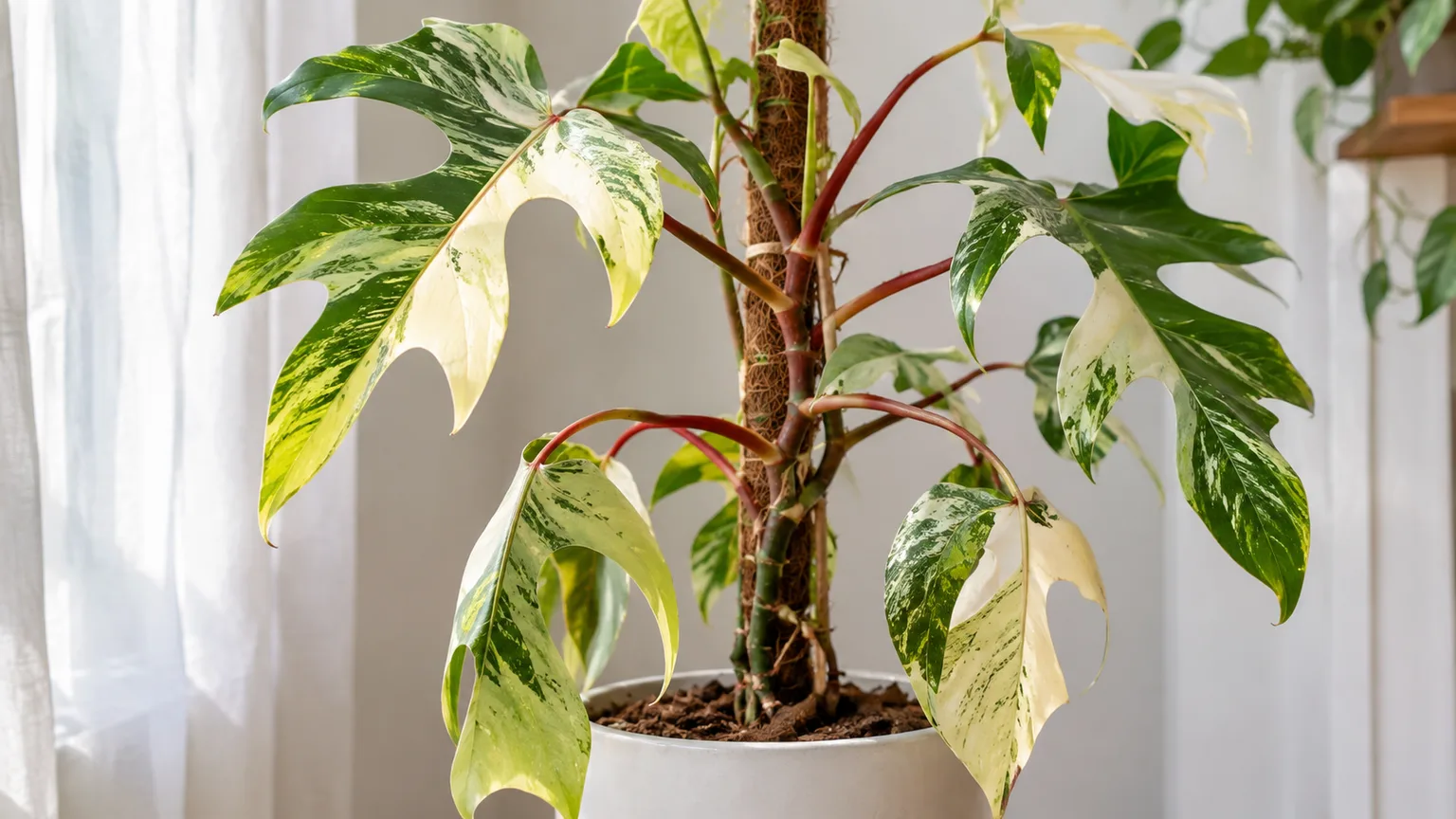
Drooping Leaves on Philodendron Florida Beauty: Causes, Checks & Fixes
This guide covers drooping leaves on Philodendron Florida Beauty. See also the general Drooping Leaves guide, watering, and light pages for this plant.
Drooping Leaves on Philodendron Florida Beauty: Causes, Checks & Fixes
Quick answer
Drooping leaves on Philodendron Florida Beauty mean the lobed green-and-cream blades have lost turgor and hang from their red petioles instead of holding the usual climbing posture. On this variegated climber, that sag most often traces to the root zone: either soggy mix suffocating roots in a heavy pot, or a fully dried root ball in a feather-light pot. For how turgor loss works across houseplants in general, see our drooping leaves hub. On Florida Beauty, lift the pot and test the top 3–5 cm of mix before you add a single drop of water.
First step: lift the pot and push a finger or chopstick 3–5 cm into the mix. A light, dry pot with limp leaves calls for one thorough soak until water drains freely. A heavy, damp pot with drooping leaves means root stress — empty every saucer, move the plant to brighter indirect light, and let the mix dry before watering again.
When to use this page vs other Philodendron Florida Beauty guides
- Philodendron Florida Beauty overview — whole-plant context: hybrid background, variegation, toxicity, and buying checks
- Philodendron Florida Beauty watering — long-term dry-down rhythm and seasonal intervals once drooping stabilizes
- Philodendron Florida Beauty light — window placement and grow lights when sag traces to dim conditions or scorch
- Philodendron Florida Beauty soil — chunky aroid mix recipe when the pot stays wet despite correct intervals
- Philodendron Florida Beauty repotting — upsizing and root inspection when roots circle the pot or smell sour
- Philodendron Florida Beauty propagation — stem-cutting rescue when the main root system is mostly rotted
What drooping looks like on Florida Beauty
A healthy Florida Beauty holds deeply lobed leaves — green splashed with cream and yellow — out from upright red petioles along a climbing stem. Variegation pattern varies leaf to leaf, but posture should read alert: blades angled outward and upward, newest leaf unfurling firm near the growing tip.
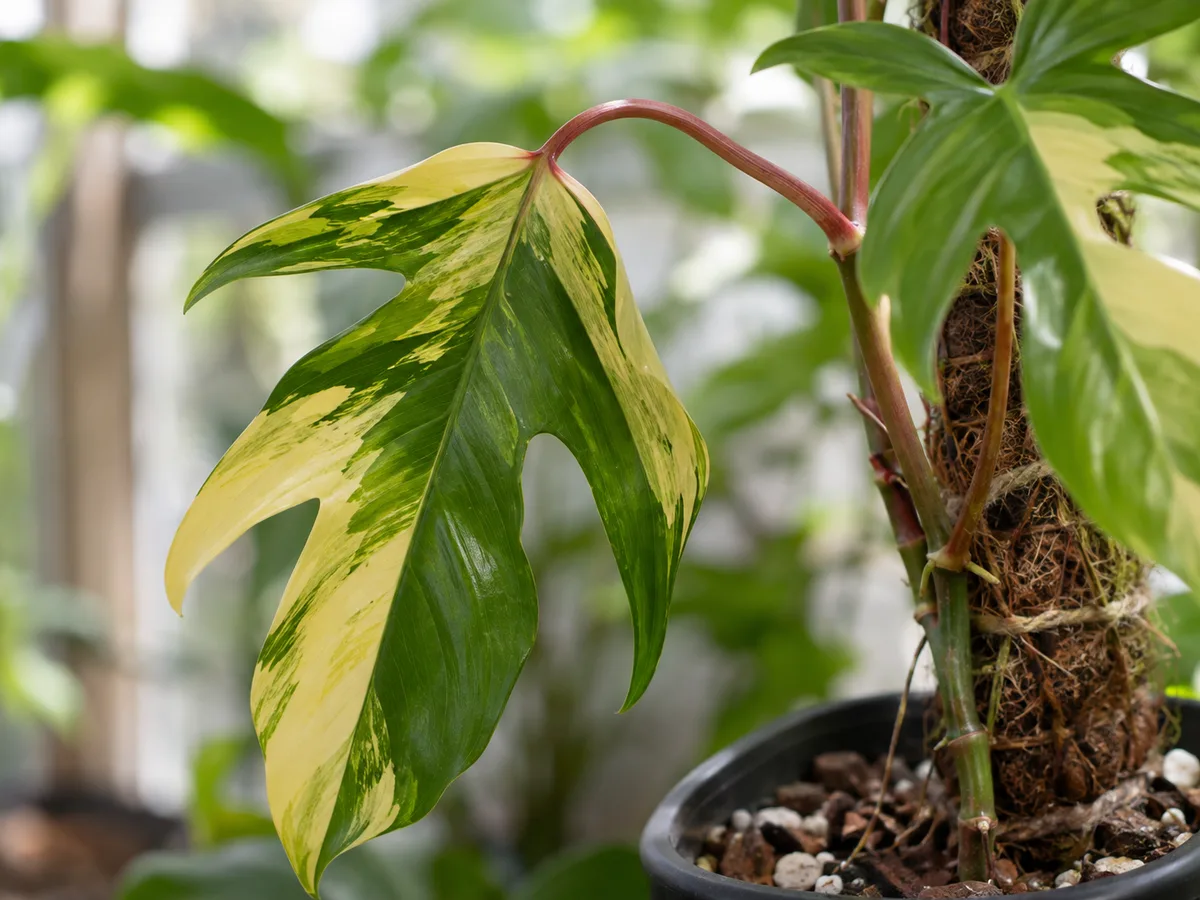
When turgor drops, the lobed blade hangs from its petiole instead of holding an outward, alert posture.
Drooping breaks that silhouette, and the pattern narrows the cause:
Wet-soil droop is the classic misread on this cultivar. Lower lobed leaves hang limp while the mix stays dark, cool, and heavy days after watering. Cream sectors may brown or collapse first because pale tissue has less photosynthetic buffer than green lobes. You might notice yellowing lower leaves, soft petioles at the base, fungus gnats hovering at the surface, or a faint sour smell from the drain holes.
Dry-soil droop shows limp but still firm-feeling lobes on a lightweight pot, with pale crumbly surface mix pulling slightly from the pot walls. Cream edges may crisp after repeated drought episodes. Unlike wet droop, these leaves usually perk within hours of a proper soak.
Sudden whole-plant flop within a day or two points to cold shock, repot disturbance, or rapid root failure — not gradual thirst. A plant that sagged overnight after sitting near an open winter window or under an AC blast is showing vascular shock, and the fix is warmth and stability, not water.
Why this climber droops differently from bushy philodendrons
Florida Beauty is a Philodendron pedatum × squamiferum climbing hybrid, not a self-heading rosette. It grows to climb, and that architecture changes how droop develops. A vine supported on a moss pole with healthy aerial roots has two water sources — pot mix and pole moisture — while an unsupported trailer hangs its stems over the pot edge, where gravity exaggerates every small loss of turgor. A drooping trailer without support may look dramatically worse than its roots justify, so check the pot before assuming the worst.
The red, slightly hairy petioles inherited from the squamiferum parent are useful diagnostic tissue. Firm red petioles with limp blades suggest a transient water-uptake gap — dry mix, heat wilt, or recent repotting. Petioles turning soft, dark, or mushy at the base signal root-zone failure advancing up the stem, and that plant needs its roots inspected, not its leaves misted.
Variegation raises the stakes of every watering mistake. Cream and yellow sectors photosynthesize weakly compared with green lobes, so the whole plant carries less energy reserve when roots are damaged. Cultivars with colored foliage need higher light levels to hold their color, which means a Florida Beauty parked in a dim corner both dries slower and recovers slower — the exact combination that turns one overwatering into weeks of droop. Fix light and drainage together; neither alone rescues a variegated climber.
Confirm the cause with the wet-vs-dry pot test
Work in this order so one check rules out a whole branch:
- Lift the pot. Heavy days after watering means water is still sitting around roots. Light means the root ball has dried. This single check matters more than how the leaves look.
- Test 3–5 cm deep. Push a finger to the second knuckle or a dry chopstick toward the root zone. Cool soil clinging to skin means wait; dry and crumbly means ready. Letting the upper mix dry between waterings is the standard rhythm for indoor philodendrons.
- Check the drain path. Pull the nursery pot out of any cachepot and look for pooled water. Empty saucers within thirty minutes of every soak — standing runoff keeps the lower root ball anaerobic while the surface looks deceptively dry.
- Feel petiole bases and sniff the drain holes. Firm petioles with neutral-smelling mix suggest simple wet or dry stress. Mushy bases or sour mix mean decay is underway.
- Note light and temperature. A plant in a dim hallway below bright-filtered light, near a cold window, radiator, or AC vent, can droop with perfect soil moisture. Climbing philodendrons prefer 65–85°F with high humidity and protection from cold drafts.
Wet + heavy + limp means overwatering and oxygen-starved roots — roots in waterlogged soil die because they cannot absorb oxygen, then cannot supply the plant with water and nutrients. Light + dry + limp means genuine thirst. Moist + right-weight + limp after a cold night or repot means shock, not a watering problem.
The first fix: act on what the pot tells you
Do one thing first, based on the test above — not a bundle of treatments.
If the pot is light and the mix is dry: soak thoroughly until water runs freely from the drainage holes, empty the saucer after thirty minutes, and leave the plant alone. Underwatering is one of the most common causes of droopy philodendron leaves, and a single deep drink usually firms Florida Beauty within hours. Do not follow with daily sips; return to the dry-down cycle described in the watering guide.
If the pot is heavy and the mix is damp: stop watering entirely. Empty saucers and cachepots, move the plant into bright indirect light if it was sitting dim, and let the top 3–5 cm dry genuinely before the next soak. Philodendrons prefer their soil to dry out a bit between waterings, and pots must drain freely. Adding water to this plant is the single most common way owners turn mild droop into root rot.
If the mix smells sour or petiole bases are mushy: unpot and inspect roots. Trim brown, slimy roots back to firm white tissue with clean scissors wiped with alcohol between cuts, and repot into fresh chunky aroid mix sized to the remaining root mass, following the repotting guide. Water once lightly to settle the mix, drain fully, and withhold fertilizer until new growth shows roots are working again.
Secondary checks: pole, light, humidity, and pests
Once the immediate water question is settled, rule out the accomplices that keep Florida Beauty sagging:
Moss-pole moisture balance. A climbing Florida Beauty rooted into a pole draws from two zones. A sopping pole plus wet pot keeps the whole column too damp; a bone-dry pole in a dry room desiccates aerial roots while the pot reads fine. Aim for a lightly moist pole and a pot surface that dries between drinks, as set up in the soil guide.
Light shortfall. In dim rooms the plant stretches toward the window, internodes lengthen, new leaves arrive smaller and greener, and petioles soften into a lean that reads as droop. Bright indirect light suits Florida Beauty — east-window brightness or filtered south-west exposure with sheer protection for cream sectors. If green runners dominate, brighten first and review the light guide before pruning.
Cold and dry air. This tropical hybrid sulks below about 15°C (59°F) and near drafts, and temperatures dropping toward 55°F demand a move to warmth away from cold floors and open windows. Census the room: cold window glass, exterior doors, AC vents, radiators. Hold roughly 65–80°F with moderate humidity from grouping or a humidifier rather than leaf misting, which wets lobed foliage without hydrating roots.
Pests. Monitor climbing philodendrons for spider mites, mealybugs, aphids, and scale — sap loss from any of these can limp leaves that watering never fixes. Inspect leaf undersides, axils, and stem joints with a magnifier; stippling plus fine webbing means spider mites, cottony clusters mean mealybugs. Treat the identified pest consistently rather than repotting, feeding, and spraying in the same week.
Recovery timeline and what improvement looks like
Dry-stress droop is the fast story: firm blades within hours of a soak, normal posture by the next day. Wet-soil droop is slower — expect one to three weeks of gradual firming as the mix cycles through genuine dry-downs, with the newest leaf as the progress report. Leaves that yellowed or turned mushy will not recover; they should stop spreading damage while fresh lobed growth unfurls firm with balanced marbling.
Escalate if more leaves collapse after you corrected watering, petiole bases keep softening upward, or sour smell persists after drying — the root system needs surgery or the healthy top needs propagating as cuttings per the propagation guide. A plant reduced to a firm stem with viable nodes is still rescuable; a fully mushy stem base usually is not.
Mistakes that turn droop into decline
- Watering on schedule instead of by pot weight. The calendar reminds you to check; only the finger test authorizes a pour.
- Treating wet-soil wilt as thirst. The most expensive mistake on this cultivar — each extra drink extends oxygen starvation.
- Stacking repot, prune, spray, and feed in one day. A stressed variegated climber cannot handle compound shock; sequence one intervention at a time.
- Fertilizing a drooping plant. Salts burn compromised roots; resume feeding only when new growth is firm for a couple of weeks in active season.
- Leaving the nursery pot swimming in a cachepot. Hidden pooled runoff is the quietest cause of chronic Florida Beauty droop.
- Chasing cream variegation with extra water. Pale sectors look fragile but need better roots and light, not more moisture.
How to prevent it next time
Keep the rhythm from the watering guide: top 3–5 cm dry, then a full soak with complete drainage — roughly every 7–10 days in bright active growth, every 10–14 days or longer in cool dim winter. Pot in loose, free-draining compost with bark and perlite rather than dense peat, keep drainage holes open, and size pots to the root mass instead of upsizing ambitiously. Give the vine its pole early so posture reflects hydration rather than gravity, hold it in bright filtered light above 15°C, and check pot weight every few days while any problem is still small. Start from the Philodendron Florida Beauty overview whenever whole-plant context would help before diving into a single symptom.
Related Philodendron Florida Beauty guides
- Philodendron Florida Beauty overview — whole-plant hub; start here when multiple symptoms overlap
- Philodendron Florida Beauty watering — dry-down checks and seasonal rhythm after drooping stabilizes
- Philodendron Florida Beauty light — placement and grow lights when sag traces to dim or scorching conditions
- Philodendron Florida Beauty soil — chunky mix and moss-pole setup when pots stay wet too long
- Philodendron Florida Beauty repotting — root inspection and upsizing when rot or circling roots are confirmed
- Philodendron Florida Beauty propagation — node-cutting rescue when the main root system cannot be saved
Related tool
Use the Drooping Leaves Diagnosis Tool to narrow causes for drooping leaves on this plant before changing multiple variables at once.