Low Humidity on Philodendron Florida Beauty: Causes, Checks
Quick answer
Low humidity shows on Philodendron Florida Beauty as crispy brown edges starting on the cream variegated sectors, new spear leaves that stick while unfurling, and aerial roots that shrivel instead of gripping the moss pole. First step: read a hygrometer at leaf level, move the plant away from heat vents and cold drafts, and run a small cool-mist humidifier nearby to hold 55–70%.
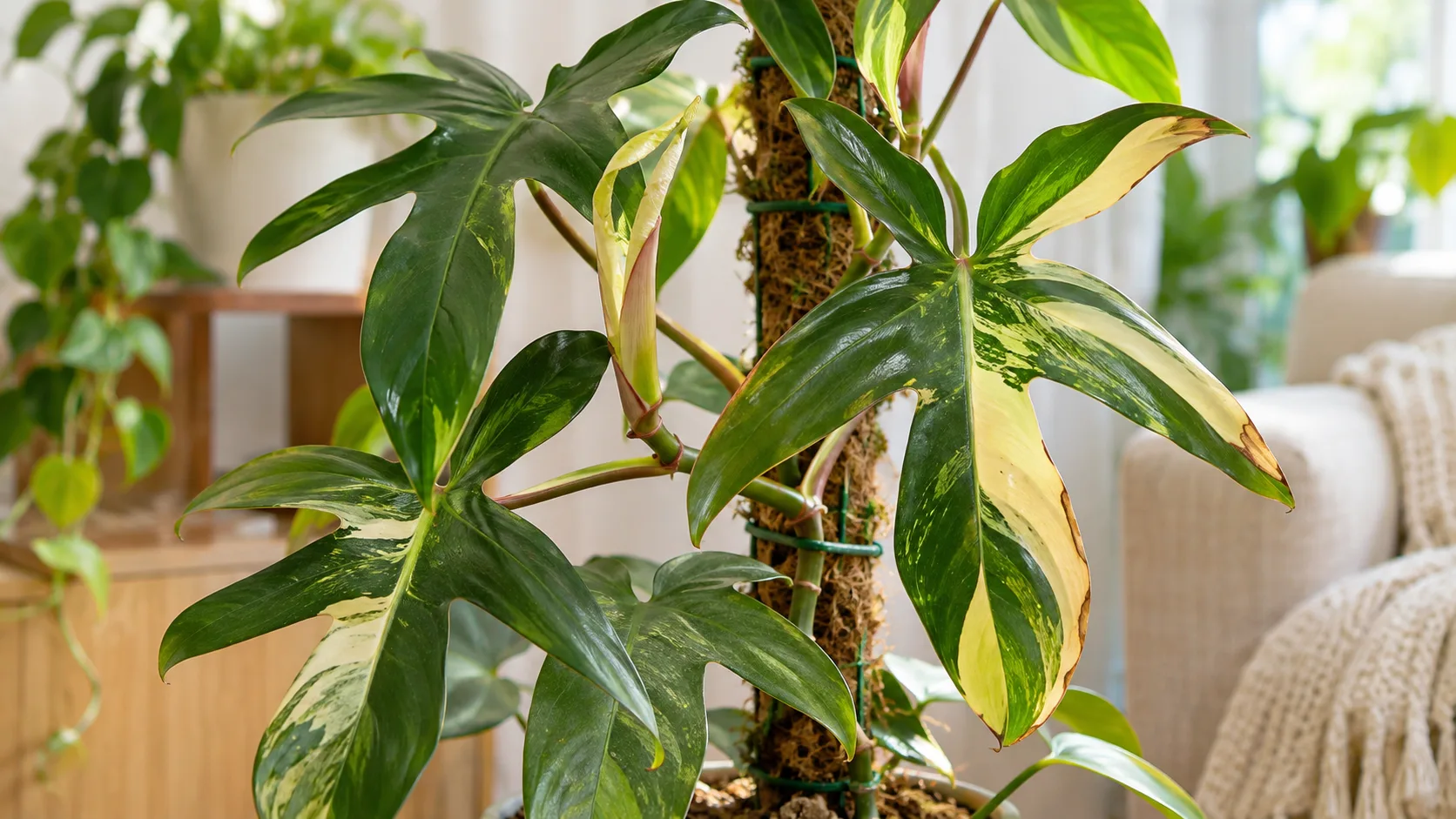
Low Humidity on Philodendron Florida Beauty: Causes, Checks & Fixes
This guide covers low humidity on Philodendron Florida Beauty. See also the general Low Humidity guide, watering, and light pages for this plant.
Low Humidity on Philodendron Florida Beauty: Causes, Checks & Fixes
Quick answer
Philodendron Florida Beauty is a climbing tropical hybrid that expects moist air, so dry indoor air marks it fast: crispy brown margins that start on the cream-and-yellow variegated sectors, spear leaves that stick and tear while unfurling, and aerial roots that dry to threads instead of gripping the moss pole. For how dry air stresses houseplants in general, see our low-humidity guide. On Florida Beauty, the variegation is the early warning system — pale sectors crisp before green tissue does.
First fix: move the plant out of the dry-air stream and run a small cool-mist humidifier within a few feet to hold 55–70% around the leaves. Check a hygrometer at leaf level first so you know your starting point, keep the moss pole lightly damp, and give new growth two to four weeks to come in clean. Do not drench the soil to compensate — wet mix plus dry air rots roots while leaves keep crisping.
What low humidity looks like on Florida Beauty
Dry air writes a recognizable signature on this plant because of its lobed, thin-textured leaves and variegation:
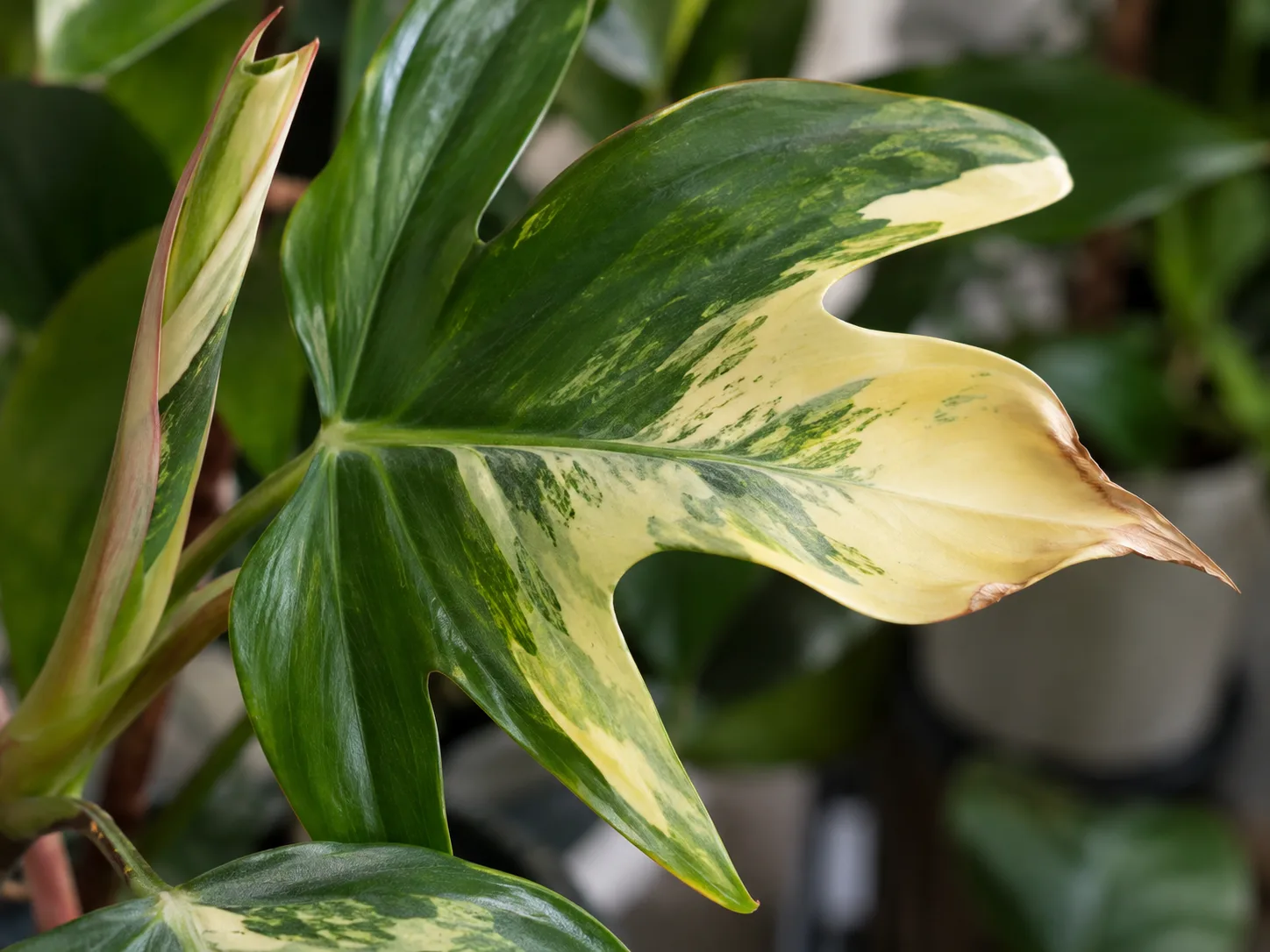
Dry air can crisp the thinner cream sectors first, while green portions of the leaf remain intact.
- Crisp brown margins starting on cream sectors. The yellow-to-cream splashes photosynthesize poorly and lose water fastest, so rims brown there first while green zones still look fine. Brown leaf edges can indicate low humidity on this hybrid specifically.
- Stuck, tearing spear leaves. New leaves emerge as furled spears that need supple tissue to slide open. In dry air the spear tip glues shut, then rips as the blade forces out — leaving notched or half-shredded lobes unique to climbing aroids.
- Shrivelled aerial roots. Florida Beauty is a natural climber that latches onto supports with aerial roots. Below ~45% humidity those nubs emerge, dry brown within days, and never attach to the pole.
- Smaller new leaves with longer gaps between nodes. Chronic dry air plus the resulting slow growth keeps each new blade smaller than the last, stretching the vine leggy.
- Curling leaf edges and dull foliage. Low-humidity signs include crispy brown leaf edges and leaf curling as leaves lose water faster than roots can replace it.
One crisp older leaf after a heating-season change is cosmetic. Multiple leaves crisping with stuck spears means the air, not the leaf, is the problem.
Why Florida Beauty suffers first
Three traits of this pedatum × squamiferum hybrid stack the odds against it in dry homes:
Tropical aroid expectations. Philodendrons as a group prefer moderately humid air, and NC State notes philodendrons want moderate humidity even when they tolerate less light. Florida Beauty’s 55–70% target sits above average living-room air, which commonly falls to 20–35% with winter heating or summer AC.
High-surface, variegated foliage. Deeply lobed leaves expose more edge per square centimetre than a solid heart-leaf philodendron, and every lobe tip is a drying front. Cream sectors run hotter and thinner in bright filtered light, so they scorch-crisp while green tissue copes.
A moss pole that dries from both sides. The pole is part of culture for this vine, not decor — but in dry air a sphagnum pole wicks dry within a day, and aerial roots pressed against dry fibre abort. A dry pole in dry air doubles the damage: no root attachment and no local humidity buffer around emerging spears.
Common triggers: radiators and forced-air vents blowing across the vine, a recently started dehumidifier or AC, a move from a humid bathroom to a bright dry living room, and autumn heating season arriving while watering stays on a summer rhythm.
How to confirm the cause
Work in this order before buying equipment:
- Read humidity at leaf level. Place a cheap digital hygrometer beside the vine for 24 hours, including a heating or cooling cycle. Sustained readings under ~45% with crisping edges confirm dry air; readings above 55% point elsewhere.
- Rule out watering. Probe the top 3–5 cm of chunky mix and lift the pot. Moist mix plus crisp edges means the roots are delivering but the air is stripping — classic low humidity. Dry deep mix with limp leaves means underwatering is at least part of the story, so align with the plant’s soak rhythm first.
- Read the pattern. Dry air starts at lobe tips and cream sectors on multiple leaves at once, with stuck spears. Fertilizer or salt burn clusters after feeding with crust on the mix; sun scorch sits only on the sun-facing side.
- Inspect unfurling spears and aerial roots. A spear glued shut with a brown papery tip, plus aerial-root nubs drying before they reach the pole, is nearly diagnostic for dry air on a climbing philodendron.
- Check leaf undersides for mites. Dry air favours spider mites — look for fine stippling, dull dusty undersides, and silk at lobe joints. Mites need their own treatment; humidity alone will not clear them.
The first fix to try
Set up local humidity, not whole-room humidity. Move the vine away from vents, radiators, and cold drafts, then run a small cool-mist humidifier a few feet away, aimed so vapour drifts past the leaves without soaking them. A room humidifier is one of the most effective devices for raising humidity around tropical plants, and philodendron growers raise air moisture with a humidifier or pebble tray beside the plant.
Dampen the moss pole the same day so aerial roots meet moisture, and leave the hygrometer in place — adjust the humidifier until daytime readings sit between 55 and 70%. Make this one change first so you can read the plant’s response before touching water, feed, or light.
Step-by-step recovery
- Relocate out of the air stream. No vent, radiator, fireplace, or AC draft within several feet. Protect philodendrons from cool drafts such as air-conditioning vents, and keep nights above 15°C (59°F) per RHS guidance.
- Run the humidifier daily. Refill and clean it on schedule — a grimy tank mists microbes onto leaves. Small ultrasonic models beat constant hand-misting, since misting and pebble trays are mostly ineffective as primary fixes despite being widely recommended.
- Rewet the pole, not the pot. Pour or spray water down the moss pole until damp but not dripping, repeating when the top dries. Keep soil watering on its normal rhythm — moist, never soggy.
- Free stuck spears gently. If a new leaf has glued shut, raise local humidity first, then tease the seam open with a damp fingertip. Never force or cut a spear; torn tissue invites rot.
- Group tropical plants. Clustering pots raises the local pocket a few points and buffers swings between humidifier refills.
- Trim only fully dead margins. Snip crisp brown rims with clean scissors, leaving a hairline of brown so you never cut green tissue. Leave partially green leaves working — they still feed the vine.
Recovery timeline
Existing crisp edges stay brown; judge everything by new growth. Within one week of steady 55–70% air, leaf edges should stop advancing and the next spear should slide open without sticking. Within two to four weeks, new blades arrive full-sized with clean cream margins, and fresh aerial roots stay green-tipped long enough to touch the pole. If new leaves still emerge small and crisp after a month of verified humidity, re-check light and feeding — dim light pushes greener, weaker growth that crisps for a different reason.
Lookalike symptoms
| Pattern | Likely cause | First step |
|---|---|---|
| Crisp margins on cream sectors, stuck spears, moist soil | Low humidity | Humidifier plus relocation |
| Limp leaves, light pot, dry deep mix | Underwatering | Deep soak, then dry-down rhythm |
| Brown tips with yellow halos after feeding | Salt or fertilizer excess | Stop feeding; flush only if drainage is fast |
| Bleached patches only on the sun-facing side | Direct-sun scorch on variegation | Filter afternoon sun |
| Fine stippling, dusty undersides, silk at joints | Spider mites | Rinse undersides; treat pests directly |
| Blackened soft patches after a cold night | Cold damage | Warm stable spot; trim dead tissue |
Note the Spruce’s humidity tell on philodendrons: browning leaf tips with yellow halos may mean the plant needs more humidity — halos plus crisping together lean dry air, while halos with wet soil lean salts.
What not to do
Do not overwater to “make up” for dry air — roots in soggy chunky mix rot while leaf rims keep browning, and you will convert a humidity problem into root trouble. Do not mist the leaves five times a day instead of fixing the air; leaves that stay wet in still indoor air invite fungal spotting, which is why steady humidifier output plus gentle airflow beats a spray bottle. Do not fertilize a crisping, stressed vine to green it up — feed only when clean new growth resumes. And do not seal the plant in a plastic bag or unventilated cabinet for weeks; stagnant ultra-humid air grows mold on the pole and leaf joints.
How to prevent it next time
Keep the hygrometer beside the plant permanently — it costs less than one replacement leaf’s worth of worry and tells you when heating season starts before the vine does. Run the humidifier from the first week of indoor heating, not the first crisp edge. Water the moss pole on the same round as the pot so aerial roots always meet a damp surface, and keep the vine in bright filtered light where cream sectors hold without scorching. Each autumn, re-check the 55–70% target before the radiators come on; each spring, dial back as ambient humidity rises so foliage never sits wet and airless.
When to worry
Escalate fast if spears are tearing across several nodes at once, crisping spreads leaf to leaf within days, or mite webbing appears — dry air plus pests can defoliate a young vine quickly. Also act promptly if stems soften or the pole grows fuzzy mold, since those signal rot or stagnant air rather than simple dryness. A lone crisp rim on an old leaf while new growth unfurls clean is maintenance, not an emergency.
Related tool
Use the Humidity Calculator to narrow causes for low humidity on this plant before changing multiple variables at once.