Slow Growth on Philodendron Florida Beauty: Light, Roots &
Quick answer
Slow growth on Philodendron Florida Beauty usually traces to dim light on energy-poor variegated foliage, a missing moss pole, a root-bound pot, or a missed feeding season — not a single disease. First step: move the vine into bright filtered light with its pole, then watch one full new-leaf cycle before feeding or repotting.
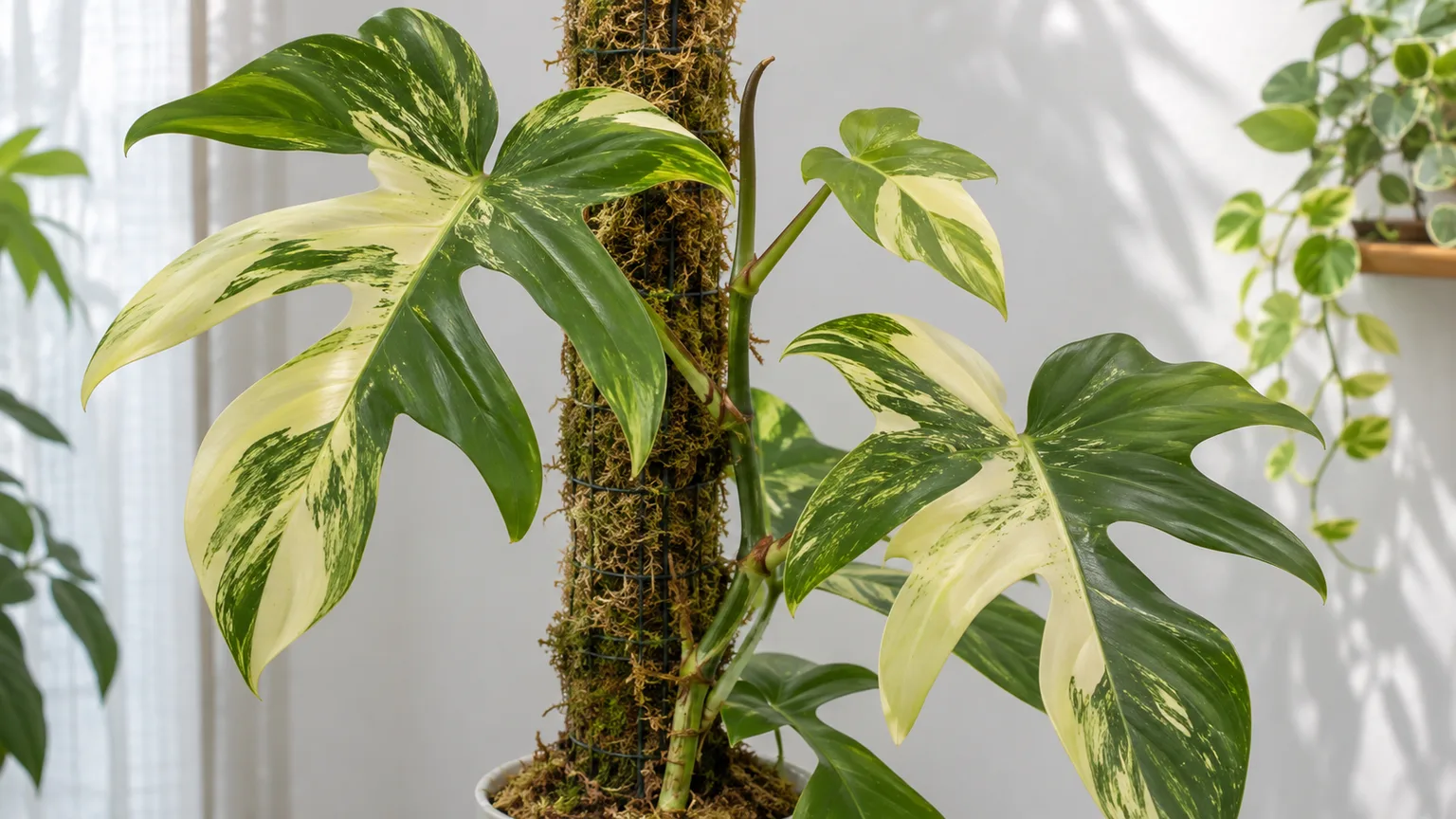
Slow Growth on Philodendron Florida Beauty: Light, Roots & Feeding Fixes
This guide covers slow growth on Philodendron Florida Beauty. See also the general Slow Growth guide, watering, and light pages for this plant.
Slow Growth on Philodendron Florida Beauty: Light, Roots & Feeding Fixes
Quick answer
Philodendron Florida Beauty is a variegated climbing hybrid, and it grows more slowly than a solid-green philodendron even in good care — cream and yellow leaf sectors barely photosynthesize, so the whole vine runs on a smaller energy budget. A real stall means no new lobed leaves unfurling at the vine tip for weeks during warm weather, often with smaller-than-usual new blades.
For how stalled growth works across houseplants in general, see our slow growth hub. On Florida Beauty, the pattern usually shows up as a quiet vine tip in a dim spot, a pole-less plant with stretching internodes and small unlobed leaves, or a long-unfed plant that survived winter and never restarted in spring.
First step: move the vine into bright filtered light with its moss pole, then watch one full new-leaf cycle before feeding or repotting. Light is the most common limiter on this plant, and changing food and pots at the same time hides which fix actually worked.
What slow growth looks like on Florida Beauty
Judge pace at the vine tip, not by overall fullness. A healthy Florida Beauty in active growth pushes a new leaf every couple of weeks in spring and summer, each blade deeply lobed with yellow-to-cream splashes when light is adequate. A stalled plant looks “alive but frozen”: older leaves hold their color, the stem stays firm, and the tip simply does nothing.
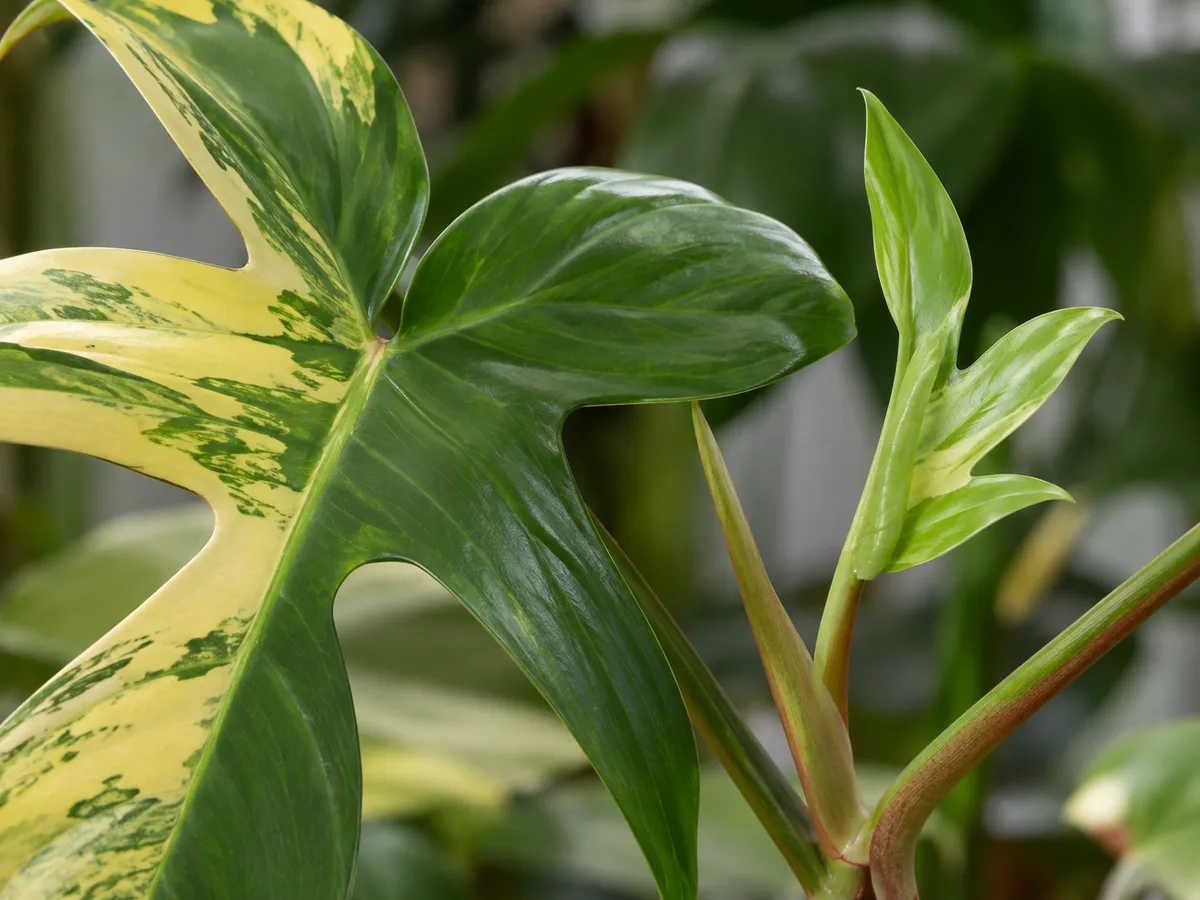
Compare recent blades with mature leaves; progressively smaller growth can signal a limiter.
Plant-specific markers of a genuine stall:
- Quiet tip for three-plus weeks in warm weather — no emerging leaf spike at the newest node while room temperatures sit in the plant’s comfort range.
- New leaves arriving smaller than older blades — each successive leaf downsizes instead of holding the established lobed scale.
- Poor lobing on mature vines — leaves stay spear-shaped instead of developing the deep indentations this cross shows as it climbs and matures.
- Fading cream in new growth — new blades emerge mostly green with long gaps between nodes, signaling the plant is economizing on expensive variegated tissue.
- Firm stem, stable pot — unlike rot or pest collapse, a pure stall keeps tissue firm; soft bases or rapid yellowing belong to a different diagnosis.
Normal slow periods (not chronic failure):
- Winter weeks when growth legitimately pauses — feed nothing and water less until spring push resumes
- The first one to two weeks after repotting while roots settle into fresh mix
- A brief hold after moving the plant into much brighter light while foliage acclimates
Why variegation makes Florida Beauty slower than green philodendrons
This is the single most important context for the whole page. Florida Beauty is a hybrid of Philodendron pedatum and Philodendron squamiferum — both climbers — selected for heavily variegated yellow-and-green foliage. That beauty has a metabolic price: white leaf tissue produces no food for the plant, the green remainder works harder to feed the whole vine, and variegated plants end up less robust than their green counterparts.
Practically, that means three things. First, calibrate expectations — Florida Beauty will never match the pace of a green heartleaf philodendron in the same window, and that gap is genetics, not failure. Second, every stressor costs this plant more: a dim month or a soggy spell that a green philodendron shrugs off can stall Florida Beauty for a whole season because its energy reserves are thinner. Third, light matters disproportionately — the plant needs brighter filtered light than solid-green types precisely because each leaf earns less sugar per photon. Dim placement does not just slow this vine; it pushes new leaves toward plain green, since green tissue is energetically cheaper to build.
Light: the usual limiter on a dim shelf
Most stalled Florida Beauty plants are simply under-lit. The species wants bright diffused positions — think east window or sheer-filtered south-west glass — and Clemson HGIC places philodendrons generally in indirect or curtain-filtered sunlight, noting that yellowing lower leaves and dying growing tips follow too little light. On Florida Beauty specifically, dim light shows a signature sequence: new leaves emerge greener with longer internodes first (the reversion warning), and only later does the tip go fully quiet.
Confirm the light story before touching anything else:
- Read the variegation, not the room. If the last two leaves are greener than older blades with stretched stem between nodes, light — not food — is the limiter. See the light guide for placement targets.
- Check duration, not just brightness. A bright windowsill for two hours plus dim room light all afternoon still stalls a variegated climber; it needs sustained bright filtered exposure through the day.
- Rule out scorch confusion. Pale bleached patches with crispy cream edges mean too much direct afternoon sun on variegated sectors — the fix is filtering, not a darker room.
If you improve light, give the plant one full leaf cycle there before declaring victory or adding fertilizer. Variegated tissue responds slowly, and premature feeding on a plant that only needed photons creates salt stress on top of the original problem.
The moss pole factor: no support, no mature leaves
Because both parent species are climbers, Florida Beauty is built to ascend — juvenile leaves start spear-shaped and develop deep lobes as the vine climbs and matures. A pole-less plant left to trail or flop does not just look messier; it stays physiologically juvenile, producing smaller, less-lobed leaves on stretching internodes that read exactly like slow growth. NC State Extension describes this lineage as a climber on a moss pole indoors, and that support is cultural infrastructure for Florida Beauty, not decoration.
Check the climbing setup:
- Aerial roots waving in air with nothing to grip — offer a moist moss pole and loosely tie the stem so nodes contact damp sphagnum.
- Internodes lengthening while leaves shrink — the vine is reaching for support and light simultaneously; fix both together.
- A heavy vine flopping over the pot rim — mechanical stress plus juvenile foliage; stake at the next watering, not as an emergency midnight procedure.
Once climbing resumes, expect the payoff in leaf quality rather than sheer speed: larger blades, deeper lobes, and more stable cream patterning across nodes. That maturation is the plant-specific recovery signal no generic growth guide can give you.
Roots, mix, and pot size: the hidden stall
A Florida Beauty that has not been repotted in years often stalls even when light and feeding look right. Dense, circling roots in broken-down mix cannot deliver water and nutrients efficiently, and the plant responds by shrinking new leaves rather than by dramatic wilting. The practical rule from cultivation references is to repot every 2–3 years, with spring the best season while the plant still has room to re-establish before winter.
Confirm the root story without unpotting first:
- Water runs straight through yet the plant never perks — mix has collapsed and channels around a dense root ball instead of wetting it.
- Roots circling the surface or pushing from drainage holes — the pot is fully colonized; see the repotting guide for sizing.
- Pot stays heavy for many days after watering — exhausted fine mix holds stagnant water around roots; cross-check the soil guide for chunky aroid structure and the watering guide for dry-down checks.
When you do repot, size to the root mass — one step up, not a giant leap — into potting mix cut with perlite and orchid bark. Water once to settle, drain fully, and hold fertilizer until new growth confirms the roots are working again.
Water, temperature, and the winter pause
Cool, wet conditions stall Florida Beauty through two mechanisms at once: metabolism slows and roots suffocate. Philodendrons want night temperatures of 65–70°F with days at 75–85°F per Clemson HGIC, and the RHS advises keeping plants above 15°C (59°F) while letting compost dry slightly between waterings. A plant sitting at 16°C in soggy mix is not resting — it is drowning slowly, and overwatering of this lineage causes root rot that then looks like permanent dwarfism.
Separate a seasonal pause from a care stall:
| Signal | Winter pause (normal) | Cool-wet stall (fix it) |
|---|---|---|
| Timing | Short days, cool room, tip quiet | Any season with heavy wet pot |
| Foliage | Holds color, firm petioles | Yellowing lower leaves, soft bases |
| Mix | Dries slowly but does dry | Stays soggy for days, sour smell |
| Response | Less water, no feed, patience | Warm the roots, drain, dry-down |
Cultivation guidance is explicit that growers should water less frequently in winter, when growth slows right down, and stop feeding until spring. Respect that rhythm: a firm plant with a quiet crown in January needs patience, not rescue feeding. Resume normal watering and monthly feeding only when warmth and new growth return together.
Hunger check: feeding a heavy-variegation climber
When light, support, warmth, and roots all check out but the vine still creeps, nutrition is the remaining suspect — especially if the plant has not been fed since spring. The documented schedule is a liquid houseplant fertilizer monthly during April to September, with no feeding through winter. That window exists because the plant can only convert nutrients into leaves while warm and lit; feeding a cold, dim, stalled plant accumulates salts while growth stays quiet.
Practical hunger signs on Florida Beauty:
- Uniformly pale new leaves (not just cream sectors) with a firm stem, warm pot, and good light — the whole leaf lacks building material.
- A full growing season with zero feeding in the same two-year-old mix — depleted substrate cannot sustain variegated leaf production.
- Steady but tiny leaf output rather than a full stop — the plant rations nutrients into miniature blades.
The diagnostic logic used by experienced growers applies here: if a philodendron is growing very slowly despite adequate light, it may need more fertilizer — applied as a complete feed with macro and micronutrients during the growing season, per Gardening Know How. Start with one dilute dose at half label strength, then continue monthly only while new leaves keep coming. Align amounts and timing with the fertilizer guide, and never dump a heavy corrective dose on a plant whose roots you have not verified.
How to confirm the cause before you act
Work through these checks in order so you fix the true limiter first:
- Read the last two leaves. Greener than older blades with long internodes means light; small but well-variegated means hunger or roots; pale all over means hunger after light checks out.
- Audit light duration at the pot across a full day, not one bright moment. Under sustained bright filtered exposure, suspect other causes.
- Lift the pot and finger-test the top 3–5 cm. Heavy and wet days after watering means drainage or root trouble; light and dry means the watering cycle is fine.
- Inspect the climbing setup. No pole, aerial roots grasping air, and juvenile spear leaves on a mature vine mean support is part of the stall.
- Check warmth. Below about 15°C at the roots, warming comes before feeding — fertilizer cannot restart a cold plant.
- Review feeding and potting history. No feed all season or no repot in three-plus years points to hunger or congestion; confirm with the checks above first.
- Scan new growth for pests. Webbing, stippled young leaves, or cottony clusters in leaf axils mean sap-feeders are taxing the vine — treat the infestation before judging pace.
Soft, darkened tissue at the soil line or a sour smell from the mix is not a slow-growth case anymore — unpot, inspect roots, and treat it as root damage first.
First fix for Florida Beauty
Move the vine into bright filtered light on its moss pole, and change nothing else for one full leaf cycle.
That single relocation addresses the most common limiter while giving you a clean read on the plant:
- Place near an east window or behind sheer-filtered south-west glass — brighter than a green philodendron tolerates, gentler than direct afternoon sun on cream sectors.
- Secure the stem to a moist (not soggy) moss pole so the newest node contacts support.
- Keep the existing watering rhythm — top 3–5 cm dry, then soak and drain — so light is the only variable you changed.
- Hold fertilizer and repotting until you see what the tip does in the brighter spot.
If a new leaf starts pushing within two to four weeks, light was the answer — continue monthly feeding through the growing season. If the tip stays quiet in good light with correct watering, move to the hunger check and then the root inspection, one step at a time.
Recovery timeline
| Time after the right fix | What you should see |
|---|---|
| 1–2 weeks | Firmer posture; newest node swelling at the tip |
| 2–4 weeks | New leaf spike emerging; unfolding blade holds size |
| 4–8 weeks | Second new leaf with deeper lobes and stable cream patterning |
| One warm season | Vine visibly advancing up the pole; leaf size consistent across nodes |
| Cool-season hold | Little new growth until warmth returns — patience, not panic |
Judge success by new leaves, never by old ones. Already-produced small or green blades will not enlarge or regain variegation; the next two leaves are the report card. If new growth keeps shrinking despite correct light, water, and feeding, unpot and inspect the root mass — congestion or rot outranks every above-ground fix.
Mistakes that keep Florida Beauty stalled
- Feeding a dim plant to force growth — nitrogen without photons produces soft stretched tissue, not healthy leaves; brighten first.
- Repotting, pruning, and full-strength feeding on the same day — a stalled vine cannot handle triple stress; sequence light, then food, then pot.
- Chasing calendar schedules through winter — summer watering and feeding frequency in cool short days stalls roots and invites rot.
- Assuming cream variegation means extra water — pale sectors look fragile but want the same dry-down cycle; weak cream growth usually needs better roots and light, not more moisture.
- Leaving the vine pole-less for years — trailing Florida Beauty stays juvenile and small-leafed; support is part of the growth prescription.
- Ignoring the two-to-three-year repot window — exhausted mix starves the plant slowly enough to look like a mystery stall.
When to use this page vs other Florida Beauty guides
Use this page when the main story is pace: a firm vine with stable color that simply stops producing new lobed leaves in warm weather.
- Stretch with long bare internodes and a lean toward glass → light guide
- Yellow lower leaves with a heavy wet pot → watering guide
- Mix that never dries or smells sour → soil guide and repotting guide
- A full unfed season with pale new leaves in good light → fertilizer guide
- Healthy stem sections with nodes for backup plants → propagation guide
Related Florida Beauty guides
- Philodendron Florida Beauty overview — whole-plant context, variegation, and collector expectations
- Philodendron Florida Beauty light — filtered-light placement that protects cream sectors
- Philodendron Florida Beauty watering — dry-down checks that prevent stall-by-rot
- Philodendron Florida Beauty soil — chunky aroid mix for climbing roots
- Philodendron Florida Beauty fertilizer — April-to-September feeding detail
- Philodendron Florida Beauty repotting — sizing and timing for root-bound vines
- Philodendron Florida Beauty propagation — node cuttings as a backup plan
Conclusion
Slow growth on Philodendron Florida Beauty is usually an energy story, not a disease: variegated foliage earns less sugar per photon, so dim light, missing pole support, exhausted mix, or a skipped feeding season stalls this vine sooner than a green philodendron. Fix the limiter in order — bright filtered light with pole support first, then warmth and dry-down, then seasonal feeding, then repotting — and judge recovery by the next two leaves, not the old ones. A vine pushing full-size lobed blades with stable cream splashes is telling you the system works; keep the light bright, the pole moist, and the winter pause respected.
Related tool
Track whether your setup is actually moving the vine forward with the Plant Growth Rate Calculator.