Wilting on Philodendron Florida Beauty: Causes, Checks &
Quick answer
Wilting on Philodendron Florida Beauty is most often dry potting mix, soggy mix with root damage, or a dry moss pole starving the upper vine. Push a finger 3–5 cm into the mix and lift the pot: if dry and light, soak deeply until water drains; if wet and heavy, drain fully and hold water while you check roots.
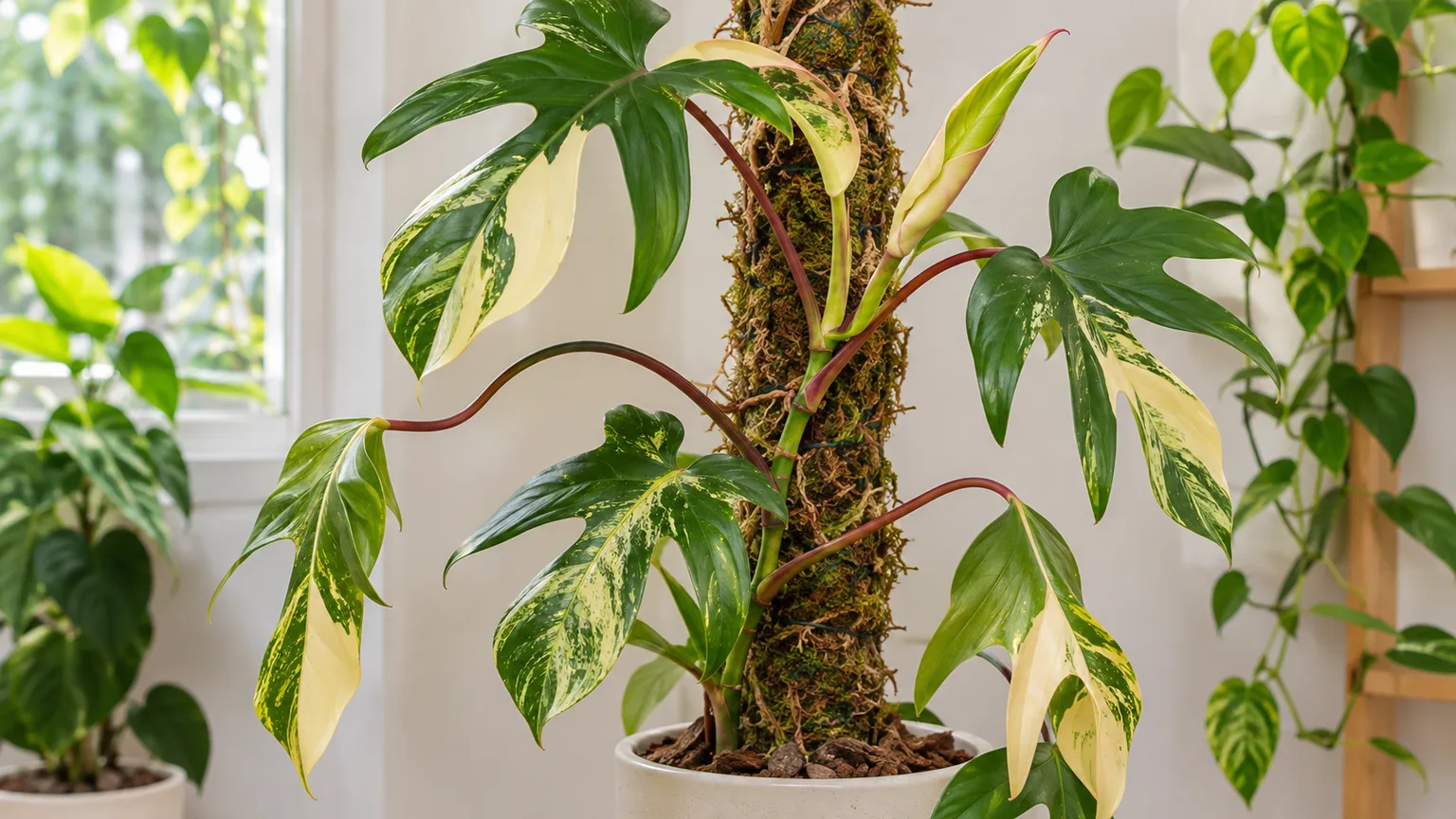
Wilting on Philodendron Florida Beauty: Causes, Checks & Fixes
This guide covers wilting on Philodendron Florida Beauty. See also the general Wilting guide, watering, and light pages for this plant.
Wilting on Philodendron Florida Beauty: Causes, Checks & Fixes
Quick answer
Wilting on Philodendron Florida Beauty almost always traces to one of three things: dry mix, suffocated roots in soggy mix, or a dry moss pole starving the upper vine while the pot itself looks fine. Check before you water — push a finger 3–5 cm into the mix and lift the pot. Dry and light means a deep soak until water runs freely from the base. Wet and heavy means drain everything, empty the saucer, and leave the plant alone while you investigate the roots.
For how chronic wet mix damages roots in houseplants generally, see our wilting guide. On Florida Beauty, the pattern usually shows up as lobed blades folding down at the petiole joints, with the pale variegated sectors flagging first.
What wilting looks like on Florida Beauty
A thirsty or root-damaged Florida Beauty does not just droop — its architecture folds. The long petioles lose stiffness first, so each lobed blade hinges downward from the petiole joint while the vine itself may still stand. Petioles feel soft and bendy instead of springy, and a new leaf caught mid-unfurl stalls, sometimes emerging small and crinkled.
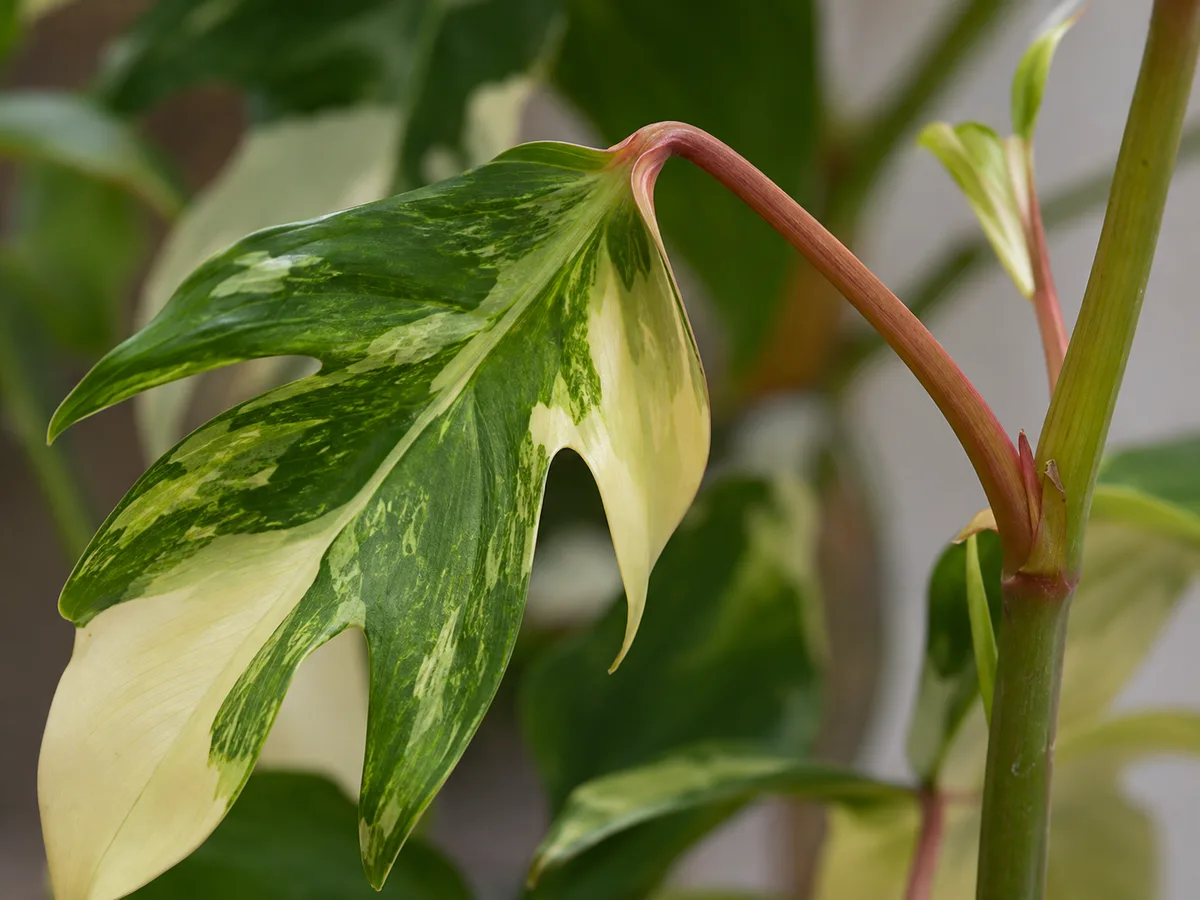
Wilting first loosens the petiole joint, so the lobed blade folds even while the vine remains upright.
The variegation tells on this plant early. Cream and yellow sectors carry little chlorophyll and scorch readily, so heat- or sun-driven wilting shows as limp, papery pale patches while the green parts still look acceptable. In low light the opposite happens: growth turns leggy with long internodes, and the whole vine goes floppy from weak tissue rather than true water loss.
Aerial roots add another signature. Healthy ones reaching for the pole are silvery-green and firm; on a wilting vine they turn brown, brittle, and shriveled. If only the leaves above a certain node are limp while the base looks perky, the problem lives in the pole zone, not the pot.
Why Florida Beauty wilts
Dry chunky mix and hydrophobic pockets
Florida Beauty grows in a bark-and-perlite aroid mix that drains fast by design. In warm rooms that mix can dry through in days, and once bark turns hydrophobic, poured water channels down the sides while the core around the roots stays bone dry. The plant then wilts in a pot that looks watered. This is the most common cause on established, pole-trained specimens in summer.
Soggy mix and root suffocation
The mirror image is a pot that never dries: dense peat, no drainage hole, or a cachepot holding a reservoir. Philodendrons need their mix evenly moist, but not soggy, and Clemson notes that root rot usually results from a soil mix that does not drain quickly or from watering too often. Without oxygen, feeder roots die, fungi invade, and the vine wilts in wet soil — the classic paradox covered in our overwatering and root rot hubs.
A dry moss pole starving the upper vine
A climbing Florida Beauty drinks through two systems: pot roots below and aerial roots gripping the pole above. If the pole stays permanently dry while the pot is watered normally, the upper nodes lose a major moisture source and their leaves wilt even though the base looks healthy. Tall specimens with dry coir poles show this pattern constantly, and it fools growers into overwatering the pot — which then rots the base roots too.
Light, heat, and cold drafts
Because its pale sectors photosynthesize poorly, Florida Beauty demands brighter filtered light than a solid-green philodendron yet burns in harsh direct afternoon sun. A vine moved into a hot west window can wilt within hours as variegated tissue loses water faster than roots can supply it. At the other extreme, cold drafts and rooms below about 18°C slow root function, so winter wilting near a leaky window is often chill, not thirst. Resolve the exposure before blaming your watering, and compare notes with our underwatering guide only after ruling these out.
How to confirm the cause
Work through this order — it separates dry wilt from wet wilt in under five minutes:
- Finger test at depth. Push a finger 3–5 cm into the mix near the middle of the pot, the check Epic Gardening recommends as watering only when the top two inches are dry. Dry and crumbly points to underwatering; cool and damp points to excess moisture.
- Pot weight. Lift the pot. A dry pot feels strikingly light; a wet one feels dense and cold. Match the weight against what you remember right after watering.
- Leaf and petiole feel. Dry-wilted blades feel thin and papery with bendy petioles; wet-wilted leaves feel soft, heavy, or slightly translucent, sometimes with yellowing lower leaves. Turgor loss explains both: without internal water pressure the tissue cannot hold itself stiff, as described in practical terms by Our Wild Garden.
- Pole and aerial roots. Squeeze the pole at vine height and inspect aerial roots. A dusty-dry pole with shriveled aerial roots above healthy basal foliage means pole drought, not pot drought.
- Root peek. If the mix is wet and the plant still wilts, slide the root ball out. White or tan firm roots exonerate watering; brown, soft, foul-smelling roots confirm rot — Wisconsin Extension describes exactly this picture of plants wilted, even though the soil is wet.
The first fix to try
Do the finger-and-weight check, then act on what it tells you — one action only. If the mix is dry, give a single deep soak until water streams from the drainage holes, empty the saucer after 15 minutes, and mist or pour water down a dry moss pole. If the mix is wet, drain everything, remove the nursery pot from any cachepot, and do not water again until the top 3–5 cm dries. Making one targeted correction lets you read the plant’s response within a day instead of guessing between stacked treatments.
Step-by-step recovery
Dry-wilt path
- Set the pot in a basin of room-temperature water for 20–30 minutes so hydrophobic bark rehydrates by capillary action, then let it drain fully.
- Water the moss pole from the top until it is damp but not dripping.
- Move the plant out of direct sun into bright filtered shade for 48 hours while turgor returns.
- Expect firm petioles within 12–36 hours; if nothing changes, suspect hidden root damage and switch to the wet path.
Wet-wilt path
- Unpot and shake off the soggy mix, rinsing roots gently so you can see their true color.
- Trim every brown, mushy, or foul-smelling root back to firm pale tissue with alcohol-cleaned scissors.
- Repot into fresh chunky mix (potting soil plus perlite and orchid bark) in a container with pots with drainage holes — non-negotiable for this hybrid.
- Water lightly once to settle the mix, then wait until the top 3–5 cm dries before watering again. Wisconsin Extension’s core prescription for rot recovery is exactly this: reduce soil moisture while meeting growth needs, never swinging to saturation.
Pole-drought path
If only the upper vine wilted, soak the pole, tie the vine closer with soft plant ties so aerial roots contact moisture, and keep the pole lightly damp for the next two weeks. New aerial root tips should emerge fuzzy and green within a fortnight — proof the upper vine is drinking again.
Moss-pole moisture: the Florida Beauty–only check
No other habit matters as much for this plant as its vertical one. Florida Beauty is a pedatum × squamiferum climber that sizes up its lobed leaves only while attached to a moist, grippable surface; a vine left to dangle grows smaller leaves on longer internodes and wilts from the top down whenever room air runs dry. Water the pole independently of the pot — pour slowly from the top on watering day and again midweek in heated winter rooms. Sphagnum-wrapped poles hold moisture far longer than bare coir and root faster into aerials. When repotting, extend the pole rather than coiling the vine back into the pot; buried stem sections in damp mix are a rot highway on this hybrid.
Variegation, light, and heat behavior
Treat the cream sectors as an early-warning system. If pale patches wilt and crisp while green tissue stays firm, the plant is losing water faster than its roots supply — usually too much direct sun or radiator heat, not a watering failure. Florida Beauty holds its splashes only in bright filtered light, consistent with the RHS guidance on philodendron light needs in the RHS philodendron growing guide; dim corners push all-green reversion and weak floppy stems that mimic wilt. An east window or sheer-filtered south-west aspect is the sweet spot, and sheer protection matters most for the palest leaves. If new growth arrives mostly green with stretched internodes, brighten the light first — extra water cannot fix an energy shortage.
Node-cutting rescue when the base is lost
When the stem base has gone soft or the root ball is mostly mush, Florida Beauty offers an escape hatch most rosette plants lack: every node can become a new plant. RHS lists stem-tip and leaf-bud cuttings as the propagation route for this hybrid in the RHS Florida Beauty profile. Choose a firm section above all discoloration with at least one node and an aerial root nub, preferably one showing cream on the stem so variegation carries forward. Root it in damp sphagnum or water in bright filtered light, and pot up once roots reach 3–5 cm. This is worth attempting before discarding any wilted specimen with a salvageable upper vine.
Recovery timeline
Dry-wilted plants look dramatically better within a day or two; hold the normal rhythm for another fortnight to confirm stability. Wet-wilted plants are slower: expect two to six weeks before a new leaf unfurls cleanly, since replacement roots must grow first. Track the newest growth, not old damage — previously limp blades may stay slightly creased forever, and that is cosmetic, not failure. If no new growth appears after six weeks in good conditions, re-inspect the roots.
Mistakes to avoid
- Watering on a calendar instead of checking the top 3–5 cm first.
- Drowning a wet-wilted plant further because “wilting means thirsty.”
- Repotting, pruning hard, and spraying treatments all on the same day — a stressed climber cannot handle all three.
- Fertilizing before the plant firms up; salts on damaged roots worsen burn, and feeding is never the first response to wilt.
- Soaking the pot while ignoring a bone-dry pole, or vice versa.
- Leaving the nursery pot sitting in a water-filled cachepot or saucer.
How to prevent it next time
Anchor prevention to this hybrid’s actual rhythm, detailed in our Florida Beauty watering guide: deep soak only when the top 3–5 cm dries, roughly every 7–10 days in summer and 10–14 days in winter, adjusting for light and pot size. Keep it in chunky bark-and-perlite mix that matches the Florida Beauty soil guide rather than dense peat, and site it per the Florida Beauty light guide so variegation stays stable and water use stays predictable. Maintain 18–29°C with humidity around 55–70%, water the pole on its own schedule, and check pot weight weekly — a pot that stays heavy for days is warning you before the leaves do.
When to worry
Treat it as urgent when the stem base softens, when collapse spreads across several leaves in a day, or when the mix smells sour — these signal rot moving through the vascular system. A single limp lower leaf on an otherwise firm vine is routine aging; snip it and carry on. If the entire root ball is black mush and no firm node remains above, the plant is spent — compost it, sterilize the pot, and start fresh rather than nursing dead tissue for months.
Related tool
Use the Plant Watering Calculator to dial in soak timing for wilting on this plant before changing multiple variables at once.