Wilting on Philodendron Florida Ghost: Causes, Checks &
Quick answer
Wilting on Philodendron Florida Ghost is usually thirst, wet-root suffocation, or cold shock — not one single disease. First step: lift the pot and feel the mix at 3–5 cm depth. Light dry pot means soak thoroughly; heavy wet pot means stop watering, drain, and let it dry.
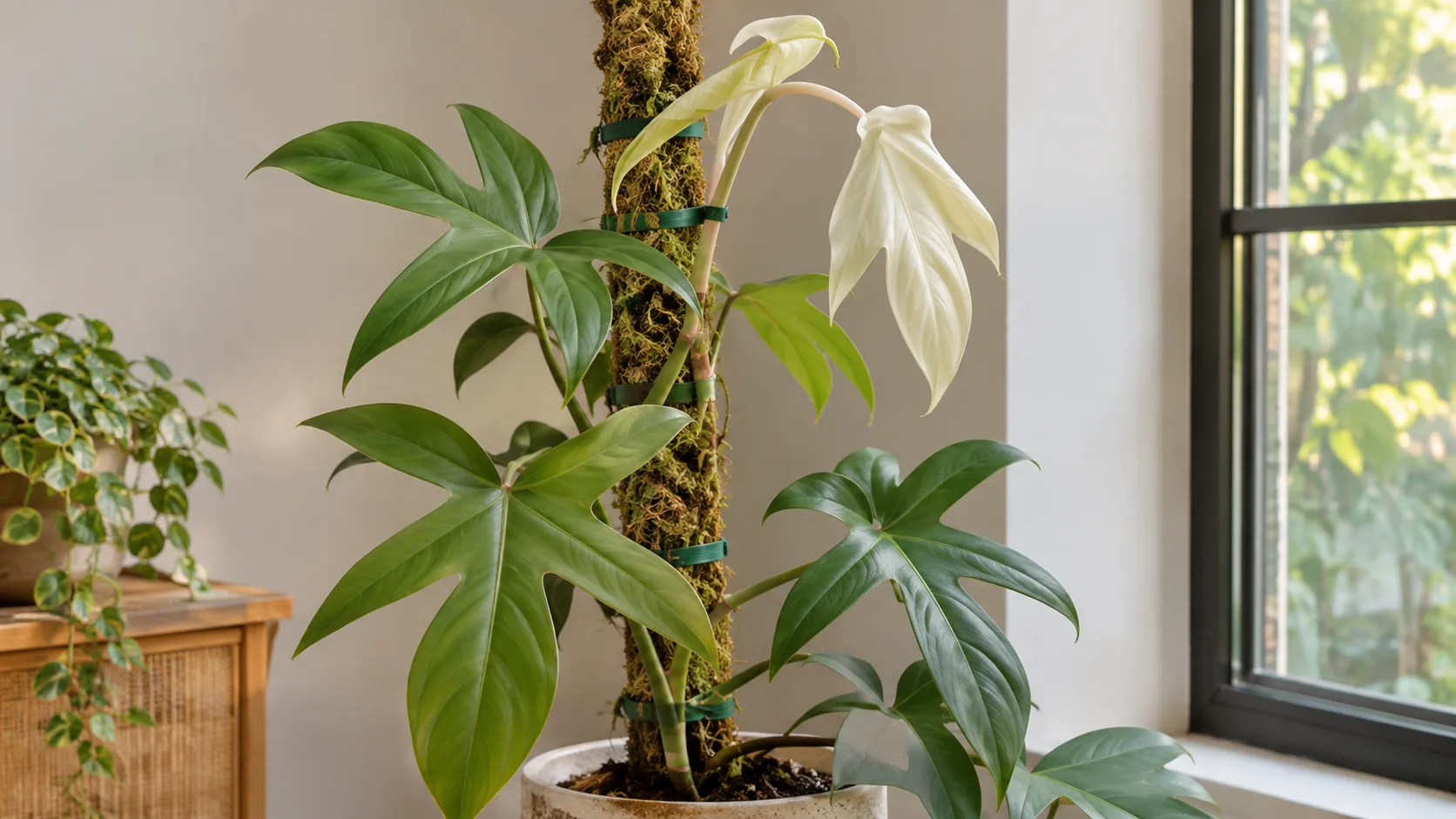
Wilting on Philodendron Florida Ghost: Causes, Checks & Fixes
This guide covers wilting on Philodendron Florida Ghost. See also the general Wilting guide, watering, and light pages for this plant.
Wilting on Philodendron Florida Ghost: Causes, Checks & Fixes
Quick answer
Wilting on Philodendron Florida Ghost is a loss of internal water pressure in the leaves — the cells lose turgor and go limp — and it is a symptom, not a disease. On this climbing hybrid the three usual drivers are a genuinely dry root ball, roots suffocating in wet mix, or a cold shock. First step: lift the pot and feel the mix at 3–5 cm depth, then act on what the pot tells you — soak a light dry pot thoroughly, or drain and dry out a heavy wet one.
For how wilt works across houseplants in general, see our wilting guide. On Florida Ghost, the pattern usually shows up at the growth tip first, because the pale unfurling leaf has the least reserves to ride out stress.
What wilting looks like on Florida Ghost
Expect soft, hanging leaves on otherwise intact stems, often starting with the newest growth. The white or cream unfurl at the vine tip may flop or crease while older green leaves still look acceptable — that tip-first pattern is characteristic of this cultivar, whose new leaves emerge white before hardening green. Thirsty wilt feels papery and light; wet-root wilt feels limp and heavy, sometimes with yellowing lower leaves underneath.
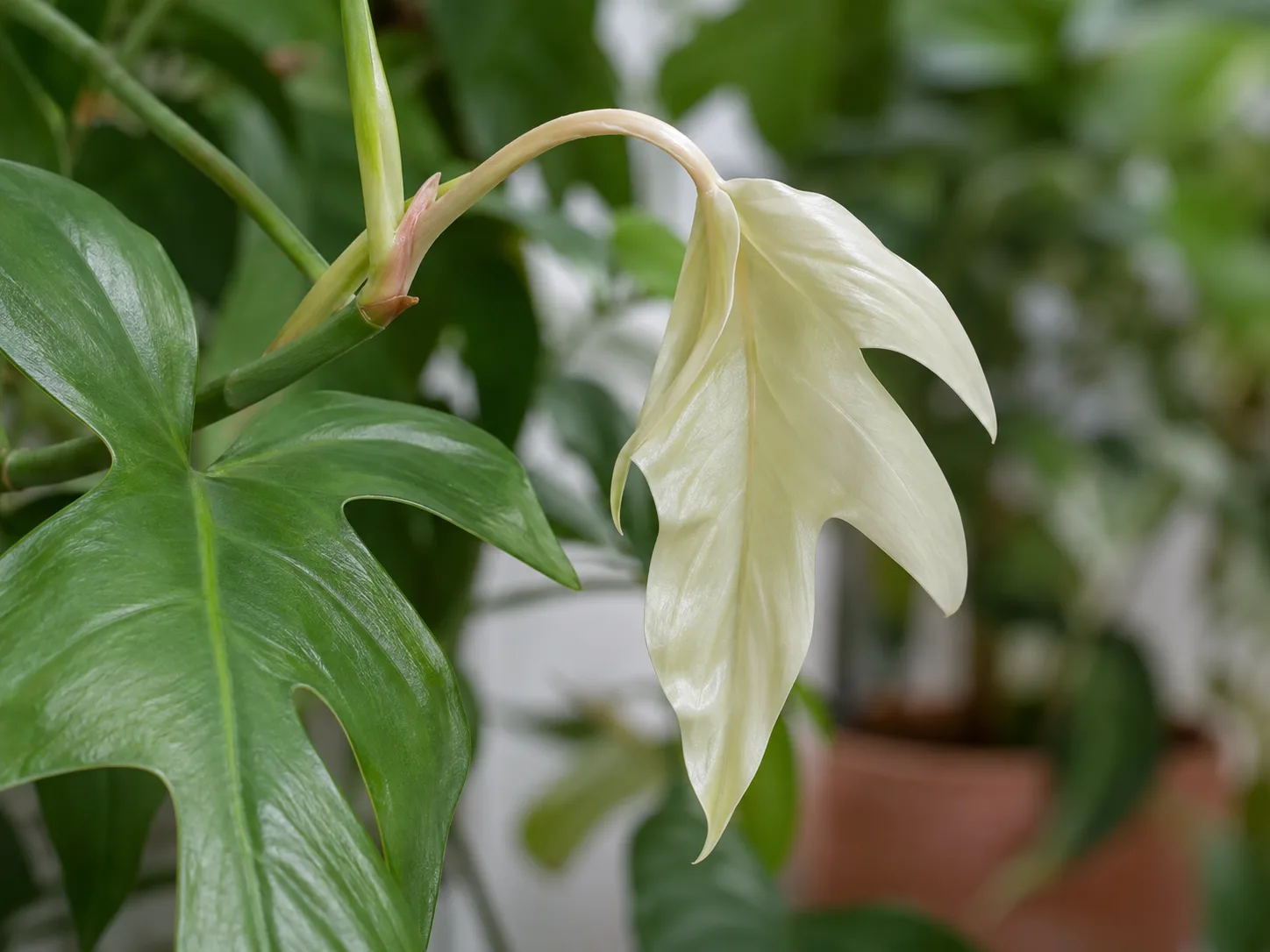
The newest pale leaf may flop or crease while older green foliage still looks firm.
Do not confuse an afternoon slump with real wilt. If the plant perks up by evening without extra water, that was heat or bright-light transpiration outpacing uptake, not a watering failure. True wilt persists into the cool of the morning.
Why Florida Ghost wilts: the three usual causes
1. Genuine thirst in a fast-draining pot
Chunky aroid mix, small nursery pots, moss poles wicking moisture, and bright east-window positions all dry a Ghost out faster than its owner expects. Missed drinks show as a light pot, mix pulling slightly from the rim, and leaves that recover within hours of a soak. This is the kindest cause and the easiest to fix.
2. Wet roots that cannot breathe
The paradox that traps beginners: a plant dying of thirst in soaking soil. Clemson HGIC notes that philodendron root rot usually results from mix that drains poorly or watering that comes too often, and that plants must never stand in water. When the root ball stays saturated, fine roots die from oxygen loss and stop transporting water upward — so leaves wilt despite wet mix. Cachepots that hide runoff, oversized repots with uncolonized wet centers, and winter watering kept at summer frequency are the classic Ghost setups for this. NC State Extension makes the same link on related climbing philodendrons: overwatering causes root rot in moist-but-must-drain soil.
3. Cold shock and dry-air stress
Florida Ghost is a tropical climber that wants stable warmth. RHS guidance keeps philodendrons at typical room temperatures of at least 15°C (59°F), away from hot radiators and cold draughts. A night against cold window glass, a blast from an AC vent, or a winter move in an unheated car can collapse leaves within a day even when the pot is perfectly watered. Low humidity compounds it: as RHS explains, dry air speeds transpiration, and leaves wilt when water leaves the foliage faster than roots can replace it.
How to confirm the cause
Run one check in this order before touching the watering can:
- Lift the pot. Heavy days after watering points to wet-root trouble; light and easy to lift points to thirst.
- Finger test at 3–5 cm. Cool and clinging means wait; dry and crumbly means water. Let the compost surface dry before watering again — that surface-dry rule is the cultivar-specific baseline.
- Read the timeline. Did it wilt within days of repotting, moving rooms, or a cold night? Transplant sulk on this Ghost is common and resolves on its own; wet-pot wilt after a week of damp heaviness does not.
- Inspect the base. Soft dark petioles at the soil line, sour-smelling mix, or fungus gnats confirm the roots are in trouble rather than merely dry.
- Check leaf undersides. Sap-feeding pests such as spider mites, aphids, and mealybugs — the usual philodendron pests per Clemson — weaken leaves into a wilt-like droop; treat only if you actually find them.
First fix for Philodendron Florida Ghost
Do the pot-weight check above, then take exactly one action: if the pot is light and the mix is dry at depth, soak thoroughly until water runs from the drainage holes, empty the saucer within 30 minutes, and leave the plant alone. If the pot is heavy and the mix is damp, empty all standing water, move the plant to brighter indirect light, and let the top layer dry before even considering another drink.
One action, then observe. Stacking a repot, a prune, fertilizer, and a pest spray on the same day hides which fix worked and usually finishes off an already stressed vine.
Step-by-step recovery
For thirst wilt: one full soak, drain completely, and return to the check-first rhythm in our Florida Ghost watering guide. Leaves should firm within hours; if they do not, re-examine for root damage.
For wet-root wilt: stop watering and improve conditions first. Drain saucers and cachepots, confirm drainage holes are open, and give brighter indirect light so the plant can use stored moisture. If yellowing spreads, petioles soften at the base, or the mix smells sour, unpot and inspect: firm white-to-tan roots stay, brown-black mush gets trimmed with clean shears, and the plant goes back into fresh chunky mix sized to the remaining roots. Full repot workflow lives in our Florida Ghost repotting guide.
For cold shock: move the plant to stable warmth above 15°C, out of drafts, and do not water unless the pot check says dry. Damaged tissue will not un-collapse; recovery shows as the next leaf opening firm.
For repot sulk: patience is the treatment. Bright indirect light, one settling drink, then normal dry-down checks — Ghost-specific repot guidance treats this as adjustment stress, not failure.
Recovery timeline
Thirst wilt: hours to perk, a few days to look normal. Cold-shock or repot sulk: one to three weeks before new growth tells the story. Wet-root recovery: two to four weeks minimum, because new fine roots must grow before uptake resumes. In every case judge progress by the growth tip — a firm new unfurl means the fix landed; old wilted leaves rarely become perfect again.
White new leaves need a special note
The pale unfurl is the Ghost’s glory and its weak point. UF/IFAS notes that philodendrons with colored foliage need higher light to hold their color, and the same applies to Ghost’s white phase: in dim light the plant cannot photosynthesize enough to support both new tissue and water balance, so the white leaf is the first thing to flop. If fresh white leaves keep wilting while green ones cope, fix light alongside water rather than pouring more. And never fertilize a wilted Ghost to “strengthen” pale leaves — salts on stressed roots burn fast.
What not to do
- Do not water a heavy pot “to perk it up.” Wilting plus wet soil means stop.
- Do not fertilize a wilted plant until new growth looks healthy for at least two weeks.
- Do not repot on day one unless roots are clearly rotting or the mix has failed.
- Do not move the plant between rooms every few days while diagnosing; instability extends the sulk.
- Do not mist as a substitute for root watering — wet foliage in still air invites spotting without hydrating roots.
Lookalike symptoms
| What you see | More likely | Where to go |
|---|---|---|
| Yellow lower leaves, heavy pot, sour mix | Overwatering with root damage | Overwatering guide |
| Brown-black mushy roots, collapsing base | Root rot needing surgery | Root rot guide |
| Limp leaves but pot is light and dry | True underwatering — this page’s thirst path | Soak and resume watering rhythm |
| Crispy brown edges only on white unfurls | Sun scorch or heat, not wilt | Light guide |
| Sticky leaves, visible insects, stippled foliage | Pest sap-feeding mimicking wilt | Inspect undersides before treating |
Philodendron Florida Ghost care cross-check
Wilting rarely travels alone on this cultivar. Confirm the soil is genuinely chunky and fast-draining rather than compacted peat; check the moss-pole tip actually receives bright filtered light instead of sitting three feet above the bright zone; and review whether winter watering ever stretched out when growth slowed — RHS advises watering less frequently in winter for this cultivar. If you recently upsized the pot, expect slower dry-down for several weeks until roots colonize the new volume.
How to prevent it next time
Keep the check-first rhythm: top 3–5 cm dry plus a light pot before every soak, thorough watering with full drainage, saucers emptied within 30 minutes. Hold bright indirect light at the climbing tip, keep temperatures in the 65–85°F band with no cold drafts, and propagate a healthy tip cutting as insurance when a specimen vine is valuable — method in our propagation guide. Full context for the whole plant sits in the Florida Ghost overview.
When to use this page vs other Philodendron Florida Ghost guides
- Florida Ghost overview — Whole-plant context: identity, white-leaf phase, buying, and routine.
- Florida Ghost watering — The dry-down workflow to adopt once wilt resolves.
- Florida Ghost light — Use when white new leaves fail while green ones cope.
- Florida Ghost soil — Escalate here when pots stay heavy days after watering.
Related Philodendron Florida Ghost guides
- Philodendron Florida Ghost overview
- Philodendron Florida Ghost watering
- Philodendron Florida Ghost light
- Philodendron Florida Ghost soil
- Philodendron Florida Ghost propagation
- Philodendron Florida Ghost repotting
Related tool
Use the Plant Watering Calculator to narrow causes for wilting on this plant before changing multiple variables at once.