Aphids on Philodendron Majestic: Causes, Checks & Fixes
Quick answer
Aphids on Philodendron Majestic cluster on the soft new spear and leaf undersides, leaving sticky honeydew and curled velvet leaves. First, isolate the plant and rinse the undersides and unfurling spear thoroughly with water, then confirm live aphids before applying insecticidal soap.
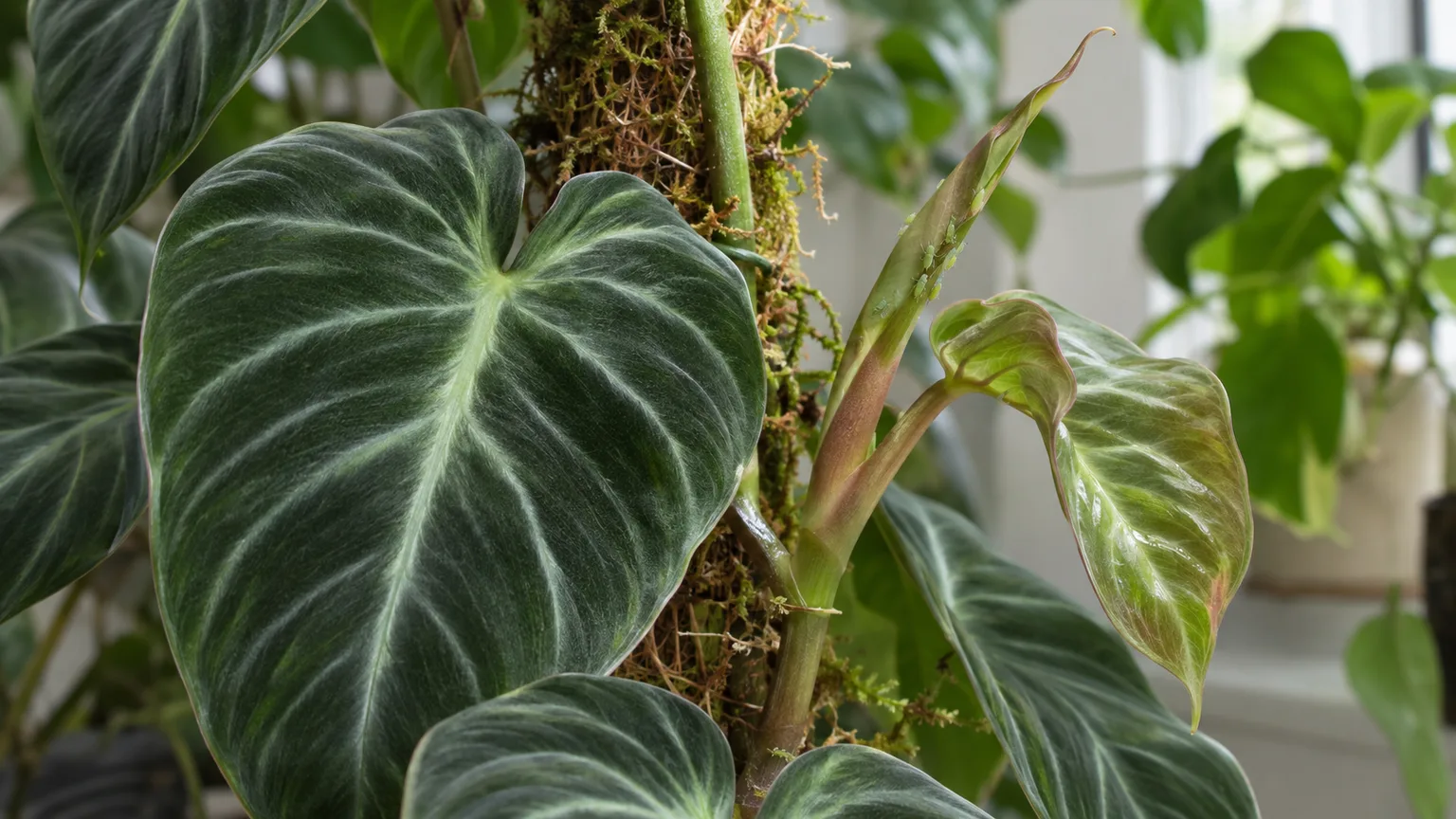
Aphids on Philodendron Majestic: Causes, Checks & Fixes
This guide covers aphids on Philodendron Majestic. See also the general Aphids guide, watering, and light pages for this plant.
Aphids on Philodendron Majestic: Causes, Checks & Fixes
Quick answer
Aphids on Philodendron Majestic cluster on the soft unfurling spear and the undersides of new leaves, leaving sticky honeydew, white cast skins, and curled velvet growth. First, isolate the plant and rinse the spear and every leaf underside thoroughly with a firm stream of lukewarm water. Then confirm live aphids with a loupe before reaching for insecticidal soap, and recheck every few days rather than stacking treatments on day one.
For how aphids feed and spread in general, see our aphid pest guide. Everything below is about how they behave on this particular velvet climbing philodendron. For Majestic’s normal growth habit and placement, see the plant overview.
What aphids look like on Philodendron Majestic
Philodendron Majestic is a sodiroi × verrucosum hybrid grown for big heart-shaped leaves with a silver-veined, velvety surface and a climbing habit. That velvet texture changes the aphid picture: colonies are harder to spot against the matte silver-green surface, while their white cast skins and the glossy sheen of honeydew stand out sharply once you know to look for shine rather than bugs.
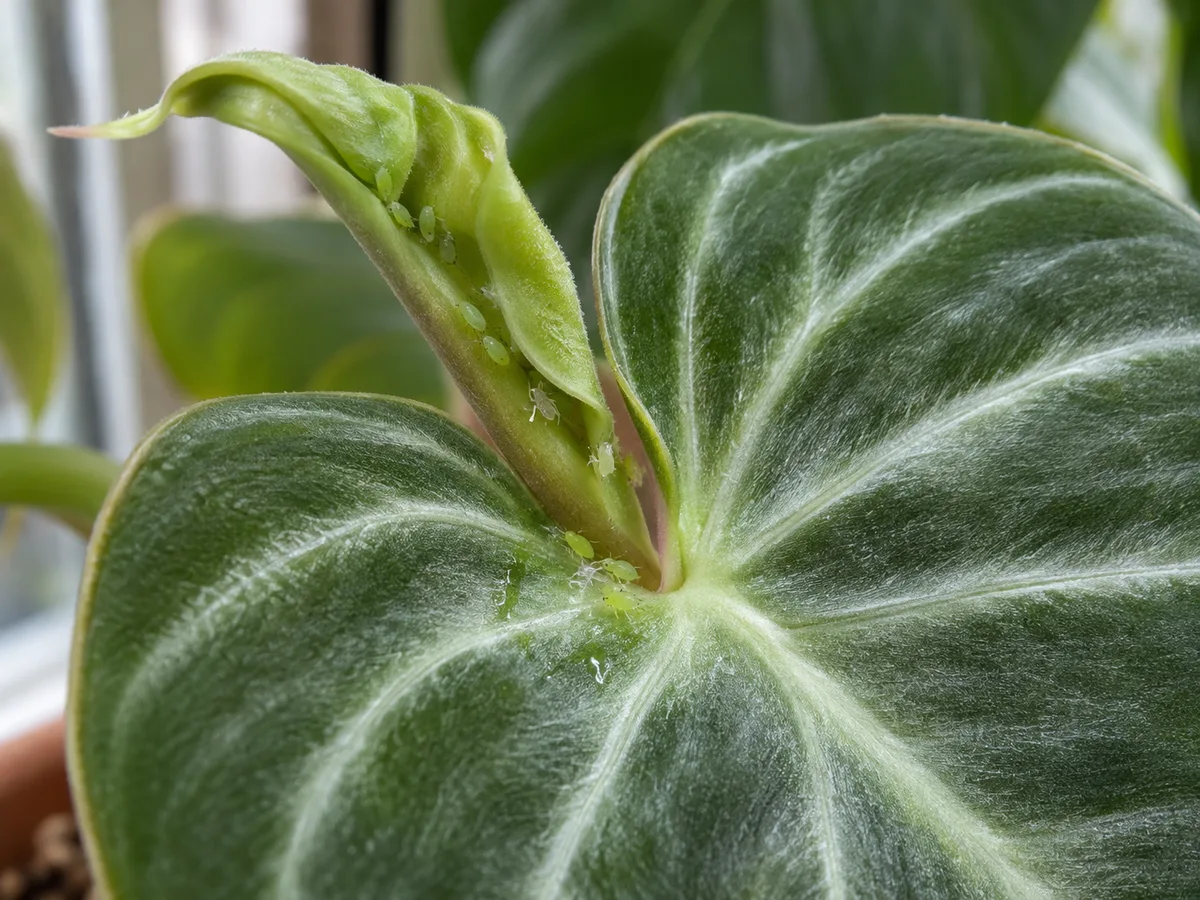
Aphids favor the soft spear and petiole groove; their cast skins and honeydew can show against the velvet leaf surface.
Expect small sap-sucking insects just 1 to 7 mm long, usually pale green, yellowish, or dark, massed on the tenderest tissue. On a Majestic that means the still-furled spear, the petiole groove of the newest leaf, and the undersides near the midrib. The plant’s older, tougher leaves are rarely the starting point; aphids want the soft growth where piercing is easy. If new leaves are distorted but you cannot find insects or honeydew, compare the pattern with brown tips on Philodendron Majestic and not-enough-light symptoms.
Damage shows as a spear that stalls half-open, new leaves unfurling narrow or rippled, and a sticky film on the leaf below the colony where honeydew has dripped. In warm indoor air that film can darken with sooty mould within a week or two, dulling the silver veining the plant is grown for.
Why Majestic gets aphids
Three traits of this hybrid invite aphids. First, it pushes soft nitrogen-fueled growth: a Majestic in active growth constantly offers the succulent unfurling tissue aphids prefer over mature leaves. Plants pushed hard with frequent feeding produce especially tender spears that colonize fast; compare your routine with the Philodendron Majestic fertilizer guide.
Second, it lives in warm, humid, still indoor air on a moss pole or trellis. Colonies overwinter and breed continuously without a cold season to reset them, and the pole, ties, and leaf-axil crevices give strays shelter between flushes. Third, new plants are the classic entry route: a cutting or nursery pot with a few aphids tucked into a furled spear becomes a full colony two weeks after you bring it home.
How to confirm the cause
Work in this order on a Majestic:
- Unfurl check: hold the spear gently to the light and look inside the curl with a 10x loupe. Live aphids cluster where the spear is softest.
- Underside sweep: flip the two newest leaves and inspect along the midrib and side veins. Look for clustered pear-shaped bodies, plus white papery cast skins stuck to the velvet.
- Touch test: run a finger over the leaf below the suspect colony. Fresh honeydew feels tacky like thin syrup; that stickiness plus visible insects confirms aphids over thrips or mites.
- Ant trail: ants commuting up the pot or pole to the same spot are a strong secondary sign, since ants are drawn to honeydew-covered plants and tend the colonies.
- Tap test: hold white paper under the spear and tap the petiole. Aphids drop as slow-moving specks; thrips look like tiny darts and spider mites like dust that smears red-brown.
The first fix to try
Isolate the plant and rinse it. Carry the Majestic to a shower or sink, tilt the pot so the mix does not flood, and wash the spear, both faces of every leaf, petioles, and the top of the moss pole with a firm stream of lukewarm water. A strong jet of water dislodges exposed aphids without chemicals, and on velvet leaves it also clears honeydew before sooty film sets.
Let the plant drip-dry in gentle air movement out of direct sun, then loupe the spear again the next day. If you find only a few survivors, squash or rinse them individually. Move to soap only when live colonies persist after two rinses spaced three to four days apart.
Step-by-step recovery
If rinsing alone does not clear the colony, use insecticidal soap as the second step. Insecticidal soaps kill small soft-bodied insects such as aphids by suffocation and membrane disruption, and they double as a leaf wash for honeydew and soot. Buy a true formulated insecticidal soap rather than mixing dish liquid: homemade detergent mixes carry a substantially increased risk of plant injury, and velvet philodendron leaves show that damage as bleached patches.
Spray in the evening, coat the colony and all leaf undersides to full contact wetness, and keep the plant out of strong light until dry. Re-spraying about every 7 to 10 days until the problem subsides catches nymphs hatched since the last pass. Test one older leaf first and wait 48 hours; if it spots or yellows, dilute per the label and retest rather than treating the prized new spear.
Prune only leaves that are fully coated in sooty film or chewed into a crumpled stub, cutting at the petiole base. Leave merely curled leaves in place: they still photosynthesize for the next spear. Do not repot during treatment unless the mix is clearly failing; root disturbance plus pest stress stalls the very new growth you are judging recovery by.
Recovery timeline
Judge recovery by the spear, not by old leaves flattening out. Distorted leaves stay distorted. A clean rinse plus one or two soap passes usually breaks the cycle within two to three weeks, and the next spear should emerge on schedule, opening flat with crisp silver veining and no fresh tackiness underneath.
If two consecutive spears still emerge stunted, or honeydew keeps reappearing within days of washing, the colony has a reservoir you are missing: check the moss pole core, the pot rim, stake ties, and any neighboring plant within arm’s reach. Treat or quarantine the neighbor too, since winged adults hop short distances indoors.
Mistakes to avoid
Do not blast the plant with a systemic insecticide as a first move; indoor aphids on one philodendron rarely justify it, and broad sprays also kill the lady beetles, lacewing larvae, and parasitoid wasps that naturally suppress aphids. Do not fertilize a colony-stressed Majestic to “help it outgrow” the pests; soft forced growth feeds the next generation. Do not wipe velvet leaves with alcohol-soaked cotton aggressively, which strips the fine surface and scars the silver finish. And never spray any soap or oil in hot direct sun or above-label heat, when wet residue is most likely to burn foliage.
Majestic care cross-check
Use the plant’s watering guide and light guide to keep growth steady while you monitor for a returning colony. The Philodendron Majestic problems hub links the full symptom cluster.
Aphid pressure drops when the plant grows at a steady, firm pace. Closely related climbing philodendrons want partial shade, high humidity, moist well-drained organic mix, and 65 to 85°F air, and indoor guides converge on bright indirect light, temperatures above 15°C, and compost allowed to dry slightly between waterings. For a Majestic on a pole that translates to: bright filtered light that keeps internodes compact, a pole kept lightly moist rather than soggy, and water only when the top few centimeters of mix have dried.
Quarantine every newcomer for two to three weeks where its spear can be inspected, and make the underside flip part of weekly watering day. Catching five aphids in a furled spear beats washing fifty off an open leaf.
When to worry
A light colony found early on one spear is routine maintenance, not an emergency. Worry when honeydew coats several leaves with spreading black film, when new growth stalls across the whole crown, or when colonies rebound within days across three or more checks despite rinsing and soap. At that point strip the worst-coated leaf, treat all in-contact plants, and consider whether chronic stress, such as a cold draft or a collapsed soggy pole, is keeping the plant too weak to outgrow the pest.
Related tool
Use the Pest Identifier Tool to narrow causes for aphids on this plant before changing multiple variables at once.