Overwatering on Philodendron Ring of Fire: Causes, Checks &
Quick answer
Overwatering on Philodendron Ring of Fire shows as yellowing lower leaves, a pot that stays heavy for days, and soft growth at the stem base. First step: stop watering completely, empty the saucer, and let the top 2–3 inches of mix dry before you touch the plant again.
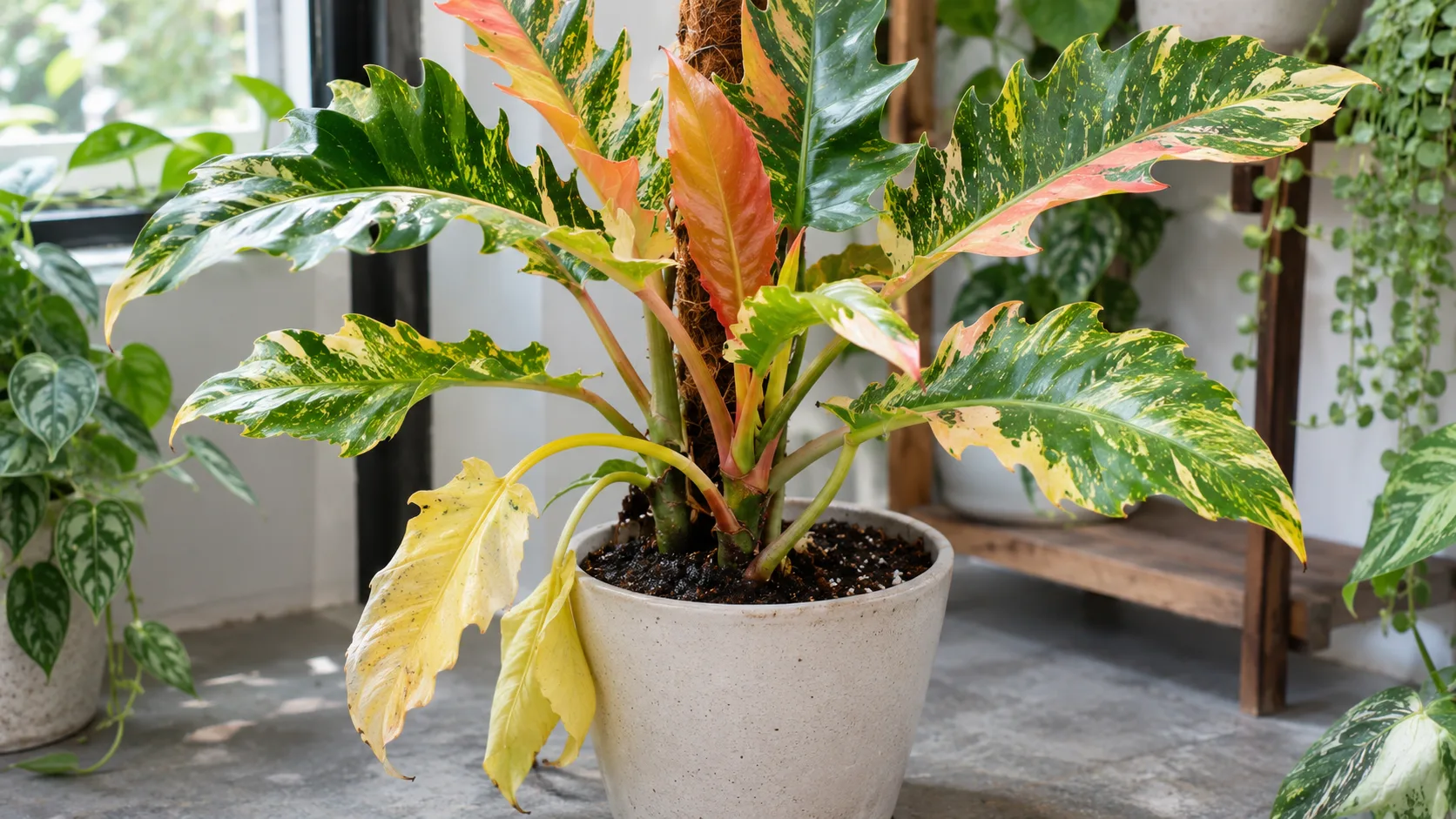
Overwatering on Philodendron Ring of Fire: Causes, Checks & Fixes
This guide covers overwatering on Philodendron Ring of Fire. See also the general Overwatering guide, watering, and light pages for this plant.
Overwatering on Philodendron Ring of Fire: Causes, Checks & Fixes
Quick answer
An overwatered Philodendron Ring of Fire tells on itself slowly: lower leaves yellow one by one, the pot stays heavy days after a drink, and growth stalls even though the mix looks fine on top. This cultivar is extremely sensitive to overwatering and develops root rot fast once its roots sit in waterlogged mix.
First step: stop watering completely. Empty the saucer, lift the nursery pot out of any cachepot, and do not water again until the top 2–3 inches of mix are dry. For how chronic wet mix damages roots in general, see our overwatering guide. On Ring of Fire, the pattern usually shows up as yellowing that starts on the lowest, oldest leaves while the variegated new growth stalls — read on to confirm before you repot anything.
What overwatering looks like on Ring of Fire
Early overwatering hides behind this plant’s best feature. The multicolor variegation — cream, yellow, and orange sectors on jagged mature leaves — makes the first pale, washed-out yellow hard to spot. Look low and look close: the lowest leaves fade first, sometimes with limp petioles that feel soft rather than crisp.
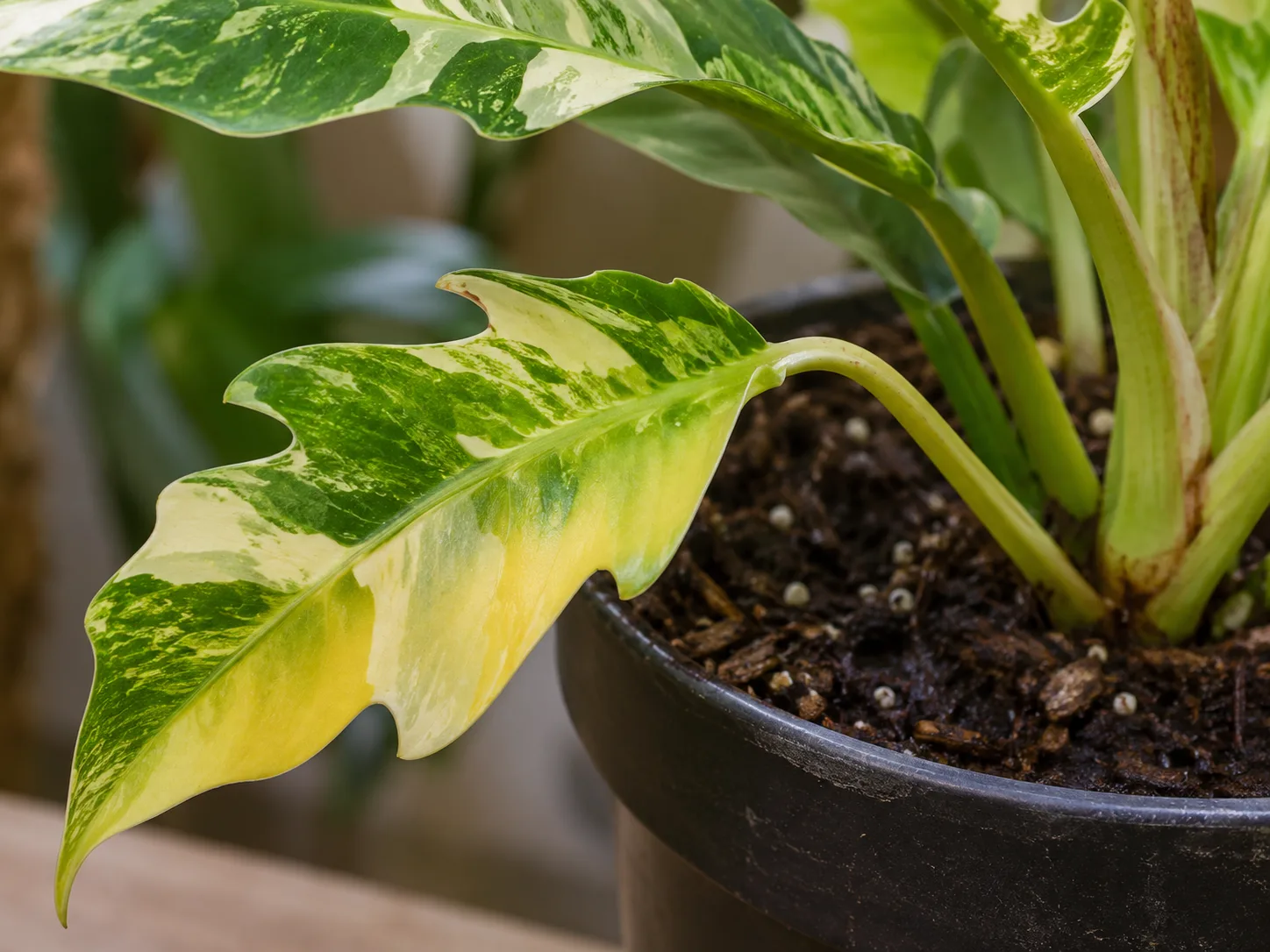
Early wet-root stress can fade lower leaves while the upper variegated foliage remains colorful.
As the root zone stays wet, the signs sharpen. Leaf edges on pale sectors turn brown and papery, new spears emerge slowly or stall half-unfurled, and the stem base near the soil line darkens or feels tender when you press it gently. A sour or swampy smell from the drainage holes means decay is already underway underground. If the whole plant wilts while the mix is clearly damp, that is root failure, not thirst — the damaged roots can no longer move water upward.
Why Ring of Fire gets overwatered so easily
Three traits of this cultivar stack the odds toward wet feet.
It drinks slowly. Ring of Fire is a genuinely slow grower, so it pulls water from the pot far more slowly than a fast vining philodendron. A weekly pour that suits a heartleaf philodendron keeps a Ring of Fire permanently soggy. Growth slows further in fall and winter, but many owners keep the summer rhythm going straight through the dark months.
It is usually sold in the wrong mix. Nursery peat holds water far longer than the chunky aroid mix this plant needs. Pure potting soil stays dense and airless around the roots, which is exactly why growers warn that dense soil alone will waterlog this cultivar. If you never repotted after bringing it home, the original peat plug at the core can stay wet even when the fresh mix around it feels dry.
Its display setup traps water. Cachepots without drainage, moss poles that get soaked daily, and pebble trays tucked under the pot all keep the root zone damp between waterings. A moss pole is genuinely useful for this climber’s leaf size and serration, but a pole that never dries becomes a wick that feeds moisture back into the mix.
How to confirm the cause
Work through these checks in order before deciding between a simple dry-out and a full unpot:
- Lift the pot. A pot that still feels heavy three or more days after watering is holding too much water, whatever the surface looks like.
- Probe deep, not shallow. Push a finger or wooden skewer 2–3 inches into the mix near the root ball. Checking only the surface is the classic mistake — the top can look dry while the middle is sodden.
- Inspect the drainage path. Water sitting in the saucer or cachepot, a blocked drainage hole, or no hole at all confirms the roots have nowhere to shed excess.
- Smell the drain holes. Earthy is fine; sour, rotten, or swampy means root decay has started.
- Press the stem base. Firm and green points to early trouble a dry-out can fix. Soft, dark, or translucent tissue means rot has reached the stem and you should unpot the same day.
- Note the leaf pattern. Yellowing that starts on the lower and inner leaves first, with both old and new leaves dropping, fits overwatering far better than a single scorched leaf or one aging bottom leaf.
If most checks come back wet but the stem base is firm and only one or two lower leaves are yellow, you caught it early. If the smell is bad and tissue is soft, skip ahead to the severe-case steps.
The first fix to try
Stop adding water — nothing else comes first. Continuing to water an already saturated plant only deepens oxygen loss around the roots and raises the chance of rot. Move the plant to bright indirect light where it already lives (per the light guide), but resist the urge to shove it into direct sun to “dry it out faster” — a root-damaged plant cannot supply its upper leaves, and harsh sun scorches the pale variegated sectors while it is vulnerable.
Set the nursery pot where air circulates, keep it out of the cachepot, and leave it alone until the top 2–3 inches of mix dry. It can take between one and two weeks for a plant to dry out and begin recovering, so expect waiting, not instant improvement. Check moisture every few days with the finger test rather than on a schedule.
Step-by-step recovery
Mild case: heavy pot, firm stems, one or two yellow leaves
- Stop watering and empty every saucer and cachepot.
- Let the full pot dry until a skewer pushed toward the bottom comes out barely damp.
- Resume with the rhythm in the watering guide — soak thoroughly, drain fully, then wait for the top inches to dry again.
- Watch the next new spear. If it unfurls clean and no further leaves yellow, the plant has stabilized.
Severe case: sour smell, soft stem base, fast-spreading yellow
- Slide the plant out of its pot and shake off the wet mix so you can see the roots.
- Rinse roots gently and trim every section that is brown or black and slimy or smelling of decay, keeping only firm white or tan roots. Sterilize the scissors between cuts.
- Repot into fresh chunky aroid mix — potting mix plus orchid bark and perlite as described in the soil guide — in a clean pot with a drainage hole, no larger than before. A smaller pot is safer than a bigger one for a reduced root system.
- Water lightly once to settle the mix, then hold off until the top inches dry. Keep the plant warm (this group prefers roughly 65 to 85 degrees Fahrenheit indoors) in bright indirect light.
- If the stem base itself is mushy below the lowest node, cut back to firm green tissue and treat the remaining stem as a node cutting: root it in fresh airy mix or water, since a rotted base rarely recovers in place.
Details on pot size and timing for the repot itself are in the repotting guide.
Recovery timeline
Dry-out cases usually stop getting worse within one to two weeks, with the next new leaf emerging normally over the following three to six weeks on this slow grower. After a root trim and repot, expect a longer pause — often a month or more before new growth resumes while roots re-establish.
Judge progress by what is new, not what is old: firm new spears, no fresh yellowing, and a pot that now lightens on a predictable rhythm. Yellowed leaves will not revert, and browned variegated patches will not heal — trim them only once the plant is clearly stable, since stressed plants still draw reserves from old foliage.
Lookalike symptoms
| What you see | More likely | How to tell |
|---|---|---|
| Wilt with dry, light pot and crispy leaf edges | Underwatering | Mix pulls from the pot sides; leaves feel papery, not limp. Recheck with the watering guide. |
| Pale, small new leaves with long bare internodes | Too little light | No wet-pot signs; variegation fades to green. See the light guide. |
| Small brown or rust spots with yellow halos on otherwise firm leaves | Fungal leaf spot | Spots start on foliage, not from the roots up; no heavy pot or sour soil. Improve airflow and keep water off leaves. |
| One oldest bottom leaf yellowing while everything else thrives | Natural aging | Single leaf, firm stems, normal pot weight — no action needed. |
| Brown leaf tips with no yellowing after feeding | Fertilizer excess | Check your recent feeding against the fertilizer routine, not the watering can. |
When several rows seem to fit at once, trust the pot weight and the stem-base press over leaf appearance — leaves lie, roots do not.
When to use this page vs other Ring of Fire guides
This page is the entry point when the pot stays wet and the plant declines from the roots up. Use it to decide between drying out and unpotting.
- Watering guide — the long-term soak-and-dry rhythm to adopt once this crisis passes.
- Soil guide — chunky bark-and-perlite mix recipes that make overwatering physically harder.
- Repotting guide — pot sizing and spring timing when a severe case forces a repot.
- Light guide — bright indirect placement that keeps variegation strong without sun-scorching a weakened plant.
Mistakes to avoid
- Feeding a stressed plant. Fertilizer does not rescue drowning roots and can burn the few working ones. Wait until clean new growth holds for several weeks.
- Doing everything on day one. Unpotting, hard pruning, spraying, and repotting in a single session can finish a plant that one measured correction would have saved. Dry out first; escalate only on evidence.
- Upsizing the pot “for air.” More mix holds more water around fewer roots. Stay the same size or go smaller after a root trim.
- Soaking the moss pole daily. Water the mix by dryness, and let the pole dry between mistings so it stops wicking moisture back to the crown.
- Misting a plant that is already wet. Ring of Fire enjoys humidity, but misting wet foliage in still air invites leaf spot while doing nothing for the roots.
How to prevent it next time
Build the routine around this plant’s actual thirst. Water only when the top two to three inches of potting mix feel dry, then soak until water runs freely and empty the saucer within minutes — never let the pot sit in standing water, since saturated compost can eventually cause root rot. In winter, stretch the interval; this slow grower may need water half as often.
Keep it in free-draining, slightly acidic aroid mix in a pot with a real drainage hole, and repot out of nursery peat into that mix during the first growing season. A moisture meter or the lift-the-pot habit beats any calendar, and cutting back before the dark months matters more than any rescue technique afterward. Note that overwatering can cause root rot on climbing philodendrons specifically, so prevention here is not fussiness — it is the whole game for this cultivar.
When to worry
Treat the situation as urgent — same-day unpotting, not watchful waiting — when the stem base is mushy, the mix smells of decay, several leaves yellow within days, or a new spear turns to mush before unfurling. If trimming leaves almost no firm roots, or rot has travelled up the stem past every node, the plant may not be salvageable; a healthy top cutting with a clean node is then the rescue, not the mother plant.
FAQs
How can I confirm overwatering on Philodendron Ring of Fire?
Lift the pot — if it still feels heavy several days after watering and the top 2–3 inches of mix are damp, the roots are sitting wet. Yellow lower leaves plus a sour smell from the drainage holes confirm it. Dry surface with a sodden middle still counts as overwatered.
What should I check first on an overwatered Ring of Fire?
Check pot weight, mix moisture 2–3 inches down, and whether the saucer or cachepot is holding water. Then look at the stem base: firm and green means a dry-out will likely fix it, while soft or dark tissue means unpot and inspect the roots the same day.
Will yellow Ring of Fire leaves turn green again after I fix watering?
No — yellowed leaves stay yellow, and browned variegated sectors do not heal. Recovery shows in the next new spear emerging clean and firm, with no further yellowing spreading upward. Leave damaged leaves in place until the plant stabilizes, then trim.
When is overwatering on Ring of Fire an emergency?
Act the same day if the stem base feels mushy, the soil smells sour or rotten, multiple leaves yellow at once, or the new spear collapses. Those signs mean rot is advancing through roots and stem tissue, and waiting out a dry-down will lose the plant.
How do I prevent overwatering Ring of Fire long term?
Water only when the top 2–3 inches of chunky aroid mix are dry, always in a pot with a drainage hole and an emptied saucer. Slow down in fall and winter when this slow grower barely drinks, and never let a moss pole or cachepot keep the root zone permanently damp.
Related Philodendron Ring of Fire guides
- Philodendron Ring of Fire overview — growth habit, variegation, and baseline care
- Watering — soak-and-dry rhythm to adopt after recovery
- Soil — chunky aroid mix that resists waterlogging
- Light — bright indirect placement that protects pale sectors
- Repotting — pot sizing and timing when a repot becomes necessary
Related tool
Use the Root Rot Risk Checker to narrow causes for overwatering on this plant before changing multiple variables at once.