Yellow Leaves on Philodendron Ring of Fire: Causes, Checks
Quick answer
Yellow leaves on Philodendron Ring of Fire are most often overwatering on a chunky aroid mix that never dried — but first rule out the plant's own cream, yellow, and orange variegation, which is not chlorosis. First step: push a finger 3–5 cm into the mix; if it feels damp days after watering, hold all water and let the pot lighten before you change anything else.
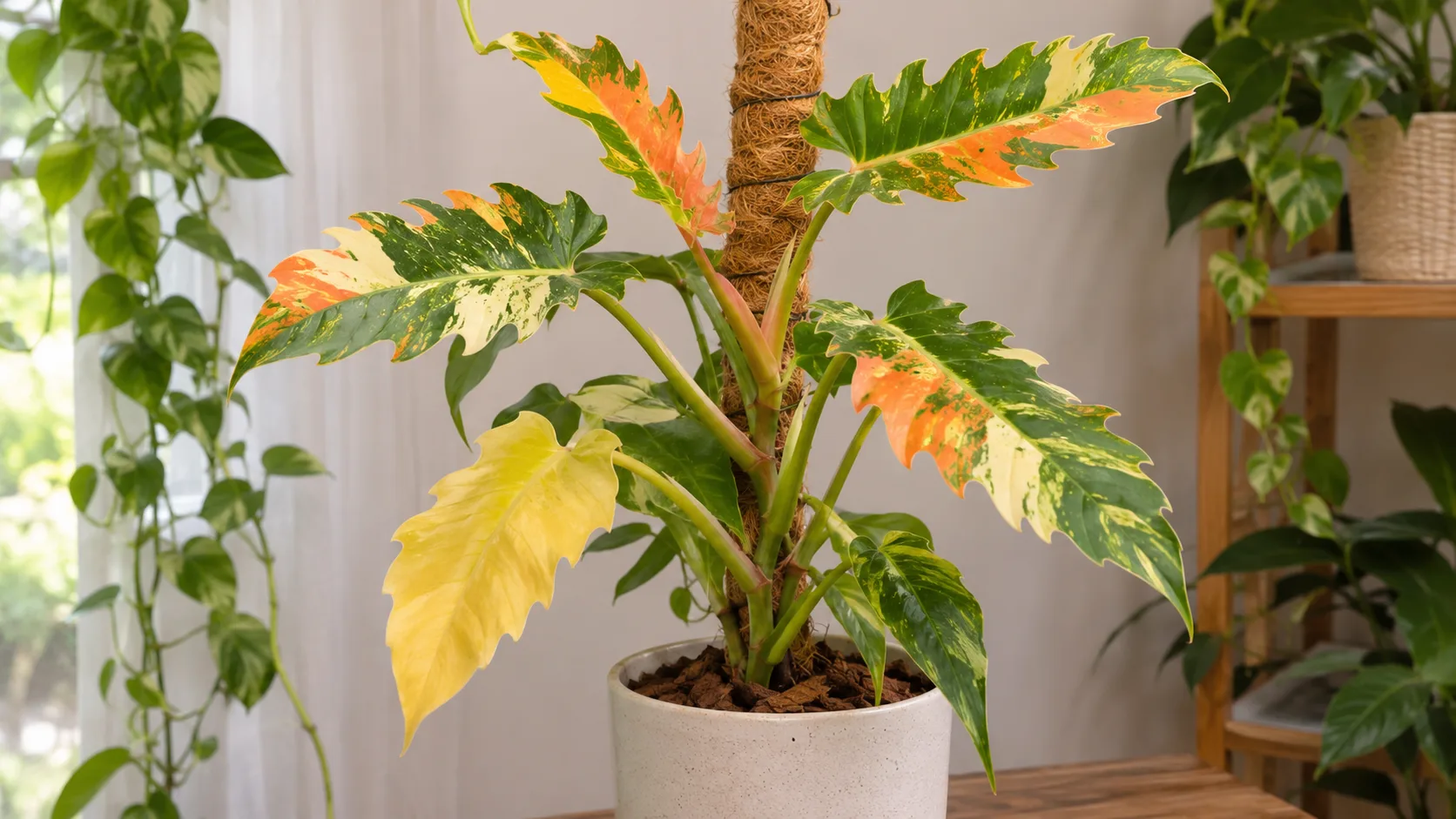
Yellow Leaves on Philodendron Ring of Fire: Causes, Checks & Fixes
This guide covers yellow leaves on Philodendron Ring of Fire. See also the general Yellow Leaves guide, watering, and light pages for this plant.
Yellow Leaves on Philodendron Ring of Fire: Causes, Checks & Fixes
Quick answer
Yellow leaves on Philodendron Ring of Fire are most often overwatering on a chunky aroid mix that never dried — but first rule out the plant’s own cream, yellow, and orange variegation, which is not chlorosis. Overwatering is one of the most common causes of yellow leaves on philodendrons, because soggy mix stops roots from taking up nutrients. For how yellowing works on houseplants in general, see our yellow leaves guide. On Ring of Fire, the pattern usually shows up as lower leaves fading on heavy, damp mix while the variegated new growth stalls.
First step: push a finger 3–5 cm into the mix and lift the pot. If it feels damp days after watering, hold all water and let the pot lighten before you change anything else. One moisture correction first, then read the plant’s response.
Serrated variegation vs true chlorosis: reading a Ring of Fire leaf
No other common philodendron confuses yellowing diagnosis like Ring of Fire, because healthy leaves already carry cream, yellow, and orange sectors on deeply serrated blades. Those pale zones are stable from unfurling, often edged crisply against green, and frequently paired with variegation streaking on the stem between nodes. New leaves may even open reddish or copper before settling. None of that is a problem.
True chlorosis behaves differently: a previously green area fades, softens, or develops spots over days to weeks. Suspect real yellowing when an older lower leaf turns uniformly yellow and limp, when green tissue between veins pales while veins stay dark, or when several leaves fade in sequence rather than holding a fixed pattern. Compare the suspect leaf against the two newest leaves and the stem. If the stem still shows cream or orange streaking and new growth looks clean, you are likely looking at environmental stress on old foliage — not variegation loss.
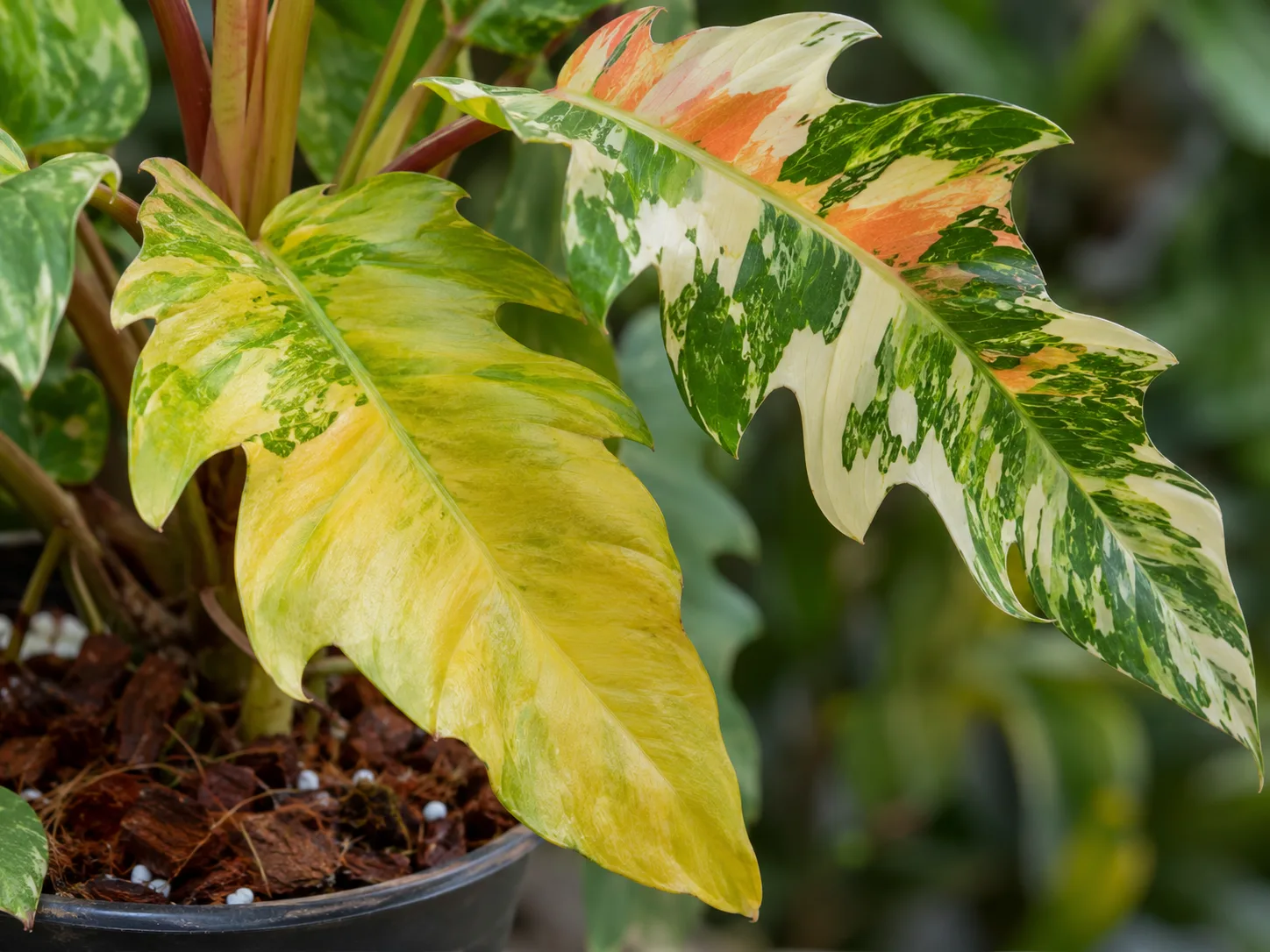
True chlorosis changes previously green tissue; stable cream, yellow, and orange sectors are normal variegation.
Why Ring of Fire gets yellow leaves
Ring of Fire is a climbing aroid in a chunky, fast-draining mix, and its watering rhythm assumes the pot actually dries between soakings. When the mix stays wet — oversized pot, compacted old bark, dim corner slowing uptake — roots suffocate and lower leaves yellow first. Soggy soil prevents roots from taking up nutrients, so the plant cannibalizes older foliage while new leaves stall or emerge small.
Light and hunger play supporting roles. Weak light forces the plant to add chlorophyll wherever it can, so壓力 shows as leggy stems with fading contrast; harsh direct sun instead scorches pale sectors brown while green stays firm. Nutrient shortage yellows oldest leaves first because nitrogen is mobile and redistributed from mature blades to new growth, and plants in pots often show deficiency signs when nutrients run out. Since nitrogen supports chlorophyll and leafy growth, a Ring of Fire unfed for a year or more in exhausted mix fades from the base upward. Finally, one or two bottom leaves yellowing on an otherwise vigorous vine is normal aging as older foliage fades — not a crisis.
The stem-streak check: genetics vs hunger vs water
Before touching water or fertilizer, trace the yellowing stem from base to tip and read the stem surface, not just the leaves. A stem with visible cream, orange, or marbled streaking over several nodes still carries variegated genetics; yellowing leaves on that stem point to care stress, and pruning for “reversion” would be the wrong move. A stem running multiple consecutive all-green leaves with no streaking is a separate reversion question — covered in the Philodendron Ring of Fire pruning guide — not this yellowing fix.
Next, map which leaves yellow. Oldest-lower-leaves-first with greener tips fits mobile hunger or natural aging; all-ages yellowing including new leaves on wet mix fits overwatering, since overwatered philodendrons yellow young and old leaves alike as roots fail. Yellow with brown crispy edges on cream sectors only suggests sun or low humidity rather than root trouble. This two-minute stem-and-ladder read prevents the classic mistake: fertilizing a drowning plant or repotting a merely old leaf.
How to confirm the cause
Work in this order so one check does not contaminate the next:
- Moisture and weight. Finger 3–5 cm deep plus a pot lift. Damp and heavy days after watering means overwatering until proven otherwise. Bone-dry and feather-light with crispy edges means underwatering. Details: Philodendron Ring of Fire watering guide.
- Mix structure. Tip the nursery pot and look at drainage holes. Fine, compacted, sour-smelling mix that holds water points to soil failure; see the Philodendron Ring of Fire soil guide.
- Light position. Long internodes plus fading contrast mean too little light; brown patches confined to pale sectors mean too much direct sun. Compare against the Philodendron Ring of Fire light guide.
- Stem and roots. Firm white roots and streaked stems mean the plant can recover in place. Soft brown roots or mushy petioles mean rot — skip to the urgent path below.
- Feeding history. No fertilizer for a year or more in old mix with base-upward fading suggests hunger; recent heavy feeding with burnt edges suggests salts. Calibrate with the Philodendron Ring of Fire fertilizer guide.
Confirmed overwatering needs wet mix plus lower-leaf yellowing plus stalled growth. Confirmed hunger needs old-leaf-first fading plus exhausted mix plus firm roots. A single yellow bottom leaf on a firm, streaked, well-watered vine is aging — remove it and move on.
The first fix to try
If the mix is damp: stop watering and let the top 3–5 cm dry completely, then water thoroughly once and empty the saucer. Do not fertilize, repot, or spray anything on the same day. This single drying correction resolves most mild Ring of Fire yellowing within one care cycle, because roots resume uptake as air returns to the mix.
If the mix is dry and crispy, invert the fix: soak thoroughly until water runs from drainage, drain fully, and resume finger-check watering. If roots are mushy or the mix smells sour, unpot, trim soft roots with clean shears, and repot into fresh chunky mix — that is the only case where day-one repotting earns its place.
Step-by-step recovery
After the first correction, follow this sequence over the next two to four weeks:
- Remove only fully yellow leaves at the petiole base with clean shears. Yellow leaves will not turn green again once chlorophyll is lost, and clearing them lets you see whether spread has stopped.
- Hold position. Keep the plant in bright filtered light without moves, feeds, or sprays for at least a week so you can read the response.
- Resume finger-check watering per the Philodendron Ring of Fire watering guide — top 3–5 cm dry, soak, drain, empty the saucer.
- Feed only if hunger was confirmed, lightly and on moist soil during active growth, per the Philodendron Ring of Fire fertilizer guide. Never fertilize a plant still yellowing on wet mix.
- Check leaf undersides and axils once for mealybugs or mites while you wait; treat only if you find live pests, since sprays on stressed variegated tissue add damage.
Judge success by the next new leaf: firm, cleanly variegated, with no fresh yellowing on neighbors. Old yellow tissue will not recover — stopped spread plus healthy new growth is the win.
Recovery timeline
Mild overwatering yellowing usually stops spreading within one to two weeks of corrected drying, with a healthy new leaf emerging over the following three to six weeks in warm, bright conditions. Hunger-related fading is slower: expect the next leaf to look greener about a month after the first light feeding, with full color over two leaf cycles. Rot recovery after a repot takes longest — six to ten weeks before new growth proves the root system rebuilt.
Mistakes to avoid
- Fertilizing a wet, yellowing plant. Salts burn stressed aroid roots; fix moisture first.
- Repotting on day one without root evidence. A disturb-everything repot sets back a plant that only needed to dry out.
- Blasting direct sun to “green it up.” Pale variegated sectors scorch before green tissue benefits.
- Daily dribbles. Surface-wet, root-dry cycling confuses every later diagnosis.
- Pruning green-looking stems for reversion when the real issue is water — read the stem-streak check first.
How to prevent it next time
Keep the Philodendron Ring of Fire overview rhythm: chunky bark-perlite mix, watering on finger checks rather than calendars, bright filtered light, and light feeding in spring and summer only. Repot every one to two years before bark fines compact, going up one pot size so the root system can actually use the water you give it. A moss pole helps too — supported vines dry more predictably and show variegation problems earlier, while new-leaf color on the last two leaves remains your earliest warning system.
When to worry
Escalate fast if several leaves yellow within days on wet mix, petioles soften, the pot smells sour, or new leaves emerge yellow and deformed despite corrected watering. That is root rot until proven otherwise: unpot, cut mushy roots to firm tissue, repot into fresh airy mix, and hold water briefly while the plant stabilizes. If instead the whole vine is green, firm, and merely pale on the oldest leaves after a year without feeding, work through hunger correction calmly — urgency belongs to rot, not slow fading.
Related Philodendron Ring of Fire guides
- Philodendron Ring of Fire overview
- Philodendron Ring of Fire watering
- Philodendron Ring of Fire light
- Philodendron Ring of Fire soil
- Philodendron Ring of Fire fertilizer
- Philodendron Ring of Fire pruning
Related tool
Use the Yellow Leaves Diagnosis Tool to narrow causes for yellow leaves on this plant before changing multiple variables at once.