Underwatering on Philodendron Ring of Fire: Causes, Checks
Quick answer
Underwatering on Philodendron Ring of Fire shows as soft drooping leaves that curl inward, with dry crispy edges worst on the thin pale variegated sectors. First fix: give one deep soak until water runs freely from the drainage holes, drain fully, then resume watering when the top 3–5 cm of mix dries.
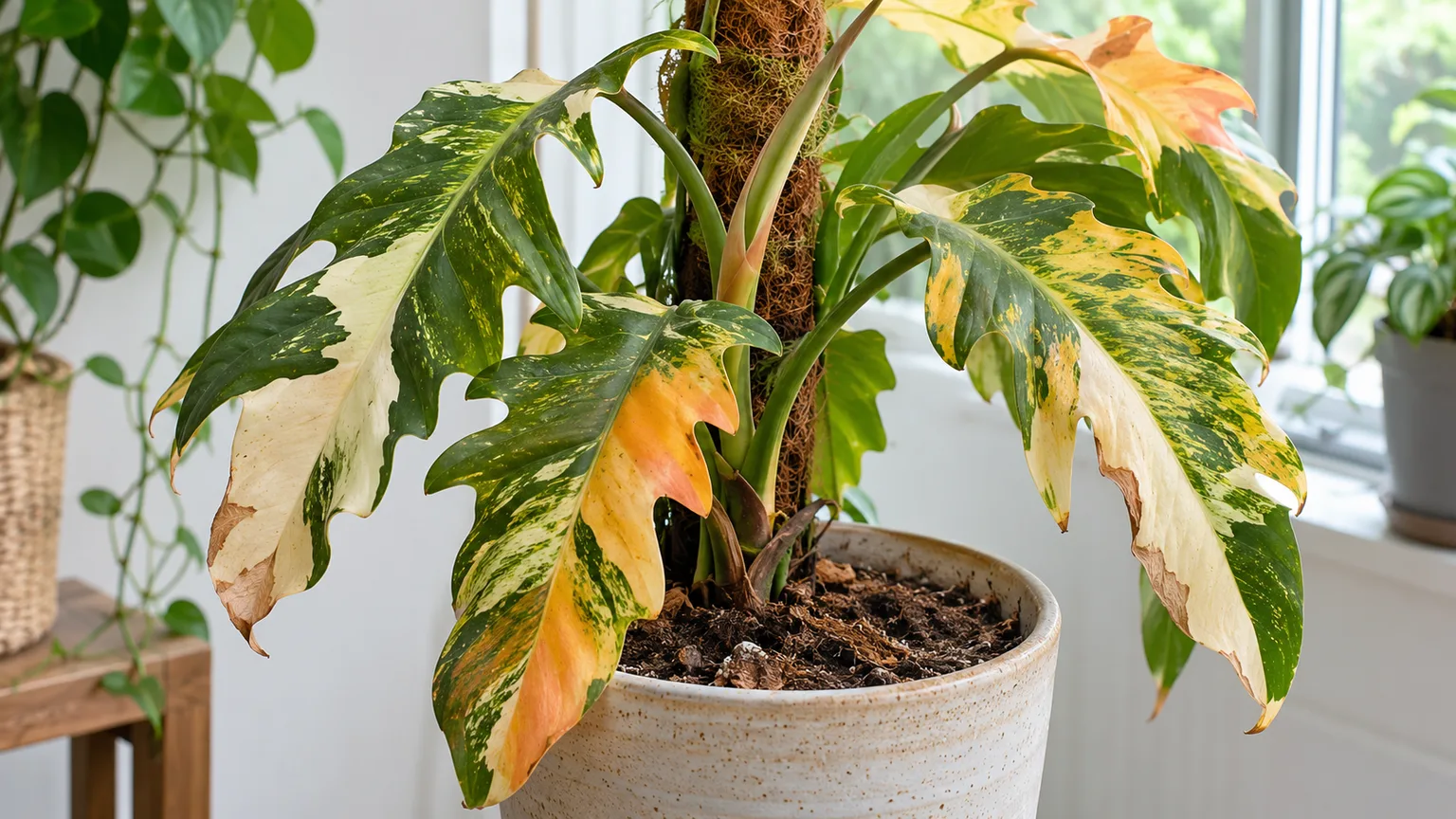
Underwatering on Philodendron Ring of Fire: Causes, Checks & Fixes
This guide covers underwatering on Philodendron Ring of Fire. See also the general Underwatering guide, watering, and light pages for this plant.
Underwatering on Philodendron Ring of Fire: Causes, Checks & Fixes
Quick answer
Underwatering on Philodendron Ring of Fire shows as soft, drooping leaves that curl inward, with dry crispy edges that hit the thin pale variegated sectors first. First fix: give one deep soak until water runs freely from the drainage holes, let it drain completely, then go back to watering when the top 3–5 cm of mix feels dry.
For the general mechanics of how dry mix stresses houseplants, see our underwatering guide. On Ring of Fire, the pattern usually shows up as limp saw-toothed leaves plus a suspiciously light pot — this slow-growing climber drinks steadily in bright light and punishes missed waterings with stalled new spears.
What underwatering looks like on Ring of Fire
A thirsty Ring of Fire does not just wilt politely. The long serrated leaves lose their stiffness and bow downward, and the margins — especially the cream, yellow, and orange sectors — turn papery and brown at the edges. Because variegated tissue carries less chlorophyll and is naturally thinner and weaker, those pale patches crisp before the green parts do, which is why underwatering on this cultivar often looks like edge burn first and droop second.
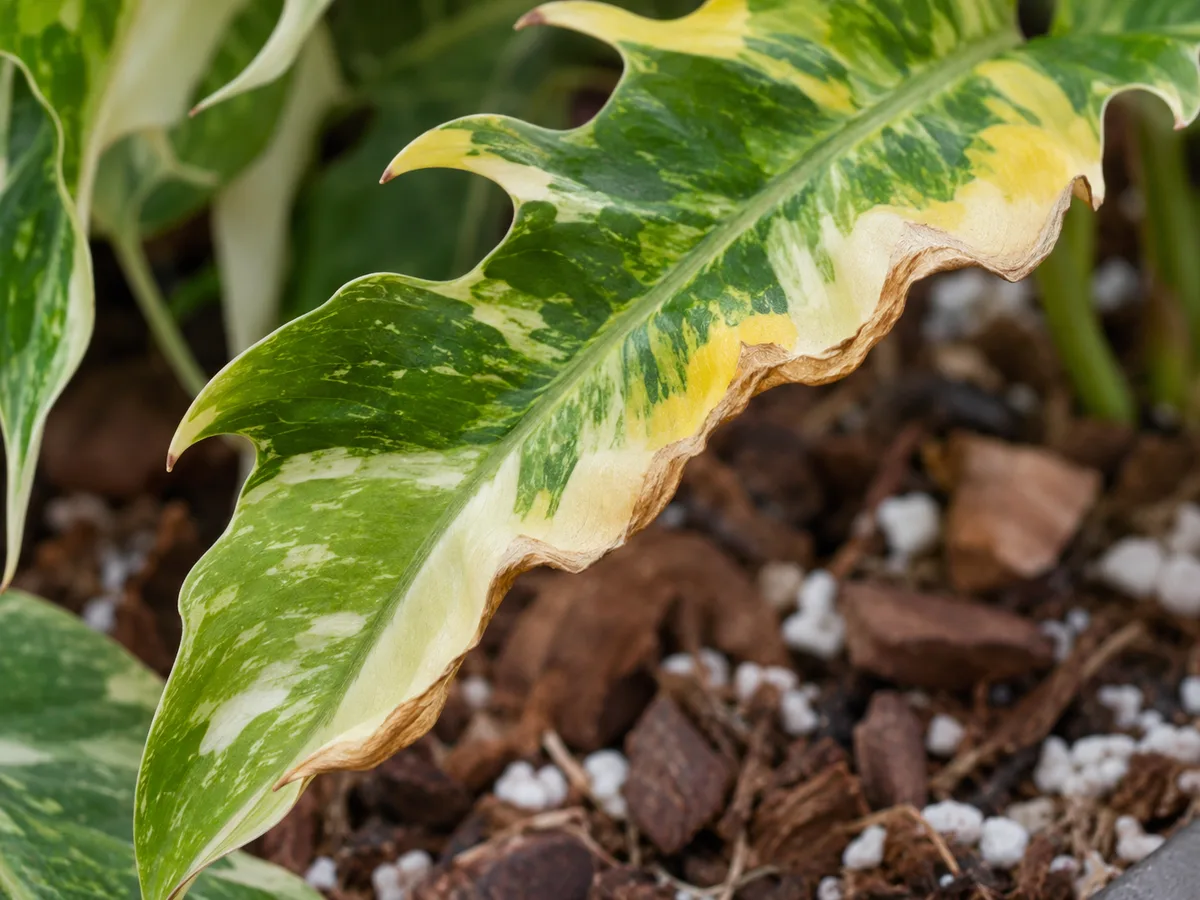
Dry-root stress softens the leaves and crisps the thin cream and yellow margins before the green tissue.
Growth tells the same story. New leaves emerge slowly, unfurl late, or stall mid-spear, and the plant may drop an older lower leaf to conserve moisture. Underwatering plus dry indoor air is the most common route to yellow leaves on this plant, since drought stress, overly dry conditions, and weak light top the list of usual causes (The Spruce).
Why Ring of Fire runs dry faster than you expect
Three traits of this cultivar conspire against forgetful watering. First, it wants bright indirect light to keep its variegation vivid, and brighter light means faster transpiration and a pot that dries days earlier than the same plant in a dim corner. Second, it grows in a chunky aroid mix of bark, perlite, and coir that drains fast by design — excellent for roots, but it holds far less reserve water than dense peat soil. Third, it is a slow grower, so owners often assume it needs little water and stretch intervals too far, letting the mix bake dry between drinks.
Seasonal rhythm matters too. In warm bright months the plant may need a thorough drink roughly every 7–10 days, while in cool dim winter it can stretch to two weeks or more. Calendar watering ignores all of this, which is why the finger check beats the schedule every time.
How to confirm it is thirst, not something else
Work through these checks in order before you water:
- Pot weight. Lift the pot. A thirsty plant in a dry chunky mix feels strikingly light; a heavy pot means water is still in there and the problem lies elsewhere.
- Finger test. Push a finger 3–5 cm into the mix. Ring of Fire is ready for water when that top layer feels dry (Healthy Houseplants). If it is damp below, hold off.
- Gap check. Look at the inside rim of the pot. Bone-dry bark mixes shrink and pull away from the sides, leaving a visible gap — a classic sign the root ball has gone hydrophobic.
- Tissue feel. Soft, limp, inward-curling leaves with dry crispy margins signal thirst. Mushy stems, yellowing lower leaves in wet mix, or a sour smell from the drainage holes point the other way, toward rot.
- Newest growth. A stalled or slow-unfurling spear corroborates a longer dry spell; clean active new growth suggests a one-off miss rather than chronic drought.
The first fix: one deep rehydrating soak
Do exactly one thing first: water thoroughly until liquid streams from the drainage holes, then empty the saucer and let the pot drain completely. Room-temperature rainwater or filtered water is preferable to hard tap water for philodendrons, since it helps maintain the slightly acidic mix they prefer (RHS). Most mildly thirsty plants perk up within several hours; give it a full day before judging.
If water races straight through and out the bottom while the pot still feels light, the bark mix has gone hydrophobic. Set the nursery pot in a basin of room-temperature water up to the rim for 10–15 minutes so the bark and coir can reabsorb moisture, then lift, drain fully, and discard the runoff. One patient soak beats three panicked splash-waterings.
Moss pole and aerial roots: reading dryness above the pot
Ring of Fire is a hemiepiphytic climber that throws aerial roots along its stem, especially when trained up a moss pole. Those exposed roots are your early-warning system: silvery, shriveled aerial roots and a bone-dry pole mean the whole setup has been dry for a while, even if the pot mix still holds a little moisture. When you do the rescue soak, wet the moss pole too so the aerial roots can drink — dry poles wick humidity away from the stem instead of supplying it.
This section would be nonsense on a rosette fern or a caudex succulent. Only a climbing aroid asks you to diagnose dryness six inches above the soil line.
Chunky aroid mix rewets differently: beating hydrophobia
Standard houseplant advice says “water and drain,” but bark-heavy aroid mix behaves differently from peat once it dries fully. Coir and bark turn water-repellent, so top-watering a desiccated Ring of Fire mostly channels down the pot walls while the core stays dry. That is why the plant can look thirsty days after you “watered” it.
After the rescue soak, press the mix gently back against the pot walls to close the gaps, and consider top-dressing a thin layer of fine coir or sphagnum to slow surface evaporation. Long term, letting the mix dry only about 50–75 percent between waterings — checking two inches down with a finger — keeps bark in its absorbent zone without ever going soggy (Our Wild Garden).
Variegated sectors crisp first: triage for pale leaves
The cream and orange zones on Ring of Fire leaves have the least chlorophyll and the thinnest cuticle, so they scorch and crisp under drought while neighboring green tissue still looks fine. When you assess damage, separate cosmetic edge-crisping on pale sectors (ugly but harmless) from whole-leaf collapse (a sign of deeper stress). Trim only fully dead brown tissue with clean scissors, leaving a slim brown margin rather than cutting into living green — open wounds on stressed leaves invite leaf-spot infection, which philodendrons are already prone to when foliage stays wet or damaged (NC State Extension).
Do not strip every blemished leaf at once. This is a slow grower; each serrated leaf represents weeks of energy, and the plant needs its remaining green tissue to fund recovery.
Recovery timeline
Expect limp leaves to firm up within 24 hours of a proper soak. Crispy brown edges will not heal — watch the next new leaf instead. A healthy spear resuming its unfurl within one to two weeks means the roots are fine and the routine just needs tightening. If no new growth appears within three to four weeks in the growing season, unpot and inspect: white firm roots confirm patience is the answer, while brown mushy ones mean rot set in during the drought–flood cycle and need trimming.
Hold fertilizer until the plant shows fresh growth. Feeding a drought-stressed Ring of Fire monthly-strength fertilizer risks burning already damaged roots; this cultivar only wants feeding during active spring and summer growth anyway.
Lookalike symptoms
| What you see | More likely | Telling difference |
|---|---|---|
| Droop + light pot + crispy pale edges | Underwatering | Mix dry 3–5 cm down; leaves perk after a soak |
| Droop + heavy pot + yellow lower leaves | Overwatering / root rot | Mix damp for days; stems soft at base; sour soil smell |
| Crispy edges but mix moist + new spear fine | Low humidity | Damage limited to margins and oldest leaves; pot weight normal |
| Bleached papery patches on pale sectors | Too much direct sun | Damage faces the window; leaves stiff rather than limp |
| Speckled dull leaves + fine webbing | Spider mites | Pests and webbing on leaf undersides; damage does not improve after watering |
Dry air deserves special attention because it mimics thirst: when humidity is low, plants transpire faster than roots can supply and wilt even in moist mix (RHS). If the pot feels heavy but edges still crisp, raise humidity toward the 55–70% this cultivar prefers instead of adding more water.
What not to do
Do not flood the plant daily to “make up” for the drought — saturated compost suffocates roots and eventually causes root rot, trading one problem for a worse one. Do not repot on rescue day; a thirsty plant needs water, not root disturbance, and repotting a dry root ball tears fine roots. Do not fertilize a wilted plant, mist the leaves as a substitute for watering the mix, or cut off every damaged leaf at once. Make the single soak, then wait and read the response.
How to prevent it next time
Anchor watering to the mix, not the week. Check the top inch or two before every drink and water only when dry, always in a pot with drainage holes (Odd Leaf). Pour slowly so bark absorbs rather than channels, soak until runoff, and empty the saucer. Recheck faster in bright warm positions, after turning heating on, and whenever the moss pole dries out — the pole’s dryness is a handy proxy for the pot’s. For the full routine this prevention plugs into, follow the plant’s watering guide.
When to worry
Most underwatering resolves with one good soak. Escalate if stems wrinkle or soften at the base, if several leaves collapse together, if a soak brings no improvement within a day, or if you find blackened mushy roots on inspection — those point to root death or secondary rot, and the plant needs root triage, fresh chunky mix, and a smaller recovery pot rather than more water.
Related tool
Use the Plant Watering Calculator to dial in a dry-down routine for underwatering on this plant before changing multiple variables at once.