Brown Tips on Philodendron Ring of Fire: Causes, Checks &
Quick answer
Brown tips on Philodendron Ring of Fire usually start on the pale cream sectors, which scorch first in direct sun or dry air. First step: move the plant into bright, indirect light out of midday sun, then check soil moisture and humidity before changing anything else.
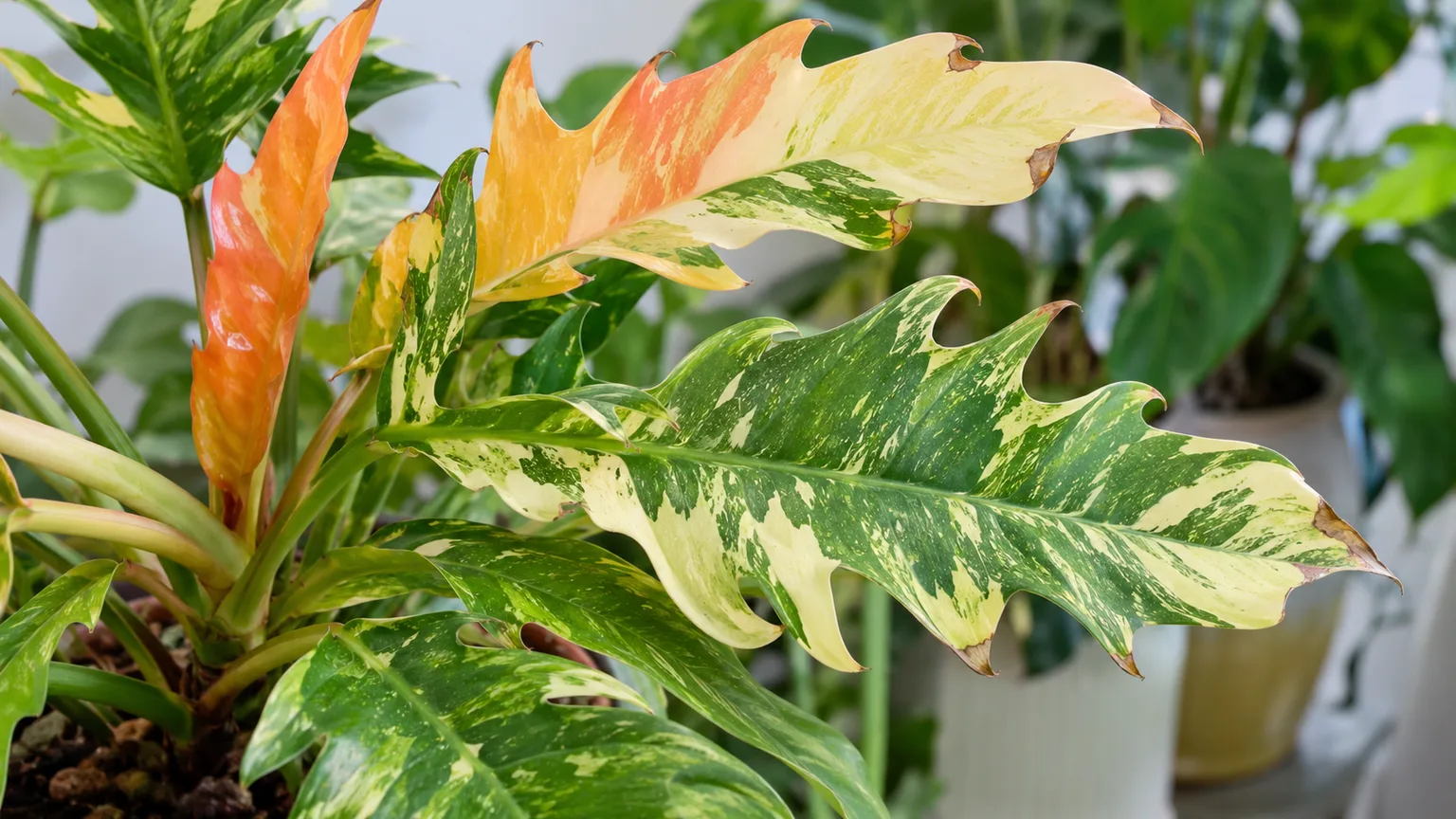
Brown Tips on Philodendron Ring of Fire: Causes, Checks & Fixes
This guide covers brown tips on Philodendron Ring of Fire. See also the general Brown Tips guide, watering, and light pages for this plant.
Brown Tips on Philodendron Ring of Fire: Causes, Checks & Fixes
Quick answer
Brown tips on Philodendron Ring of Fire usually start on the pale cream sectors, which scorch first in direct sun or dry air. First step: move the plant into bright, indirect light out of midday sun, then check soil moisture and humidity before changing anything else.
For how tip burn works on houseplants in general, see our brown tips guide. On Ring of Fire, the pattern usually shows up as crisp browning on the palest parts of the leaf first, while the green zones stay firm.
What brown tips look like on Ring of Fire
Expect dry, papery browning that starts at the very point of the leaf and creeps inward along the margin. On this cultivar the damage favors the cream, pale-yellow, and orange sectors, and the jagged serrated teeth along the leaf edge often brown before the rest of the margin. The browned tissue feels crisp, not soft or wet, and there is no yellow halo spreading through the green tissue the way leaf-spot disease produces.
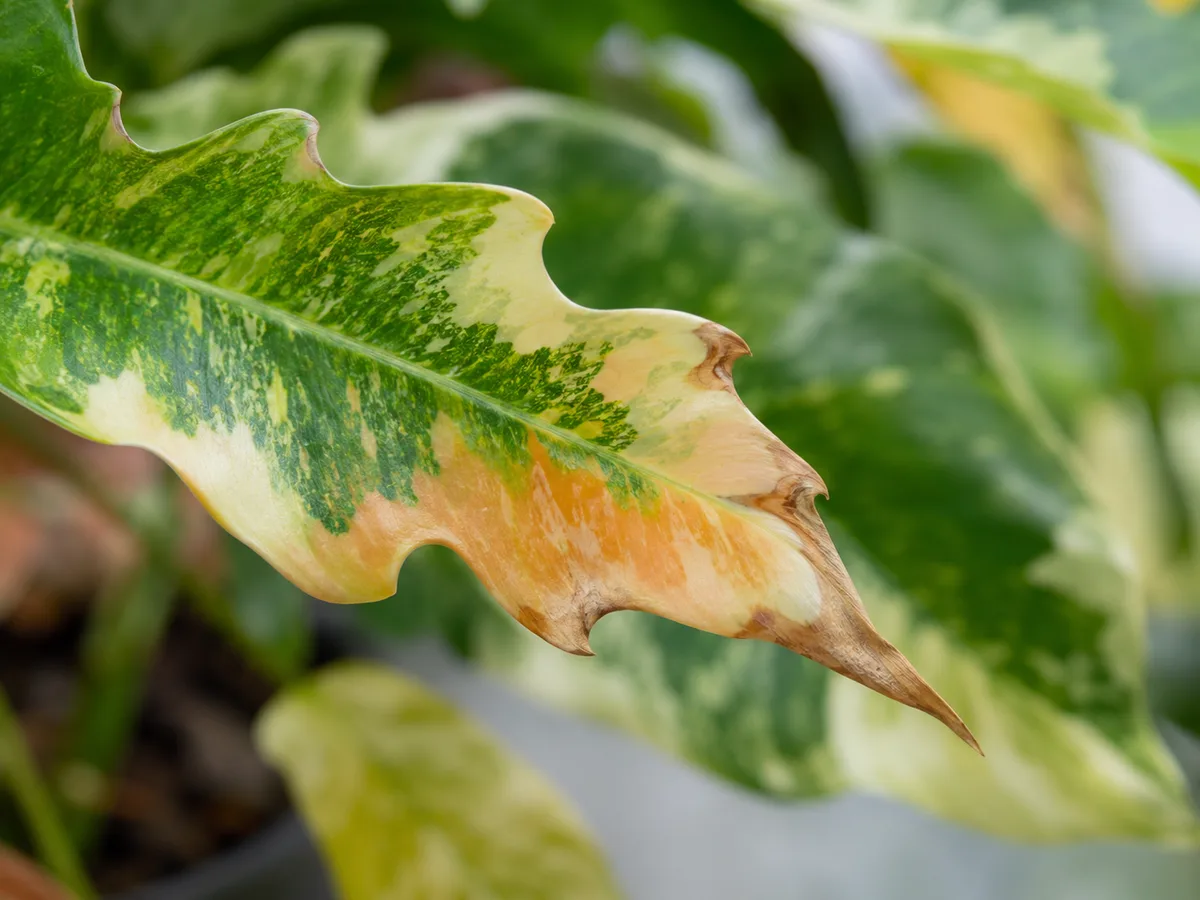
Brown tip burn favors the lower-chlorophyll cream and orange sectors; crisp dry tissue without spreading spots points to stress rather than leaf disease.
New leaves tell the real story. If fresh growth emerges with clean tips while only older outer leaves show damage, the plant has already stabilized. If every new leaf browns at the tip as it unfurls, the stress is still active.
Why Ring of Fire browns at the tips first
Three traits of this cultivar stack the odds toward tip burn. First, its multicolor variegation means large patches of leaf carry little chlorophyll, and those pale sectors overheat and lose water faster than green tissue under identical light. Second, its long serrated leaves put a lot of thin margin tissue far from the veins, so any water shortfall shows at the tips before anywhere else. Third, it is a humidity-loving tropical aroid happiest around 55–70% humidity, so heated or air-conditioned rooms dry its leaf edges steadily through winter — low-humidity tip browning is reported as a routine Ring of Fire complaint in dry homes.
The usual triggers are too much direct midday sun on the pale sectors, air that is drier than the plant prefers, a root ball left dry too long between waterings, or fertilizer salts accumulating in the mix. Philodendrons belong in bright but indirect light, with direct summer sun kept off the leaves because it scorches them — and on Ring of Fire the cream patches are always the first casualties.
How to confirm the cause
Work through the clues in order rather than guessing. Start with light: leaves facing a south or west window with bleached or browned pale sectors point to sun scorch, especially if the damage appeared within days of a position change. Next check water history: the RHS notes that brown tips or margins usually point to under- or overwatering, which you can assess by checking the roots rather than the leaves alone — so feel the top 3–5 cm of mix and lift the pot to judge its weight.
Then assess the air and the salts. Browning that worsens after heating season starts, with otherwise good watering, implicates dry air. A white crust on the mix surface or pot rim, plus a history of frequent feeding, implicates fertilizer salts — Clemson warns that too much fertilizer can cause tips of leaves to curl and brown on philodendrons. Only unpot if the mix stays soggy days after watering or smells sour; healthy firm white roots rule out rot and keep the diagnosis on light, air, water, or salts.
The first fix to try
Move the plant out of direct midday sun into bright filtered light — a sheer curtain, a few feet back from the window, or an east-facing spot. Do that one thing first and give it a week before stacking more changes, because sun-stressed pale tissue keeps browning for a few days even after the cause is removed, and piling on fertilizer or repotting in the same week hides the signal.
Practical Ring of Fire growers report the same sequence of watering, humidity, light, and water-quality checks resolving most brown-tip cases on this cultivar (Cafe Planta), so light repositioning plus a moisture check covers the two most common drivers before anything stronger is needed.
Step-by-step recovery
Once the plant is out of harsh sun, water thoroughly when the top 3–5 cm of the chunky aroid mix feels dry, letting excess drain fully and emptying the saucer. If the air is dry, set the pot on a tray of damp gravel with the water level kept below the pot base — the RHS recommends exactly this humidity tray method for dry-air leaf damage. Grouping it with other tropicals or running a small humidifier nearby through winter does the same job.
If you suspect salts, flush the pot with plain room-temperature water until it runs freely from the drainage holes, then hold off fertilizer until new growth looks clean. Trim only the fully crisp brown edges with clean scissors, following the leaf’s natural outline and leaving a hairline of dead tissue so you never cut into green. If roots proved rotted during the check, trim only the mushy strands, repot into fresh chunky mix, and resume normal watering — that escalation is for confirmed rot, not routine tip burn.
Recovery timeline
Sun-scorched tips stop spreading within one to two weeks of the move, though already-browned tissue stays brown. Humidity and watering corrections show in the next one or two leaves: each new unfurling leaf should carry intact tips further down the blade than the last. Full confirmation takes a month or more of clean new growth, which is normal for a moderately fast climbing aroid rather than a sign of failure.
Lookalike symptoms
Soft brown patches with yellow halos spreading from the middle of the leaf suggest leaf spot or overwatering damage, not tip burn — overwatering browning tends to sit mid-leaf rather than at the margins. Entire lower leaves yellowing then browning and dropping usually means watering imbalance or natural aging of old foliage, and whole-plant wilting with soggy mix points toward root trouble. Pest feeding from spider mites or mealybugs stipples or distorts leaves rather than crisping just the tips, so check undersides before assuming the tips tell the whole story.
Mistakes to avoid
Do not fertilize a browning Ring of Fire to “strengthen” it; salts are a likely cause, and feeding a stressed plant often deepens tip burn. Do not repot on day one unless you confirmed rotted roots — repotting adds shock without touching light or humidity. Do not mist the leaves several times a day as the main humidity fix; brief surface wetting evaporates fast and keeps foliage damp without raising air moisture, while the gravel tray or humidifier actually changes the air. And do not cut brown tips back into green tissue for a tidier line, since the fresh wound browns again and costs the leaf photosynthetic area it would have kept.
Ring of Fire care cross-check
Lock in the conditions that keep new leaves clean. This species prefers warm temperatures between 65 to 85 degrees Fahrenheit, protection from cold drafts, and partial shade rather than direct sun — keep it away from radiators, AC vents, and drafty panes. Watering should follow the pot, not the calendar; review the watering guide and let the top few centimeters dry before each deep soak. Match light to the light guide so variegation stays vivid without the pale sectors taking midday sun, keep the mix open and chunky per the soil guide, and feed lightly in the growing season per the fertilizer guide with periodic plain-water flushes.
When to worry
Treat it as urgent if browning races across whole leaves within days, stems or the growth tip soften, or several leaves collapse at once — that is root or systemic stress, and the plant needs unpotting and triage, not a light tweak. Brown tips confined to leaf points with firm stems and steady new growth can wait for the routine corrections above.
Severity note: This issue is marked medium for Philodendron Ring of Fire — a triage clue, not a guarantee.
Related Philodendron Ring of Fire guides
Use the watering guide when the top few centimeters stay wet or dry out unpredictably; the light guide when pale sectors bleach or new leaves come in mostly green; the soil guide when the pot stays heavy days after watering; and the fertilizer guide when a white crust or heavy feeding history suggests salt buildup.
Related tool
Use the Brown Tips Diagnosis Tool to narrow causes for brown tips on this plant before changing multiple variables at once.