Philodendron Ring of Fire Slow Growth: Causes & Fixes
Quick answer
Philodendron Ring of Fire is naturally slow-growing, and pale variegated sectors carry less chlorophyll, so a quiet spell can be normal — especially in winter or on a young plant. First compare the newest growth tip with the season, then check light at the leaves and root-zone moisture; correct only the cause the evidence points to.
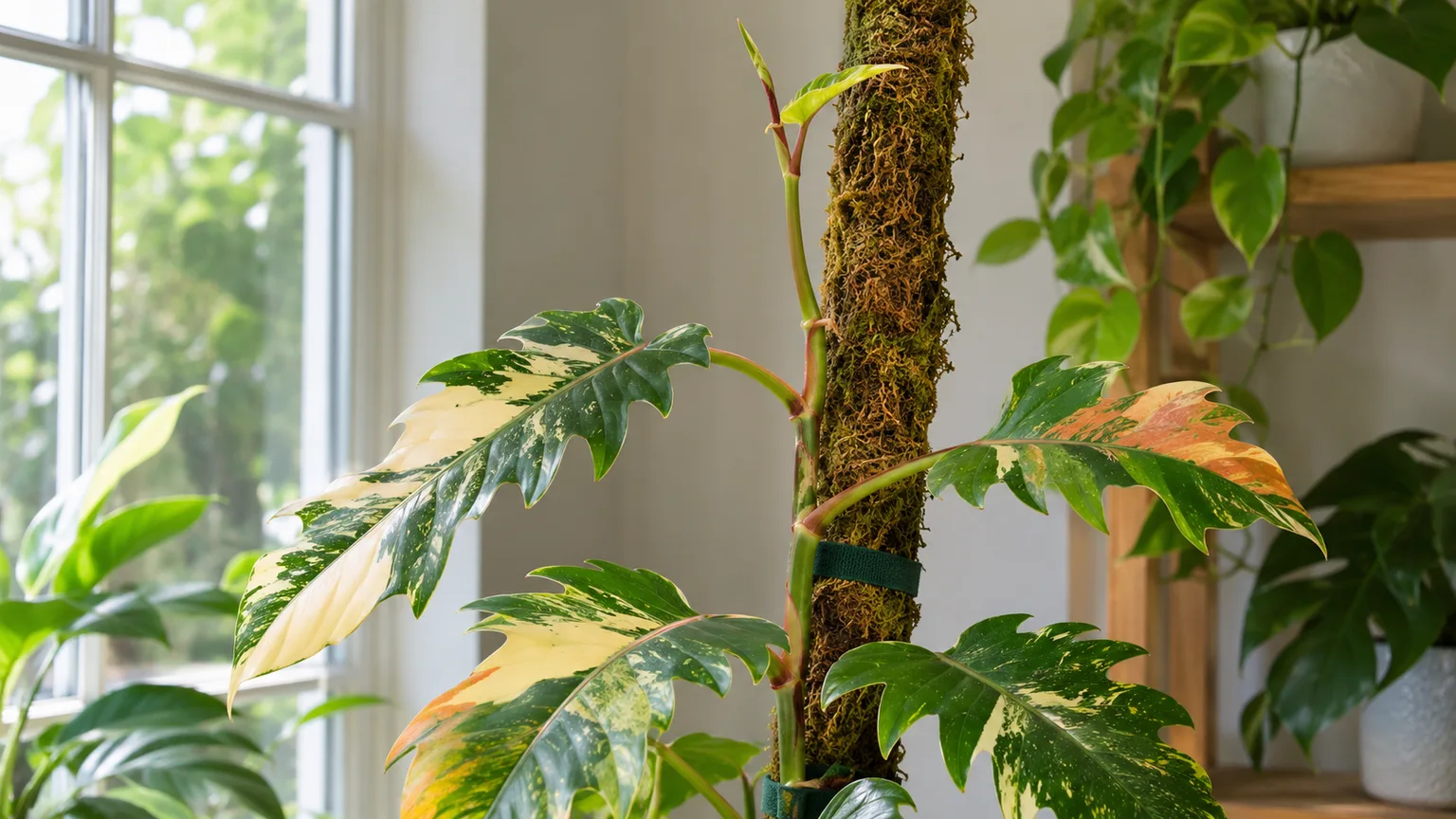
Slow Growth on Philodendron Ring of Fire: Normal Pace or a Care Problem?
This guide covers slow growth on Philodendron Ring of Fire. See also the general Slow Growth guide, watering, and light pages for this plant.
Slow Growth on Philodendron Ring of Fire: Normal Pace or a Care Problem?
Quick answer
Philodendron Ring of Fire is a naturally slow-growing cultivar, so a plant that adds leaves gradually can still be perfectly healthy. Its cream, yellow, and orange sectors carry less green pigment than plain green leaves, which means less leaf surface working at full capacity — variegated plants need stronger filtered light to hold their pace. A pause is especially unsurprising in fall and winter, on a young plant still building roots, or in the weeks after a move or repot.
Slow growth deserves a closer look when the pattern changes: the newest leaf arrives much smaller than recent ones, the tip stalls while the pot stays wet, variegation fades toward plain green, or several symptoms appear together.
First, compare the growing tip with the season, check the light landing on the newest leaves, and feel how the mix dries. Change one thing only after a check points to it — do not start with fertilizer or a repot.
What slow growth looks like on Ring of Fire
On this plant, slow growth means fewer new leaves than it produced under the same conditions, longer gaps between leaves, or new leaves arriving smaller than the plant’s own recent ones. Judge it against its own history, not against a fast green philodendron in someone else’s photos.
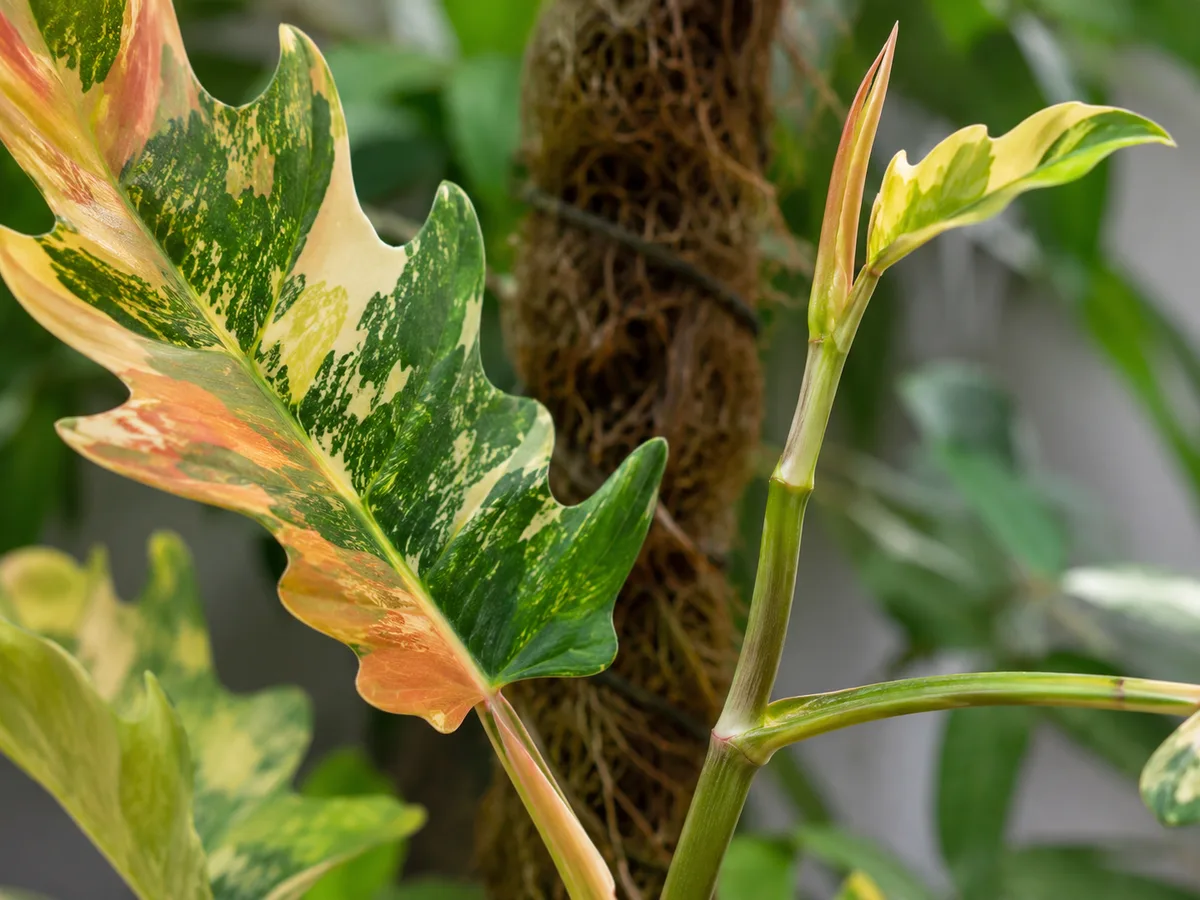
A firm emerging spear and slower leaf production can reflect the cultivar’s natural pace; compare new growth with the plant’s own history.
Find the growing tip at the top of the upright stem and look for a firm emerging spear or a swelling sheath. A leaf that is slowly separating from its sheath and opening is still progress — Ring of Fire unfurls on its own timetable, and cool or dim rooms stretch that timetable further. A healthy-but-slow tip is firm and clean; a troubled tip is soft, dark, dried out, or collapsing.
New leaves also tell you about variegation. Each Ring of Fire leaf carries its own mix of green, cream, yellow, and orange, and color shifts as the leaf matures from its reddish young stage. A run of mostly green new leaves after a brightly variegated stretch is not random: the plant is adjusting its pigment to catch more light, and that adjustment usually coincides with weaker light.
When slow growth is normal and when it signals stress
A quiet spell is more likely ordinary when the plant is otherwise stable: stems firm, roots sound, older leaves holding, mix drying on its usual rhythm, and the slowdown lining up with shorter days, cooler windows, or a recent change of home. Young plants are particularly prone to looking stalled while they establish roots — growth can seem paused while energy goes underground, and patience is the correct response as long as the tip and roots stay healthy.
A care problem becomes more plausible when the pace change lines up with another clue. Stretched stems leaning toward the window with widening gaps between leaves point to weak light. A heavy, long-wet pot with yellowing lower leaves points to the root zone instead. Stippling, webbing, sticky residue, or distorted new leaves are not just slowness — inspect for pests as a separate problem. Cold exposure, such as a drafty window below about 50°F (10°C), can also stall this tropical plant and damage foliage.
The key is change from this plant’s own baseline. If it has always unfurled a leaf every couple of months and still does, speed alone is a weak reason to intervene. If it was active and then stopped after a move, a watering shift, or pest exposure, that timing narrows the search. For how stalled growth works in houseplants generally, see the global slow-growth guide; the rest of this page interprets that picture for Ring of Fire specifically.
Why variegation sets Ring of Fire’s pace
Ring of Fire’s selling point — its multicolor serrated leaves — is also the reason it cannot be rushed like an all-green philodendron. Pale sectors contribute little usable green area, so the plant needs more bright filtered light than a darker green type to support the same growth, while still needing protection from harsh direct sun that scorches thin variegated tissue.
In dim light the plant compensates by pushing greener, sometimes larger leaves to capture more energy — and variegation that fades is hard to win back. So a Ring of Fire sitting far from a window may look slow and progressively plainer at the same time. That combination is one of the most reliable light diagnoses on this cultivar: improve filtered light gradually rather than shoving the plant into midday sun, which burns the pale sectors first.
Treat each new leaf as evidence about current conditions. A heavily cream leaf may take longer to pay for itself than a greener one, and a run of pale leaves in moderate light can mean a longer wait for the next spear. Compare leaves on your own plant across the same season and spot, and use the Ring of Fire light guide to place it.
Serration, maturity, and the climbing habit
Juvenile Ring of Fire leaves are smoother and less dramatic than mature ones — the jagged serrated margins develop as the plant ages in good conditions. A young plant making small, simply shaped leaves is not failing; it is showing its age, and neither extra feed nor a bigger pot will fast-forward maturity.
This cultivar climbs, and support shapes its mature growth. Climbing philodendrons given a stable moss pole they can root into develop larger, better-formed leaves with shorter gaps between them, as the RHS philodendron guide describes for climbing types kept on a moist support. A Ring of Fire with no support, a wobbling pole, or a vine bent away from its stake spends energy coping instead of extending — check that the tip has room to keep climbing and that ties hold the stem without strangling it. Adding a pole will not make a slow plant instantly fast, but a secure one lets each new leaf reach its proper size. The Ring of Fire overview covers its climbing habit in the broader care picture.
A diagnostic pass before changing care
Read the season and the tip
Note when the last leaf started, whether it opened fully, and what changed in the room since — a move, a darker corner, a cold snap, a repot. Photograph the tip from the same angle so you can compare in two to three weeks. In fall and winter this plant’s growth naturally eases; feeding stops and watering stretches out in the dormant months. A slower winter pace with steady leaves and a firm tip needs holding, not forcing.
Measure light where the new leaves grow
Watch the top of the plant through the day. Is the tip shaded by furniture or curtains while the pot sits in brightness? Did the plant move farther from the window? Is new growth turning toward the glass with longer bare stem between leaves? Ring of Fire wants several hours of bright indirect light daily — an east-facing window with filtered sun or a spot near a bright south window shielded by a sheer curtain are typical indoor answers, and a grow light can carry it through dark winters.
If light is clearly weak, move the plant closer in stages over a week or two and keep pale sectors out of hot afternoon sun. Expect the next leaf, not the current one, to show the response.
Check moisture and drainage at the roots
Do not water because the plant is slow, and do not withhold water because it is variegated. Push a finger 5–7 cm into the mix and lift the pot to feel its weight; the top 2 inches of soil should dry before the next thorough soak, with excess draining away and saucers emptied. NC State Extension describes philodendrons as wanting moist, well-drained soil rich in organic matter in partial shade, and warns that overwatering brings root rot — a plant with damaged roots pauses while it survives on what remains.
A chunky aroid mix of potting soil, perlite, and orchid bark keeps air around the roots; dense pure potting soil stays wet and suffocates them. The Ring of Fire watering guide gives the plant-specific dry-down routine, and the soil guide covers mix structure — use both as checks against your actual pot and room, not as calendar schedules.
Inspect pot size and root room
Slide the plant out only if you have a reason: water behavior that never normalizes, roots circling the ball or escaping drainage holes, or soil drying out within a day or two of watering. This cultivar needs repotting only every two to three years, and a pot far larger than the root ball holds wet mix longer, which stalls growth rather than encouraging it. When you do repot, choose spring or early summer, go only slightly larger, and keep the same chunky mix character.
Look for pests on new growth
Inspect leaf undersides, stem joints, and the folded sheath of the newest spear with bright light and, if needed, a phone camera’s close focus. Spider mites, mealybugs, scale, and aphids all occur on indoor philodendrons, and low humidity with dusty leaves invites them. Treat anything you find as its own diagnosis — isolate, identify, and control with a plant-safe method — rather than spraying a clean but slow plant on suspicion.
Review feeding history last
Write down the last feed date, the product, and its dilution. Ring of Fire needs only modest feeding: a diluted balanced liquid feed about monthly during spring and summer growth, then nothing once temperatures drop and the plant rests, which matches the RHS guidance to feed philodendrons during the growing season from April to September. A plant that has grown actively in good light on sound roots and has not been fed to its product’s indoor directions may reasonably get a careful feed in season. But repeated feeding without growth is a signal to stop and check for salt crust on the mix surface or browned leaf edges — signs of buildup that call for flushing with plain water, not more fertilizer. The Ring of Fire fertilizer guide covers routine feeding; this page is not a deficiency diagnosis.
The first fix to try
Fix the cause with the clearest matching evidence, one change at a time. If the vine reaches toward a dim window and new leaves come in greener and smaller while the pot dries normally, improve filtered light first. If the pot stays heavy and wet, prioritize drainage and root health over light moves or fertilizer. If pests are visible, deal with them before anything else. If the only change is a gentler pace in a darker season with everything else steady, hold the pattern and keep watching.
Record the change and what you expect: a light correction should bring a firmer tip and a stronger next leaf; a moisture correction should restore a predictable dry-down; pest control should stop fresh pest evidence. If nothing matches, recheck the diagnosis before escalating — stacking a move, a repot, a prune, and a feed in one weekend hides which one mattered and can stress a plant that needed patience.
How recovery appears on Ring of Fire
Recovery is measured in new growth, not speed records. Existing leaves will not get bigger, paler sectors will not turn efficient-green overnight, and scarred or browned patches will not heal — leave functional leaves in place unless they are mostly dead, since they still feed the plant. Improvement looks like a firm tip pushing a leaf that opens cleanly, later leaves returning toward their usual size and variegation, and a pot resuming its normal wet-to-dry rhythm.
Allow weeks, not days: a new spear forming and opening is the unit of progress here. If every new leaf keeps shrinking, stems soften, several leaves yellow in sequence, or the mix never dries, the first diagnosis was wrong or incomplete — recheck roots and light rather than repeating the same fix. A stem base gone soft and dark with no firm viable node left may not recover as a whole plant; if a healthy stem section with a node remains, propagation can preserve it, but that is a salvage, not a cure.
Mistakes that make slow growth harder to read
Do not fertilize first because the plant is slow — nutrients cannot substitute for light, repair rotted roots, kill pests, or end winter rest, and excess salts burn leaf margins. Do not water on a fixed weekly date when the pot is still heavy, and do not let the root ball bake dry just because growth paused; check the mix and the pot’s weight every time.
Avoid jumping the plant into a much larger pot without root evidence, and do not prune healthy leaves to “redirect energy” into faster growth — removing working foliage slows a variegated plant further. Give any single correction at least a few weeks and one new leaf before judging it, and resist unpotting repeatedly to peek at roots.
When to use this page vs other Ring of Fire guides
Use this page when the main concern is the pace of new leaves and no clearer symptom has appeared yet. If the vine is stretching sparse and pale toward the window, the light guide is the better next read; if the mix stays wet, the stem base softens, or lower leaves yellow, treat the root zone as the priority and check the watering and soil guides above. Limp leaves on a light, dry, fast-draining pot point to underwatering rather than this page’s slowdown checklist. Name the clearest symptom first, then let that guide take over — this page is for slowness as the starting clue.
How to prevent a repeat slowdown
Keep a simple log for this particular plant: where it sits, which way the tip faces, when each leaf appears, and how many days the pot takes to dry each season. A photo of the same node every few weeks beats any generic growth chart. Recheck placement when seasonal light shifts, keep humidity in the 55–70% range it prefers, hold temperatures roughly between 65°F and 80°F away from cold drafts and hot radiators, and keep the climbing support stable with room for the tip to extend. Feed lightly in active growth only, water by dry-down, and inspect new growth and leaf undersides as part of the routine.
Related Philodendron Ring of Fire guides
Use the overview for the cultivar’s broader care context; the light guide for placement and variegation; the watering guide for judging dry-down; and the soil guide when drainage or mix structure is unclear. The fertilizer guide covers routine feeding in the growing season.
Related tool
Use the Plant Problem Diagnosis Tool to narrow causes for slow growth on this plant before changing multiple variables at once.