Wilting on Philodendron Ring of Fire: Causes, Checks & Fixes
Quick answer
Wilting on Philodendron Ring of Fire is most often a water-uptake problem, not a watering-frequency problem: dry chunky mix, a soggy pot core, or dry heated air. First step: push a finger 3–5 cm into the mix and lift the pot — soak thoroughly only if it is dry and light; if it is wet and heavy, stop watering and let air reach the roots.
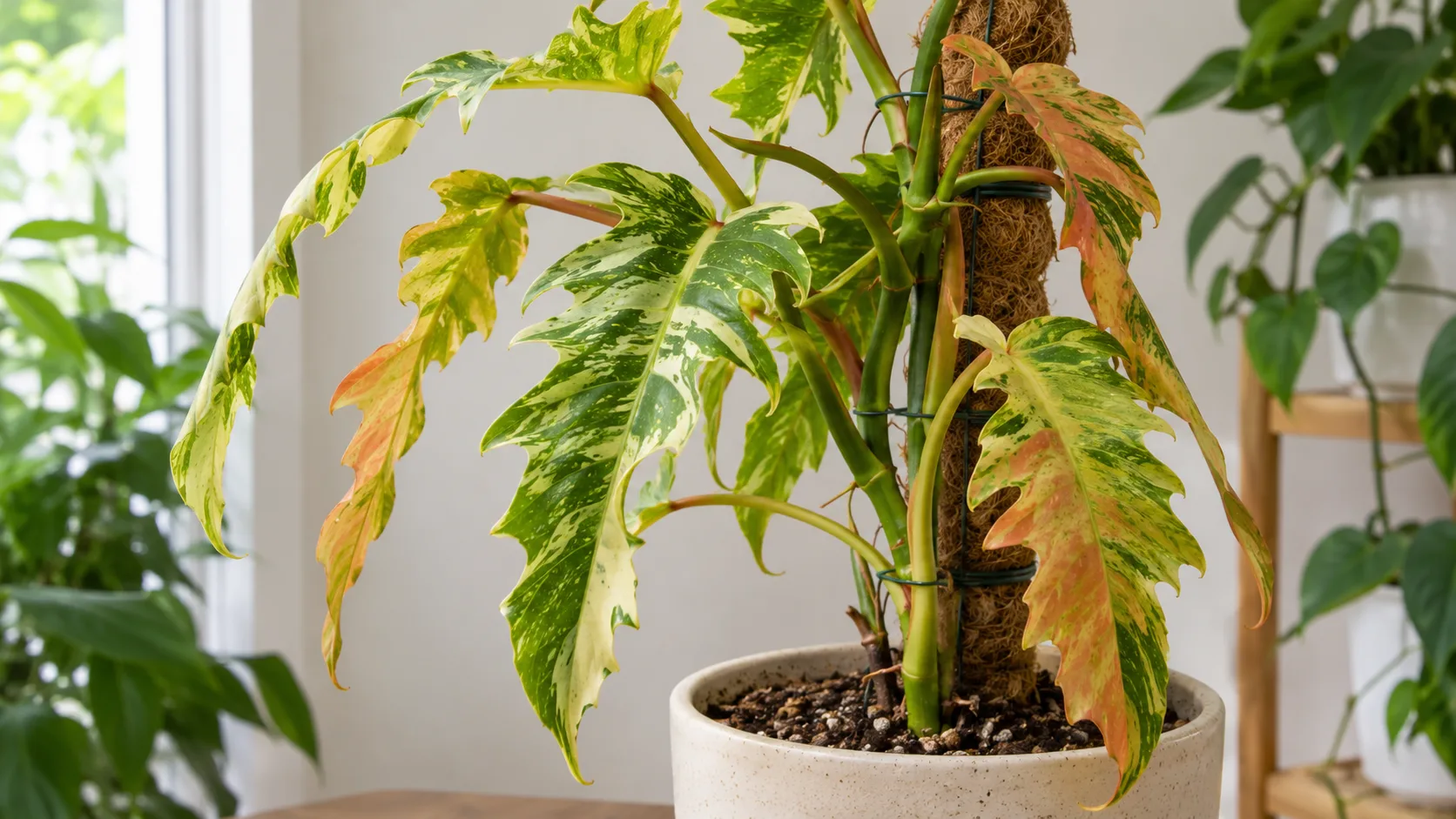
Wilting on Philodendron Ring of Fire: Causes, Checks & Fixes
This guide covers wilting on Philodendron Ring of Fire. See also the general Wilting guide, watering, and light pages for this plant.
Wilting on Philodendron Ring of Fire: Causes, Checks & Fixes
Quick answer
Wilting on Philodendron Ring of Fire almost always means the leaves are losing water faster than the roots can supply it — because the mix dried out, because soggy mix damaged the roots, or because hot dry air is pulling moisture out of the foliage. For how wilting works in general across houseplants, see our wilting guide. On Ring of Fire, the chunky aroid mix and the climbing habit change the diagnosis: the top can feel dry while the core is soaked, and new leaves near the top of a moss pole wilt first when humidity drops.
First step: push a finger 3–5 cm into the mix and lift the pot. Dry and light means a thirsty plant — soak thoroughly until water runs from the drainage holes, then drain the saucer. Wet and heavy means drowning roots — do not water, empty standing water, and let air back into the mix. Details on this rhythm are in the Ring of Fire watering guide.
What wilting looks like on Ring of Fire
Healthy Ring of Fire holds stiff, jagged leaves upright on firm climbing stems. When it wilts, the long serrated blades go limp and fold downward, often starting at the leaf tip and margins rather than the whole leaf at once.
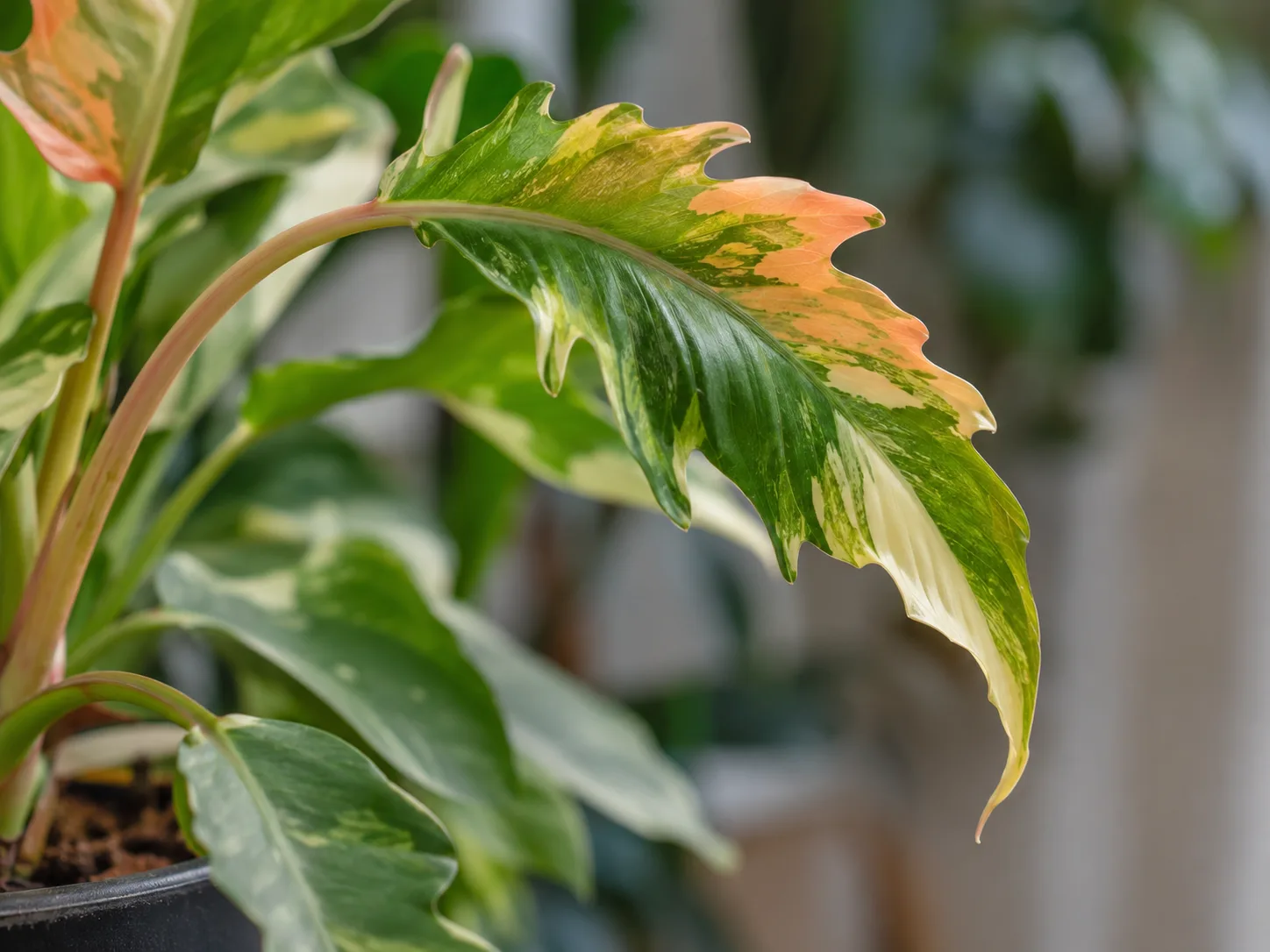
Wilt shows as a loss of the firm upright posture, often beginning at the long leaf tips and margins.
Watch the variegation: the pale cream and yellow sectors contain less chlorophyll and thinner tissue, so they flag stress first — going soft and papery while the green zones still look fine. New leaves emerging reddish near the growth tip are the most honest signal on the plant. If fresh unfurling growth flops while older leaves hold, the problem is current (dry air, missed watering, heat). If older lower leaves yellow and collapse while the tip still pushes growth, suspect the root zone instead.
Because the stems store some water, visible wilt on this cultivar arrives late — the root zone has usually been off for days before the foliage shows it. That lag is why the finger-and-weight test matters more than the calendar.
Why Ring of Fire wilts
Dry chunky mix
Ring of Fire grows in an open bark-and-perlite mix that drains fast by design. In bright light or warm rooms it can dry all the way through in days, and the fibrous roots have no fine soil to draw reserve moisture from. The fix details live in the Ring of Fire watering guide, but the pattern is simple: an underwatered plant has dry mix at depth, a noticeably light pot, and firm stems with floppy leaves.
Soggy core and suffocated roots
The opposite failure looks identical from above. Water poured little and often wets only the surface while the core stays saturated, or a decorative cachepot holds the nursery pot in standing water. Philodendron roots need air as well as moisture, and saturated compost eventually causes root rot — mushy, blackened roots that can no longer absorb water, so the plant wilts despite wet soil. Wilting or drooping despite moist soil, yellowing lower leaves, a foul smell from the mix, and mushy, blackened roots form the classic root-rot picture on this plant.
Dry air and heat
Ring of Fire prefers humidity around 55–70% and warm, stable indoor temperatures. When indoor air runs dry — radiators, air-conditioning, a sunny windowsill in summer — the broad serrated leaves lose water faster than the roots can replace it, and the leaf edges flag first. This species prefers temperatures between 65 and 85 degrees Fahrenheit indoors and should be protected from cold drafts, so a plant parked by a vent or draughty door can wilt even in damp mix.
Scorched pale sectors
The cream and yellow variegation burns in direct sun while green tissue tolerates it. Scorched pale zones turn papery and flop, which reads as wilting but is actually sun damage on the thinnest tissue. If only the palest sectors on sun-facing leaves are affected, light — not water — is the cause, and the Ring of Fire light guide explains the bright-indirect target that keeps variegation vivid without burning it.
Compacted or exhausted mix
Old bark breaks down into fine, airless sludge after a year or two, and a root-bound plant can fill the pot so completely that water runs down the sides without wetting the core. Both produce the confusing combination of frequent watering plus permanent wilt. If the mix smells sour, stays wet for a week, or water sheets straight through, the medium itself is the problem — the Ring of Fire soil guide and repotting guide cover the chunky refresh this climber needs.
How to confirm the cause
Work through these checks in order before changing anything:
- Finger test at depth. Push a finger 3–5 cm into the mix near the root ball, not just the surface. Dry means thirsty; cool and damp means wait. Letting the top two to three inches dry between waterings is the standard rhythm for a mature plant.
- Pot weight. Lift the pot. A thirsty Ring of Fire feels strikingly light; a waterlogged one feels heavy for days after watering. Learn your pot’s dry versus freshly watered weight.
- Stem and base check. Squeeze the lower stem gently. Firm means the plumbing is intact and recovery should be quick. Soft, wrinkled, or darkened stem bases mean damage that watering alone will not fix.
- Leaf pattern. Pale sectors and new top growth wilting first points to air, heat, or light. Lower leaves yellowing with whole-plant flop on wet mix points to roots.
- Drainage audit. Confirm the pot has a drainage hole and no water sits in the saucer or cachepot. A missing hole plus wilt is nearly always a soggy-core case.
- Root inspection (only if wet-wilt). If the mix is wet and the plant still flops, slide the root ball out. White or tan firm roots can recover; brown mushy roots with a sour smell confirm rot — trim the dead roots with clean scissors and repot into fresh chunky mix.
The first fix to try
Do exactly one thing based on your finger test: if the mix is dry at 3–5 cm and the pot is light, soak the pot thoroughly until water streams from the drainage holes, let it drain fully, and empty the saucer. Most thirsty Ring of Fire plants firm up within a few hours.
If the mix is wet and heavy, your one action is the reverse: stop watering, empty all standing water, and move the plant somewhere warm with gentle airflow so the mix can dry. Do not fertilize, repot, and prune on the same day — a stressed plant needs one variable changed at a time so you can read its response.
Step-by-step recovery
- Apply the first fix above and wait 24 hours. Thirsty plants respond fast; anything still floppy after a day needs the next steps.
- If leaves stay limp on drying mix, unpot and inspect the roots. Trim mushy brown roots back to firm tissue, and repot into fresh chunky bark mix in a pot with drainage — ideally in spring while the plant is actively growing.
- Trim only fully dead tissue: papery brown sectors and mushy collapsed leaves. Leave partly green leaves in place; they still feed recovery.
- Stabilise the environment: bright indirect light, 55–70% humidity, no cold drafts or radiator blasts. Climbing stems recover faster when tied to a damp moss pole rather than flopping, since supported growth keeps new leaves developing normally.
- Resume watering by dry-down, not schedule. Resume dilute feeding only after new growth emerges firm and holds for two weeks.
Wear gloves when trimming and keep fallen leaves away from pets — philodendrons are toxic to cats and dogs, and the sap can irritate skin.
Recovery timeline
Thirst-only wilt reverses within hours of a good soak, with leaves regaining stiffness by the next morning. Humidity or heat wilt eases over two to four days once conditions stabilise. Root-rot recovery is measured in weeks: expect stopped spread first, then one firm new leaf, then steady growth. Judge progress by new growth and stem firmness, not by damaged leaves — flopped pale sectors that turned papery will never re-green.
Mistakes to avoid
- Watering on a fixed schedule instead of testing the mix. This cultivar’s chunky medium dries unpredictably with the seasons.
- Pouring sips daily. Shallow watering keeps the core either dry or soggy; soak deeply, then let it dry.
- Leaving the nursery pot sitting in a water-filled cachepot or saucer.
- Fertilizing a wilted plant. Salts stress damaged roots further — if you see a white crust on the surface, flush the pot with plain water and hold all feeding until new growth firms up.
- Repotting, pruning hard, and spraying treatments in one session. Sequence the work over days.
How to prevent it next time
Anchor care to the plant’s rhythm: soak when the top few centimetres dry, drain completely every time, and refresh the chunky mix every one to two years before it compacts. Keep light bright but indirect so the pale variegation colours up without scorching, hold humidity in the 55–70% band, and give the climbing stem a moss pole early so mature serrated leaves develop with steady moisture at the aerial roots. A weekly finger-test plus a glance at the newest leaf catches nearly every wilt before it shows.
When to worry
Most wilts resolve with one watering correction. Escalate when stems soften at the base, rot smell rises from the mix, the crown collapses, or successive new leaves emerge already floppy — these mean the root system or stem base is failing. A plant with no firm roots and a mushy stem base is rarely salvageable; a healthy top cutting with a node can still propagate a replacement.
Related tool
Use the Drooping Leaves Diagnosis tool to narrow down whether your Ring of Fire’s wilt is a watering, humidity, or root issue before changing multiple variables at once.