Wilting on Philodendron Silver Sword: Causes, Checks & Fixes
Quick answer
Wilting on Philodendron Silver Sword most often means the chunky aroid mix went too dry between waterings — but soggy mix with suffocated roots causes the same limp look. First step: push a finger 3–5 cm into the mix and lift the pot; water deeply only if it feels dry and light.
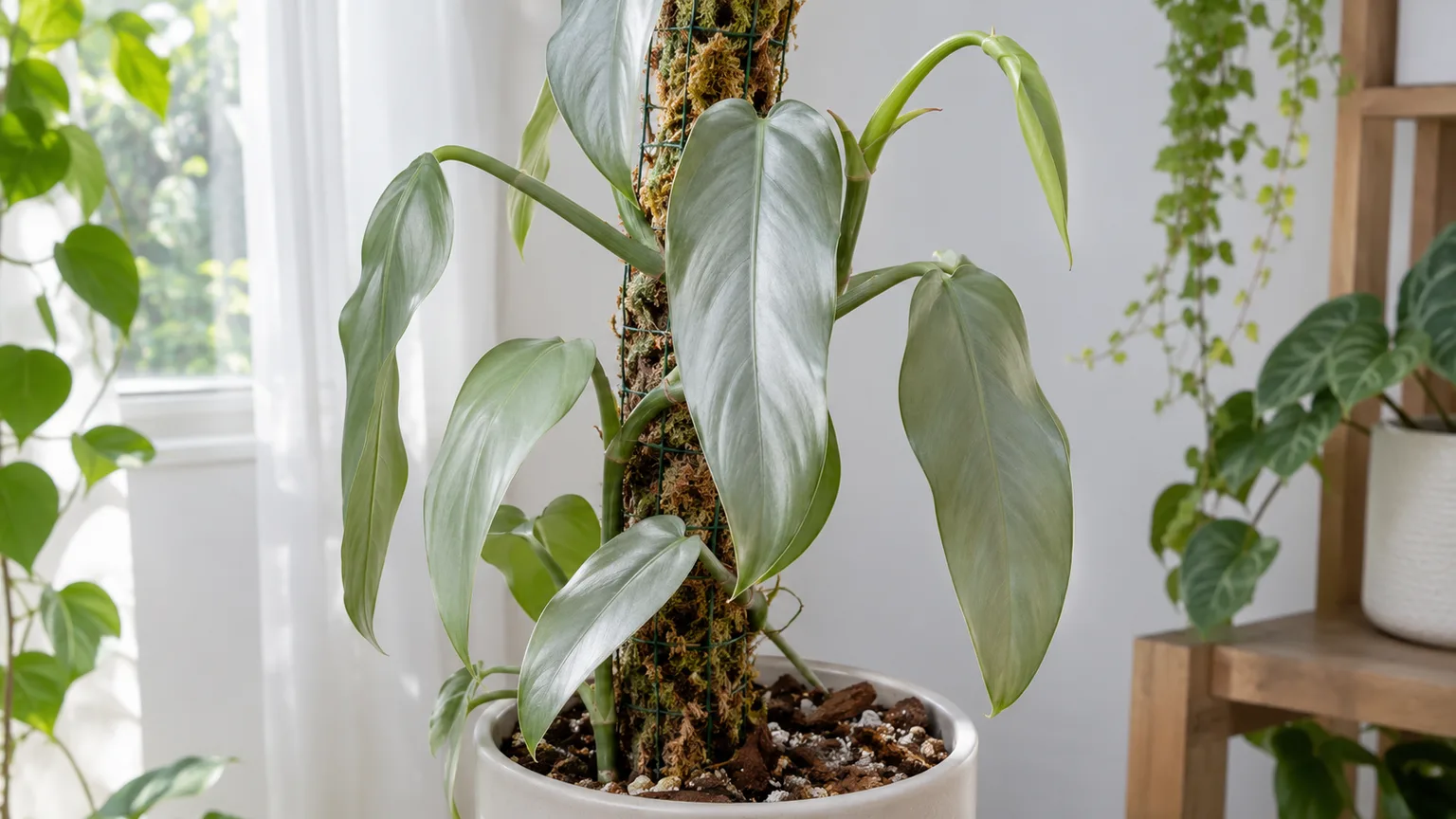
Wilting on Philodendron Silver Sword: Causes, Checks & Fixes
This guide covers wilting on Philodendron Silver Sword. See also the general Wilting guide, watering, and light pages for this plant.
Wilting on Philodendron Silver Sword: Causes, Checks & Fixes
Quick answer
Wilting on Philodendron Silver Sword most often means the chunky aroid mix went too dry between waterings — but soggy mix with suffocated roots causes the same limp look. First step: push a finger 3–5 cm into the mix and lift the pot; water deeply only if it feels dry and light.
For how chronic wet mix damages roots in general, see our wilting guide. On Silver Sword, the pattern usually shows up as thin silver-blue blades going soft and folding along the midrib, with the vine tip drooping even though the moss pole is still upright.
What wilting looks like on Silver Sword
A thirsty Silver Sword loses blade stiffness first. The long arrow leaves feel soft and papery, fold inward, and hang from their petioles while keeping most of their silver tone. The growing tip usually droops as one piece, and older lower leaves may curl before they yellow.
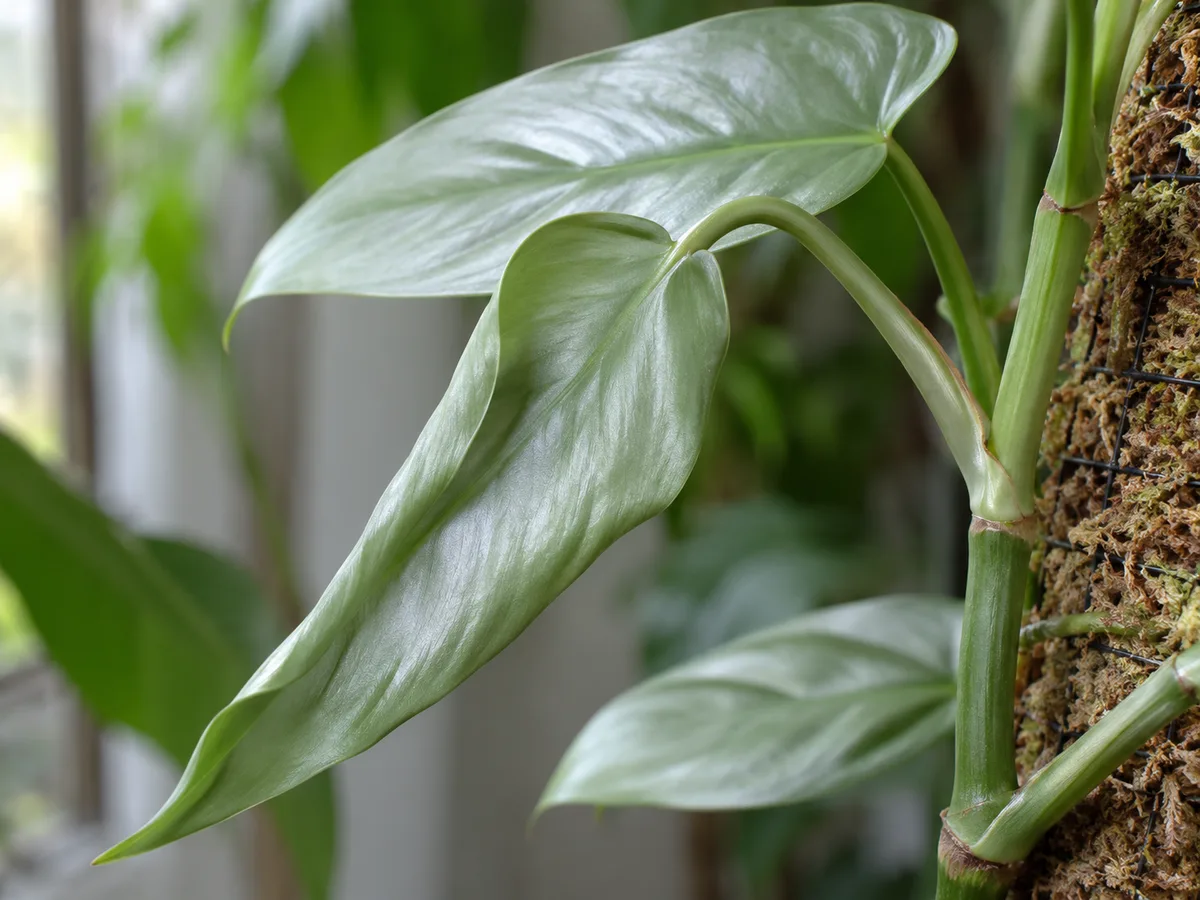
Wilting softens the blades and makes them fold inward; check pot weight and mix moisture to tell dry stress from wet-root stress.
Wet-root wilting looks heavier. Leaves stay dark and limp rather than papery, petioles feel soft at the base, and yellowing spreads across leaves of several ages at once. If the base of a stem smells sour or feels mushy, the problem has moved past simple thirst into root damage.
Why Silver Sword wilts
Silver Sword is a clinging climber with a fast-draining aroid mix, so its root ball dries unevenly. The most common cause is simply waiting too long: the top of the pot looks fine while the core around the roots has gone fully dry, and the vine collapses to conserve water. Hot, bright weeks and small pots shorten that window to days.
The second cause is the mirror image — mix that never dries. Roots sitting in waterlogged soil die back because of a lack of oxygen, then cannot deliver water upward, so the plant wilts even though the pot feels heavy. Dense peat, a pot without drainage, or a saucer left full after watering all create this trap.
Two Silver Sword–specific triggers round out the list. A vine that has outgrown or slipped off its moss pole puts mechanical stress on petioles, and the unsupported section flops in a way that mimics wilt. Cold drafts below its comfort range of 65 to 85 degrees Fahrenheit can also collapse new growth overnight, especially near winter windows.
How to confirm the cause
Work through this order before you water or repot:
- Mix at depth. Push a finger 3–5 cm into the mix near the root ball, not just the edge. Dry and crumbly means thirst; cool and damp days after watering means excess moisture.
- Pot weight. Lift the pot. A thirsty Silver Sword feels strikingly light; a wet-root plant feels heavy despite limp leaves.
- Stem firmness. Squeeze lower stems gently. Firm stems with papery leaves suggest underwatering; soft, watery stems suggest rot.
- Drainage check. Look under the pot. Standing water in the saucer or cachepot, or a blocked hole, points at the wet-root side. Silver Sword growers are advised to let the top quarter to top half of the pot dry and to discard saucer water every time.
- Pole and placement. Confirm the vine ties are intact and the plant has not recently moved into much stronger sun or a cold draft.
Philodendrons show yellow or droopy leaves from both faults, so leaf colour alone cannot settle it — the mix reading and pot weight are the deciding votes.
The first fix to try
Water deeply only if the mix is dry and the pot is light. Set the nursery pot in the sink, soak until water runs freely from the drainage holes, let it drain for 15 minutes, then empty the saucer completely.
Do nothing else that day. One grower’s rule worth borrowing: feel the mix rather than trusting a schedule or a meter, since meters misread chunky bark mixes badly. Recheck turgor the next morning — thirsty blades should feel stiff again within 12–24 hours.
If the mix was already damp and heavy, skip the water entirely. Move the plant to bright but indirect light, empty any standing water, and let the top centimetres dry before you reassess. Watering a soggy root ball a second time is the single fastest way to turn a mild wilt into rot.
Step-by-step recovery
- Day 1: Apply the first fix above based on your mix reading.
- Day 2–3: If blades firmed up, resume the normal rhythm from the Silver Sword watering guide — roughly every 7–10 days in summer, letting the top 3–5 cm dry. If the plant is still limp in damp mix, slide the root ball out and inspect: white firm roots mean patience, while brown mushy ones need trimming with clean scissors.
- Week 1–2: Re-secure the vine to its support following the Silver Sword overview climbing notes, and prune only leaves that are fully yellow or crisp. Leave partly green blades — they still photosynthesize.
- Week 3+: Once a new arrow leaf emerges firm and silvery, treat the plant as recovered. Details on refreshing exhausted mix are in the Silver Sword repotting guide, but repot only if roots were damaged or the mix has collapsed into sludge.
Recovery timeline
Simple underwatering rebounds fast: stiffness returns within a day, and the next new leaf looks normal. Expect the oldest leaf or two to yellow and drop even after a good rescue — that is the plant balancing its water budget, not a new problem.
Wet-root wilting is slower. After correcting drainage, allow one to two full dry-down cycles before judging. Fresh growth that holds its silver tone and climbs firmly is the real all-clear; if successive new leaves emerge small and limp, unpot again and check whether rot is still spreading.
Mistakes to avoid
- Watering on sight without feeling the mix first. Silver Sword’s bark-heavy soil can look dry on top while the core is still wet.
- Misting wilted leaves as the fix. Surface misting does not rehydrate roots and keeps foliage damp in weak light.
- Fertilizing a limp plant. Salts stress damaged roots further; hold all feed until new growth looks healthy for at least two weeks, as the Silver Sword fertilizer guide recommends for stressed plants.
- Repotting, pruning hard, and spraying pests on the same day. Pick the single most likely cause first so you can read the plant’s response.
Silver Sword care cross-check
Wilting rarely happens in isolation, so audit the setup described in the Silver Sword care hub:
- Light: Bright filtered indirect light keeps blades thick and water use steady. Deep shade slows drinking so much that normal watering turns into overwatering; harsh direct sun through glass can wilt leaves by midday. The Silver Sword light guide has placement specifics.
- Soil: The mix should be chunky potting mix plus perlite and orchid bark that drains within seconds. If water ponds on the surface, rebuild the mix per the Silver Sword soil guide before adjusting anything else.
- Pests: Sap feeders such as spider mites drain vigor and can tip a mildly dry plant into a full wilt. Check leaf undersides and petiole joints with a flashlight when the mix reading does not explain the collapse.
Reading the silver blades
Silver Sword’s metallic finish is a useful diagnostic tool other philodendrons lack. A thirsty plant keeps its silver sheen even as blades fold — the colour layer is intact, only turgor is gone. A plant wilting from wet roots or cold damage loses the sheen first: blades look dull grey-green and slightly translucent before they go fully yellow.
Use that cue when the mix reading is borderline. Shiny but limp means water; dull and limp means hold off and investigate roots and temperature instead.
Moss-pole flop versus true wilt
Because hastatum only reaches full leaf size while climbing, support failures deserve their own check. A vine section that slipped its tie flops outward with firm, healthy blades — petioles bend at the tie point, not along the whole leaf. True wilt softens every blade on the section equally.
If the flop is mechanical, re-tie loosely with plant tape and mist the pole (not the leaves) to encourage aerial roots to reattach. Do not water the pot extra for a fallen vine; the roots are usually fine and the extra soak pushes them toward rot.
When to worry
Treat the wilt as urgent when several leaves collapse within a day or two, stems soften at the base, the mix smells sour, or the pot stays heavy long after watering. Those signs mean roots are failing, and each extra day of wetness costs more of the vine.
A plant with a fully mushy base and no firm stem section left to cut is unlikely to recover whole — salvage shifts to node cuttings. Anything with at least one firm node and healthy aerial root can usually be restarted even if the mother root ball is lost.
How to prevent it next time
Anchor a routine to the pot, not the week. Water when the top few centimetres dry and the pot feels lighter, soak until drainage runs, and always empty the saucer. Keep the vine tied to a damp pole in bright indirect light with steady 55–70% humidity, and refresh compacted mix every year or two so air reaches the roots.
Seasonal shifts matter: summer growth drinks faster, while winter’s cool low light stretches the interval toward two weeks. Adjust by feel each time rather than locking in a fixed schedule.
Related Silver Sword guides
- Silver Sword watering guide — set the dry-down rhythm that prevents most wilts.
- Silver Sword soil guide — rebuild a mix that drains fast but holds enough moisture.
- Silver Sword light guide — match brightness to water use so the schedule stays stable.
- Silver Sword repotting guide — fix root-bound or collapsed mix behind repeat wilts.
- Silver Sword overview — climbing support, feeding, and whole-plant context.
Related tool
Use the Plant Watering Calculator to narrow causes for wilting on this plant before changing multiple variables at once.