Aphids on Philodendron Splendid: Causes, Checks & Fixes
Quick answer
Aphids on Philodendron Splendid cluster on the climbing tip, unfurling coppery leaves, and velvet leaf undersides. First step: isolate the plant and rinse the growing tip and leaf undersides with lukewarm water, then let the velvet foliage dry in good airflow before any spray.
Aphids on Philodendron Splendid: Causes, Checks & Fixes
This guide covers aphids on Philodendron Splendid. See also the general Aphids guide, watering, and light pages for this plant.
Aphids on Philodendron Splendid: Causes, Checks & Fixes
Quick answer
Aphids on Philodendron Splendid cluster on the climbing tip, unfurling coppery leaves, and velvet leaf undersides. First step: isolate the plant and rinse the growing tip and leaf undersides with lukewarm water, then let the velvet foliage dry in good airflow before any spray.
For general aphid biology and life cycles, see our aphid guide. On Splendid, the rest of this page stays plant-specific: where colonies hide on a velvet climber, how to confirm them without confusing them with thrips or humidity-stuck leaves, and how to clear them without ruining velvet foliage.
What aphids look like on Philodendron Splendid
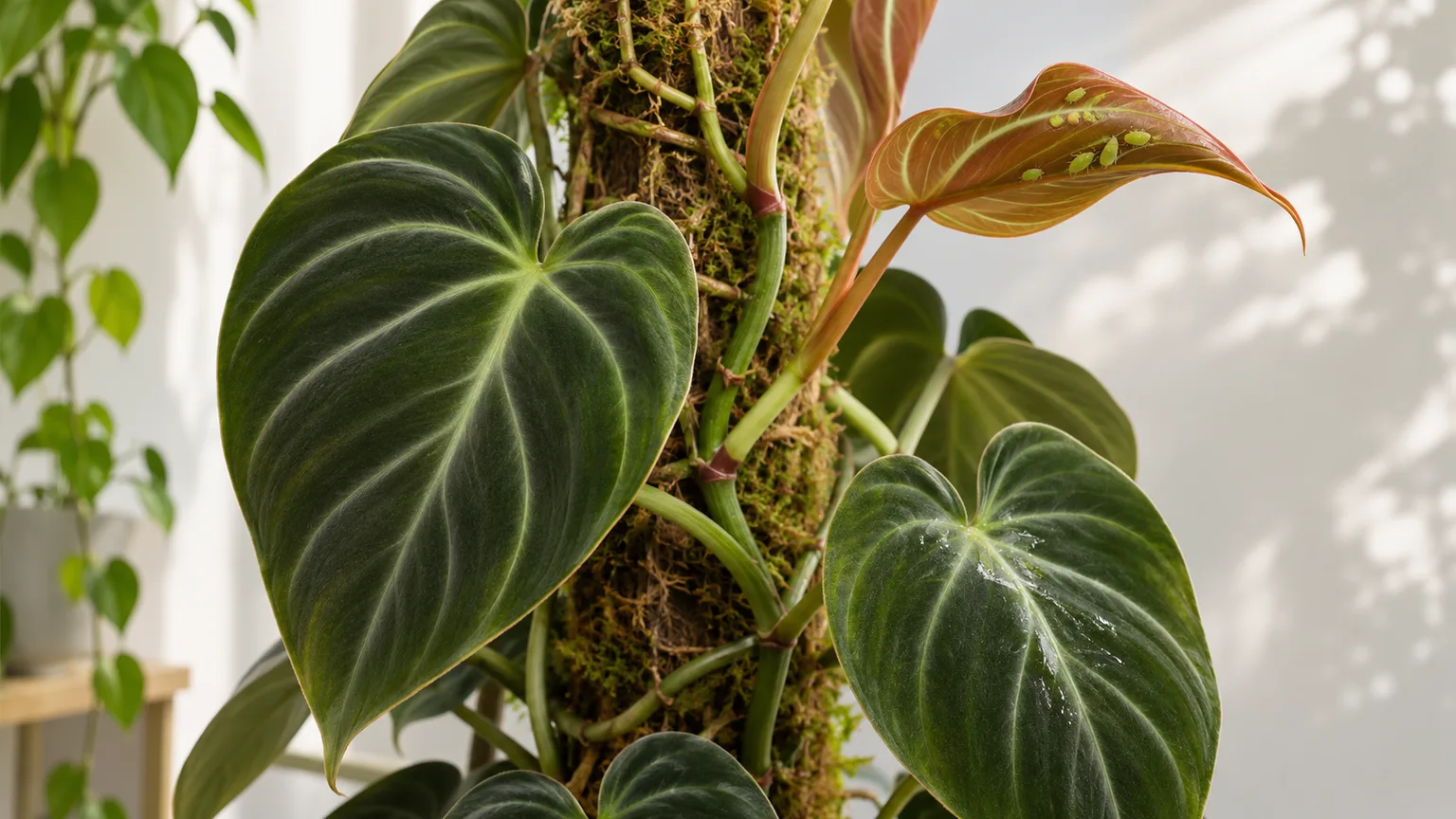
On Splendid, aphids almost always start at the top of the plant. Check the climbing tip first: you will find clusters of tiny pear-shaped insects, 1 to 7 mm long, in green, black, yellow, or pinkish tones, packed around the newest stem, flower-free buds, and the underside of the youngest leaves (aphid size and colour range).
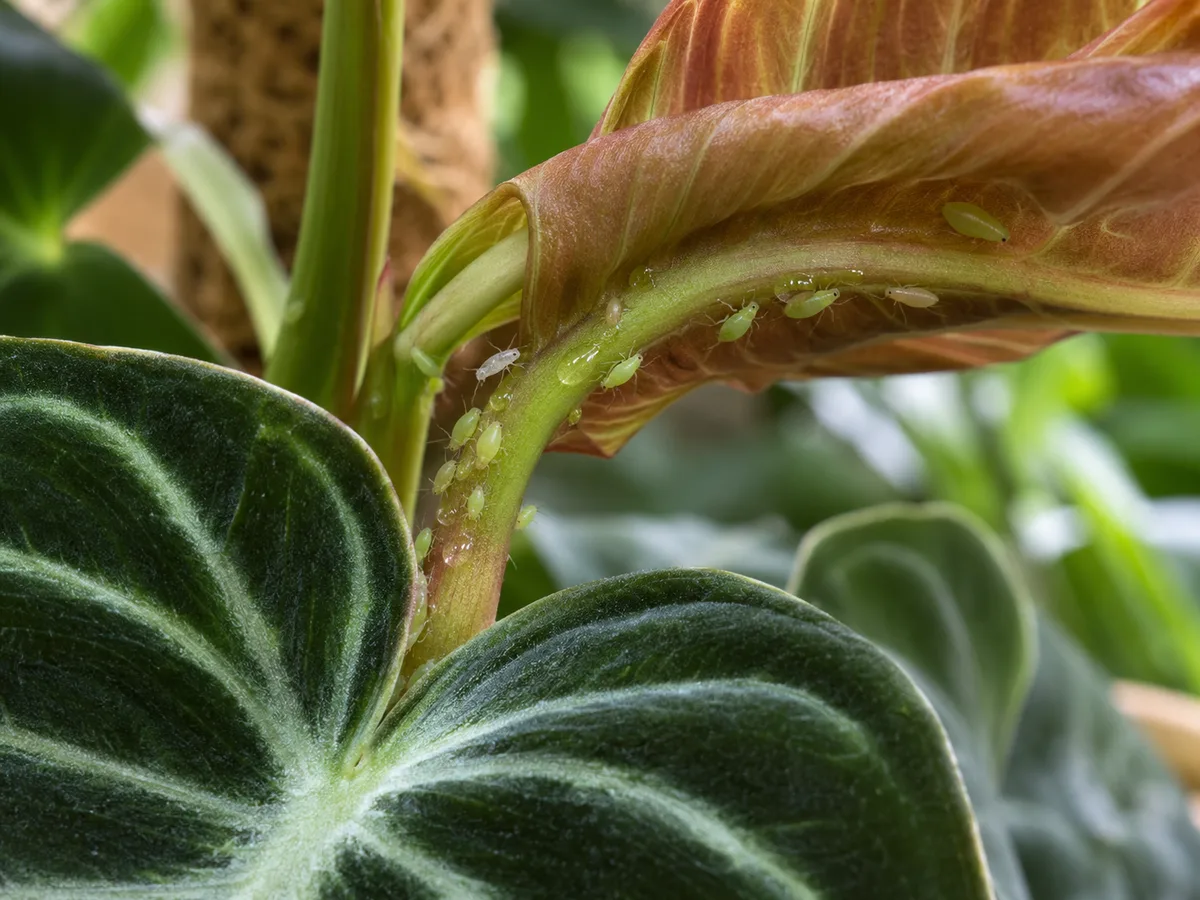
Aphids prefer soft new growth; honeydew and cast skins can appear on leaves below the colony.
The unfurling leaf is the second hiding place. Splendid pushes coppery new leaves from a cataphyll sheath, and aphids wedge themselves inside that furled spear where sprays cannot reach. Gently unroll your inspection routine: look inside the sheath, along the midrib of the half-open leaf, and at the node just below it.
Honeydew gives colonies away before you see the insects. Leaves below the tip feel tacky, and white cast skins collect on the velvet surface like dust. Left sitting, that sugary film grows black sooty moulds, which you will notice as a dark powdery coating on the broad lower leaves.
Damage shows in the new growth, not the old. Attacked leaves emerge small, puckered, or streaked, and a badly hit tip stalls entirely while older leaves stay glossy and normal. That top-down pattern is the signature that separates aphids from root or watering problems on this plant.
Why Splendid draws aphids
Splendid grows exactly the tissue aphids want: soft, nitrogen-rich new growth in warm, humid air. A vine pushing fresh coppery leaves at 60–80% humidity, as described in the Splendid overview, is a continuous buffet, and the moss pole junction keeps the microclimate around the tip damp and sheltered.
Weak or leggy growth invites heavier colonization. A Splendid stretching in dim light produces thin, slow-hardening leaves that aphids pierce easily; steady bright indirect light grows firmer tissue that resists them better. Heavy-handed feeding does the same in reverse: a flush of soft growth after overfertilizing is prime feeding ground, so keep Splendid on a light seasonal schedule.
New arrivals are the most common source. Fresh nursery stock, cuttings shared between collectors, and summer open-window airflow all deliver winged aphids straight to the tip. Ants matter too: where honeydew appears outdoors or in greenhouses, ants farm the colony and defend it from predators, so an ant trail up the pot deserves the same attention as the insects themselves.
How to confirm the diagnosis
Work top-down with a 10x loupe or phone macro lens. Start at the climbing tip, then the unfurling spear and its sheath, then the undersides of the two youngest open leaves. Live aphids move slowly when prodded and cluster shoulder-to-shoulder; their shed white skins do not move at all.
Run the honeydew test. Slide a finger across a lower leaf: sticky film plus black sooty dust underneath a clean-looking tip still means aphids above. Check the saucer and shelf too, since drips land below the colony before the insects are visible.
Rule out the two closest lookalikes. Thrips leave silvery rasped patches and tiny black specks on velvet leaves rather than clustered insects and stickiness. Spider mites make fine webbing at the tip and stippled bronzing, mostly in dry air. If you see clustered pear-shaped bodies plus honeydew, aphids are confirmed and you can treat without stacking three pest protocols at once.
First fix: isolate and rinse the tip
Move the plant away from other aroids the moment you confirm live aphids — winged adults drift to the next soft tip within a day. This one action matters more than any spray choice.
Next, rinse the colony off. Hold the vine sideways over a sink, run gentle lukewarm water over the climbing tip, inside the unfurling sheath, and across every leaf underside for a full minute. Water physically removes most of the colony, which is why a strong rinse comes before any spray.
Then dry the velvet properly. Shake excess water off, space the leaves so none rest against each other, and run a fan nearby until the foliage is dry. Velvet leaves that sit wet overnight in still air invite fungal spotting, so never rinse in the evening and walk away.
Step-by-step follow-up
Recheck the tip after two days. If crawlers reappear, apply a ready-made insecticidal soap, coating the tip, sheath interior, and undersides until wet, exactly per the label. One thorough application beats three misty ones.
Repeat on a seven-day rhythm. Soap kills on contact but leaves no residue, so eggs hatching later need a second and sometimes third pass. Alternate the third pass with neem oil if pressure persists; its residual effect suppresses recolonization between washes.
Prune only what is ruined. A fully puckered leaf that never flattened will not recover its shape — snip it at the petiole base once the colony is gone so the vine redirects energy to the tip. Keep the node intact, since Splendid resprouts from nodes, as noted in Clemson propagation guidance.
Velvet-leaf mistakes to avoid
Do not soak velvet foliage and leave it wet. Splendid’s pubescent leaves hold droplets far longer than glossy philodendrons, and that trapped moisture is what turns a pest rinse into a fungal problem. Rinse in the morning with airflow, every time.
Do not mix your own strong dish-soap concentrate. Detergents strip the leaf surface and burn velvet tissue; use a labeled insecticidal soap and patch-test one older leaf first. If that leaf spots within 48 hours, dilute further or switch products rather than spraying the prized new growth.
Do not fertilize, repot, or prune hard on treatment day. A stressed vine cannot use extra nitrogen, and tearing roots open while the tip is under attack stacks two recoveries at once. Hold feed until two consecutive new leaves emerge clean, and confirm your watering rhythm is back to wet-dry cycles before changing anything else.
Recovery timeline
Expect the tip to resume within one to two weeks of the last live aphid sighting. The truest signal is a fresh spear that opens full-sized with smooth coppery colour and clean undersides — that leaf formed after pressure ended.
Honeydew stops first, usually within days of the final rinse. Sooty mould does not wash off on its own, so wipe affected lower leaves with a damp cloth once; if no new stickiness appears, the colony is finished.
Give distorted leaves their verdict at three weeks. Leaves that stay puckered are permanent but harmless; leaves that yellow and drop were too damaged to keep. As long as each new leaf is bigger and cleaner than the last, the vine is recovering on schedule.
When to worry
Escalate fast if the climbing tip turns black, mushy, or stops producing new spears entirely — that means the meristem itself is damaged and the vine may need to be cut back to the last healthy node. Treat spreading sooty mould across multiple leaves the same way, since blocked light weakens the whole plant.
A colony that survives three properly applied soap rounds suggests a reservoir you have missed: check the moss pole core, the potting-mix surface, and every neighbouring plant. Reinfestation from an untreated neighbour is the most common reason indoor aphid battles drag on for months.
How to prevent it next time
Quarantine every new aroid for two to three weeks before it joins the collection, tip-check included. Most indoor aphid outbreaks trace to one unchecked newcomer, and isolation is cheaper than treating five vines.
Make the tip a weekly habit. Glance at the climbing tip, sheath, and youngest undersides each watering day; a five-insect cluster rinsed today never becomes a five-leaf infestation. Good airflow around the pole helps too, drying honeydew traces and making the tip less inviting.
Keep growth firm rather than forced. Steady light, a chunky mix that drains as described in the soil guide, and modest feeding grow leaves that harden quickly. Soft, overfed tips in still, dim air are what turn a stray winged aphid into a colony.
Related Philodendron Splendid guides
Keep these in the watering-day rotation: the Splendid overview for the full care picture behind pest pressure, the watering guide when growth stalls and you need to separate pest damage from root stress, the light guide for firming up leggy tips, and the soil guide if the mix stays soggy and weakens the vine. Use this aphids page when you see clustered insects plus honeydew; reach for the care guides when new growth is misshapen but no insects or stickiness turn up.
Related tool
Use the Pest Identifier Tool to narrow causes for aphids on this plant before changing multiple variables at once.