Fungus Gnats on Philodendron Splendid: Causes, Checks &
Quick answer
Fungus gnats on Philodendron Splendid mean the top of the mix — and often the moss pole — is staying wet enough for larvae. First fix: let the top 3–5 cm of mix dry fully before watering again, and set a yellow sticky trap to confirm adults. Follow with a Bti soil drench if flies persist past two weeks.
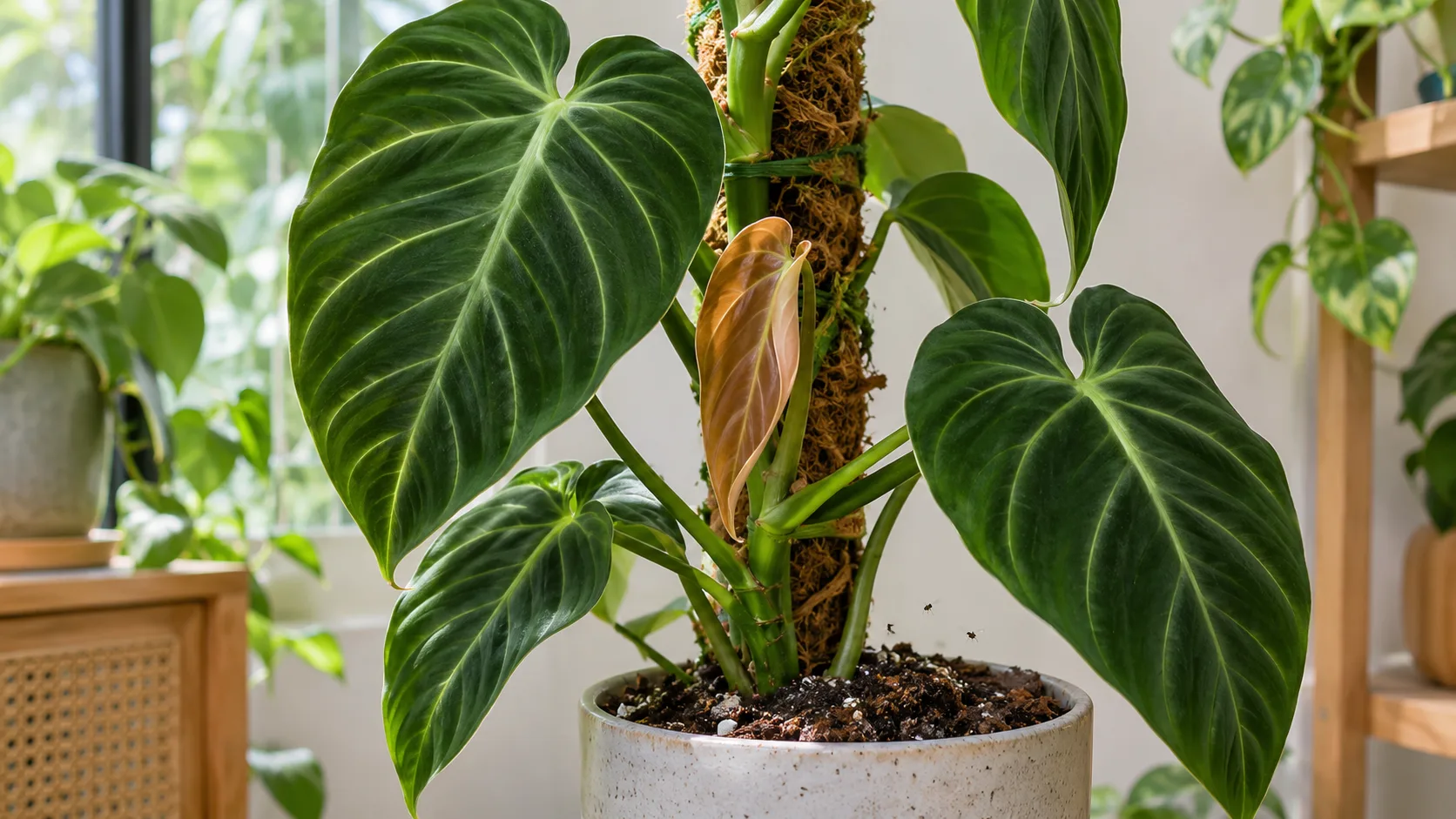
Fungus Gnats on Philodendron Splendid: Causes, Checks & Fixes
This guide covers fungus gnats on Philodendron Splendid. See also the general Fungus Gnats guide, watering, and light pages for this plant.
Fungus Gnats on Philodendron Splendid: Causes, Checks & Fixes
Quick answer
Tiny black flies drifting up from your Splendid’s pot are fungus gnats breeding in damp mix, not a leaf disease. Let the top 3–5 cm of mix dry fully before you water again, tip out any saucer water, and set a yellow sticky trap at the pot rim to confirm adults. If flies are still rising after two weeks of proper dry-down, apply a Bti (Bacillus thuringiensis israelensis) soil drench to kill the larvae. For how these flies live and breed in general, see our fungus gnats hub. On Splendid, the pattern almost always traces back to a wet surface layer plus a constantly damp moss pole.
What fungus gnats look like on Philodendron Splendid
Adults are delicate black flies about an eighth of an inch long with long legs, often noticed hovering just above the mix or resting on the velvet leaves after watering. The larvae live in the growing medium rather than on the foliage — translucent wormlike grubs with black head capsules that feed on fungi, algae, and fine roots in the top few inches of mix (Colorado State University Extension). On Splendid you will rarely see leaf damage first; instead the climbing tip slows, new copper leaves unfurl smaller than expected, and the plant looks thirsty even though the mix is moist — a sign larvae have been pruning the fine feeder roots.
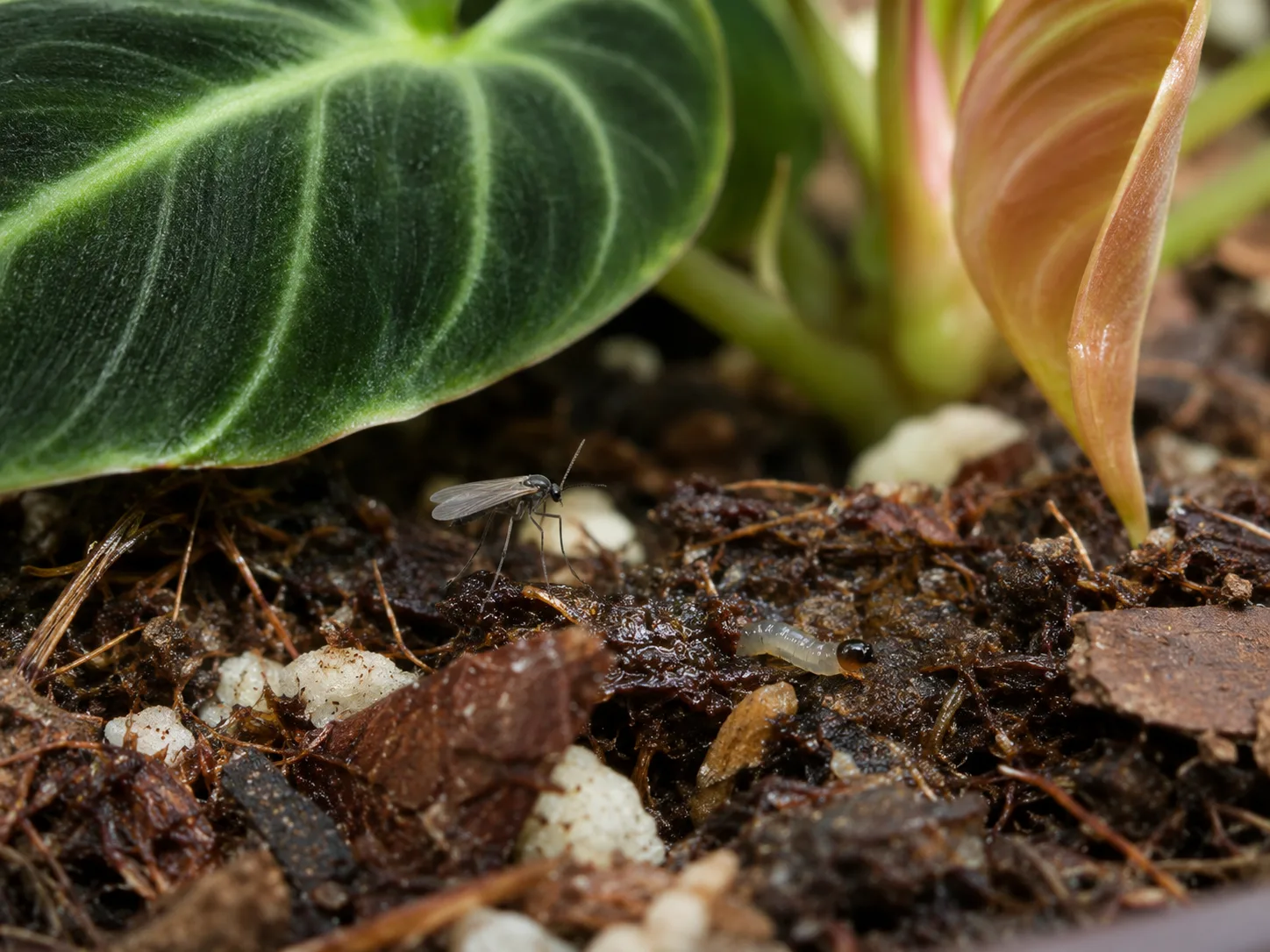
Adults hover near wet mix while translucent larvae develop in its upper layer.
Because Splendid’s leaves are dark and velvety, adults resting on them are easy to miss. Tap the pot gently and watch the surface: a puff of tiny flies rising together is the classic tell.
Why Splendid’s moss pole and bark mix invite gnats
Splendid is a verrucosum × melanochrysum velvet climber that wants 60–80% humidity and a moist moss pole for its aerial roots — and that exact setup is prime gnat habitat. The chunky aroid mix of potting soil, perlite, and orchid bark stays airy when fresh, but its bark top layer holds little pockets of moisture and decaying organic matter where fungi grow and larvae feed. Standard pole advice says keep the moss damp so aerial roots attach, yet a pole that is soaked daily keeps the whole column humid and gives egg-laying females a second damp nursery above the pot.
The watering guidance for this plant — soak only when the top 3–5 cm dries — exists partly for this reason. When Splendid sits in weaker light than it prefers, the pot stays heavy for many extra days, and each premature watering resets the surface moisture that gnat eggs need. One soggy stretch in autumn, when growth slows but watering has not, is enough to start a colony that then persists for weeks.
Where to look on a climbing velvet philodendron
Start at the soil line, not the leaves. Part the bark chunks at the surface and look for fine silvery slime trails, white specks of fungal growth, or threadlike larvae just under the top dressing. Check the base of the moss pole where it meets the mix — that junction stays wettest and often hides the densest larvae. Then inspect the pole itself: algae or green film on constantly wet sphagnum signals conditions larvae love.
Lift the nursery pot out of any cachepot and check for standing water, sour smell, or roots circling in sludge at the drainage holes. Finally, look at the climbing tip: a healthy Splendid pushes firm copper new growth, while a gnat-stressed one stalls with small, pale unfurlings. Firm tip growth with a few flies means a light, early infestation; a stalled tip with many flies means larvae have been feeding for at least one full generation.
How to confirm it’s fungus gnats
Run this sequence before treating:
- Disturbance test. Tap the pot rim and watch for 10 seconds. Gnats rise, hover, and resettle; shore flies behave similarly but breed in algae, so continue to the next checks.
- Trap test. Push a yellow sticky trap into the mix at canopy height and leave it 48 hours. Adults are strongly attracted to yellow, and a catch of small dark flies confirms the diagnosis (UC IPM).
- Potato-slice test. Lay a peeled raw potato chunk cut-side down on the mix for two days, then lift and check the underside with a lens for translucent larvae with dark heads. This trick both monitors and pulls some larvae away from roots (UC IPM).
- Moisture reading. Press a finger 3–5 cm deep or lift the pot. Damp mix plus trapped adults equals a breeding colony; dry mix with a few strays may just be visitors from a neighbouring plant.
Rule out lookalikes: fruit flies hover around kitchens and drains rather than pots, and thrips leave silvered leaf scars. Wilting with wet mix and flies points to gnat larvae or the overwatered conditions larvae thrive in — either way, drying comes first. Full background on the insect’s habits is in the hub linked above.
The first fix: dry the top layer
Do one thing first: break the breeding cycle by letting the surface dry. Hold all watering until the top 3–5 cm of mix feels dry and the pot is noticeably lighter, then water deeply until it drains freely and empty the saucer within 30 minutes. Larvae develop in the moist upper layer of the medium, so a proper dry-down makes the pot inhospitable to eggs and young larvae (Colorado State University Extension). Adults live only about a week to ten days, and the whole egg-to-adult cycle can run as short as 20 days in warm rooms (University of Maine Cooperative Extension), so two to three disciplined dry-down cycles collapse most colonies without any spray.
While drying, mist the moss pole lightly in the morning only — enough for the aerial roots, not a soaking that drips into the pot. Keep the plant in its normal bright indirect spot; moving it to dimmer rooms to “rest” slows drying and backfires. Follow the pot-weight habit described in the Splendid watering guide rather than any calendar.
Follow-up: traps and Bti soil drench
If flies still rise after two weeks of correct dry-downs, escalate in this order:
- Mass-trap the adults. Keep yellow sticky cards at the pot rim and one tucked under the leaf canopy. Trapping egg-laying females cuts the next larval generation and shows whether numbers are falling week to week.
- Drench the larvae with Bti. Mix a Bacillus thuringiensis israelensis product (Mosquito Bits or Gnatrol) with water per the label and apply as a soil drench. Bti is a naturally occurring bacterium toxic only to fly larvae, and potted-media infestations typically need repeat applications about five days apart because it does not persist indoors (UC IPM). Practical growers report good results sprinkling or soaking the granules per label and re-treating on schedule (Ohio Tropics).
- Consider nematodes for stubborn cases. Steinernema feltiae nematodes, mixed with water and applied as a drench, can give longer-lived larval control than Bti alone (UC IPM). These are live, perishable products — order fresh and apply immediately.
Reserve full repotting for pots where the mix has collapsed into sour sludge; unpotting a climbing Splendid tears aerial-root attachments and sets the plant back far more than gnats do. If you must repot, shake off only the loose old mix, refresh with the chunky bark blend from the Splendid soil guide, and re-secure the vine to its pole the same day.
Mistakes to avoid
- Fogging the leaves for gnats. Adults barely feed and larvae live underground, so leaf sprays miss the problem entirely while coating velvet foliage that hates residue.
- Keeping the pole soggy “for humidity.” Room humidity feeds the leaves; a dripping pole feeds the gnats. Dampen the pole, don’t saturate it.
- Watering on schedule through winter. Splendid drinks far less in cool, dim months. Every calendar watering into already-damp mix extends the colony’s lease.
- Top-dressing with dense compost. Fine, moisture-holding top layers stay wet longest. Keep the chunky bark surface open so air reaches the top centimetres.
- Fertilizing a stressed, fly-ridden plant. Extra salts in damaged roots burn new feeders. Resume the light half-strength routine from the Splendid overview only once fresh tip growth looks clean.
Recovery timeline
Week one of dry-downs usually cuts visible flies sharply as adults die without laying new eggs. Weeks two to four are the larval tail: a few flies may still emerge from pupae already in the mix, but sticky-trap counts should fall steadily. Judge recovery by the climbing tip — firm copper new leaves unfurling to full size means the root zone is functioning again, usually within three to six weeks for an established vine.
Cuttings and juvenile plants recover slower because larvae can destroy a large share of a small root system, and heavy larval feeding can stunt or even kill seedlings and young plants (Gardening Know How). If no new growth appears after six weeks of correct care, unpot and inspect: white firm roots mean patience, while brown mushy ones mean rot has joined the gnats and the mix needs replacing.
How to prevent them next time
Water by dryness, not by day: every soak should follow a 3–5 cm dry check and end with an emptied saucer, since pots without drainage and perched water are classic gnat nurseries (Gardening Know How). Keep Splendid where bright indirect light dries the pot on schedule — dim corners keep mix wet and invite repeat colonies. Refresh decomposed bark yearly so the surface drains fast, and quarantine new plants for two to three weeks with a sticky trap in each pot before they join the aroid shelf.
One female can seed hundreds of eggs in the top few inches of mix within days, so a single neglected wet spell can restart everything (Gardening Know How). A permanent trap in the Splendid pot costs nothing and warns you before the next cloud forms.
When to use this page vs other Splendid guides
Use this page when tiny flies rise from the pot and the mix stays damp — the fix is drying plus larval control. If leaves yellow from the base with no flies and a heavy pot, work through the watering routine first. White fuzzy growth on the bark surface without flies belongs to a soil-mould routine (same dry-down, no Bti needed). Stuck, crinkled new copper leaves with no insects at all point to dry air rather than pests, so check humidity and pole moisture before treating anything.
Related Philodendron Splendid guides
- Philodendron Splendid overview — feeding, growth habit, and when this hybrid wants support versus rest.
- Splendid watering guide — the pot-weight and 3–5 cm dry check that prevents most gnat colonies.
- Splendid soil guide — chunky bark mix ratios and when decomposed mix needs replacing.
- Splendid light guide — bright indirect levels that keep the pot drying on schedule.
Related tool
Use the Pest Identifier to confirm fungus gnats on this plant before changing multiple variables at once.