Low Humidity on Philodendron Splendid: Causes, Checks &
Quick answer
Low humidity on Philodendron Splendid shows as crispy brown leaf edges and new velvet leaves that stall or tear while unfurling. First step: raise the air around the plant above 60% RH with a humidifier plus gentle airflow, then judge recovery by the next new leaf — damaged edges will not heal.
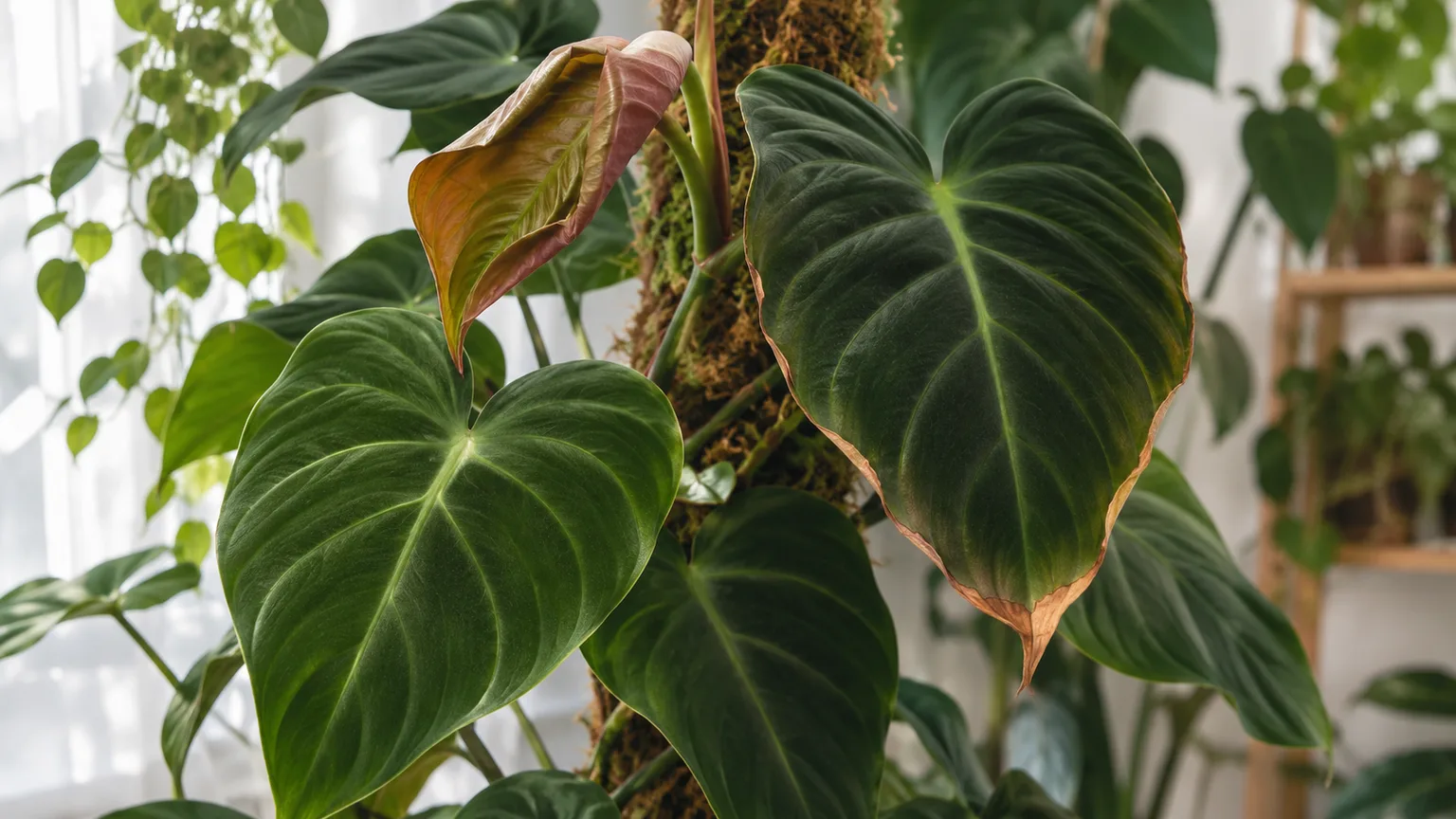
Low Humidity on Philodendron Splendid: Causes, Checks & Fixes
This guide covers low humidity on Philodendron Splendid. See also the general Low Humidity guide, watering, and light pages for this plant.
Low Humidity on Philodendron Splendid: Causes, Checks & Fixes
Quick answer
Low humidity on Philodendron Splendid shows as crispy brown leaf edges and new velvet leaves that stall, stick, or tear while unfurling. First step: raise the air around the plant above 60% RH with a humidifier plus gentle airflow, then judge recovery by the next new leaf — damaged edges will not heal.
For how dry air stresses houseplants in general, see our low-humidity guide. On Splendid, the pattern is unusually harsh because its velvet verrucosum-inherited leaves lose water fast and its unfurling new growth physically jams in dry air.
What low humidity looks like on Philodendron Splendid
On this hybrid, dry air attacks the two most distinctive tissues first: the velvet leaf margins and the emerging spear. Established leaves develop thin, papery brown edges and tips while the center stays dark green and firm. New leaves are the clearer tell — they emerge slowly, the sheath clings instead of releasing, and the blade can crease or tear as it forces its way out. Small, crispy brown patches may also appear across the blade, which growers often mistake for sunburn; spots that stay small and rust-colored rather than crispy warrant a closer look for fungal leaf spot instead.
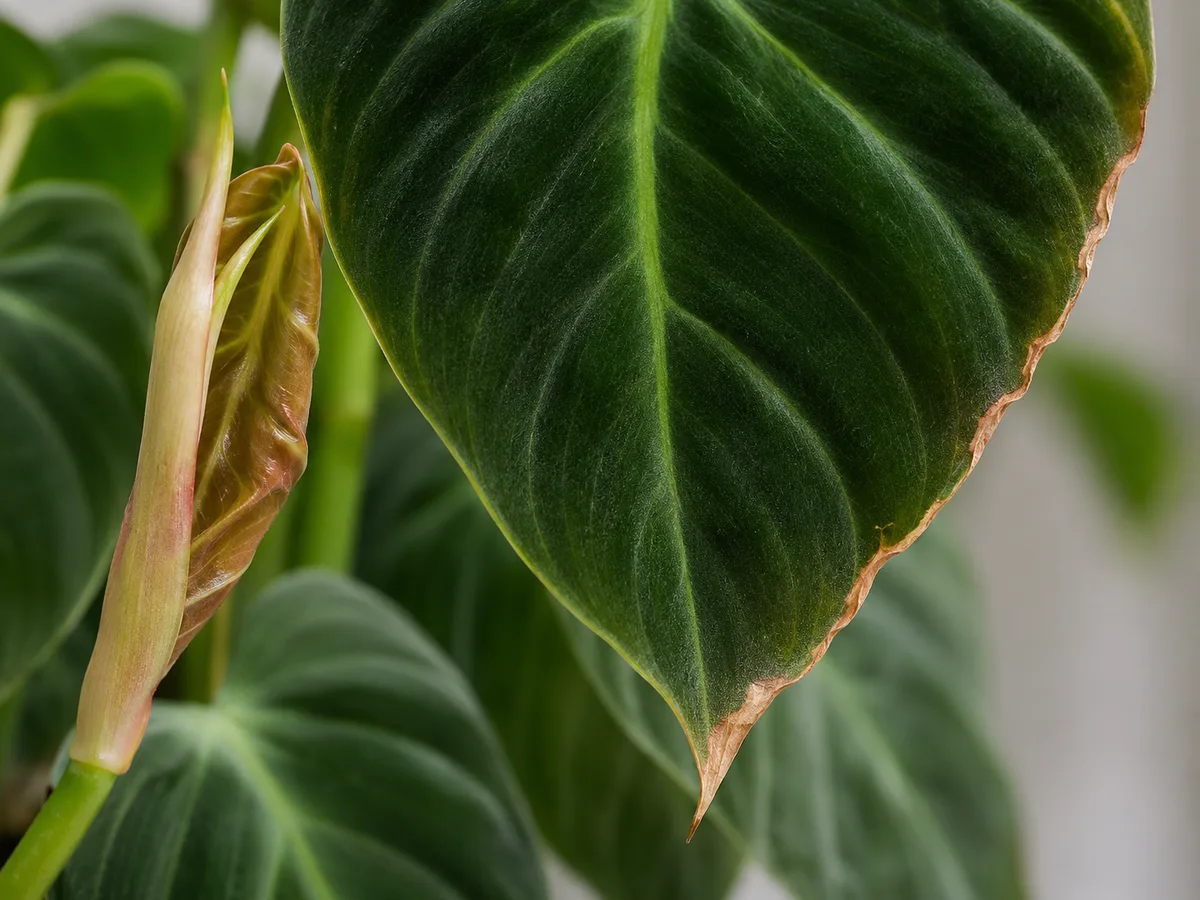
Dry-air stress often marks the velvet leaf margins and slows a new leaf as it unfurls.
The key distinction from underwatering is that the pot behaves normally. The top few centimeters dry on schedule, the pot has reasonable weight, and older leaves stay plump while only margins and new growth suffer. If whole leaves yellow, wilt, and collapse, rule out watering stress before blaming the air.
Why Splendid suffers faster than most philodendrons
Splendid is a verrucosum × melanochrysum cross, and it inherits the verrucosum parent’s demand for moist air — that parent prefers higher atmospheric humidity than many others in the genus and is even grown in terrariums for that reason (RHS verrucosum details). Velvet-textured leaves transpire readily, so when room air drops toward 30–40% in heated or air-conditioned homes, the leaf margins desiccate while roots are still delivering water normally. The RHS notes that low air humidity makes plants transpire quickly and risk damage when leaves lose water faster than roots can replace it (RHS growing guide).
Three household setups cause most cases. Winter heating is the classic one: radiators and forced air can halve indoor RH just as the plant’s unfurling slows. Summer air-conditioning plus a bright window creates a second trap — cool dry air on one side, heat buildup on the glass on the other. The third is the dry moss pole: a pole that is never moistened holds no local humidity around the climbing stem, so aerial roots stay shriveled and new leaves size down even when the room reads acceptably. Splendid wants roughly 60–80% humidity for clean unfurling, and growth visibly improves above 60% as long as air stays below about 80%, where fungal problems begin (Splendid care).
How to confirm the cause
Work in this order so you do not misread water stress as air stress.
- Read the newest leaf. A spear stuck in its sheath, a half-opened blade with a torn edge, or a leaf that has not moved in two weeks points to dry air. Healthy new growth in normal air emerges coppery and smooth.
- Check margins versus whole leaves. Crisping confined to edges and tips with firm green centers fits humidity. Soft, limp, or yellowing whole leaves fit watering or root problems — unpot and inspect if you see that.
- Measure at leaf level. Set a hygrometer beside the foliage for a day, including when heating or AC runs. Sustained readings under 50% alongside edge crisping confirm the diagnosis. Splendid is happiest at 60–70% (Splendid care).
- Map the microclimate. Note distance to radiators, vents, and sun-facing glass. A plant two feet from a heat vent can sit in far drier air than the room average suggests.
- Rule out the pole and roots. Squeeze the moss pole — bone-dry pole plus shriveled aerial roots mean the climbing zone is drier than the room. Lift the nursery pot to confirm normal weight and check that drainage is open, since wet feet plus dry air produce confusing mixed symptoms.
The first fix to try
First, put a humidifier within a few feet of the plant and hold the air above 60% RH, with a small fan or open-door airflow keeping the air gently moving. That single change — not a bundle of repotting, fertilizing, and pruning — is what the next leaf needs. Top up or mist the moss pole lightly at the same time so the climbing stem sits in a humid column, but keep water off the velvet blades themselves.
Do this before anything else because every other correction depends on it: fertilizer cannot fix desiccated margins, and repotting a plant whose only problem is dry air just adds root damage. Clemson notes that philodendrons prefer high humidity for best growth even though they tolerate ordinary home air (Clemson HGIC) — Splendid sits firmly on the “needs the humidity” end of that tolerance.
Step-by-step recovery
- Set the humidifier and hygrometer. Aim for 60–70% at leaf level. Refill daily at first; winter air drinks water fast.
- Free stuck sheaths gently. If a new leaf is trapped, raise local humidity and wait a day or two before touching it. Only then, with clean damp fingers, ease the sheath — never yank a dry sheath, which tears the blade.
- Moisten the pole, not the leaves. Pour or spray water into the moss pole so it is damp but not dripping. Skip routine misting of velvet foliage: droplets sit on the texture and invite spotting when airflow is weak, and NC State advises watering philodendrons at the base while keeping water off the leaves (NC State Extension).
- Trim only what is dead. Snip fully brown, papery margins with clean scissors, leaving a thin brown rim rather than cutting into green tissue. Leave partly damaged leaves attached — they still feed the plant.
- Hold steady for one leaf cycle. Do not move, repot, or feed the plant this week. Let the next emerging leaf be the test; one clean unfurl confirms the fix.
Recovery timeline
Damaged margins never re-green, so reset expectations: success looks like arrested spread plus one clean new leaf. Within one to two weeks of steady 60%+ humidity, emerging spears should slide out faster and open without sticking. A fully clean new blade typically takes three to six weeks depending on season and light. If two consecutive new leaves still stall despite verified humidity, suspect compounding stress — check the mix for compaction and inspect velvet undersides for spider mites, which exploit stressed aroids.
Lookalike symptoms
| What you see | More likely | How to tell apart |
|---|---|---|
| Crispy brown edges, firm green centers, stuck new leaves | Low humidity (this page) | Soil and roots normal; hygrometer reads low |
| Whole leaves limp then yellow; light pot | Underwatering | Entire blade softens; pot very light; see the watering guide |
| Yellow lower leaves; heavy pot, sour mix | Overwatering / root stress | Mix stays wet for days; stems may soften at base |
| Bleached patches facing the glass | Too much direct sun | Damage on the window side only; velvet looks washed out |
| Small rust-colored spots that spread in still damp air | Fungal leaf spot | Spots multiply after leaves stay wet; keep foliage dry and improve airflow |
Mistakes to avoid
- Misting velvet leaves as the fix. It raises humidity for minutes and leaves droplets that mark the texture and encourage fungal spots in still air. Use a humidifier or pebble tray instead — both are established ways to lift local humidity (RHS growing guide).
- Sealing the plant in still, soggy air. Pushing past ~80% without ventilation trades crisped edges for leaf-spot disease. Humidity plus gentle airflow is the combination that works (Splendid care).
- Fertilizing stressed foliage. A plant stalled by dry air cannot use extra salts; feeding now risks burn on already damaged margins. Resume light feeding only once clean new growth appears.
- Repotting on day one. Dry air is an atmosphere problem, not a root problem. Unpot only if you found heavy, sour mix or soft roots during confirmation.
- Ripping stuck sheaths dry. A torn unfurling leaf never repairs itself. Humidify first, assist only when damp and gently.
Philodendron Splendid care cross-check
Dry air rarely acts alone, so verify the surrounding conditions that decide how much humidity the plant actually needs. Bright indirect light keeps unfurling vigorous — weak light slows new leaves and makes humidity damage look worse, so compare against the light guide. Keep temperatures in the 18–27°C comfort zone and never below about 13–15°C, since cold plus damp air is a fast route to decline (RHS growing guide). Confirm the chunky aroid mix still drains freely per the soil guide; humid air plus a compacted pot is how stem rot starts. Finally, remember Splendid is toxic — its calcium-oxalate sap irritates skin and mouths, so wear gloves when handling damaged foliage and keep the plant away from pets and children (RHS genus guide).
How to prevent it next time
Make humidity structural rather than reactive. Keep the humidifier on a humidistat set near 65% through the heating season, and group Splendid with other tropicals so the cluster buffers dry spells. Water the moss pole on the same rhythm you check the pot — a consistently damp pole keeps the climbing zone humid where new leaves form. A pebble tray under the pot adds a small steady lift and costs nothing (RHS growing guide). Recheck with the hygrometer whenever seasons change or the plant moves rooms, and revisit the overview guide each spring to align watering, feeding, and support with active growth.
When to worry
Most cases are cosmetic and resolve with steadier air. Escalate if new leaves repeatedly emerge deformed or rot inside the sheath, if crispy damage spreads to stems or the growth tip, or if webbing and stippling appear on velvet undersides — spider mites move in fast on dry-stressed aroids. If the growth tip itself blackens and no new spear forms for two months in good conditions, the climbing stem may need cutting back to a healthy node; cuttings root readily from nodes in warm, humid air (Clemson HGIC).
Related Philodendron Splendid guides
Dry-air damage overlaps with watering and light stress, so use these when the pattern does not fit this page: the watering guide for limp or yellowing leaves and pot-weight checks, the light guide for bleached or leggy growth, and the soil guide for heavy mix and drainage problems. The overview guide ties the full routine together.
Related tool
Use the Humidity Calculator to narrow causes for low humidity on this plant before changing multiple variables at once.