Aphids on Philodendron White Princess: Checks and Fixes
Quick answer
Aphids on Philodendron White Princess cluster on soft new growth, unfurling spears, and pink petioles, leaving sticky honeydew and curled young leaves. First step: isolate the plant and rinse every unfurling leaf and leaf underside with a firm stream of water before applying any spray.
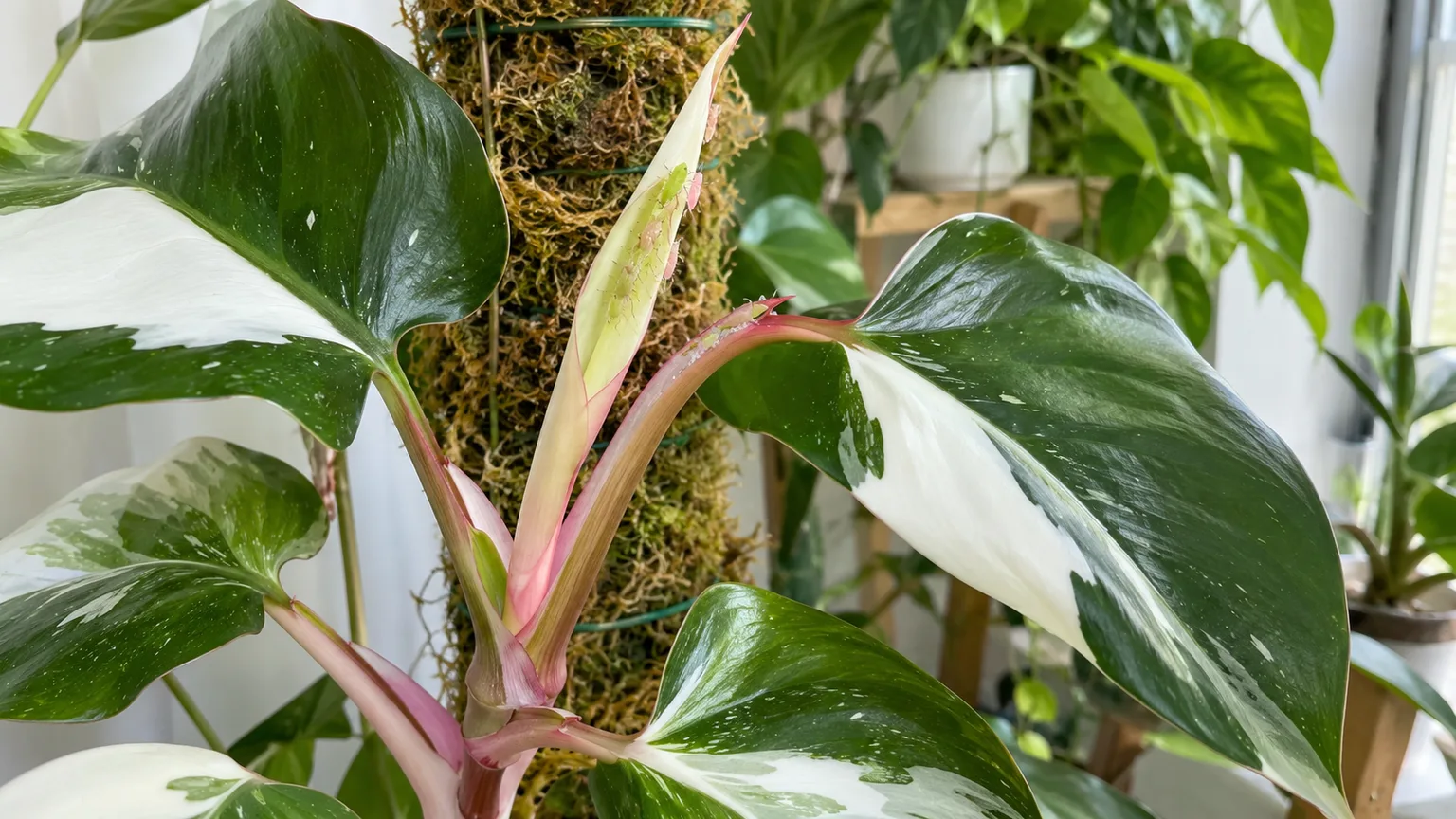
Aphids on Philodendron White Princess: Checks and Fixes
This guide covers aphids on Philodendron White Princess. See also the general Aphids guide, watering, and light pages for this plant.
Aphids on Philodendron White Princess: Checks and Fixes
Quick answer
Aphids on Philodendron White Princess show up as clusters of tiny soft insects on the softest tissue: the unfurling spear, young petioles, and the undersides of new leaves. Feeding leaves sticky honeydew and curled young growth, and heavy colonies can stall the growing tip so every subsequent leaf emerges small.
First step: isolate the plant and rinse every unfurling leaf, young petiole, and leaf underside with a firm stream of lukewarm water. This single pass removes most of the colony without chemicals and tells you how much of the problem is live insects versus old residue. Anything else, soap, neem, or pruning, comes after you confirm what survived the rinse.
What aphids look like on White Princess
Aphids are soft-bodied, pear-shaped insects with paired cornicles at the rear, usually 1 to 3 mm long. On indoor philodendrons they are most often pale green, white, or light pink, and they pack shoulder to shoulder rather than scattering singly. Nymphs look like smaller copies of the adults, and you may see shed white skins stuck in honeydew near the colony.
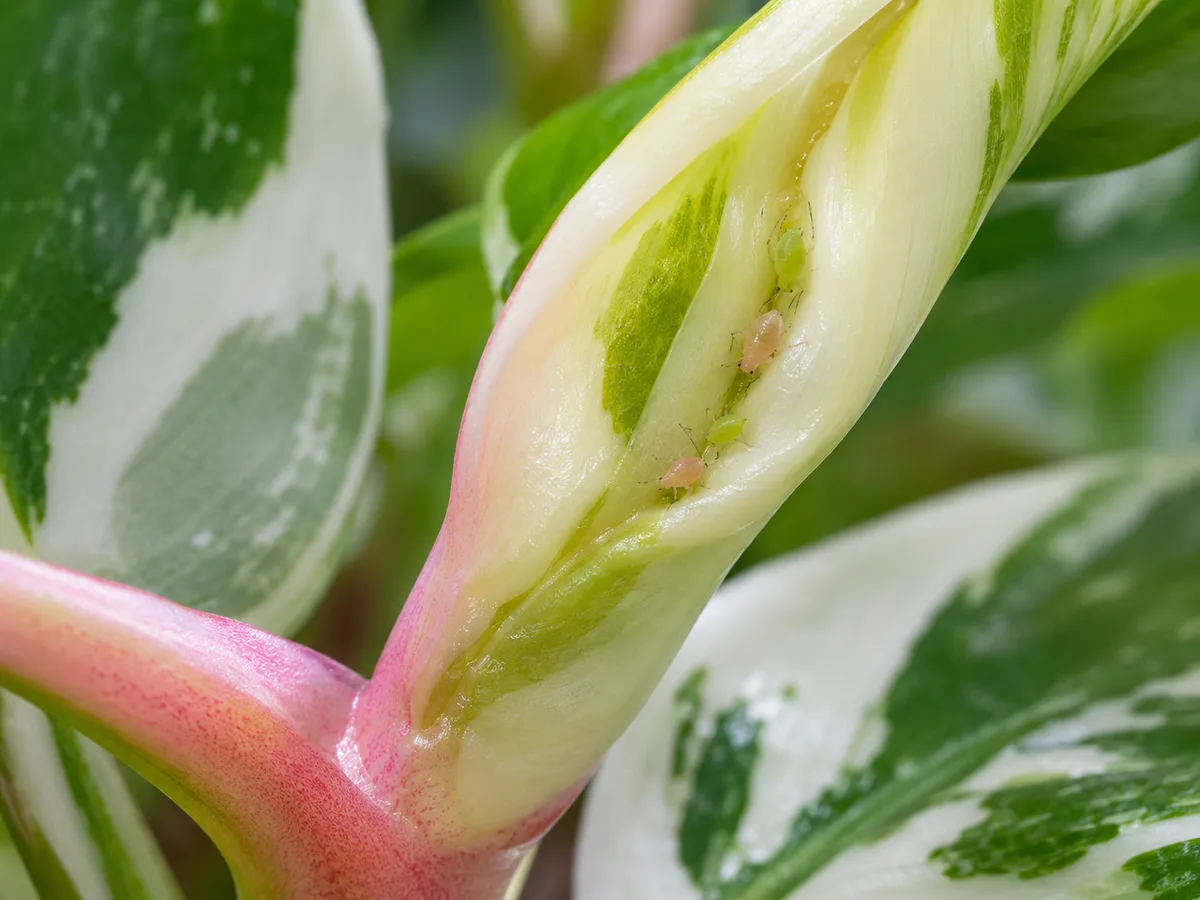
Aphids gather on soft new tissue and pink petioles, where honeydew can make the surface look glossy.
On White Princess, three things make the pattern distinctive. First, pale aphids nearly disappear against white variegated sectors, so a colony on a half-moon leaf can look like slightly raised leaf texture until you lean in with a magnifier. Second, feeding damage shows first in the newest tissue: spears that stick halfway, young blades that unfurl narrow or rippled, and pink petioles with a glossy sticky film. Third, because this plant climbs, honeydew drips down onto the broad mature leaves below, where sooty mold grows on the sugary deposit as a black film that worried owners sometimes mistake for a separate leaf disease.
Where aphids hide on White Princess: spears, pink petioles, and pole nodes
Generic advice says to check leaf undersides. On this plant, that misses the main harborages. Work this order:
- Inside the unfurling spear. Gently separate the newest rolled leaf and look down the seam. Aphids wedge where the tissue is softest and most sheltered, and a colonized spear explains a run of distorted leaves in a row.
- Along the pink petioles near the crown. The grooved upper side of each young petiole collects honeydew and shelters nymphs. Sticky fingers after handling the crown are a reliable early clue.
- At nodes pressed against the moss pole. Stems trained up a moss pole hold humidity and contact points where crawlers settle. Peel the stem gently away from the pole and inspect each node and aerial-root nub.
- Undersides of the two youngest expanded leaves. Older, hardened leaves are rarely the headquarters, but they catch dripping honeydew, so a sticky mature leaf points you upward to the real colony.
This climbing check matters because White Princess keeps producing vulnerable tissue at one growing tip. Miss the spear and you will rinse mature leaves repeatedly while the colony keeps seeding each new blade.
Why white variegation makes early colonies easy to miss
White Princess carries white sectoral variegation on green leaves with pink accents on green stems, and pale tissue photosynthesizes poorly, so the plant already grows more slowly than a plain green philodendron. That creates two aphid-specific problems.
First, camouflage. White and pale-green aphids plus their white shed skins read as variegation texture on white sectors. Get in the habit of touching suspect patches: variegation is flat and dry, while aphids are slightly raised, soft, and often paired with sticky residue.
Second, slow replacement. A fast green pothos outgrows minor tip damage in weeks, but White Princess replaces chewed spears slowly, so a colony that sits on the tip for a month costs a disproportionate share of the season’s growth. Early detection on this plant is not fussiness; it matches the plant’s real replacement speed described in the Philodendron White Princess overview.
Bright indirect light keeps variegation balanced, but it also means white sectors scorch easily once coated. Honeydew plus dust plus strong sun through glass can mark pale tissue even after the insects are gone, another reason to wash residue off white areas promptly rather than leaving cleanup for later.
Why White Princess gets aphids
Aphids do not appear from wet soil or bad luck. They arrive and then thrive on soft growth:
- New plants without quarantine. Most indoor infestations hitchhike on a recent addition. Aphids bear live young and multiply without mating through the warm season, so a few founders on a new plant become a visible colony within weeks.
- Soft, overfed new growth. Heavy or frequent feeding pushes tender nitrogen-rich tissue that sap feeders prefer. If your plant flushed a run of large soft leaves right before the outbreak, review the schedule in the White Princess fertilizer guide rather than feeding more to help it recover.
- Crowded, touching foliage. Leaves pressed against neighboring plants or a constantly damp pole give wingless crawlers easy bridges. White Princess trained tightly up a soggy pole with no airflow is the classic setup for spread.
- Warm indoor conditions with no predators. Outdoor aphid numbers are checked by weather and beneficial insects; a warm living room has neither, so indoor colonies persist until the grower intervenes.
For general aphid biology and outdoor control context, see our aphid guide. On White Princess, the story is almost always new-plant introduction plus soft tip growth, not a soil or watering failure.
How to confirm the cause
Before treating, separate live aphids from lookalikes and old residue:
- Find the insects themselves. Part the spear seam and check petiole grooves with a magnifier. Live aphids have legs, antennae, and slow movement when prodded; shed skins are hollow, dry, and motionless.
- Feel for honeydew. Sticky gloss on young petioles, the pole, or leaves below the tip confirms active sap feeding, not just dust.
- Read the young growth. Aphid feeding twists and stunts tissue as it expands, so damage tracks the leaves that developed during the infestation. Uniform yellowing of the oldest lower leaves alone points toward watering or age, covered in the White Princess watering guide, not pests.
- Watch for ants. Ants farming honeydew around the pot or pole strongly supports an active colony rather than a dead one.
- Scope the collection. Check plants that touched this one and any plant added in the last month. A second small colony on a neighbor confirms you need whole-shelf quarantine, not a single-plant fix.
Lookalikes to rule out: mealybugs leave distinct white cottony wax in axils rather than exposed clusters of pear-shaped insects; spider mites leave fine stippling plus silk on leaf undersides, favoring dry air; thrips leave silvery rasp scars and black frass specks rather than sticky honeydew; and edema or fertilizer residue feels crusty, not sticky, and has no insects under magnification.
The first fix for White Princess
Isolate the plant and rinse the entire crown with a firm stream of lukewarm water, inside the spear seam included.
Move the plant to a sink, shower, or balcony away from the collection. Tilt the pot so the stream hits foliage, not the mix, and wash the spear seam, both sides of the two youngest leaves, every young petiole, and the stem section against the pole. Support each leaf with your free hand so pressure does not crease pale tissue. A plain water rinse knocks most aphids off houseplants and is the correct opener because it removes insects, honeydew, and shed skins in one pass with zero chemical stress on variegated leaves.
Let the crown air-dry in bright indirect light, not harsh direct sun through glass. Recheck the spear in two days: clean expanding tissue with no new stickiness means the rinse may have been enough for a light colony.
Step-by-step recovery
If live clusters remain after the rinse, escalate in this order, one layer at a time:
- Repeat the rinse after three to four days. Eggs and sheltered nymphs survive the first wash, and aphid generations turn over fast in warm rooms. Two rinses a few days apart catch what the first missed.
- Spot-treat survivors with insecticidal soap. Apply a houseplant-labeled soap directly to remaining clusters, coating the insects, and follow the label’s repeat interval, typically reapplying across two to three cycles. Test on one older leaf first and keep treated leaves out of strong sun until dry, since wet soap plus bright light marks white sectors.
- Use neem only as a follow-up, tested first. Neem oil can follow a rinse for residual indoor aphids, but it is slower than soap and can spot delicate pale tissue. Test one mature leaf, wait 48 hours, and never apply neem to a plant sitting in hot direct sun.
- Prune only the unsalvageable spear. If one spear is glued shut with honeydew and will never unfurl cleanly, snip it at the petiole base so the next bud can emerge. Do not defoliate the plant; it needs its mature green leaves to fund regrowth.
- Clean the pole and surroundings. Wipe honeydew off the pole, stakes, and shelf, and replace or rinse ties that hold infested nodes. Sooty film left on the pole recontaminates stems and hides reinfestation.
Hold fertilizer until two consecutive new leaves expand clean. Feeding during active pressure pushes exactly the soft tissue aphids want, a point the White Princess soil and feeding notes reinforce with lean, airy mix guidance.
What not to do
Do not blast the plant with a systemic insecticide as the opening move for a small indoor colony; contact methods plus persistence resolve most houseplant cases with less risk. Do not spray dish soap mixed at kitchen strength, which burns pale tissue far more readily than labeled insecticidal soap used as directed. Do not repot on day one unless the mix is genuinely failing; tearing roots on a stressed variegated climber sets recovery back by weeks. Do not place a freshly sprayed plant in direct sun to dry. And do not fertilize a colonized tip to push it through; soft forced growth feeds the colony faster than it helps the plant.
Recovery timeline
Expect visible colony collapse within one to two weeks of the rinse-plus-follow-up cycle. The honest marker is new tissue: the next spear should unfurl wider and flatter than the damaged ones, with no fresh stickiness on petioles. White Princess is not a fast replacer, so allow three to six weeks for two clean leaves on an indoor plant in moderate light, longer in winter.
Old damage will not fully reverse. Puckered young blades stay rippled, and black sooty film needs gentle wiping once insects are gone; it does not wash away on its own. Worsening signs: each new spear emerges smaller than the last, honeydew reappears within days of treatment, or ants keep visiting the pole. That pattern means the colony survives in a missed harbor, usually the spear seam or a pole node, not that the treatment chemistry failed.
How to prevent it next time
- Quarantine every new plant two to four weeks and inspect its growing tip twice before it joins the shelf.
- Rinse new spears during weekly checks, especially in spring and summer flushes when aphids target soft new growth.
- Feed on schedule, not extra, and review light first when variegation fades, following the White Princess light guide before reaching for fertilizer.
- Refresh the pole surface when it stays soggy, and keep stems lightly attached rather than strapped flat along its whole length.
- Space the canopy so White Princess leaves do not rest against neighboring plants for weeks at a time.
Stable routine care, check-before-you-water rhythm and bright indirect placement from the Philodendron White Princess overview, keeps growth firm rather than soft and susceptible.
When to worry
Treat as urgent when the growing tip is fully colonized, when successive new leaves emerge stunted, or when honeydew coats broad lower leaves faster than you can wipe it. Consider discarding a cutting-grown start only if the single bud is destroyed and repeated careful treatment across a month fails, and even then check neighbors first, since reinfestation from an untreated plant is the more common explanation.
A light cluster found early on one leaf is a routine houseplant chore, not a plant emergency. The risk on White Princess is delay: a sheltered spear colony quietly taxes the one tip that all future leaves depend on.
Related Philodendron White Princess guides
- Philodendron White Princess overview — placement, variegation balance, and whole-plant baseline before diagnosing pests.
- White Princess watering — check-before-you-water rhythm so soft overwatered growth is not confused with pest damage.
- White Princess light — bright indirect levels that keep variegation without scorching sprayed pale tissue.
- White Princess soil — airy aroid mix that avoids the soggy root stress often blamed for tip problems.
- White Princess fertilizer — normal feeding schedule that avoids the soft overfed flush aphids prefer.
Related tool
Use the Pest Identifier Tool to narrow causes for aphids on this plant before changing multiple variables at once.