Low Humidity on Philodendron White Princess: Crispy Edges &
Quick answer
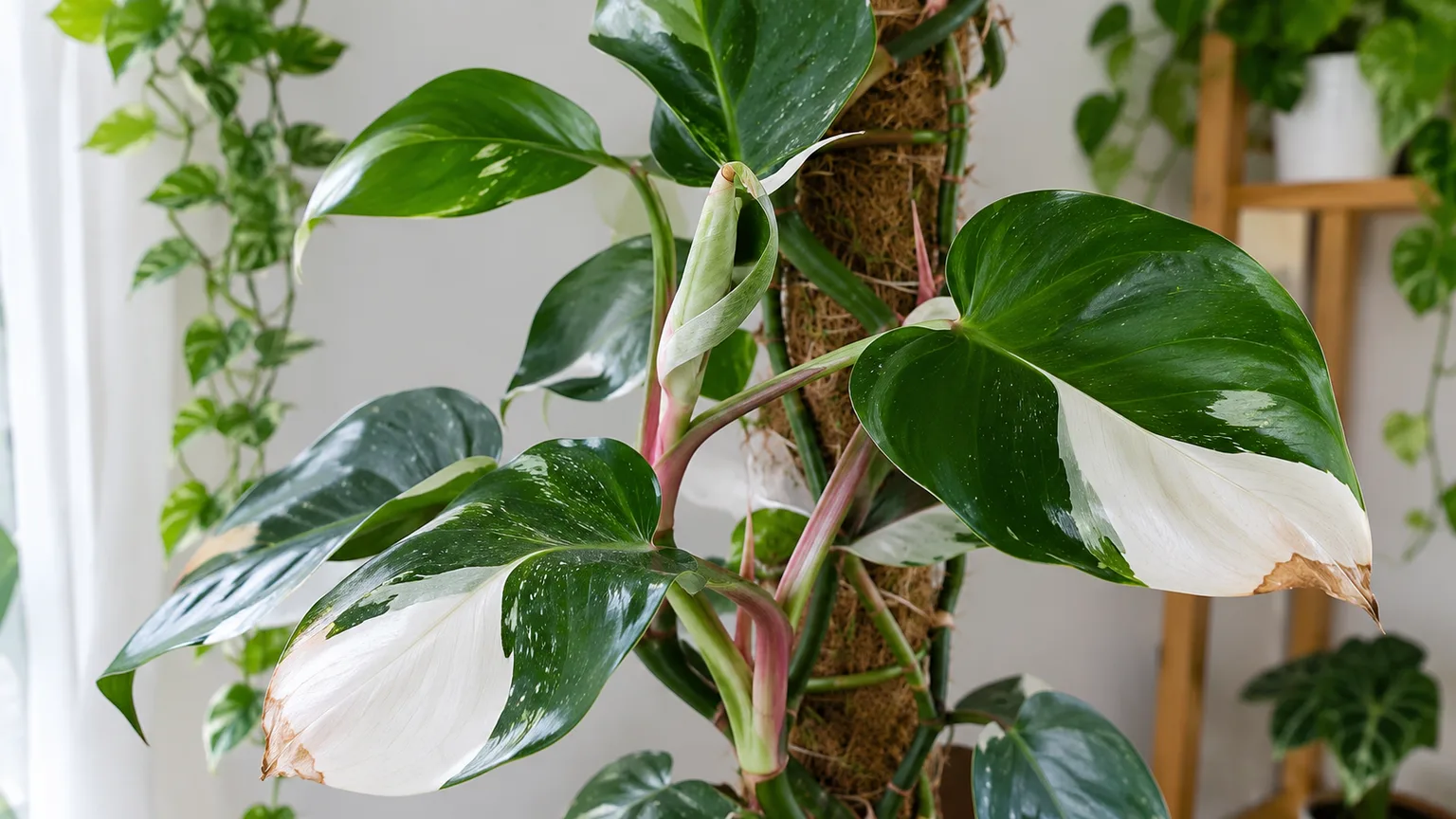
Low humidity on Philodendron White Princess shows as crispy brown edges on the white leaf sectors first, sometimes with new leaves sticking half-unfurled. First step: move the plant out of heater or AC airflow and set the pot on a pebble tray of water, keeping the pot base above the waterline. Browned tissue will not heal, so judge success by clean new growth within a few weeks.
Low Humidity on Philodendron White Princess: Causes, Checks & Fixes
This guide covers low humidity on Philodendron White Princess. See also the general Low Humidity guide, watering, and light pages for this plant.
Low Humidity on Philodendron White Princess: Causes, Checks & Fixes
Quick answer
Low humidity on Philodendron White Princess shows as crispy brown edges concentrated on the white sectors, sometimes with new leaves sticking half-unfurled or tearing as they open. For the general science of dry air and houseplants, see our low humidity guide. On White Princess, the variegation is the early-warning system: the white patches crisp long before the green tissue complains.
First step: move the plant out of heater, radiator, or AC airflow and set the pot on a pebble tray filled with water, keeping the pot base above the waterline. Make this one change, then watch the next new leaf before adding anything else.
What low humidity looks like on White Princess
Healthy White Princess holds firm green leaves splashed with white, plus pink striping along green stems. Dry air breaks that pattern in a recognizable order:
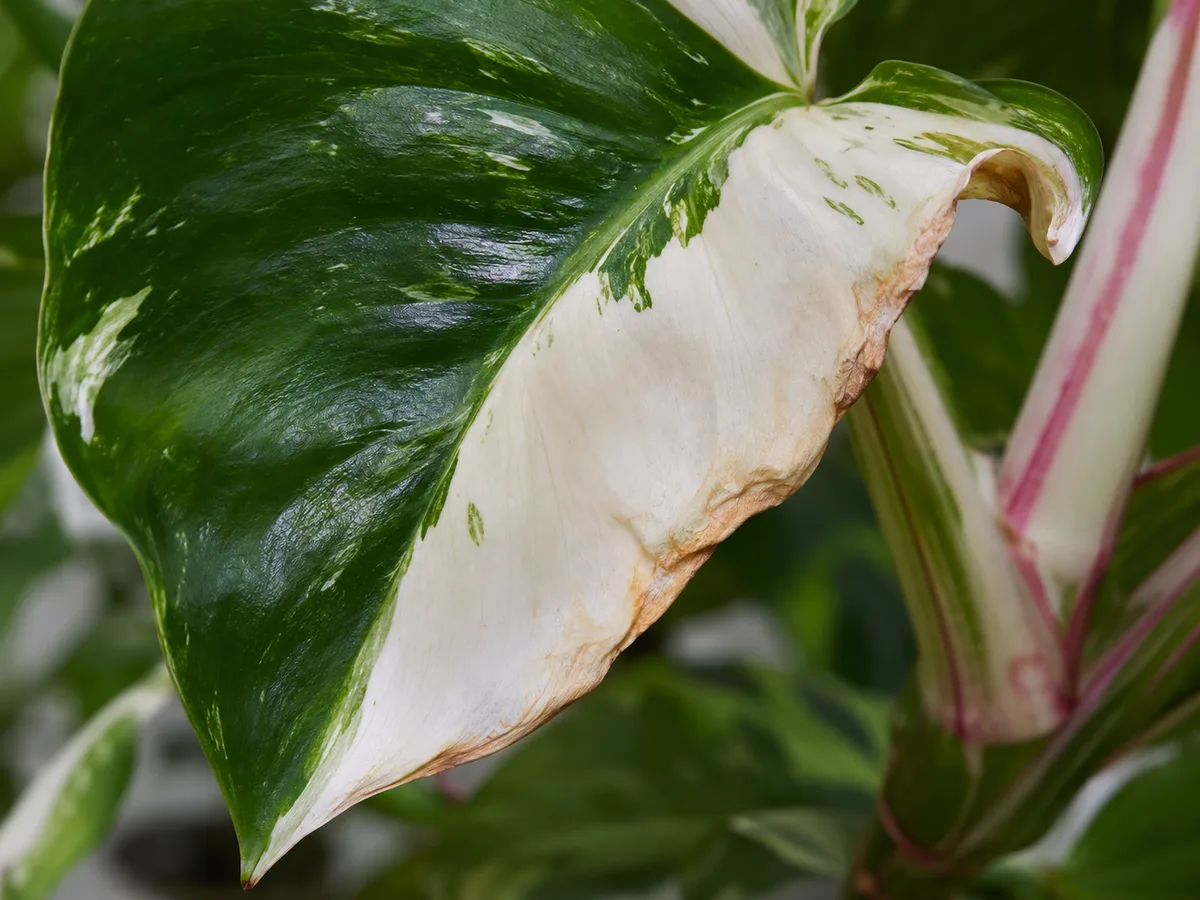
Dry air can crisp the white sectors of a variegated leaf before adjacent green tissue is affected.
- Brown crispy edges on the white sectors first — The pale patches have little chlorophyll and desiccate fastest, turning papery while neighboring green tissue still looks fine.
- New leaves stuck half-unfurled — Emerging spears stall, and forcing them open tears the blade. This is the most White-Princess-specific sign of dry air.
- Curling or thinning leaf feel — Leaves feel papery and curl inward at the margins as they lose water faster than roots can replace it.
- Shriveled aerial roots — The silvery roots reaching from stem nodes dry to brittle threads instead of gripping the moss pole.
- Older green leaves affected last — When green leaf edges crisp too, the air has been dry for a while or a heat vent is blowing directly on the plant.
Check the newest growth first. Damage confined to older leaves with clean new spears points to a past dry spell, not an active crisis.
Why White Princess suffers before your other plants
White Princess is a variegated Philodendron erubescens, a tropical climber that prefers high humidity and temperatures between 65 and 85 degrees Fahrenheit. Three traits make it crisps first in a dry room.
First, the white sectors carry almost no chlorophyll, so they run hotter and lose water faster under the same light that green leaves tolerate. The plant-detail notes warn that pale tissue photosynthesizes poorly, which is why average household humidity around 40 to 50 percent is usually fine but very dry winter air browns leaf edges.
Second, the climbing habit means new leaves unfurl from tight sheaths. In moist air the sheath slides open; in dry air it grips, stalls, and tears. A bushy pothos never shows this failure mode, which is why unfurling trouble is diagnostic here rather than generic.
Third, indoor heating drops relative humidity into the 10 to 20 percent range typical of most homes, far below the 50 percent or higher humidity of a greenhouse. A White Princess bought from a humid nursery and placed near a winter radiator experiences exactly this shock.
How to confirm dry air, not water or sun
Crispy edges invite overcorrection, so confirm before you act:
- Read the room, not just the plant. Place a small hygrometer at leaf level for a day. Readings persistently below 40 percent alongside crisping white sectors point to dry air; relative humidity below 20 percent is considered low for interior plants.
- Map the airflow. Note radiators, heat vents, fireplaces, and AC outlets within two meters. A plant crisping on the vent-facing side only is an airflow problem more than a whole-room problem.
- Check soil before adding moisture. Feel the top 3 to 5 cm and lift the pot, following the rhythm in the watering guide. Normal moisture with crispy white edges supports a humidity diagnosis; soggy or bone-dry mix points elsewhere.
- Rule out sun scorch. Harsh direct sun bleaches white and pink patches into tan burn spots. If damage sits only on the window-facing side, adjust placement per the light guide first.
- Inspect for spider mites. Dry air favors them, and they stipple leaves before webbing appears. Check leaf undersides with a lens; spider mites thrive in dry conditions, so webbing plus crisping means treating pests alongside humidity.
The first fix to try
Set the pot on a wide saucer filled with pebbles and water, with the pot base resting on the pebbles above the waterline so the roots never sit wet. Position the plant out of direct vent airflow and, if you own one, run a small humidifier nearby. Evaporation from a shallow container of water with pebbles raises the humidity immediately around the plant.
Do nothing else for two weeks except normal watering. The next leaf that unfurls is your report card: clean and intact means the fix worked.
Step-by-step recovery
- Relocate away from dry airflow — East-window or filtered light a meter or more from vents and radiators, per the light guide.
- Install the pebble tray or humidifier — The single humidity intervention from the first fix. Grouping with other tropical plants adds a small shared microclimate.
- Stabilize watering in chunky mix — Keep the check-first rhythm from the watering guide so extra ambient moisture never becomes soggy soil. The soil guide mix of potting soil, perlite, and bark should drain freely.
- Support the next unfurling leaf — If a new spear stalls, raise local humidity rather than pulling it open. A damp (not wet) moss pole gives emerging leaves and aerial roots contact moisture.
- Trim only after recovery starts — Once a clean new leaf opens, snip fully brown edges with clean scissors, staying inside dead tissue. Keep partially green leaves working until replacemants mature.
Stuck spears: the White Princess unfurling problem
This section would make no sense on a snake plant or fern, and it is the signature low-humidity injury on this cultivar. Each new White Princess leaf emerges as a furled spear from the previous leaf sheath. In adequately humid air the spear firms up and slides free within days. In dry air the sheath clings, the tip browns inside the sheath, and the leaf either stalls for weeks or rips along the midrib when it finally forces through.
Do not tug a stuck spear. Raise the humidity around the crown, keep the moss pole lightly damp, and give it a week. Leaves that emerge torn will never mend, but the following spear usually opens cleanly once the air improves. If every spear for a month stalls despite humidity above 50 percent, suspect the roots or light instead and work through the overview guide checks.
Moss pole and aerial roots in dry air
Another climber-only dimension. White Princess produces aerial roots from stem nodes that are meant to grip a moist support and feed the development of larger leaves. In dry room air these roots emerge, brown at the tip within days, and go brittle. The pole itself dries to straw and stops contributing any microclimate.
Lightly mist the pole (not the leaves) or pour a little water down it at watering time so it stays faintly damp between waterings. Healthy aerial roots look silvery-green and pliable; they will latch onto a damp pole and resume extending. This matters for leaf size: a White Princess with functioning aerial roots on support holds bigger, better-variegated leaves than one left to sprawl in dry air.
Lookalikes and what each one points to
| What you see | More likely cause | Read next |
|---|---|---|
| Soft yellow lower leaves on wet heavy mix | Overwatering, not dry air | Watering guide |
| Tan bleached patches only on the sun-facing side | Direct-sun scorch of white sectors | Light guide |
| Stippling plus fine webbing under leaves | Spider mites exploiting dry air | Inspect undersides; raise humidity and treat pests |
| Uniform crisping right after repotting | Root disturbance in dense mix | Soil guide |
| Single oldest leaf yellowing then browning | Normal aging while new growth stays clean | Overview guide |
Underwatering deserves a special note because it also crisps edges. The separator is the pot: underwatering crisps alongside light pots and fully dry mix deep down, while humidity damage crisps with normal soil moisture. Philodendrons prefer high humidity for best growth but tolerate the lower humidity of most homes, so mild edge crisping with correct watering is a humidity nudge, not a watering failure.
Mistakes to avoid
- Misting the leaves as the fix. A few sprays raise humidity for minutes; you would need to mist every few minutes indefinitely to make a real difference. Worse, wet foliage invites leaf spot, which is why extension guidance says to water at the base and keep water off the leaves.
- Drowning the roots to humidify the air. Extra watering does not raise room humidity and pushes a chunky mix toward rot. Keep the pebble-tray water outside the pot, never under submerged drainage holes.
- Cutting into healthy tissue. Trimming brown edges back into green opens wounds and never restores the margin. Cut inside dead tissue or leave the leaf alone.
- Stacking repot, feed, and relocation in one day. A crisped White Princess is stressed but stable; repotting and fertilizing on top of relocation compounds the shock. Humidity first, everything else later.
Recovery timeline
Browned edges are permanent: once browning from dry air happens there is no way to reverse the damage, but raising humidity prevents further browning. Expect edge crisping to halt within a week of the fix. The next leaf, emerging over two to four weeks, should unfurl without sticking. Two consecutive clean leaves mean the plant has adjusted; resume normal care and keep the tray filled through heating season. If browning spreads to green tissue despite humidity above 50 percent, re-diagnose water, light, or pests rather than humidifying harder.
How to prevent it next time
Site the plant where humidity is naturally highest: away from radiators and AC outlets, grouped with other tropicals, in the bright indirect light described in the light guide. Run the pebble tray or humidifier from the first week of heating season rather than after damage appears. Because low humidity makes plants transpire faster and risk wilting when roots cannot keep up, keep watering steady in the free-draining mix from the soil guide instead of letting the pot swing between soaked and parched. A hygrometer at leaf level costs little and ends all guesswork.
Related Philodendron White Princess guides
- Watering guide — use when soil moisture is off and crisping may be water stress rather than dry air.
- Light guide — use when white sectors bleach or burn on the window side, which mimics humidity crisping.
- Soil guide — use when mix stays soggy or hydrophobic, since root trouble produces similar edge damage.
- Overview guide — use for whole-plant checks when several symptoms overlap and you need the full care picture.
Related tool
Use the Humidity Calculator to narrow causes for low humidity on this plant before changing multiple variables at once.