Not Enough Light on Philodendron White Princess: Fading
Quick answer
On Philodendron White Princess, dim light shows as new leaves unfurling mostly green, longer gaps between nodes, and a pot that stays wet too long. First step: move the plant within 1 to 2 metres of a bright east window or a sheered south or west window so light falls directly on the leaves.
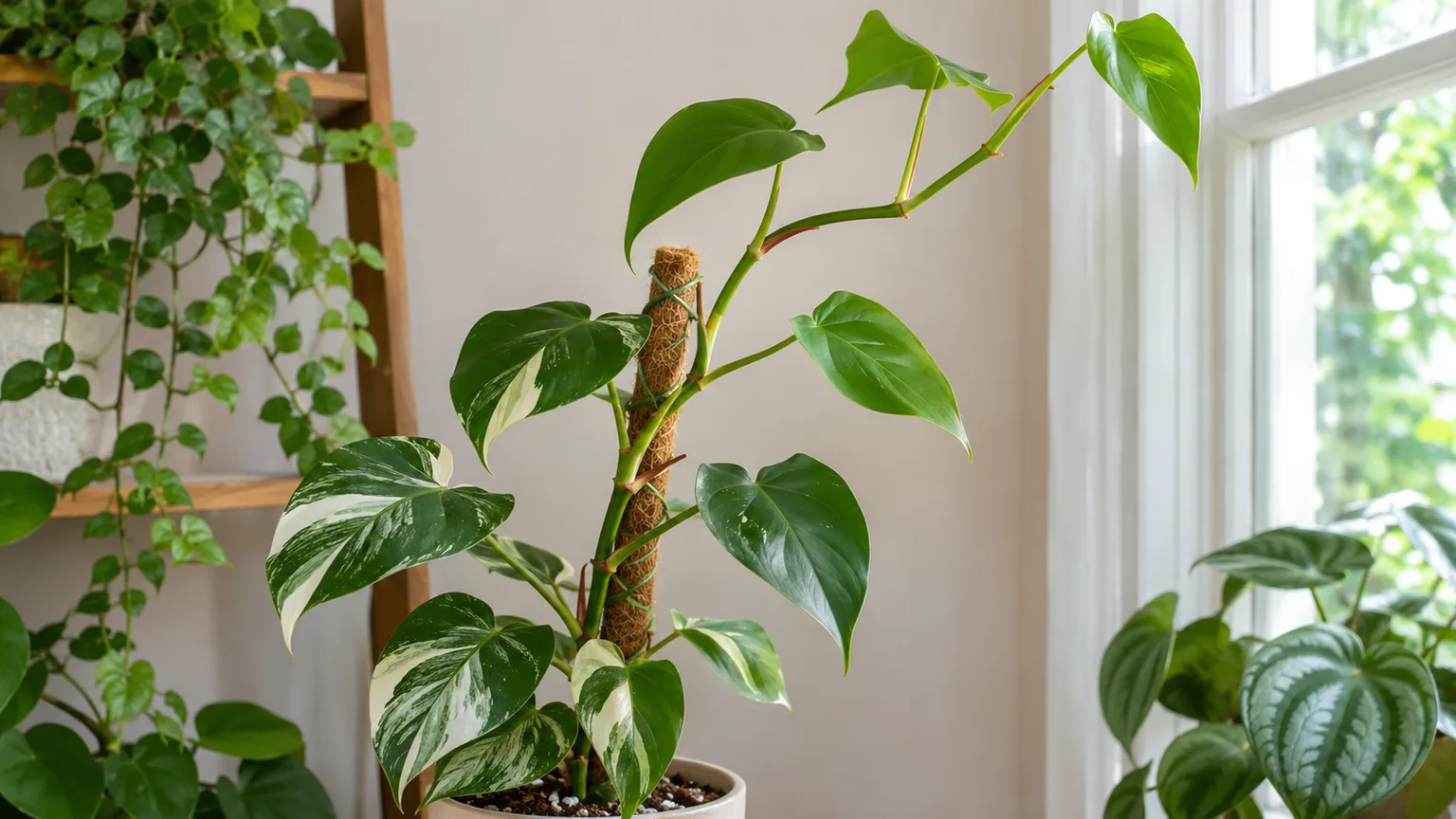
Not Enough Light on Philodendron White Princess: Causes, Checks & Fixes
This guide covers not enough light on Philodendron White Princess. See also the general Not Enough Light guide, watering, and light pages for this plant.
Not Enough Light on Philodendron White Princess: Causes, Checks & Fixes
Quick answer
Philodendron White Princess tells you about dim light through its variegation before anything else. New leaves come out mostly green with little white, stems stretch with longer gaps between nodes, and the potting mix stays wet far longer than its normal 7 to 10 day rhythm. First step: move the plant within 1 to 2 metres of your brightest filtered window, ideally an east exposure or a south or west window softened by a sheer curtain, so daylight lands on the leaves themselves rather than on the floor nearby. Change nothing else for two to three weeks, then read the next new leaf.
For the general mechanics of how chronic shade starves houseplants, see our not enough light guide. On White Princess specifically, the pattern shows up as fading white sectors first and legginess second.
What not enough light looks like on White Princess
Because the white sectors of each leaf contain little chlorophyll, this cultivar runs on a thinner energy margin than a plain green philodendron. When photons drop, the plant rations what it has, and the signs are distinctive.
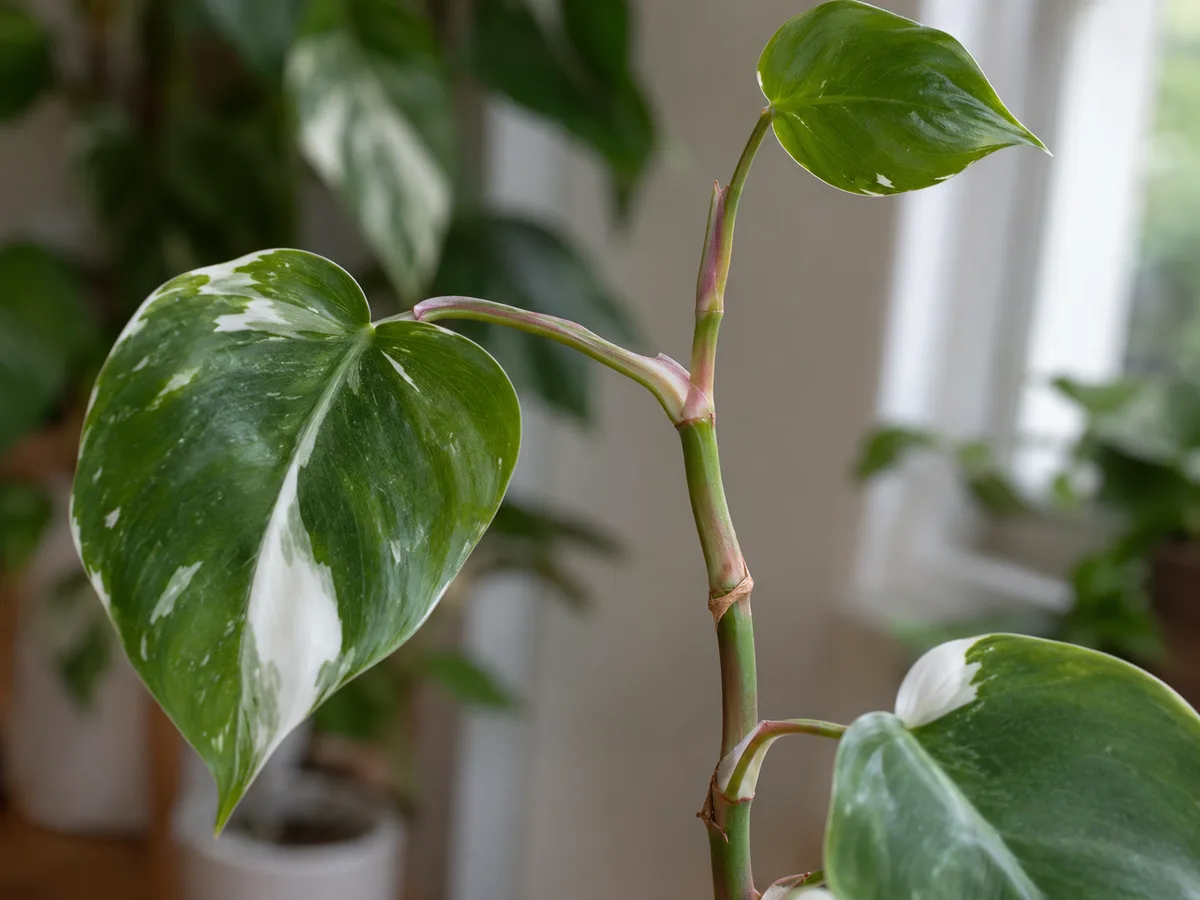
Low light first reduces white sectors on new leaves and lengthens the gaps between nodes.
Watch for this combination:
- New leaves unfurl greener than old ones. Earlier foliage keeps its white flecks while the newest two or three leaves emerge mostly green. This reversion under shade is the signature clue, and growers of variegated philodendrons report that plants lose variegation if not given enough light (Teak and Terracotta).
- Longer internodes along the climbing stem. Gaps between leaf nodes widen as the vine reaches for brightness, and the upright habit starts to sprawl or lean one-sided toward the glass.
- Smaller new leaves. Each successive leaf unfurls a little reduced, the classic low-light response the RHS describes on philodendrons.
- Slow dry-down. The chunky aroid mix stays damp well past its usual rhythm because weak photosynthesis pulls less water. Do not mistake this for a plant asking for a bigger pot.
- Lower leaves yellow and drop. Clemson Extension notes that yellowing lower leaves and dying growing tips follow too little light, often alongside overwatering in the same dim corner.
One or two of these alone prove little. Green new growth plus stretch plus a sluggish pot together mean shade.
Why White Princess suffers first in dim rooms
Wild philodendrons root beneath South American tree canopies in filtered sun, which is why most thrive in bright, indirect light rather than deep shade or harsh sun. White Princess pays a higher price for dimness than its green relatives because its pale tissue photosynthesizes poorly, so the plant needs stronger ambient brightness just to break even.
Its parent species, Philodendron erubescens, prefers partial shade with direct sunlight avoided and warm, humid air. Indoors that translates to a bright room near glass, not a decorative shelf metres from the nearest window. Typical home traps include north-facing rooms with no supplement, plants pushed far back from the glass for aesthetics, winter daylight drop in a spot that worked in summer, and dirty windows or heavy sheers that quietly cut usable light.
Check the stem variegation before you act
White Princess carries its future variegation in the stem, where pink striping on green marks nodes capable of patterned growth. In good light this striping stays visible; in prolonged shade, successive nodes emerge plain green. Inspect the stem from the base upward and find the highest node that still shows pink or white flecking in the stem tissue.
This check tells you two things. If striping is present but new leaves are green, light is almost certainly the limiter and a move should restore patterned growth within a few leaves. If many consecutive nodes have gone fully green, expect a longer recovery, and plan to prune back to the last variegated node only after brighter light has produced stable patterned growth first. Never prune on day one; cutting a light-starved plant removes the few leaves funding its recovery.
How to confirm the cause
Work through these checks on a bright midday before changing anything:
- Read the newest three leaves. Compare their white coverage against older foliage on the same vine. A downward trend across successive leaves points at light, not a one-off blemish.
- Measure distance and direction. East glass or sheered south or west within 1 to 2 metres of the leaves usually qualifies as bright indirect. Across the room, deep in a north window, or behind heavy drapes usually does not.
- Shadow test at leaf level. Hold your hand between the foliage and the window at midday. A soft, diffuse shadow suits this plant; no shadow at all means too dim, while harsh sharp-edged sun lines warn of burn risk on white sectors.
- Feel the pot rhythm. Push a finger 3 to 5 cm into the mix and lift the pot. If it still feels heavy and damp well past the normal watering interval on your White Princess watering routine, shade plus slow uptake is likely.
- Rule out lookalikes. Crispy brown patches confined to white sectors after a sunny move suggest burn, not shade. Soft stems with sour-smelling mix point to rot riding along with the shade. Pests leave stippling, webbing, or sticky residue rather than uniform greening.
If brighter placement produces a new leaf with visibly more white within three to six weeks, the diagnosis is confirmed.
First fix for White Princess
Move the pot gradually into bright indirect light at the leaf surface.
Pick an east window first, or a south or west window filtered by a sheer curtain. Place the plant close enough that daylight falls on the foliage, and rotate the pot a quarter turn so all sides of the vine receive it. The RHS positions philodendrons in bright but indirect light, out of direct summer sun, which is exactly this target.
Acclimate over 7 to 10 days if the plant comes from a very dim corner. Move it a half metre closer every few days, or open the sheer for progressively longer morning stretches. White sectors scorch fast, so never jump a shade-weakened plant straight onto an unfiltered afternoon sill. Hold watering and fertilizer steady during the move; brighter light will naturally quicken dry-down, and feeding a light-starved plant only stresses its roots.
Step-by-step recovery
Once the plant sits in its brighter spot, support it in this order:
- Stabilize the climbing habit. Tie lengthened stems loosely to the moss pole so new nodes stack tightly instead of sprawling. Shorter internodes on fresh growth are your proof the light level is right.
- Add a grow light if windows fail. A full-spectrum LED 30 to 45 cm above the foliage for 10 to 12 hours daily on a timer replaces weak north light or short winter days. Keep the schedule consistent rather than blasting the plant on weekends.
- Water to the new rhythm. Recheck the top 3 to 5 cm before every watering instead of following the old calendar. The mix will dry faster now; that is recovery, not a new problem. If the pot still stays soggy after two weeks of good light, unpot and inspect the roots.
- Clean the leaves. Wipe dust from both green and white sectors with a damp cloth so the foliage absorbs the improved light fully.
- Prune only after patterned growth returns. Once two or three new leaves show healthy white flecking, you may cut a fully reverted tip back to the last variegated node to encourage patterned branching. Root the cutting with a visible node if you want a backup plant.
- Resume feeding last. Wait until new patterned growth looks stable for at least two weeks, then restart the gentle growing-season schedule from your White Princess care overview. Fertilizer cannot substitute for light.
Recovery timeline
Judge everything by leaves formed after the move. Old foliage will not change.
- 1 to 2 weeks: The lean toward the window slows, and the mix begins drying on something closer to its normal pace.
- 3 to 6 weeks: The next leaf should unfurl with visibly more white and tighter node spacing if light was the limiter.
- One growing season: Successive leaves hold stable flecking, stems climb compactly on the support, and overall growth speeds up.
- Permanent: Solid-green leaves never regain white sectors, and stretched internodes never shorten. Success means the problem stops spreading and new growth comes in patterned.
Worsening signs: continued all-green leaves after six weeks of genuinely brighter placement, bleached tan patches on white sectors (too much direct sun now), or soft stems with a sour pot (rot needs root attention alongside light). Recheck distance from glass, winter supplementation, and drainage in that order.
Lookalike symptoms
- Sun scorch on white sectors. Crisp tan or brown patches appearing within days of a move to unfiltered sun. Pull back behind a sheer rather than adding more brightness.
- Overwatering in shade. Yellow lower leaves with a heavy, wet pot and soft stems. Fix light and let the root zone dry; the two problems travel together because plants in low light use less water.
- Natural old-leaf aging. One lowest leaf yellowing slowly while new growth stays patterned is routine turnover, not shade.
- Pest damage. Fine stippling, webbing, or cottony clusters point at mites or mealybugs rather than light. Inspect undersides before relocating.
- Nutrient hunger. Uniform pallor across all ages including veins, with adequate brightness, suggests feeding review through the White Princess light and placement guide and soil checks, not a darker corner.
What not to do
Do not fertilize a stretched, greening White Princess to force variegation back; salts stress roots that already lack light energy. Do not repot on day one unless the mix smells sour or roots are confirmed mushy. Do not swing the plant between windows every few days hunting for instant change; pick one filtered bright target and give it three weeks. And do not carve off reverted stems before the plant has produced stable patterned growth in better light, since premature pruning removes its remaining energy supply.
How to prevent it next time
Anchor the plant where brightness is structural, not seasonal luck. A spot 1 to 2 metres from east glass, or sheered south or west, with a weekly quarter turn keeps variegation stable across the whole vine. Reassess every autumn, because the corner that carried strong variegation in June can fall below the threshold by November. Pair any winter light drop with a timer-driven grow light and a slower watering hand, and keep the foliage dust-free so every photon counts. A chunky, free-draining mix from the White Princess soil guide adds margin by keeping roots oxygenated through the darker months.
Related tool
Use the Plant Problem Diagnosis Tool to narrow causes for not enough light on this plant before changing multiple variables at once.