How to Prune Philodendron Xanadu: When, Where, and What
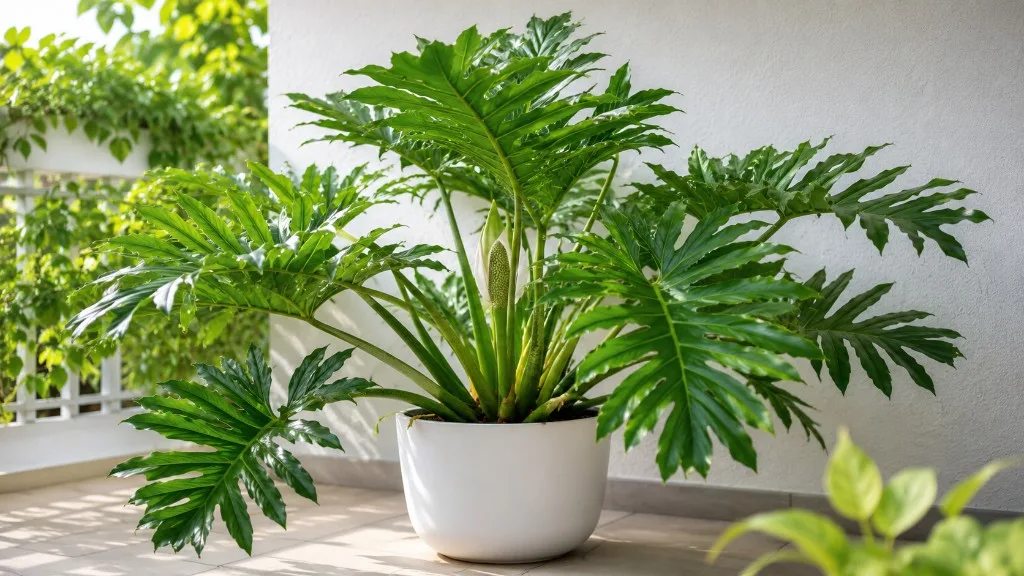
How to Prune Philodendron Xanadu: When, Where, and What to Cut
How to Prune Philodendron Xanadu: When, Where, and What to Cut
First, remove only fully yellow, brown, or clearly damaged leaves with clean sharp scissors — snip each petiole at the base where it meets the crown, without cutting into the central growing point. Philodendron Xanadu (Thaumatophyllum xanadu, still sold as philodendron) is a self-heading bush, not a vine. A quick sanitation pass shows you what is actually finished before you decide whether overcrowded outer foliage needs thinning for size or light access.
Quick Answer
Prune Xanadu for sanitation, crown access, and occasional size control — not vine-style shaping. RHS guidance for Philodendron xanadu states that no regular pruning is required, but you should thin out if overcrowded or getting too large and remove dead or yellowing leaves. Make each cut at the petiole base flush with the crown, never into the meristem where new lobed leaves emerge. Limit size-control thinning to about one-quarter to one-third of foliage per session in spring or summer. Emergency removal of mushy, pest-damaged, or fully dead tissue can happen any time. Pruning cannot fix chronic yellow leaves on Philodendron Xanadu from overwatering — correct watering and light first.
What Pruning Does for Philodendron Xanadu
Xanadu grows as a dense, mounding, spreading rosette from a central crown. NC State Extension describes it as an evergreen houseplant with glossy, deeply lobed foliage on long petioles, reaching roughly 3 to 5 feet tall and wide in favorable conditions — compact indoors but still a floor-scale bush. UF/IFAS notes that no pruning or management is really needed with this neat, tight-growing foliage plant compared with larger tree philodendrons like Selloum.
Unlike climbing philodendrons, Xanadu does not produce new side shoots from pruned nodes along a vine. The RHS philodendron growing guide notes that bushy species don’t generally need pruning, training or support — a rule that fits self-heading Xanadu better than vine cutbacks. New growth emerges from the central crown and from offsets when the plant divides naturally. That biology means pruning is crown-aware cleanup and light thinning — not “cut above a node to force bushiness” advice copied from pothos guides.
Pruning serves four practical jobs on Xanadu:
- Removes finished or diseased leaves before they harbor pests or fungal spores
- Opens the crown to light when outer lobes shade the center and slow new growth
- Controls footprint when the mounded rosette outgrows its spot
- Prepares for division when multiple crowns are visible at repotting
Pruning does not replace brighter placement when leaves shrink and petioles stretch — that pattern usually means insufficient light, not a need for harder cutting.
What to Check Before You Cut
Before any cosmetic thinning, read the crown and petiole pattern from soil line upward:
- Crown condition — Look for firm upright petioles and active leaf tips at the center. Mushy bases, sour-smelling mix, or widespread collapse point to root rot on Philodendron Xanadu — fix roots before removing live foliage.
- Yellow leaf age — One fully yellow lowest outer leaf while new lobes unfurl above is often normal senescence. Multiple yellow leaves at different heights usually signal moisture or light stress.
- Overcrowding — Dense outer rings that block light to inner petioles may justify thinning; a naturally full mound with visible new tips may need no shaping cut at all.
- Pest or disease signs — Stippling, webbing, or sticky residue on leaf bases means isolate and treat before spreading clippings across the crown.
Do not stack pruning with Philodendron Xanadu repotting, heavy feeding, or a major location change on the same day. Self-heading philodendrons absorb stress through leaf drop when too many variables shift at once.
Normal Senescence vs Stress Yellowing
Senescence typically hits one old outer leaf at a time, yellowing from the tip or edges inward while the crown still pushes new lobed growth. Stress yellowing arrives faster, may involve several leaves, and often pairs with drooping leaves or soft petioles. If only senescence is happening, remove the fully yellow leaf and wait. If stress signs dominate, trace watering rhythm and light before stripping multiple live blades.
When to Prune Philodendron Xanadu
Xanadu tolerates dead-leaf removal any time, but timing changes how quickly the crown replaces what you removed.
Best season for thinning and size control
Late spring through summer is the ideal window for planned thin-out of overcrowded outer foliage. Daylight is increasing, the pot dries on a predictable rhythm, and new lobed leaves are already unfurling. NC State’s philodendron genus profile notes that spring is the best season for repotting and shape-related care when plants are actively growing.
Early autumn works as a second option if your indoor space stays warm and bright through winter.
Cuts that cannot wait
Some trimming should not wait for spring:
- Fully brown, dry, or mushy leaves — remove at the petiole base immediately
- Heavily pest-infested leaf bases — cut out the worst tissue once you have a treatment plan
- Torn or mechanical damage exposing wet tissue — clean the wound with a sterile cut
Sterilize blades with rubbing alcohol between cuts when disease or pests are suspected.
When to delay major thinning
Hold off on large thin-out sessions when:
- The plant was recently repotted — let roots settle before removing substantial leaf area
- Active root stress or chronic overwatering is underway — pruning live foliage does not dry wet mix
- The specimen is weak after pest recovery — a light sanitation pass is enough until new growth stabilizes
- You are in late autumn or winter with low light unless you accept a slow crown response
The RHS philodendron growing guide recommends keeping philodendrons above 15°C (59°F); cold wet roots slow recovery after any cut.
Where to Cut: Petiole-Base Technique
On self-heading Xanadu, the cut site is the petiole base, not a node on a vine.
Identify each leaf’s petiole — the smooth stalk connecting the lobed blade to the crown. Cut flush with the crown or leave a 1–2 mm stub that dries cleanly. Never slice into the tight central meristem where the next leaf will emerge.
Do not:
- Cut mid-petiole and leave a long dangling stub — it browns slowly and looks untidy
- Twist or snap leaves off by hand — torn crown tissue invites rot
- Shear the entire plant flat like a hedge — Xanadu is not a topiary subject
For outer leaves shading the crown, remove the lowest or oldest fully spent petioles first, working outward in a ring rather than punching a hole through the center.
The First Cut to Make
After your inspection, the first cut is always one fully yellow, brown, or damaged leaf at the petiole base. If that leaf is the only issue, stop there and monitor the next two weeks of new growth before deciding on further thinning.
If multiple outer leaves are fully spent but the crown is healthy, remove them over one or two sessions rather than stripping the entire lower ring in a single day. Each removed leaf was still shading soil moisture and feeding the crown until it finished yellowing — batch removal is only warranted when disease or pests demand it.
Shaping and Size Control
Xanadu spreads sideways from the crown rather than climbing upward. UF/IFAS FP474 lists a mature spread of 4 to 6 feet in landscape use; indoors, a well-grown pot still fills a floor space over time.
When the rosette exceeds its spot:
- Remove outermost fully spent or overcrowding leaves at the petiole base
- Prioritize leaves whose petioles cross or shade the crown center
- Rotate the pot quarterly so all sides receive even light — asymmetry often looks like a pruning problem but is a placement problem
If multiple distinct crowns are visible at the soil surface, division at repotting per the Philodendron Xanadu propagation guide is the correct size-control tool — not repeated hard thinning of a single crown.
Pruning Yellow, Brown, or Damaged Growth
Fully yellow leaves — safe to remove at the petiole base once the blade is at least 90 percent yellow. NC State notes that yellowing occurs with overwatering; if new yellow leaves keep appearing, fix moisture before the next cleanup round.
Brown tips or edges — trim cosmetically only after addressing humidity, salt buildup, or inconsistent watering per the brown tips guide. When more than one-fifth of a leaf is damaged, removing the whole petiole at the base is cleaner than repeated tip snips.
Mechanical tears — cut back to sound green tissue at the petiole base if the leaf cannot recover; otherwise leave partial green blades in place for photosynthesis.
Leggy, small new leaves with wide petiole spacing — that is a slow growth and light issue. Improve placement before expecting pruning to restore deep lobes.
How Much You Can Safely Remove
For routine sanitation, one to three fully spent outer leaves per session is typical on a standard indoor pot.
For size-control thinning during active growth, limit removal to about one-quarter to one-third of total foliage in one session. Spread major thin-outs across two spring or summer sessions spaced four to six weeks apart if the plant was heavily overcrowded.
Small specimens with only a handful of leaves should lose less — stripping a young Xanadu bare stalls crown push even in bright conditions.
Tools, Gloves, and Disposal
Use clean, sharp bypass pruners or scissors. Wipe blades with 70% isopropyl alcohol between cuts when removing diseased tissue.
The RHS lists Xanadu as harmful if eaten and a skin or eye irritant — wear gloves when pruning. The ASPCA lists philodendron as toxic to cats and dogs because of insoluble calcium oxalate crystals. Bag cut leaves for household trash; keep clippings away from pets and children.
Aftercare and Recovery
After pruning, support clean regrowth with stable conditions:
- Medium to bright indirect light reaching most of the crown
- Water when the top 3–5 cm of mix dries — hold fertilizer two to three weeks after a major thin-out while tissues callus
- Moderate humidity (50–60%) — helps new lobes unfurl cleanly without stagnant damp foliage
During active growth, new leaves usually appear from the crown within two to four weeks after light cleanup. A major thin-out may take six to ten weeks before the mounded silhouette looks full again. Autumn or winter cuts can sit visually unchanged longer in cooler homes.
Avoid stacking repotting, relocation, and heavy pruning in the same week.
Signs Pruning Worked (or Went Too Far)
Pruning worked when:
- New lobed leaves unfurl from the crown within two to four weeks during warm active season
- The center receives more light and produces larger, deeper lobes on the next leaves
- Removed yellow leaves do not immediately repeat on the same petiole positions after care correction
- The mounded shape looks even after rotation, without a bare side persisting
Pruning went too far or was badly timed when:
- No new crown growth appears for six or more weeks during spring or summer
- Multiple remaining leaves yellow after removing more than one-third of foliage in one session
- The crown looks exposed and sun-stressed after aggressive outer removal in direct light
- New leaves emerge smaller with long petiole spacing — usually a light problem, not a shear problem
Mistakes to Avoid
- Treating Xanadu like a vine — node-above cutbacks do not create bushier self-heading growth
- Adding a moss pole expecting larger split leaves — Xanadu is self-heading; give crown space instead
- Shearing the crown flat — damages the meristem and stops new leaf production
- Removing partially green leaves during stress — the plant is still withdrawing mobile nutrients
- Pruning without fixing overwatering — yellow leaves return quickly in wet mix
- Handling cut material bare-handed around pets or children — sap irritates skin and plant parts are toxic if chewed
- Composting diseased leaves indoors — bag and discard instead
Conclusion
Philodendron Xanadu pruning is low-drama crown maintenance: remove fully spent leaves at the petiole base first, thin overcrowded outer foliage in spring if the center is shaded, and divide at repotting when size control needs more than leaf removal. Bright indirect light and consistent watering keep the mounded rosette compact — scissors tidy the plant but do not replace good placement.
When to use this page vs other Philodendron Xanadu guides
- Philodendron Xanadu overview — Start here for whole-plant context, toxicity, and placement before deep-diving pruning.
- Philodendron Xanadu problems — Jump to symptom-specific fix guides when trimming alone does not resolve the issue.
- Yellow leaves on Philodendron Xanadu — Escalate here when yellowing repeats after cleanup.
- Slow growth on Philodendron Xanadu — Escalate here when new lobes stay small despite pruning and good sanitation.
- Brown tips on Philodendron Xanadu — Escalate here when edge damage persists after cosmetic trims.