Overwatering on Philodendron Xanadu: Causes, Checks & Fixes
Quick answer
Overwatered Philodendron Xanadu shows yellow lower leaves while the pot still feels heavy days after watering. First step: stop watering completely, empty all standing water from the saucer or cachepot, and let the mix dry until about half the soil no longer clings to your finger before you even consider the next soak.
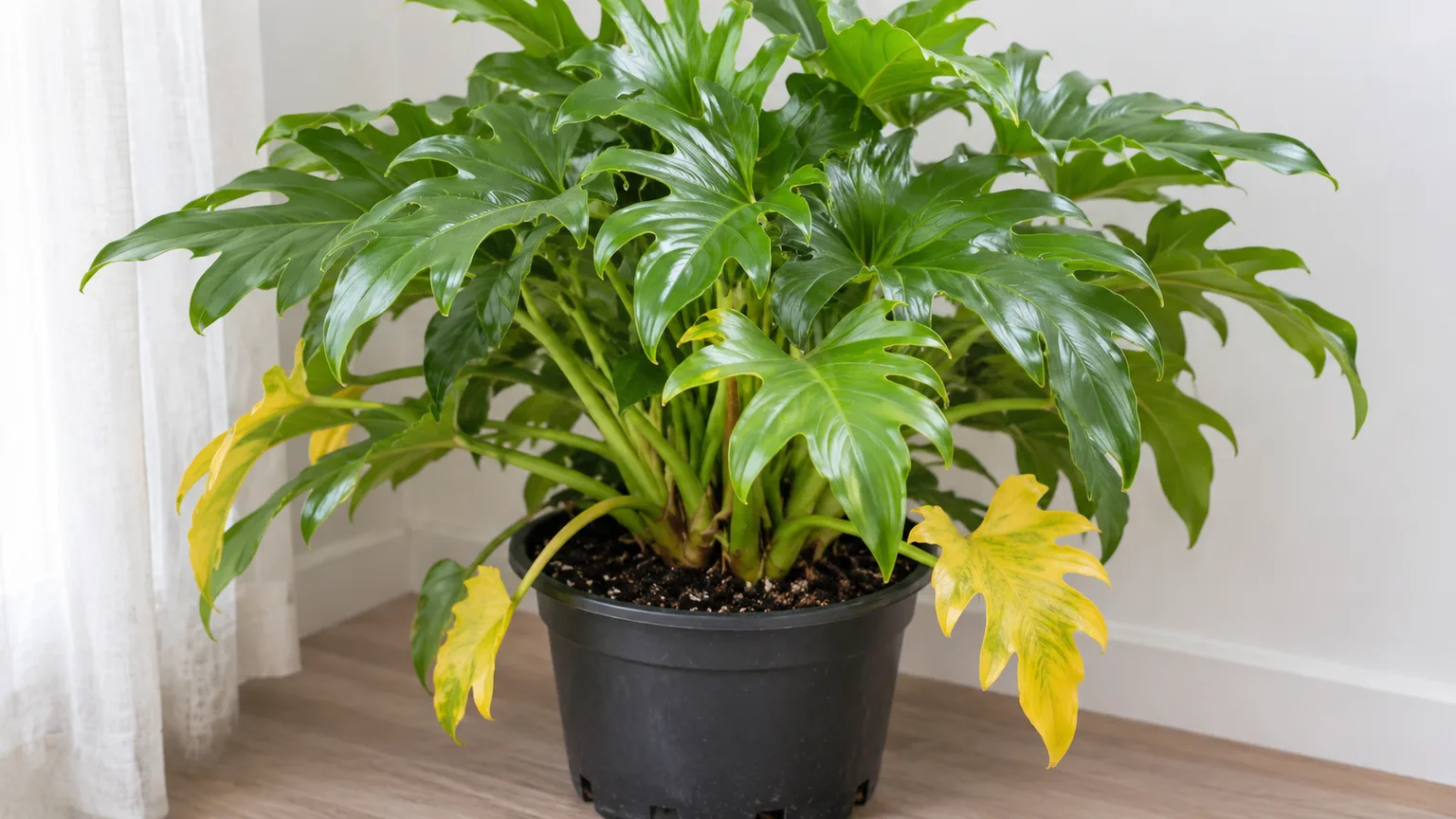
Overwatering on Philodendron Xanadu: Causes, Checks & Fixes
This guide covers overwatering on Philodendron Xanadu. See also the general Overwatering guide, watering, and light pages for this plant.
Overwatering on Philodendron Xanadu: Causes, Checks & Fixes
Quick answer
An overwatered Philodendron Xanadu yellows from the bottom up while the pot stays heavy and cool days after its last drink. New growth stalls, lower petioles feel soft near the soil line, and the mix may smell sour. For how chronic wet mix damages roots in general, see our overwatering guide. On Xanadu, the pattern usually shows up as yellow lower leaves on a plant whose crown sits in mix that never got its dry-down.
First step: stop watering completely and drain the pot. Lift the nursery pot out of any cachepot, pour off all standing water, and do not water again until the mix has dried at depth. One decisive pause tells you more than a week of small adjustments.
What overwatering looks like on Philodendron Xanadu
Healthy Xanadu holds a mound of glossy, deeply lobed leaves on stiff upright petioles rising from a central crown. Overwatering breaks that picture in a recognizable order.
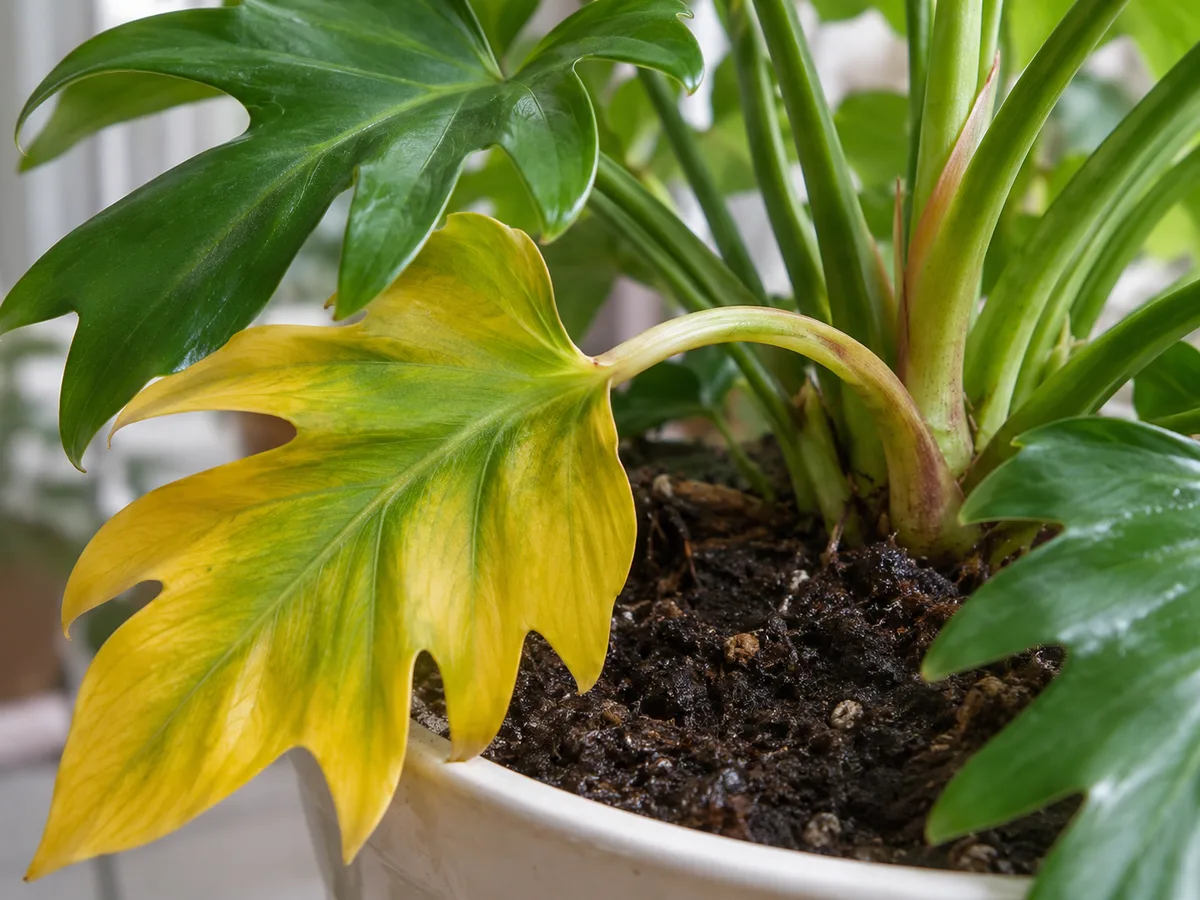
Lower leaves often yellow first while the pot remains heavy and the root-zone mix stays damp.
Lower leaves yellow first while upper foliage still looks acceptable, which matches the extension observation that yellowing if overwatered is this species’ signature complaint. Limp leaves on a heavy pot follow — the classic paradox where damaged roots cannot deliver water even though the mix holds plenty. Lower petioles then soften or darken at the soil line, new leaves emerge smaller or stall entirely, and fungus gnats may hover over mix that never dries. A sour smell from the drainage holes is the advanced signal that the root zone has gone anaerobic.
Judge urgency by the crown, not by leaf count. A few yellow lower leaves on firm petioles is an early warning. Soft tissue at the base of the crown is an emergency, because Xanadu grows from one central point with no backup vine to sacrifice.
Why Xanadu stays wet longer than you expect
Xanadu is a self-heading bush, not a climber. Its dense lobed canopy shades the pot rim, so the surface can look pale and dry while the center of the root ball stays wet. Growers who water by surface color pour again into an already saturated core, and each extra drink pushes roots closer to rot.
Three household setups trap Xanadu growers specifically. Oversized decorative cachepots hide a pool of runoff beneath the inner pot, so roots sit in a permanent bog the owner never sees. Dense peat-heavy potting mix without enough perlite holds water for days in a dim corner, where low light slows uptake further. And winter continuation of summer frequency keeps a semi-dormant root system wet for weeks, since cool short days cut evaporation and growth at once. Clemson HGIC frames the mechanism plainly: philodendrons want soil evenly moist, but not soggy, and yellowing lower leaves follow when that balance tips wet.
The crown check: Xanadu’s one-growth-point risk
This is the section that does not transfer to vining philodendrons. A heartleaf philodendron can lose one vine and regrow from another node. Xanadu cannot. Every leaf emerges from a single central crown, so wet mix attacking the base threatens the plant’s only growing point.
Press the base of the outermost petioles gently with clean fingers. Firm and upright means the crown is still sound and a dry-down routine will likely save the plant. Soft, darkened, or collapsing petiole bases mean crown tissue is already decaying, and drying alone will not reverse it — that plant needs unpotting and surgery, not patience. Check this before deciding anything else, because the crown verdict determines whether you dry or operate.
How to confirm overwatering before you act
Work through these checks in order on a plant you suspect is overwatered.
Pot weight. Lift the pot. A container that still feels heavy and cool several days after watering holds water at depth regardless of what the surface shows. Compare against the light, airy feel of the same pot when genuinely dry.
Soil moisture at depth. Push a finger or wooden skewer 5 cm into the mix near the root ball, not at the rim. Gardening Know How’s Xanadu guidance sets the bar at letting half of the soil to dry before watering again. If soil clings cool and damp to your finger at that depth, the plant is not ready.
Petiole and crown firmness. Firm petioles with a few yellow leaves suggest early trouble. Soft bases or a wobbling crown suggest advanced rot.
Smell and drainage. Sour or rotten odor from the pot, water pooling on the surface, or a cachepot with hidden runoff all confirm excess moisture rather than thirst.
Light context. A Xanadu in dim light uses far less water than the same plant by a bright east window. If yellowing appeared after a move to a darker spot with no change in watering, overwatering is the likely bridge between the two.
First fix for Philodendron Xanadu
Stop watering and drain the pot completely. Remove the nursery pot from its cachepot, empty the saucer, and let excess water run out of the drainage holes. Then leave the plant alone in bright indirect light until the mix dries at depth.
This single action matters more than any spray, feed, or trim because roots need oxygen before anything else can help. The RHS philodendron guidance warns that saturated compost can cause root rot and that plants should never be left standing in water. Do not fertilize, do not repot, and do not prune yet. Make this one correction, then read the plant’s response over the next several days.
Step-by-step recovery
Follow this sequence only after the first fix is in place.
- Dry and observe for one full cycle. Wait until the top half of the mix dries and the pot feels light, watching whether yellowing stops spreading. If new growth firms up and no more leaves yellow, resume careful watering and skip the surgery below.
- Unpot if decline continues. If more leaves yellow, petioles soften, or sour smell persists, slide the root ball out and shake off wet mix. Healthy roots are firm and white to tan. Brown, black, or slimy roots that slip apart are rotted.
- Trim to firm tissue. Cut all mushy roots back to firm white tissue with clean scissors, wiping blades with rubbing alcohol between cuts. Remove fully yellow leaves and any collapsed petioles at the base.
- Repot small and fast-draining. Replant into fresh mix amended with 20 to 25 percent perlite, in a pot with clear drainage holes sized to the remaining roots rather than larger. Our soil guide covers the mix, and the repotting guide covers timing and pot sizing.
- Water once lightly, then wait. Settle the mix with one light watering, drain fully, and return to the dry-down check before the next soak. Withhold fertilizer until new lobed leaves emerge and hold their size for a couple of weeks.
Recovery timeline
Mild cases — a few yellow lower leaves on a firm crown — usually stabilize within one to two watering cycles once the dry-down routine starts. Expect the plant to look unchanged for a week or more before new growth confirms recovery. Yellow leaves will not re-green; judge progress by whether yellowing stops and fresh leaves emerge clean.
Moderate root-trim cases need weeks. New leaves may emerge smaller at first while the root system rebuilds, then size up as uptake recovers. Severe crown rot on a self-heading plant carries the worst prognosis in this genus, because there is no second vine to take over. If the crown turns fully mushy across its width, replacement is the honest recommendation.
Lookalikes: underwatering, low light, and normal aging
Underwatering wilts on a light pot with dry crumbly mix, and leaves perk within hours of a thorough soak. Overwatering wilts on a heavy pot with damp mix and does not perk after watering. Pot weight plus the soak test separates them in one cycle.
Low light alone produces smaller, darker leaves with wider spacing between petioles and slow but otherwise clean growth. It rarely yellows multiple lower leaves at once unless watering stayed on a bright-light schedule after the move. If you recently moved the plant darker, fix light first and stretch watering to match.
Normal aging drops one lowest leaf at a time while the crown pushes healthy new lobes. It never softens petioles or sours the soil. One fading leaf on an otherwise vigorous mound is housekeeping, not a rescue.
Mistakes to avoid
Do not water a wilting plant without lifting the pot first. Wet-soil wilt plus an extra drink is the fastest route from a warning to a funeral.
Do not fertilize a stressed Xanadu to green it up. Salts on damaged roots burn what is left, and feeding belongs only in active growth on a plant drinking normally. Hold all fertilizer until new growth confirms the roots work again.
Do not repot on day one unless roots are confirmed rotten. A larger pot of fresh mix around damaged roots stays wetter longer and hides the problem. Dry first, operate only on evidence.
Do not mist the foliage as a substitute for fixing the root zone. Wet leaves in dim air invite leaf spot while the real problem sits underground.
How to prevent it next time
Prevention for Xanadu is structural, not willpower-based. Pot in standard mix plus 20 to 25 percent perlite so the column drains within minutes and breathes between drinks. Keep the plant in a nursery pot with drainage holes even inside a decorative cachepot, and empty runoff every time. Water only when the top half dries and the pot feels light, then soak until water runs freely.
Tie frequency to season the way Smart Garden Guide describes: keep the plant evenly moist in active growth, water more sparingly in the winter when uptake slows, and never let it sit in soggy soil. That seasonal gear-shift matters because UF/IFAS rates Xanadu as having moderate drought tolerance — an extra dry day is safer than an extra wet one. Finish by matching light to water: a brighter position dries the pot faster, so recheck your interval after any move rather than trusting last month’s rhythm.
When to use this page vs other Philodendron Xanadu guides
Use this page when the pot feels heavy, the mix reads damp at depth, and lower leaves yellow or wilt despite wet soil. For the underlying routine that keeps the dry-down honest, work through the watering guide. When mix never dries despite careful watering, the bottleneck is drainage — escalate to the soil guide. When yellow leaves persist after water and drainage are corrected, check placement with the light guide. For symptoms that do not match anything here, browse the problems hub to find the right fix.
Related Philodendron Xanadu guides
Related tool
Use the Root Rot Risk Checker to narrow causes for overwatering on this plant before changing multiple variables at once.