Root Rot on Philodendron Xanadu: How to Check and Fix It
Quick answer
If Philodendron Xanadu is declining while its mix stays wet, slide the plant from its pot and inspect the root ball and crown. Soft, dark roots confirm root rot; firm roots point to a watering or light problem instead.
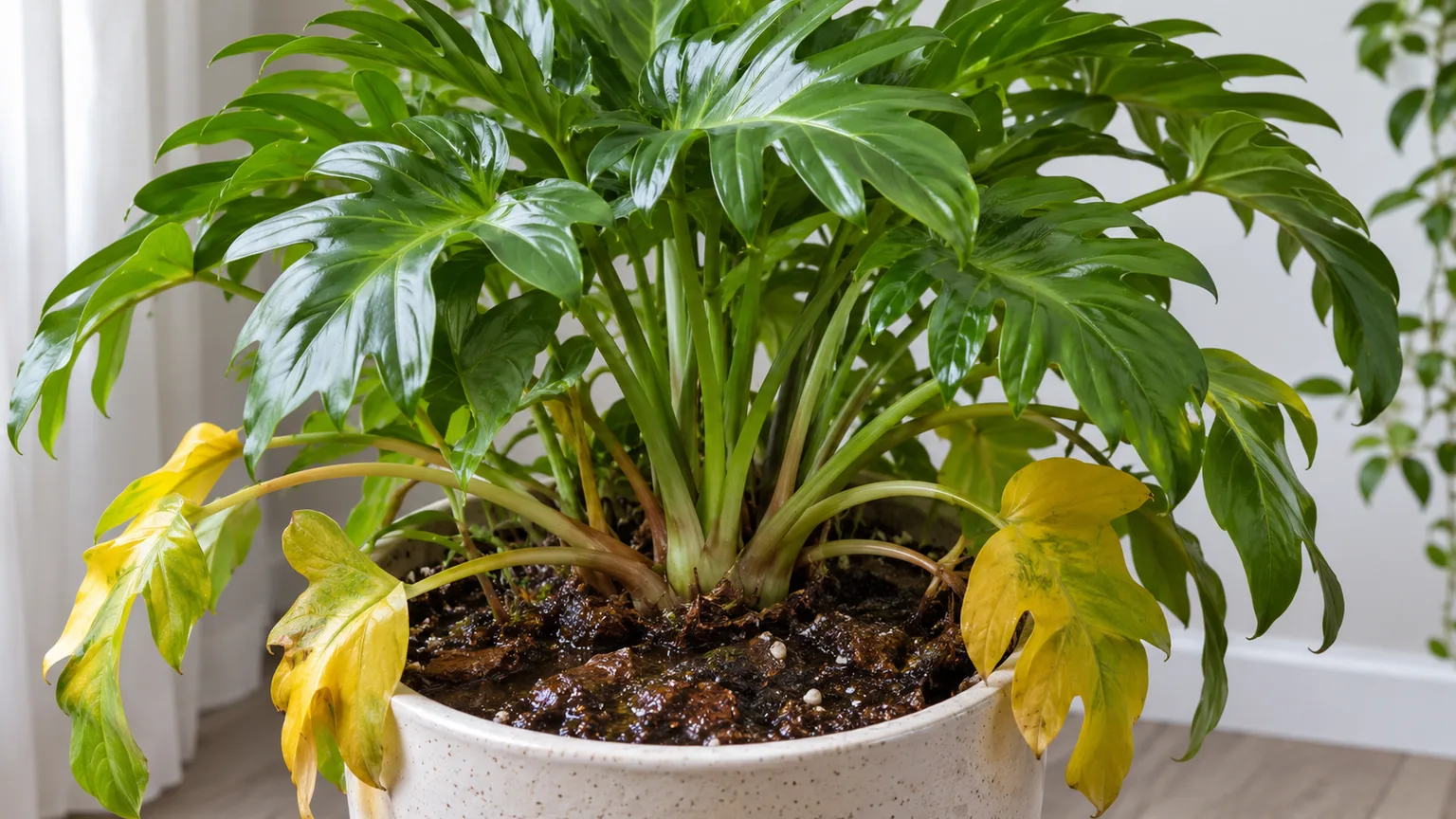
Root Rot on Philodendron Xanadu: Causes, Checks & Fixes
This guide covers root rot on Philodendron Xanadu. See also the general Root Rot guide, watering, and light pages for this plant.
Root Rot on Philodendron Xanadu: Causes, Checks & Fixes
Quick answer
If your Philodendron Xanadu is declining while its potting mix stays wet, the first action is to slide the plant from its pot and inspect the roots and the central crown. Confirm soft, darkened root tissue before cutting anything; a single yellow older leaf, on its own, never justifies surgery. Root rot is a root-zone diagnosis, not a leaf-color diagnosis.
Xanadu complicates this check because it is a self-heading plant that builds a dense mound of long-petioled leaves from one crown. That mound hides the soil surface and slows airflow around the center, so trouble can advance at the crown while the outer leaves still look acceptable. For the general mechanics of oxygen-poor media, see the root rot guide; everything below is about how this failure shows up on Xanadu’s crown, petioles, and divisions.
What root rot looks like on Philodendron Xanadu
Expect a mismatch first: the pot stays heavy and damp for days, yet the plant behaves like it cannot drink. Outer, older leaves yellow and soften while newer central spears stall. Thick petioles near the base lose their upright stiffness and feel spongy where they meet the crown. This pattern fits what NC State Extension records for Xanadu: yellowing leaves follow overwatering, so persistent wetness plus yellowing deserves a root inspection rather than another watering.
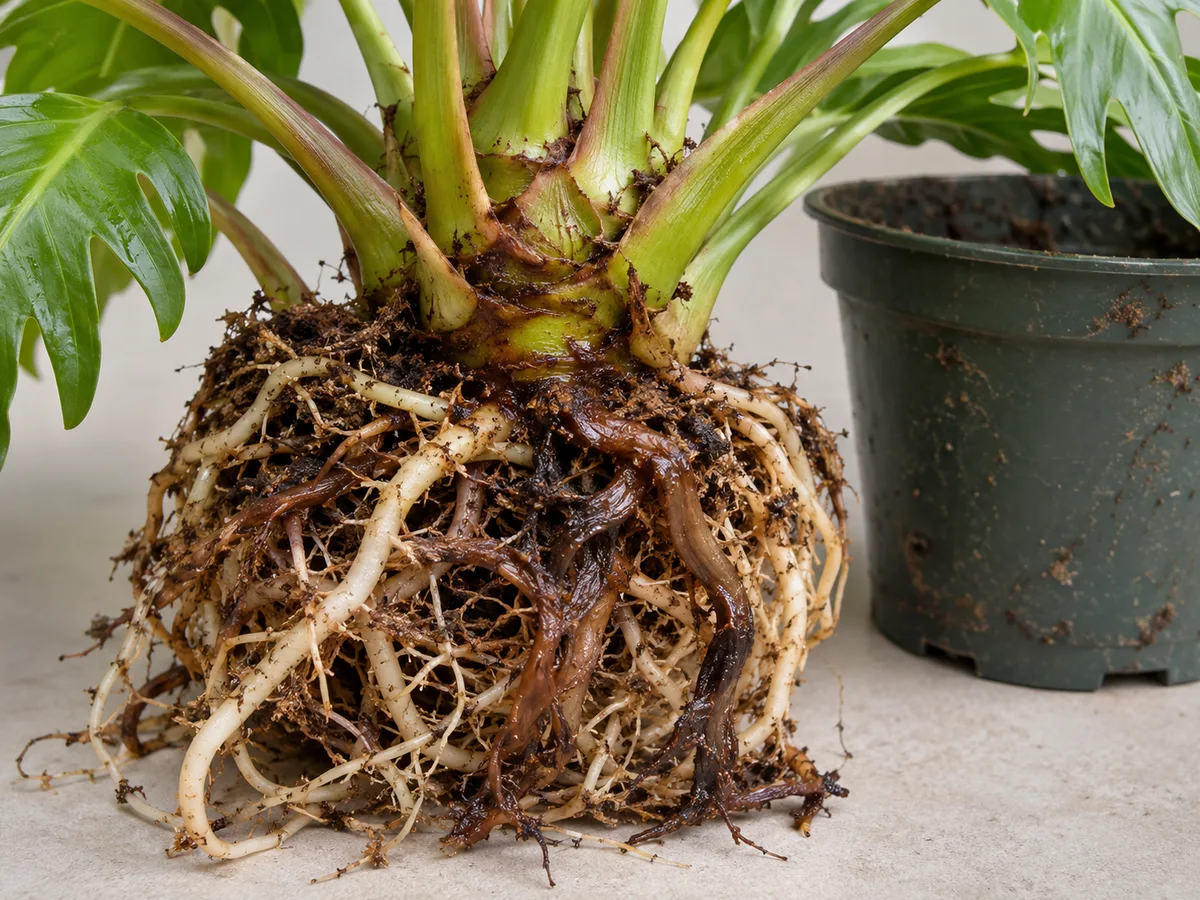
Root color varies with soil staining; compare firmness across several sections before confirming rot.
On the unpotted root ball, keep the test physical. Living Xanadu roots feel firm and resist a gentle squeeze; rotted sections feel soft, hollow, or slip apart, sometimes with a sour smell. Soil staining makes many healthy roots tan, so judge by firmness across several sections, not by color alone. Penn State’s indoor-plant disease guidance describes this endpoint directly: a soil-borne rot that produces wilting with blackened, mushy roots. General houseplant root-rot guidance frames the same inspection-and-drainage response for container plants broadly.
Check the crown with equal care. The point where the clustered petiole bases meet the soil is Xanadu’s tipping point: firm and pale means the plant still has a viable growing center, while a dark, soft, wet center means crown involvement that root trimming alone cannot fix. Note that in the same inspection, because the decision between repotting and dividing turns on it.
Separate rot from lookalikes on Xanadu
| What you notice | What it may mean | Next check |
|---|---|---|
| Drooping leaves with a light, dry pot | The mound may simply be short of water, since a dense crown transpires fast in bright warmth. Compare with the underwatering guide. | Finger-test to 3–5 cm and lift the pot; water only if that layer is dry. |
| Yellow soft leaves with a heavy, persistently wet pot | Root stress is plausible, but only damaged roots confirm rot. The overwatering guide covers the routine side of this pattern. | Inspect the root ball if decline continues; do not water again to perk wilted leaves in wet mix. |
| One yellow outer leaf, firm center, normal dry-down | Normal turnover of the oldest leaf in a mound that constantly pushes new spears from the middle. | Watch the newest spear and stem-base firmness over several days. |
| White or grey surface fuzz with firm roots underneath | A surface-moisture issue, not confirmed root damage. | Let the surface dry, improve airflow, and check roots only if the pot stays wet and the plant declines. |
| Soft dark roots plus a wet mix, or a mushy crown center | Stronger evidence of root or crown rot affecting several sections. | Trim confirmed dead tissue and correct the wet root zone. |
Why a self-heading Xanadu stays too wet
Xanadu wants its mix consistently lightly moist but cannot stand wet feet, and it is broadly described as prone to rot when that line is crossed. Smart Garden Guide’s Xanadu care walkthrough puts the risk plainly: the plant likes moisture yet rots in soggy soil, suffers in oversized containers that dry too slowly, and is easy to overwater when kept in low light because it drinks less there. Each of those three traps fits a self-heading mound. The broad crown shades its own soil surface so the top looks dry later than it is, the plant’s moderate winter growth sips slowly, and a dim corner can turn a summer schedule into a permanently wet pot.
The container magnifies everything. A pot much wider than the root mass holds a ring of wet mix the roots never reach, and a nursery pot sitting in a saucer of standing water keeps the lowest roots saturated no matter how careful the pour. UC IPM’s Pythium guidance for container crops gives the mechanism: poor drainage or excess irrigation kills more and more roots under continuing wet conditions until the plant wilts, stalls, or collapses. UC ANR’s Phytophthora notes add landscape-scale context that prolonged soil saturation raises root and crown rot risk while symptoms vary by host; read that as background on wetness, not as a diagnosis of any organism on your Xanadu.
Seasonal rhythm is the quietest cause. Xanadu slows in cool, dim months, and the 7–10 day summer cadence that once matched a bright warm room can leave the same pot wet deep into winter. Cut frequency as growth and evaporation slow rather than defending the calendar.
Confirm the cause before cutting roots
Start with the pot, not the leaves. Lift the nursery pot out of any cachepot, empty standing water, and check that drainage holes run freely instead of being sealed by matted roots or perched on a sealed saucer. Note the pot’s weight and how many days have passed since watering; a pot that is still heavy near the next scheduled watering is telling you the routine no longer matches the plant’s uptake.
If decline continues in a wet root ball, ease the plant out by supporting the crown base rather than yanking petioles. Shake loose mix away gently and compare roots from the top, center, and bottom of the ball. Firm tissue that resists a light squeeze stays; soft, hollow, or sloughing tissue is dead. Press the crown center with a thumb at the same time: springy and pale is viable, dark and wet is crown involvement. Do not name a pathogen from color or smell; no home inspection can identify one.
Then reconstruct the last few weeks: watering dates and whether the pot dried between them, any move to a dimmer window, cooler nights, a recent repot into a larger container, or fertilizer given to a struggling plant. Xanadu’s watering guide gives the plant-specific top-layer check and its soil guide describes the open mix that lets the root zone breathe; compare your setup against both before deciding the plant itself is at fault.
First fix: inspect and remove confirmed rot
If you have found soft, decayed roots in a persistently wet root ball, the first fix is to unpot and cut away only the confirmed dead root tissue. Do this once, cleanly: work with clean scissors, cut each dead root back to firm tissue, and wipe blades between cuts that contact decay. Preserve every firm root, including tan or soil-stained ones. If you have not yet seen damaged roots, finish the confirmation checks above before cutting or repotting anything.
Discard the old saturated mix rather than packing it back around trimmed roots. Choose a clean pot with open drainage sized to the remaining root mass; after heavy trimming that usually means the same size or smaller, never larger. Refill with fresh, open aroid mix built on standard potting mix amended with perlite for air space, and settle it without compressing it hard around the roots. Penn State’s disease guidance supports the hygiene behind this step: prune and discard infected parts promptly and discard material too far gone rather than nursing it back into the same pot.
Water once to settle the fresh mix, drain fully, and empty the saucer. Then wait until the top 3–5 cm dries before watering again. UC IPM places drainage and water management at the center of rot control, ahead of any product; no fungicide, peroxide soak, or feed can rescue roots that sit wet again.
Divide the crown when the root ball is badly damaged
Xanadu’s mound gives you a rescue option that vining philodendrons lack: a healthy crown section can be divided off and grown on. Consider division when very few firm roots remain, the central crown is softening, or the plant keeps declining after the root-zone correction. A firm offset with its own roots and spear is backup material; a division taken from mushy tissue is not.
To divide, remove the plant and separate a firm clump with living roots from the damaged mass, using disinfected shears only where pulling apart would tear living tissue. Lawn’s Xanadu care guide describes this same division approach and the repotting rhythm around it: plants outgrow containers and generally need repotting every 1–2 years, so a division taken during a needed repot doubles as renewal. Replant each division at the same depth it grew before, covering the white basal stem but never burying petiole bases deeper; Smart Garden Guide’s Xanadu notes warn that planting those stem sections too deep invites rot.
If the entire crown center is mushy and no firm offset exists, say so honestly: the plant is unlikely to rebuild from nothing. Discard the collapsed tissue and used mix, scrub the pot before reuse, and fix the watering and drainage setup before that container holds another plant.
Recovery: follow the crown and new spears, not old leaves
Yellowed or wilted leaves will not green up again, and trimmed roots do not regenerate; Penn State states the limit directly in that same disease guidance: severely affected tissue is finished, and new growth must come from what stayed alive. Judge recovery by a crown that stays firm, stems that stop softening, a pot that dries on a predictable rhythm, and eventually a fresh central spear unfurling clean.
Keep a simple log instead of stacking changes: repotting date, when the top 3–5 cm reads dry, pot weight after watering, and any new yellowing. In the first week the only goal is that decline stops; new spears come later and on no fixed schedule. Hold the plant in steady bright indirect light, moving it out of a dark corner gradually rather than into harsh direct sun, a placement the light guide details. Hold fertilizer until the root zone dries normally and growth resumes, since salts stress freshly trimmed roots. Recheck below the surface only if wet mix plus decline return; repeated unpotting breaks the fine new roots doing the actual recovery.
Mistakes that finish a stressed Xanadu
Do not fertilize a rotting Xanadu to force recovery; feeding decayed roots burns the tissue meant to regrow. Do not move trimmed roots into a larger decorative pot, since the extra wet ring around a reduced root mass repeats the original trap. Do not bury the crown deeper “for stability,” because buried petiole bases rot in damp mix. Do not rinse, trim, repot, spray, and feed on the same afternoon and then wonder which step helped; make the root-zone correction, then read the plant’s response. And do not keep a nursery pot standing in a full cachepot while treating rot; drainage that cannot exit is not drainage.
Prevent a second episode in this pot
Keep the pot fitted to the root mass with working drainage holes, and keep the mix open with perlite or a similar aerating amendment so water passes through instead of lingering. Water by check, not by weekday: top 3–5 cm dry, soak to runoff, empty the saucer. The repotting guide covers container sizing and timing for this plant’s 1–2 year cycle. In winter or after a move to dimmer light, stretch the interval and verify with a finger or chopstick test rather than trusting the summer pace. Wipe leaves and keep airflow gentle around the mound so the crown center does not sit humid and still for days.
When to use this page vs other Philodendron Xanadu guides
Use this page when wet mix plus root inspection point to damaged roots or a softening crown. When the roots are firm but the routine is clearly too frequent, the plant’s watering and soil guidance plus the global overwatering and underwatering references above are the better next reads. When the visible trouble is limited to leaf edges, spots, pests, or surface mold with firm roots underneath, start from the problems hub and pick the symptom that matches; this guide is the route once the root ball itself needs inspection and recovery.
Related Philodendron Xanadu guides
The Philodendron Xanadu hub gathers this plant’s overall care pattern. Use the watering guide for the top-layer dry-down routine, the soil guide for a faster-draining mix, the light guide for steady bright placement, and the repotting guide for container changes and division handling. Return here when roots are soft or the crown is failing; use the sibling symptom pages when the roots stay firm and the issue sits above the soil.
Related tool
Use the Root Rot Risk Checker to compare recent watering, drainage, and light changes before making a correction.