Brown Tips on Philodendron Xanadu: Causes, Checks & Fixes
Quick answer
Brown tips on Philodendron Xanadu most often mean dry air, letting the pot stay dry too long, or fertilizer salts building up in the mix. First fix: soak the pot thoroughly until water runs freely from the drainage holes, empty the saucer, then do not water again until the top 3 to 5 cm feels dry. Browned tips will not turn green again, so judge success by clean new spears.
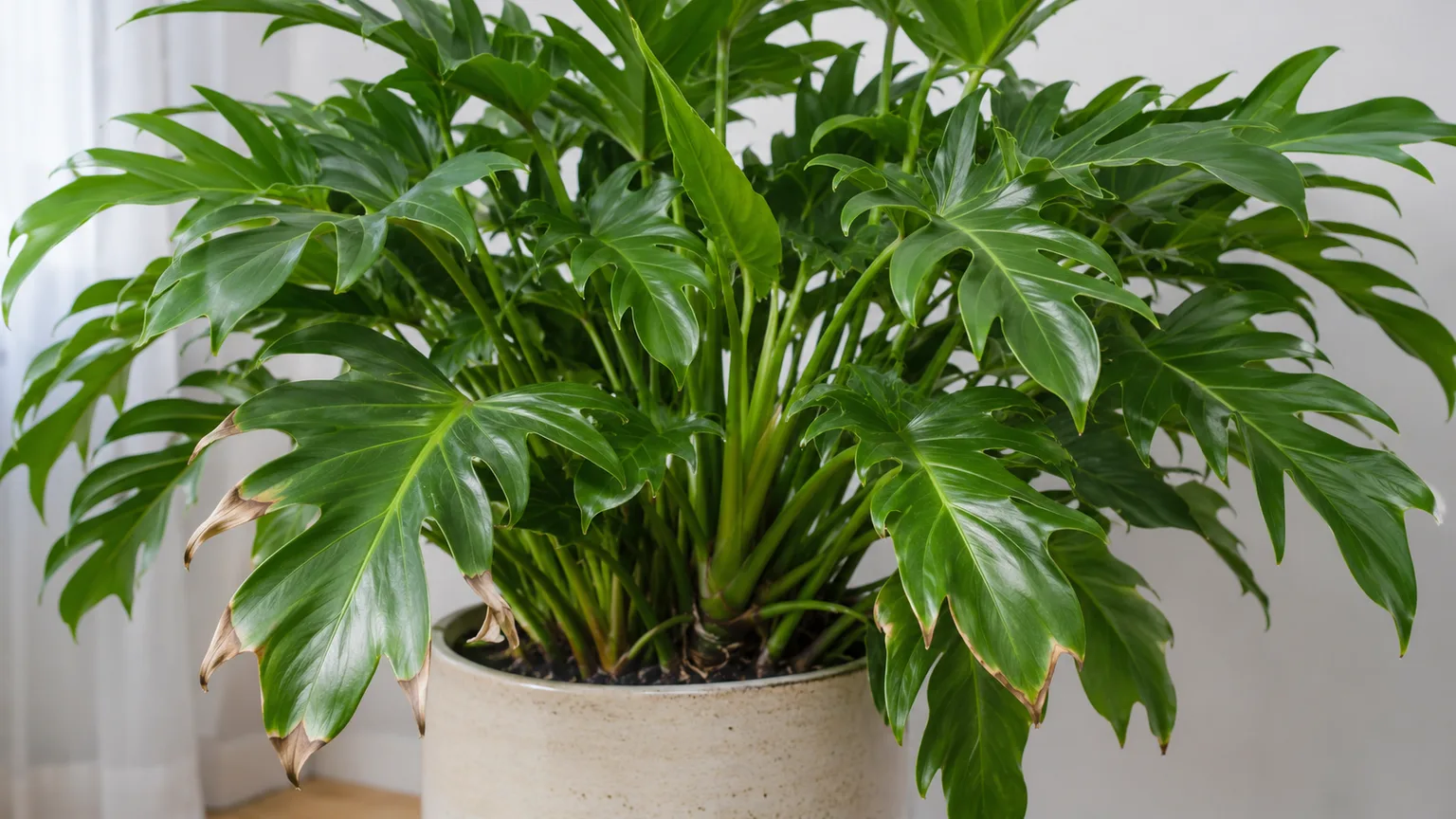
Brown Tips on Philodendron Xanadu: Causes, Checks & Fixes
This guide covers brown tips on Philodendron Xanadu. See also the general Brown Tips guide, watering, and light pages for this plant.
Brown Tips on Philodendron Xanadu: Causes, Checks & Fixes
Quick answer
Brown tips on Philodendron Xanadu most often mean dry air, letting the pot stay dry too long, or fertilizer salts building up in the mix. First fix: soak the pot thoroughly until water runs freely from the drainage holes, empty the saucer, then do not water again until the top 3 to 5 cm feels dry. Browned tips will not turn green again, so judge success by clean new spears.
For the general mechanics of why leaf margins crisp first, see our brown tips guide. On Xanadu, the pattern usually shows up as crisping on the narrow lobe tips of the oldest outer leaves first, while the central spears stay green until the stress gets severe.
What brown tips look like on Xanadu
Xanadu leaves are wide and deeply lobed, so each lobe ends in a point with a thin margin. Those points lose moisture fastest, which is why browning starts there rather than in the middle of the leaf. Early damage is a pale tan edge a few millimeters wide that turns papery and dark brown as it dries out.
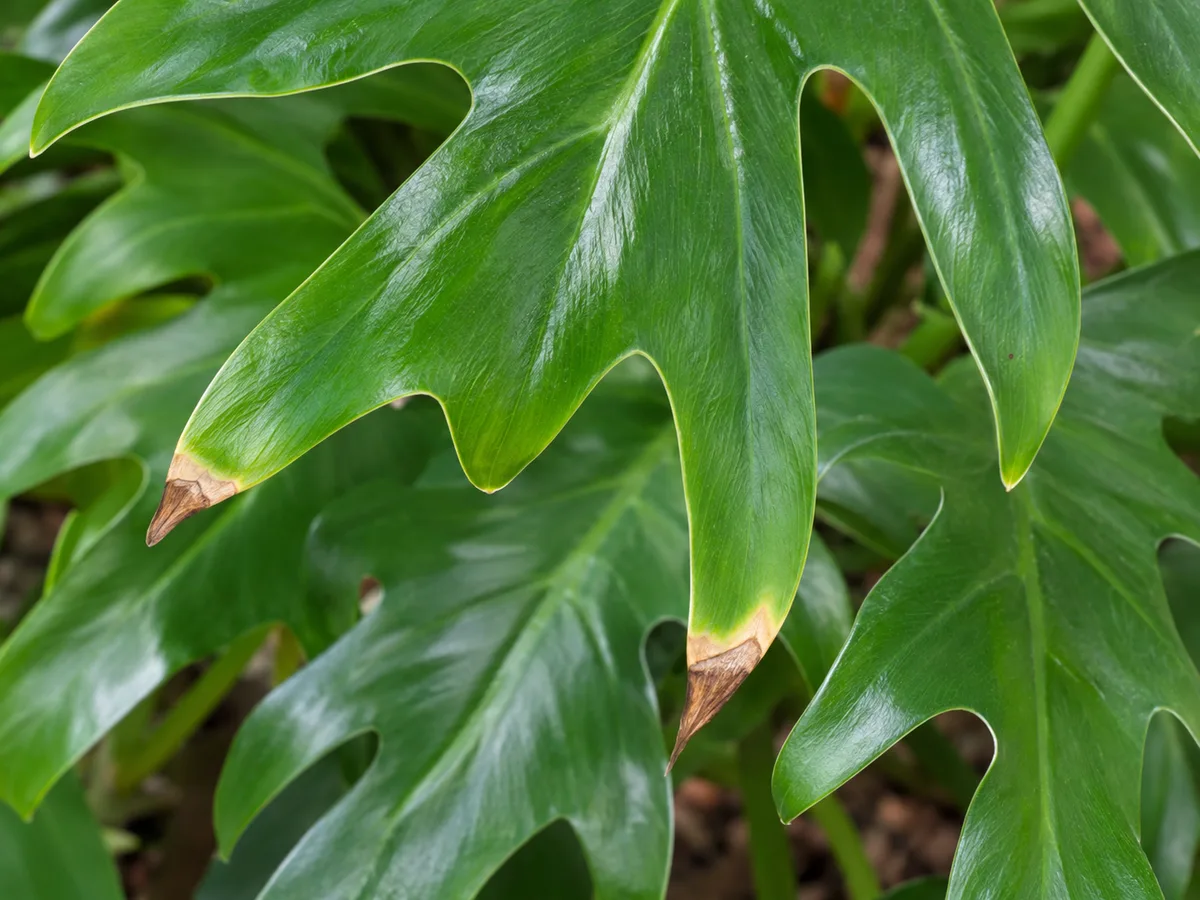
Brown tips start at the pointed lobe ends; compare older outer leaves with the central new spears.
Check the outer ring of leaves first. The oldest, lowest leaves in the mound show stress earliest, while the upright central spears stay green longer. When even the newest spear unfurls with brown edges, the stress has been going on for weeks or is severe enough to reach actively growing tissue. Yellowing that spreads inward from the tip alongside the browning usually points to watering or salt trouble rather than simple dry air.
Why Xanadu browns at the tips
Xanadu is a self-heading type that builds a dense mound of large leaves from a central crown instead of vining. That full canopy pumps out a lot of moisture through its leaves, so it notices dry indoor air sooner than a small-leafed trailer would. Its comfort zone is moderate humidity around 50 to 60 percent, and winter heating or a nearby air-conditioner vent can drag room air far below that for months.
Watering rhythm is the second driver. Xanadu wants a full soak when the top 3 to 5 cm of mix dries, roughly every 7 to 10 days in summer and less often in winter. Owners who water in small sips keep the top damp while the lower root ball stays dry, and owners who wait until leaves droop let fine roots die back repeatedly. Both patterns show up as brown tips because damaged roots cannot supply the leaf margins.
The third driver is salt accumulation. Monthly feeding plus mineral-heavy tap water leaves soluble salts in the mix, and browning leaf tips or margins with yellowing lower foliage is the classic signal of overfertilization. Small pots and peat-heavy mixes that are rarely flushed make this worse on Xanadu, since salts concentrate exactly where its dense root ball feeds.
How to confirm the cause
Work through these checks in order and stop at the first one that clearly fails.
- Soil moisture at depth. Push a finger or chopstick 3 to 5 cm into the mix. Dust-dry means underwatering. Soggy several days after watering means the pot is staying too wet, which damages roots and produces the same brown tips.
- Salt signs. Look for a white crust on the soil surface or around the pot rim, and recall your feeding schedule. Heavy or frequent feeding plus even browning across many leaves points to salt buildup.
- Air dryness. Note what sits within two meters: radiators, heating vents, air-conditioner outlets, or a sunny draft. Tips that crisp only on the vent-facing side confirm dry air.
- Light position. Xanadu prefers bright but indirect light. Leaves pressed against hot south or west glass with bleached patches plus brown edges suggest scorch layered on top of dryness.
- Root inspection, only if needed. If the mix smells sour, stems feel soft at the base, or several leaves brown within days, slide the root ball out. Firm pale roots mean the problem is above ground; mushy dark roots mean rot is involved and the fix changes.
The first fix to try
Give the pot one deep leaching soak: water slowly and evenly until it runs freely from the drainage holes, wait ten minutes, repeat once, then empty the saucer completely. Clemson HGIC recommends exactly this approach because a full soak washes out the excess salts while guaranteeing the lower root ball gets wet, and their finger test — dry at the first joint means water — is the same dry-down check Xanadu needs.
Then change nothing else for two weeks except normal light. This pause matters because flushing resolves both a parched root ball and mild salt buildup at once, and stacking fertilizer, repotting, or sprays on top hides which problem you actually had.
Xanadu’s crown habit changes the rescue
Because Xanadu grows as a self-heading mound rather than a vine, there are no trailing stems to prune back and restart. Every new leaf comes from the central crown, so protect that crown above all else: keep water out of tight new spears, never cut into the crown to remove damage, and judge everything by what the next spear does.
Trimming is cosmetic and optional. If crisp tips bother you, snip the dead edge with clean scissors and leave a 2 mm brown margin so you do not cut living tissue and create a fresh wound. Never cut a leaf off at the petiole base just for brown tips — the remaining green tissue still feeds the crown.
Skip the moss pole instinct. Climbing philodendrons sometimes need support changes when stressed, but Xanadu spreads sideways by design. Giving it elbow room and rotating the pot a quarter turn monthly evens out the mound better than any stake.
Step-by-step recovery
After the initial flush, follow this order over the next month.
- Reset watering on the dry-down test. Water deeply only when the top 3 to 5 cm feels dry, matching the detail in the watering guide. If the pot still feels heavy a week after watering, the mix is holding too much water and needs more perlite at the next repot, as described in the soil guide.
- Raise humidity around the crown. Group plants together, run a humidifier, or set a pebble tray nearby, aiming for the 50 to 60 percent range. Misting gives minutes of relief and wets the crown, so prefer steady room humidity instead.
- Fix placement. Keep the plant in bright indirect light a meter or two from strong windows, out of direct midday sun and away from heat sources. The RHS philodendron guide keeps philodendrons above 15°C in indirect light with the compost drying slightly between waterings, which matches this routine.
- Pause feeding. Hold all fertilizer until two consecutive new spears open clean, then resume at half strength monthly in spring and summer only. The fertilizer guide covers Xanadu’s light feeding needs in detail.
- Flush periodically. Every second or third month, repeat the deep soak-and-drain to prevent salts from re-concentrating, especially if your tap water is hard.
Recovery timeline
Brown edges will not heal, so watch the crown instead. Within one to two weeks of the reset, further browning should stop spreading on existing leaves. Within three to six weeks in spring or summer, a new spear should unfurl fully green with intact lobe tips — that is your proof the fix worked. Winter recovery runs slower; one clean leaf over six to eight weeks still counts as progress.
If new spears keep emerging with brown edges after two full watering cycles, recheck for salt crust, move the plant away from heat, and consider whether the mix has collapsed into a dense brick that needs replacing in spring per the repotting guide.
Lookalike symptoms
| What you see | More likely | How to tell apart |
|---|---|---|
| Whole leaf yellows, then tips brown; mix stays wet | Overwatering or early root trouble | Pot feels heavy, soil smells stale; see the full problem list on the Xanadu problems hub |
| Dry papery patches anywhere on the leaf, not just tips | Sun scorch | Damage faces the window; bleached areas precede browning |
| Fine webbing and stippled fading under leaves | Spider mites | Shake a leaf over white paper and watch for moving specks |
| Soft brown spots with yellow halos after misting | Bacterial or fungal leaf spot | Spots start mid-leaf, not at lobe tips, and spread in wet conditions |
| Older leaves yellow evenly between veins | Natural aging or nutrient shortfall | Affects one or two oldest leaves at a time while new growth stays clean |
When several patterns overlap, work the watering and salt checks first — they cause most Xanadu tip browning — before assuming pests or disease.
Mistakes to avoid
- Watering on a fixed weekly calendar instead of the dry-down test, in either direction.
- Sprinkling extra fertilizer to green up damaged tips, which deepens salt burn.
- Misting the crown daily while room air stays dry, keeping new spears wet without raising humidity.
- Cutting brown tips back into green tissue, which opens wounds on an already stressed plant.
- Repotting, pruning hard, and spraying treatments in the same weekend for what is usually a watering or humidity issue.
One handling note: philodendrons contain insoluble calcium oxalate crystals and the ASPCA lists philodendron as toxic to cats and dogs, so wash hands after trimming and keep fallen leaf pieces away from pets and children.
How to prevent it next time
Build the routine around Xanadu’s mound habit. A chunky peat or coco mix with around 20 to 25 percent perlite in a pot with open drainage holes gives the dense root ball both moisture and air. Water to runoff, drain the saucer, and wait for the 3 to 5 cm dry-down every time — Gardening Know How’s Xanadu routine follows the same soak-and-let-dry rhythm. Feed lightly in the growing season, flush the pot a few times a year, and keep winter placement away from radiators while humidity holds near 50 percent or above.
When to worry
Most brown tips are cosmetic and correctable. Escalate when browning races across the plant in days, stems soften at the crown, the root ball smells rotten, or no new growth appears for two months in the growing season. Those point to crown or root rot, where unpotting, trimming dead roots with sterilized tools, and fresh mix are the only path. If the crown itself is mushy and collapses, the plant is unlikely to recover and replacing it is the honest call.
Related Xanadu guides
- Watering guide — use when the dry-down test, soak volume, or seasonal frequency is the open question.
- Light guide — use when leaves bleach, stretch, or scorch alongside the brown tips.
- Soil guide — use when the mix stays soggy or compacts and you suspect the pot environment, not the schedule.
- Fertilizer guide — use when salt crust, heavy feeding, or yellowing lower leaves suggest overfertilization.
- Repotting guide — use when roots circle the pot or the mix has collapsed and flushing no longer drains freely.
- Xanadu problems hub — use when the lookalike table above fits better than brown tips and you need a different diagnosis.
Related tool
Use the Brown Tips Diagnosis Tool to narrow the cause for brown tips on this plant before changing more than one care variable at a time.