Philodendron Xanadu Soil Mix: Drainage, Perlite & Recipe
Philodendron Xanadu Soil Mix: Drainage, Perlite & Recipe
Philodendron Xanadu Soil Mix: Drainage, Perlite & Recipe
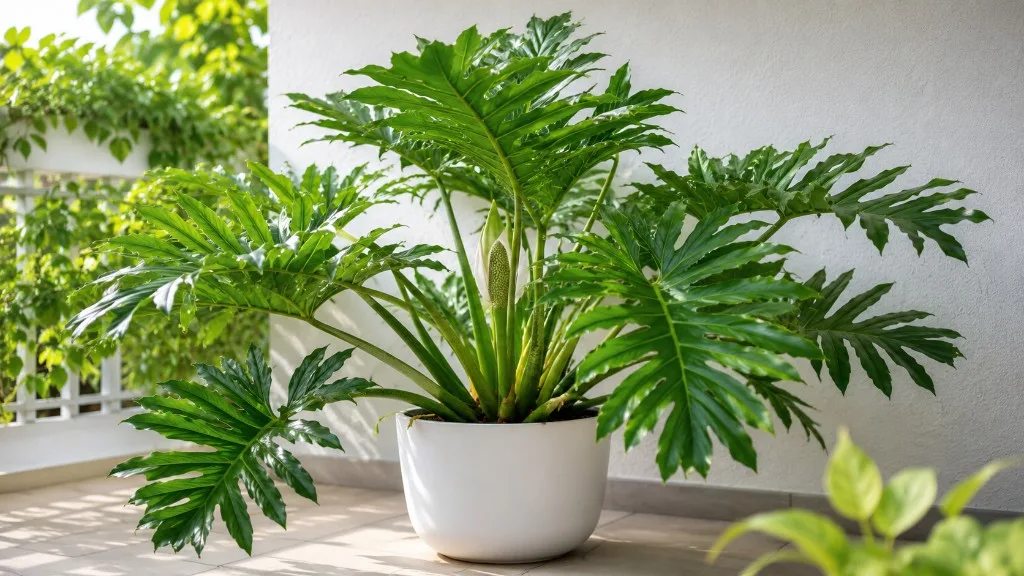
Philodendron Xanadu (Thaumatophyllum xanadu, still sold as a philodendron) is a compact, self-heading bush of deeply lobed leaves—not a climber that needs a moss pole. That shape changes how you think about soil. The crown spreads sideways from a central base, so roots occupy a wider, shallower plate than a vining Pink Princess on a pole. Heavy, peat-dense potting mix that stays wet for a week after watering suffocates those roots even when you water carefully. The right Philodendron Xanadu soil mix holds moisture in the middle of the root ball, lets the top 3–5 cm dry within a few days, and drains freely from the bottom after every thorough soak.
Clemson HGIC describes ‘Xanadu’ as a dense, low-growing self-header that matures around three feet tall. NC State Extension notes that philodendrons prefer moist, well-drained soil rich in organic matter with good drainage—exactly the tension indoor growers must balance in a pot. The RHS philodendron guide recommends a loose, free-draining compost slightly on the acidic side (around pH 5–6) and warns that oversize pots keep compost wet longer and rot roots. This page translates those principles into volume ratios, quick drainage tests, and repot steps tuned to Xanadu’s bush habit indoors.
Why Xanadu Soil Is About Drainage, Not Fancy Labels
“Well-draining aroid mix” on a care tag does not tell you whether your specific pot dries in two days or holds water for twelve. What matters is structure: air gaps between peat or coco particles and perlite grains that let oxygen reach roots while moisture moves through predictably. When that structure collapses after a year of watering—especially in plastic pots and humid rooms—roots lose oxygen within days of a soak. Anaerobic conditions follow, and root rot often appears as yellow lower leaves long before you notice a problem at the soil surface.
Xanadu is not more delicate than every philodendron, but its single crown concentrates risk. A vining plant might lose one stem and recover from nodes; a self-heading bush with crown rot has fewer backup growth points. Soggy mix that damages fine roots removes the buffer that keeps lobed leaves firm through a dim winter week. Good soil does not replace adequate light—it keeps roots healthy enough to use the light you provide.
What Xanadu Roots Need From Soil
Soil for Xanadu has one job: give aroid roots a stable, breathable environment that dries down predictably between waterings. That sounds simple until you open a bag of standard indoor potting mix formulated for dozens of unrelated houseplants, not a tropical plant whose roots rot quietly when oxygen runs low.
The three properties that matter most are drainage speed, aeration structure, and moderate moisture retention. Drainage speed determines how long the mix stays wet after you water. Aeration structure—gaps from perlite and optional bark—determines whether roots breathe while the mix is still damp. Moisture retention keeps the plant from drying so fast that you water every other day and stress roots with constant wet-dry swings.
Self-Heading Crowns and a Wider Root Plate
Tree philodendrons and their cultivars—including Xanadu—grow as self-heading plants that send leaves from a heavy clump at the base rather than climbing a support (Clemson HGIC). Indoors, Xanadu builds a mounded rosette of lobed leaves and spreads outward. Roots follow that footprint: a broader, relatively shallow mass compared with a single vertical vine in a tall narrow pot.
Do not bury the crown deeper at repotting to stabilize the plant. Keep the central growing point at the same soil line as before. Extra depth around the stem invites rot where petioles meet wet mix—especially in low light.
The Moisture-Aeration Balance for Bush-Form Aroids
The central tension in Xanadu soil is holding enough moisture for steady leaf production while keeping enough air in the root zone that roots never sit in stagnant water. Pure peat or straight coco absorbs water beautifully but compacts and suffocates roots without coarse amendments. Pure perlite drains fast but dries so quickly that you end up watering constantly.
The goal is a blend that holds moisture in the middle and lower root zone while letting the top 3–5 cm (1–2 inches) dry within a few days and excess water exit from the bottom within minutes of a thorough pour. When you squeeze a handful of properly mixed Xanadu soil, it should barely clump and fall apart easily when you open your hand—not form a tight mud ball and not crumble like dry sand.
Best DIY Soil Mix for Philodendron Xanadu
A reliable DIY mix is almost always better than unamended bagged soil for Xanadu because you control drainage yourself. You do not need exotic ingredients. You need the right ratios, a few minutes of thorough blending, and a pot with a drainage hole.
Core Recipe by Volume
Here is a percentage-by-volume recipe that works well for most indoor Xanadu setups in plastic or glazed ceramic pots with drainage holes:
- 70–75% quality peat-based or coco-based potting soil — structural base and nutrient anchor
- 20–25% perlite — primary aeration and drainage channels
- 0–10% orchid bark or pine bark fines — optional long-term structure in larger pots
For a single 20 cm (8-inch) pot refresh, that translates roughly to 3 cups potting base + 1 cup perlite + optional ½ cup bark. Scale proportionally for larger batches and store extra in a sealed tub labeled with the date.
Chunkier variant for humid homes, low-light corners, or growers who tend to overwater: use 60% potting soil, 30% perlite, 10% orchid bark. You will water slightly more often because the mix dries faster, but the root zone stays safer where soggy soil is the main risk.
Avoid using cactus or succulent mix as the sole substrate. It drains too aggressively for a tropical aroid that evolved in moisture-rich forest debris. Borrow perlite from a cactus blend as an amendment, but do not pot Xanadu straight into it unless you are prepared to water every few days and monitor closely.
Simpler Beginner Ratio (3:1 Potting to Perlite)
If you want the minimum effective blend: mix 3 parts quality potting soil with 1 part perlite (75% potting soil, 25% perlite). That matches the baseline in the Philodendron Xanadu overview and works well for most beginners in moderate indoor conditions. It is not as airy as the chunkier variant above, but it is dramatically better than straight bagged mix and takes thirty seconds to combine.
Push perlite to 30% when the mix stays wet on top for more than 3–4 days after watering, fungus gnats hover around the soil surface, or the pot sits in a cool, low-light corner. At 30% perlite, the mix feels noticeably lighter and dries faster—an intentional trade for lower root-rot risk.
Pumice substitutes for perlite at a 1:1 ratio if you prefer a heavier amendment that does not float to the top when you water aggressively.
When to Add Orchid Bark
Xanadu does not need the heavy bark load that climbing aroids in moss poles sometimes get. A standard 75/25 potting-to-perlite blend is usually enough for a 15–20 cm pot in average indoor humidity. Add 10–15% bark when:
- the pot is oversized for display and you need faster dry-down through the extra soil volume
- the room is consistently humid and surface mold appears
- you are repotting a mature plant into a wide floor container where compaction at the center is a risk
Skip bark in small starter pots—it can create uneven dry pockets before roots fill the container.
Drainage Speed and the Cup Test
Do not wait until your Xanadu yellows to find out whether a mix drains well. A one-minute percolation test takes less time than repotting and saves you from discovering a problem after roots are already stressed.
Step 1: Fill a small cup or 10 cm (4-inch) nursery pot with your dry mix. Do not pack it down.
Step 2: Pour 120 ml (½ cup) of water onto the surface in one steady pour.
Step 3: Watch the bottom. In a pot with a drainage hole, water should begin exiting within 10–30 seconds and finish draining within 2–3 minutes. The surface should darken evenly, not pool for more than a few seconds.
Step 4: After 24 hours, poke a finger 3 cm deep. The mix should feel lightly cool and barely damp, not wet and not bone dry.
If water pools on top for more than 10 seconds, add more perlite. If the cup is dusty dry at 24 hours, add a bit more peat or coco coir. If the mix slumps into a solid wet block, your organic component is too fine—rebuild with perlite before repotting a live plant.
The squeeze test complements the percolation check. Grab a handful of moistened mix and squeeze firmly. It should hold together briefly then crumble apart when you prod it with a finger. A tight, shiny mud ball means too little perlite.
Pot Choice and Container Setup
Soil mix and container setup work as a system. The best blend fails in a pot with no exit for water.
Yes—Xanadu needs at least one drainage hole in the grow pot. A hole at the bottom lets excess water leave the root zone after a thorough watering and pulls fresh air in as the mix dries. Without it, water accumulates at the bottom even if the top looks dry, and roots suffocate in that hidden reservoir (Clemson HGIC — indoor containers).
Decorative cachepots without holes are fine as display pieces if the plant lives in a plain nursery pot or inner pot with drainage that lifts above any collected water. After watering, empty the cachepot saucer within 30 minutes. Never let Xanadu sit in standing runoff.
The gravel-at-the-bottom trick does not fix poor drainage. Wisconsin Extension notes that gravel can actually inhibit drainage by creating a perched water table where fine soil above stays wetter than you expect. Fix the mix and the hole size—do not add a false bottom layer.
Choose a pot only 2–5 cm (1–2 inches) wider in diameter than the current root ball when repotting. Xanadu spreads sideways, but an oversized pot still surrounds a small root system with a large volume of mix that stays wet for days after each watering—one of the most common causes of root stress in otherwise attentive homes. Full timing and sizing detail lives on the repotting guide.
Plastic and glazed ceramic pots retain moisture longer and suit most growers. Terracotta wicks water through its walls and dries the mix faster (Clemson HGIC — indoor containers)—useful if you chronically overwater, but stressful if you already run a dry home or use a high-perlite blend.
pH, Peat-Free Options, and Salt Buildup
Xanadu prefers slightly acidic soil, typically in the pH 5.5–6.5 range common to peat-based and coco-based potting mixes. The RHS lists philodendrons around pH 5–6 with a loose, free-draining compost. NC State records acidic to neutral pH (6.0–6.5) with good drainage for philodendron culture. Most quality bagged indoor mixes land near this range out of the bag, so hobbyist growers rarely need to adjust pH chemically.
Peat-free mixes based on coco coir and composted bark work well if you compensate with extra perlite—coir alone can hold water tightly. Blend peat-free base with 25–30% perlite and test with the cup procedure above before repotting your only plant.
Salt buildup appears as a white or tan crust on the soil surface and along the pot rim. It comes from fertilizer, hard tap water, and the natural mineral content of peat. A light crust after a year is normal. A heavy crust that returns within weeks of scraping means you should flush the pot—water slowly and deeply until twice the pot volume runs from the drainage hole—or refresh the mix entirely at the next repot. Pair flushing with the fertilizer guide so you are not adding salts on top of a failing mix.
Do not add lime or sulfur to adjust pH unless you have a test result showing you are out of range. Blind adjustment creates more problems than it solves in a container with a single plant.
When to Refresh or Repot the Mix
Xanadu does not demand annual repotting, but it outgrows degraded mix faster than slow-growing succulents. Plan to refresh soil every 1–2 years (NC State notes container Xanadu may need repotting on that cadence), or sooner if you see clear signals that the root zone is failing.
Repot in spring or early summer when the plant is entering active growth. Roots repair faster, new lobed leaves fill the crown quickly, and you are less likely to trigger prolonged transplant stress. Avoid repotting in late fall or winter unless the situation is urgent—visible root rot, a completely collapsed mix, or a plant that is root-bound to the point where water runs straight through without moistening anything.
Signs it is time to repot or refresh the mix:
- roots circling the bottom of the pot or emerging from drainage holes
- water runs down the sides without absorbing (hydrophobic, degraded peat)
- the mix smells sour, swampy, or stagnant
- the soil surface stays wet for a week despite conservative watering
- growth has stalled and new leaves are smaller than last season
Soil vs Watering: Reading the Root Zone Together
Soil and watering are one system. A perfect perlite blend still fails if you pour on a fixed weekly schedule while the top 3–5 cm stays damp. Conversely, careful dry-down checks cannot save roots in dense, degraded peat that never breathes.
Use pot weight as your honest signal. Lift the pot when the top 3–5 cm is dry and again right after a thorough watering. Learning the weight difference helps you water by heft instead of calendar habit—especially useful when dense Xanadu foliage shades the rim and the surface looks dry while the core stays wet.
If leaves yellow on wet mix, check soil structure before watering less. Chronic wetness with sour smell points to root rot or yellow leaves from overwatering—escalate to unpotting and fresh mix rather than waiting another week.
Common Xanadu Soil Mistakes
Using straight bagged potting soil with no perlite. Fix: blend the existing mix with 25–30% perlite, or replace entirely with a fresh 75/25 recipe.
Oversized decorative pot with no drainage. Fix: move the plant to a nursery pot with a hole that fits inside the decorative sleeve, or drill a hole if the material allows. Empty standing water after every watering.
Bottom gravel layer instead of better mix. Fix: remove the gravel, rebuild with proper perlite content throughout the blend.
Repotting into a pot three sizes too large after seeing fast summer spread. Fix: step up one size only. A 20 cm pot goes to 23–25 cm, not 30 cm.
Adding a moss pole expecting larger split leaves. Fix: Xanadu is self-heading—give horizontal space for the crown, not vertical climb support. See the overview for habit notes.
Using garden soil or reused outdoor mix. Fix: Wisconsin Extension warns that garden soils often contain root-rot fungi. Use pasteurized commercial potting mix only.
Ignoring sour smell because leaves still look green. Fix: repot immediately into fresh mix and inspect roots. Sour smell means anaerobic conditions—rot may already be underway.
Step-by-Step Repotting With Fresh Mix
Step 1: Water lightly the day before so roots are flexible, not brittle.
Step 2: Choose a pot 2–5 cm (1–2 inches) wider with a drainage hole. Prepare enough fresh mix to fill the new container.
Step 3: Gently slide the plant out. Tease circling roots apart with your fingers; trim only mushy brown rot, not healthy white or tan roots.
Step 4: Add fresh mix to the bottom so the root ball sits at the same depth as before. Do not bury the crown deeper than it was—that invites stem rot at the petiole bases.
Step 5: Fill around the sides with mix, tapping the pot to settle without compacting. Leave a small gap below the rim for watering.
Step 6: Water once until excess drains, empty the saucer, then wait for the top 3–5 cm to dry before the next soak. Skip fertilizer for four to six weeks while roots settle—details on the fertilizer guide.
For division when multiple crowns are visible, see the propagation guide.
When to Use This Page vs Other Philodendron Xanadu Guides
Use this soil page when you are choosing or amending mix, testing drainage, picking a pot material, or repotting primarily to fix substrate—not when you are debugging how often to pour water. The watering guide owns dry-down rhythm and soak technique. The light guide owns window placement and warning signs of too little brightness—light changes how fast your mix dries. The repotting guide overlaps on timing and pot sizing; return here for recipe ratios and drainage tests. If leaves are yellow on wet mix despite good habits, escalate to root rot or yellow leaves before buying another bag of soil.
Related Philodendron Xanadu Guides
- Overview — growth habit, size, and why Xanadu does not need a moss pole
- Watering — check-first rhythm that pairs with your mix
- Light — brightness levels that change dry-down speed
- Repotting — when to move up a pot size and root-health checks
- Fertilizer — feeding after fresh soil, salt flush timing
- Propagation — division at repot when multiple crowns appear
Conclusion
Philodendron Xanadu rewards boring, well-drained soil more than expensive specialty blends with trendy labels. Mix quality potting soil with 20–25% perlite, confirm drainage with a quick cup test, use a pot only slightly larger than the root ball, and refresh the substrate every year or two before peat collapses. Match your watering checks to how that mix actually dries in your room—not to a social-media schedule—and escalate to root inspection when smell or yellowing says the root zone has already failed. Get those basics right and this self-heading bush stays firm, lobed, and low-maintenance for years.