Underwatered Philodendron Xanadu: Limp Lobes, Dry Pot &
Quick answer
Underwatering on Philodendron Xanadu shows as limp deeply lobed leaves on long petioles, dry crispy lobe edges, a noticeably light pot, and dusty-dry mix in the top 3–5 cm—while the central crown stays firm. First step: confirm a dry root zone and a firm crown, then give one deep soak until water drains freely and empty the saucer.
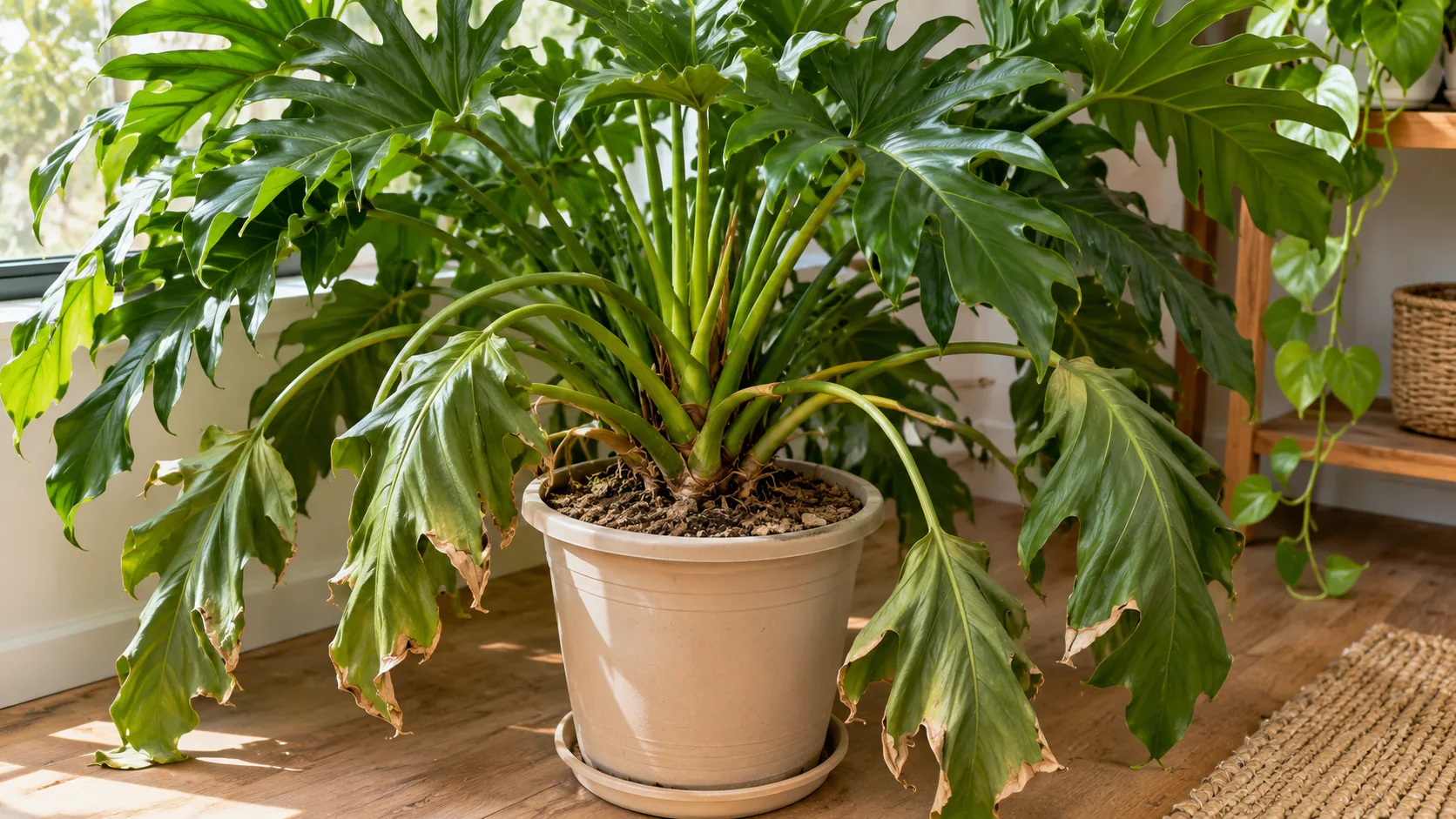
Underwatering on Philodendron Xanadu: Causes, Checks & Fixes
This guide covers underwatering on Philodendron Xanadu. See also the general Underwatering guide, watering, and light pages for this plant.
Underwatering on Philodendron Xanadu: Causes, Checks & Fixes
Quick answer
Underwatering on Philodendron Xanadu means the deeply lobed leaves go limp on their long petioles, lobe edges turn dry and crispy, and the pot feels strikingly light—while the central crown stays firm. For how chronic dryness stresses houseplants in general, see our underwatering guide. On Xanadu, the first fork is pot weight plus crown firmness: light dry pot + firm crown = thirst; heavy wet pot + soft crown = rot, not drought.
First step: confirm a dry root zone and a firm crown, then give one deep rehydration. Water slowly until it runs freely from every drainage hole, empty the saucer within 15 minutes, and wait for turgor before deciding anything else. Do not fertilize or repot the same day.
When to use this page vs other Philodendron Xanadu guides
| Pattern | Read next |
|---|---|
| Light dry pot, limp lobes, firm crown (this page) | Stay here |
| Limp leaves on a heavy wet pot with yellowing lower leaves | Philodendron Xanadu problems hub for the wet-soil path |
| Crispy edges only while the mix stays reasonably moist | Philodendron Xanadu light and Philodendron Xanadu soil |
| Fine stippling or webbing under the lobes | Philodendron Xanadu problems hub for the pest path |
| Whole-plant context, placement, and buying checks | Philodendron Xanadu |
| Soak timing and dry-down rhythm once leaves recover | Philodendron Xanadu watering |
What underwatering looks like on Philodendron Xanadu
Xanadu carries a dense mound of large lobed leaves on long petioles, so drought reads first in leaf posture and pot weight rather than color change.
Early signs
- Light pot when lifted—clearly lighter than after a thorough soak
- Limp or drooping lobed leaves while petioles and crown still feel firm
- Dry, papery lobe edges or tips on an otherwise green leaf
- Dusty-dry mix in the top 3–5 cm well before the next expected watering day
- Duller foliage that loses its gloss in a warm bright room
Advanced signs
- Several lobes hang limp at once and the mound looks deflated
- Mix pulling away from the pot wall, with the next watering racing down the gap
- Newest crown leaf stalls or opens noticeably smaller than the last one
- Older outer leaves crisp fully and shed while the crown keeps declining
- A hydrophobic root ball that stays dry in the center after a quick top splash
Firm crown + light dry pot is the classic thirst picture. Soft crown tissue on wet heavy soil is not underwatering—hold the water and work the wet-soil path instead.
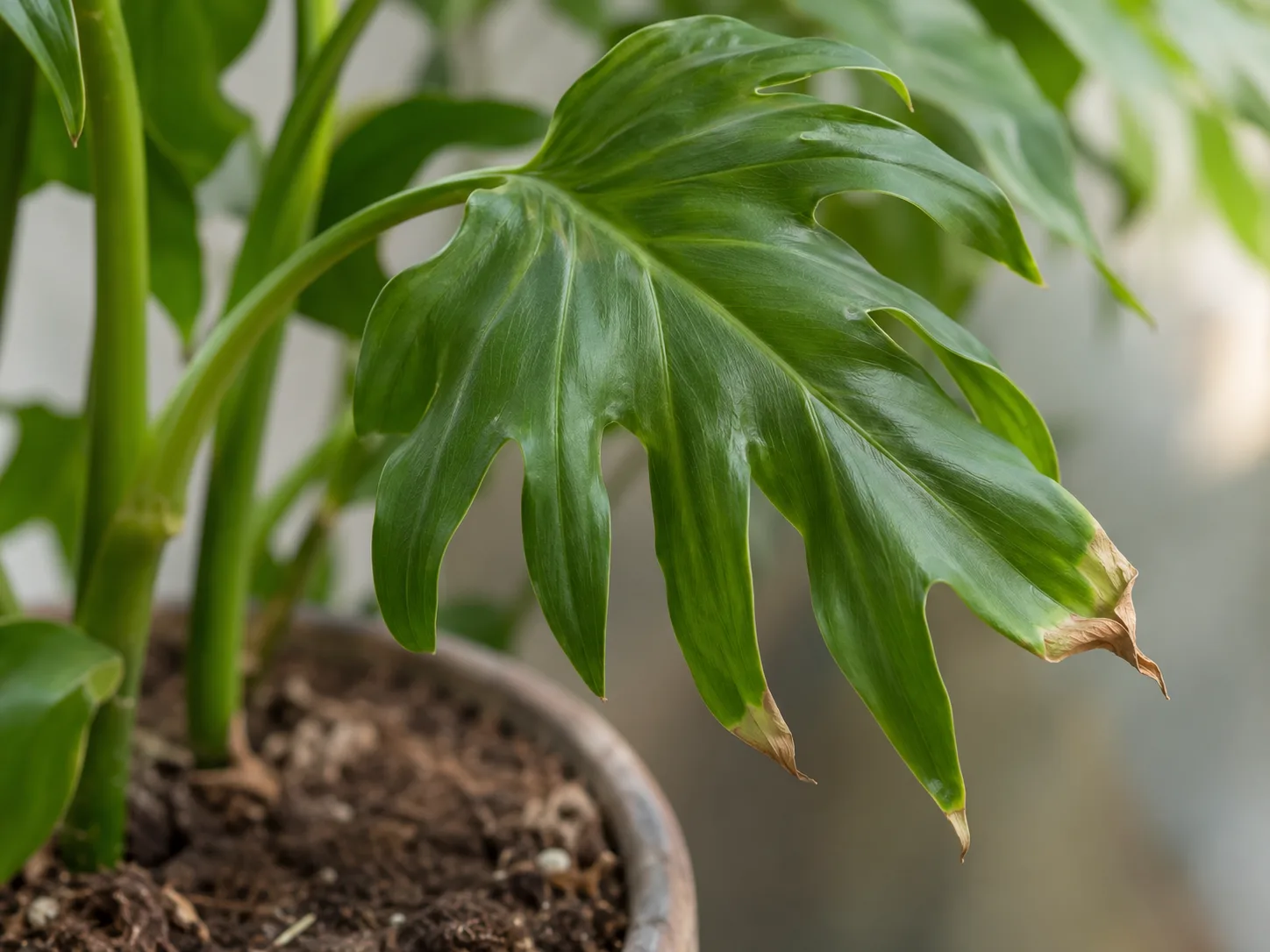
Drying mix can leave the lobed leaves limp while their edges turn papery and crispy.
Crown-first check: why the single growing point sets the stakes
This check is Xanadu-specific. The plant is a self-heading type that builds every new leaf from one central crown rather than vining outward, so all recovery depends on that single point staying sound.
- Firm crown just above the soil + light dry pot — Thirst path; rehydrate once.
- Firm crown + newest spear leaf merely stalled on dry mix — Early drought; one deep soak usually restarts it.
- Soft or darkened crown on wet sour mix — Crown decline; stop watering and let the root zone dry while you assess roots.
- Limp leaves on wet mix with a firm crown — Uptake failure after earlier damage; probe roots instead of stacking another soak.
- Newest crown leaf firms within a day of a soak — Strong recovery signal even if older crispy margins stay brown.
Handle limp foliage gently while you check: the long leaf stalks of self-heading types are brittle, so press the crown with a fingertip rather than yanking petioles. Trust crown firmness at the soil line over how dramatic the outer lobes look—a Xanadu can shed edge tissue fast while the crown is still saveable.
The 3–5 cm dry-down check on a lobed-leaf mound
Xanadu’s dense canopy shades the pot rim, so the surface lies in both directions: it can look pale while the center stays wet, or feel briefly damp after a sip while the core stays thirsty. Read the pot, not the calendar:
- Finger test: push an index finger to the second knuckle, about 3–5 cm deep, in two spots away from the crown. Cool soil that clings to skin means wait; dry crumbly mix means the plant is ready.
- Skewer probe: slide a dry wooden skewer toward the pot bottom, wait thirty seconds, and feel the shaft. Damp wood means moisture remains below; clean dry wood supports watering.
- Pot weight: lift after a thorough watering to learn the heavy reference, then lift every few days. Noticeable lightness plus a dry top 3–5 cm is a stronger signal than leaf posture alone, because Xanadu can look tired in afternoon warmth even when the mix holds enough moisture.
Small nursery pots in bright spots can hit the dry mark in under a week in summer; large floor pots in moderate light may take two. Let the checks set the interval.
Why Xanadu gets underwatered
Thaumatophyllum xanadu is believed native to southern Brazil and Paraguay, where it grows as a dense mounding shrub, and UF/IFAS rates its moderate drought tolerance—enough to forgive one missed drink, not enough to thrive on neglect. Container life sharpens the demand: many lobed leaves transpire freely while a finite pot swings from moist to hydrophobic fast.
Common accelerators:
- Fear after overwatering — One yellow-leaf scare pushes owners to wait until lobes collapse, because yellowing of the leaves will occur if overwatered. Firm dry crowns still need a drink; soft wet crowns need less.
- Small pots in bright warm spots — A 15 cm pot near a bright window dries in days while the owner still waters on a fortnightly habit.
- Winter heating gaps — Warm dry room air pulls moisture steadily while short dim days slow visible growth, so checks get skipped exactly when pots still dry.
- Hydrophobic peat — Surface looks briefly damp while the center stays dry, faking a completed watering.
- Root-bound pots — A dense root mass drinks the mix dry faster than the old schedule assumes. NC State notes container plants may need repotting every 1 to 2 years; an overdue pot is a frequent hidden cause.
- Misreading wet-soil wilt — Limp leaves on soggy mix mean roots cannot take up water, not that the plant wants more. That paradox sends people into drought fear after they finally stop pouring.
How to confirm the cause
Work in this order so you never soak a rotting crown:
- Pot weight — Compare with how it felt right after the last good soak. Very light strongly favors drought.
- Depth moisture — Finger-test the top 3–5 cm in two spots away from the crown. Dusty dry means you can water; cool clinging mix means wait.
- Peat gap check — Look for mix shrunk from the pot wall; that supports hydrophobic drought.
- Crown press — Firm on dry mix means thirst. Soft on wet mix means the rot path.
- Smell — A sour wet odor from the drainage holes means stop—not underwatering.
- Newest crown leaf vs older outer leaves — Active limpness climbing into new crown growth is more urgent than one fading bottom leaf.
- Light and heat context — Bright warm placement raises demand; dim cool corners use less. Xanadu prefers bright but indirect light indoors, and a plant moved closer to a window needs its interval rechecked.
The first fix to try
When pot weight, depth dryness, and a firm crown agree, give one thorough rehydration:
- Water slowly across the mix—not into the crown—until free drainage appears from every hole.
- If water races down a peat gap, stand the nursery pot in a tray of room-temperature water for about 20 minutes, then top-water once to flush the center. Lift out and drain fully.
- Empty the saucer and cachepot within 15 minutes. Never leave standing water after a rescue soak.
- Return the plant to its usual bright indirect spot and leave it alone.
Wait 12–24 hours before the next decision. Lobes should look firmer and the pot should feel heavier. If leaves stay limp on wet mix, this was never underwatering—stop watering and inspect the root zone.
Do not fertilize a drought-stressed Xanadu to wake it up. Do not strip every scorched leaf for cosmetics before turgor returns.
Rehydrating shrunken peat without drowning the crown
Container Xanadu often sits in peat-heavy mix that shrinks when bone-dry, opening a gap at the pot wall. The next top-water races down that gap and exits the holes while the root ball stays thirsty—a pattern this plant invites because its dense root mass fills the pot and dries it unevenly.
How to read it:
- Gap at the rim plus a pale dusty core means drought with hydrophobic mix, not good drainage.
- After one rescue soak, resume the watering guide rhythm—deep soak when the top 3–5 cm is dry—rather than daily surface sips that keep the crown damp while the wider root zone stays patchy.
- If the mix resists rewetting for several cycles, plan a later move into the freer-draining but moisture-retentive blend from the soil guide—not an emergency day-one repot unless roots are failing. Philodendrons want soil evenly moist, but not soggy, and a mix that cannot rewet cannot deliver that.
Recovery timeline and what improves
Mild underwatering in warm weather usually shows visible leaf firmness within hours to a day after one proper soak, thanks to that moderate drought tolerance. Judge progress by the crown, not the oldest leaves.
| Timeframe | What you should see |
|---|---|
| 4–24 hours | Lobes look less limp; pot weight up |
| 2–7 days | Newest crown leaf stands firmer and opens cleaner |
| 2–4 weeks | Growth rhythm resumes on the dry-down cycle; no new crisping |
Crispy brown margins and fully desiccated lobes will not re-green. Recovery means new crown leaves stay turgid and the problem stops spreading.
Once turgor returns, resume deep soaks keyed to the 3–5 cm dry-down—not daily teaspoons. The RHS advises letting the compost dry slightly between waterings while never leaving plants standing in water, which matches Xanadu’s moist-but-aerated target better than constant light sips.
Lookalike symptoms
| What you see | Likely cause | Next step |
|---|---|---|
| Firm crown, light pot, dry depth probe, limp lobes | Underwatering (this page) | One deep soak; bottom-water if hydrophobic |
| Soft crown, wet heavy pot, sour smell | Crown or root decline from excess water | Problems hub for the wet-soil path |
| Yellowing lower leaves on damp mix | Overwatering stress | Problems hub for the wet-soil path |
| Tip crisping only on moist mix in dry heated air | Low humidity or salt buildup | Light and soil guides for placement and mix |
| Fine stippling with webbing under lobes | Spider mites | Problems hub for the pest path |
| One old outer leaf yellowing while the crown grows well | Natural aging | Whole-plant hub for normal habit context |
Xanadu also suits life as a houseplant in bright, indirect light or a shaded patio container, and each setting dries at its own speed—confirm the pot before borrowing a diagnosis from another symptom.
Mistakes to avoid
- Soaking a soft crown on wet mix because the leaves look thirsty.
- Daily surface sips that wet the crown while the root ball stays uneven.
- Leaving the pot sitting in runoff after a rescue soak.
- Fertilizing or hard-pruning the crown the same day as the first rehydration.
- Stripping every scorched lobe before turgor returns and hides which tissue is alive.
- Repotting on day one for simple thirst—reserve that for failing roots or a hopelessly hydrophobic mix.
- Treating Xanadu like a succulent that prefers staying dry; it wants steady moisture with air, not extended bone-dry spells.
How to prevent underwatering next time
Build a check habit, not a calendar:
- Finger-test the top 3–5 cm and lift the pot; water deeply when both say dry, then drain completely—see Philodendron Xanadu watering.
- Prefer mixes that hold moisture without sealing off oxygen—see Philodendron Xanadu soil.
- Keep placement in bright indirect light so drying stays predictable—see Philodendron Xanadu light.
- Stretch intervals when growth slows in cool dim months; tighten checks in warm bright ones.
- After any hydrophobic episode, confirm the center rewets before you celebrate.
- Hold fertilizer until new crown growth looks turgid for about two weeks.
Related Philodendron Xanadu guides
- Philodendron Xanadu — habit, crown growth, and how water fits the full routine
- Philodendron Xanadu watering — deep soak timing and the dry-down rhythm
- Philodendron Xanadu soil — mixes that make deep soaks safe without waterlogging
- Philodendron Xanadu light — placement that keeps drying predictable
- Philodendron Xanadu problems hub — symptom-specific guides when drought is not the match
Related tool
Use the Plant Watering Calculator to estimate check intervals for your pot size and light before you change multiple variables at once.