Mealybugs on Philodendron Xanadu: Causes, Checks & Fixes
Quick answer
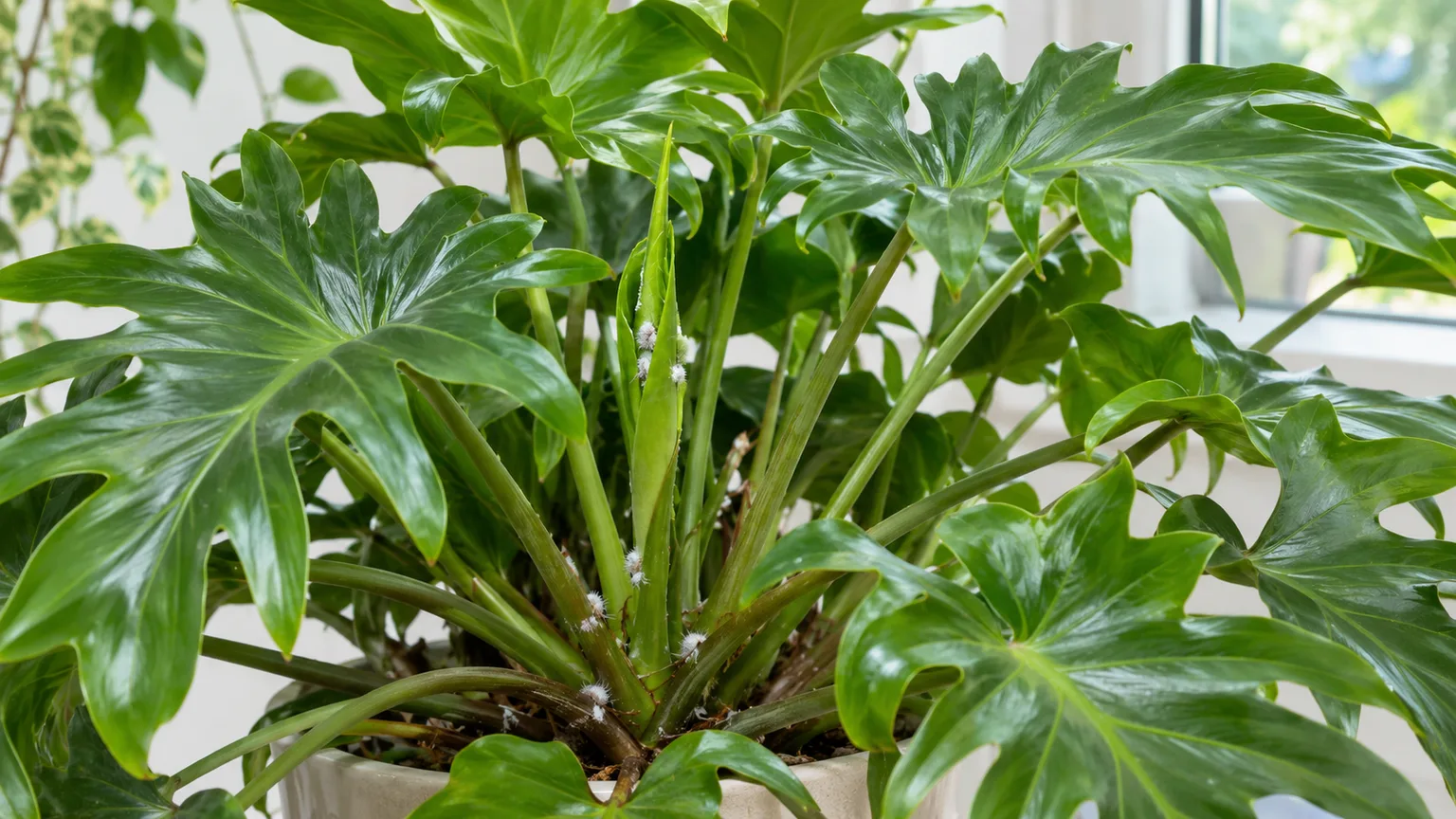
Mealybugs on Philodendron Xanadu look like white cottony tufts packed into the crown, petiole bases, and unfurling leaf spears. First step: isolate the plant and dab every visible insect with a cotton swab dipped in 70% isopropyl alcohol, then recheck weekly until no new cotton appears.
Mealybugs on Philodendron Xanadu: Causes, Checks & Fixes
This guide covers mealybugs on Philodendron Xanadu. See also the general Mealybugs guide, watering, and light pages for this plant.
Mealybugs on Philodendron Xanadu: Causes, Checks & Fixes
Quick answer
Mealybugs on Philodendron Xanadu show up as white, cottony tufts packed into the plant’s dense central crown — where the many petioles meet the base — plus the undersides of the broad lobed leaves and inside still-unfurling leaf spears. Sticky honeydew on lower leaves and a black sooty film are confirmation that the colony is actively feeding.
First step: isolate the plant, then dab every visible cottony tuft with a cotton swab dipped in 70% (or weaker) isopropyl alcohol. UC IPM advises exactly this spot treatment with isopropyl alcohol for small houseplant infestations, with a small test patch checked 1 to 2 days beforehand for leaf burn. For how mealybugs feed and spread in general, see our mealybugs pest guide. On Xanadu, the job is won or lost in the crown — dab the hidden petiole bases, not just the obvious leaf-top cotton.
What mealybugs look like on Philodendron Xanadu
Adult mealybugs are tiny — about 2 to 4 mm long, roughly sesame-seed size — oval, slow-moving, and coated in white waxy fluff that looks like miniature cotton balls. On Xanadu, start your search where the plant’s architecture gives them shelter: the crowded crown, the grooves where each petiole meets the stem, the undersides of leaves near the midrib, and the furled new spears pushing up from the center.
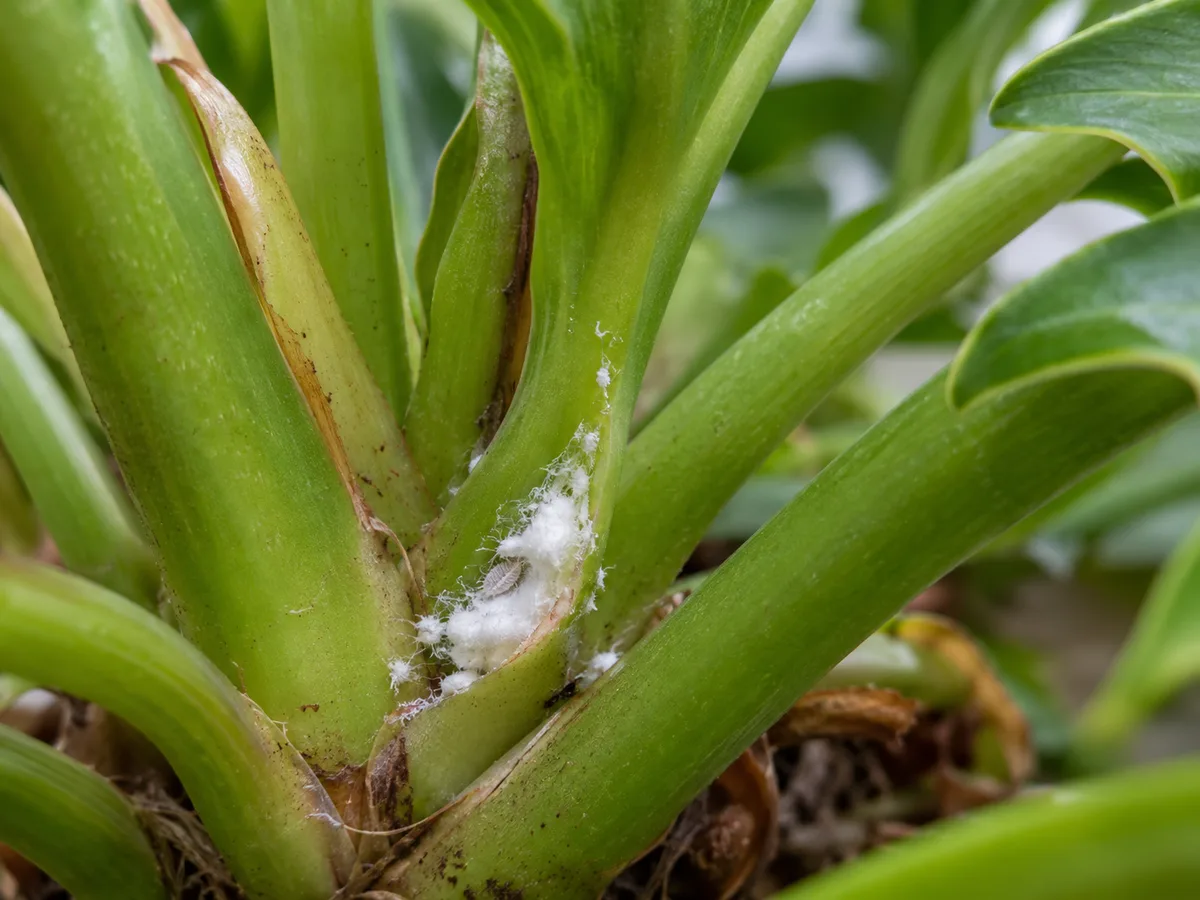
Mealybugs shelter in the tight grooves where Xanadu leaf petioles meet the crowded crown.
This hiding habit is textbook mealybug behavior. The RHS notes that glasshouse mealybugs live together in clusters in inaccessible parts of plants such as leaf axils and leaf sheaths — and a mature Xanadu is essentially a stack of such hiding places. Eggs sit inside the cottony sacs, so a tuft you ignore today becomes crawlers across the crown within weeks.
Feeding signs follow the cotton. Leaves yellow, new spears emerge small or distorted, and heavily fed leaves may drop. Sticky honeydew coats leaves below the colony, and that honeydew grows black sooty mould that weakens the plant by shading the leaf surface. NC State lists mealybugs among the occasional problems on tree philodendrons in the Xanadu group, so this is a known — not freak — pest for this plant.
Why Xanadu gets mealybugs
Three traits of this plant stack the odds. First, the clumping growth habit: dozens of leaves rising from one crown create warm, still, hard-to-inspect crevices where a colony can build for weeks before you notice. Second, Xanadu is a long-lived indoor anchor plant that rarely gets rotated or showered, so dust builds on the big lobes and early cotton blends in. Third, stressed plants in dim corners with erratic watering are easier targets, and colonies most often arrive on a newly purchased plant placed straight beside the collection.
Xanadu’s normal care sets the baseline. NC State describes these tree philodendrons as wanting moist, well-drained soil high in organic matter with high light and moderate humidity. A plant stuck in a dark corner with soggy or bone-dry mix is not the direct cause of mealybugs, but it slows new growth and makes damage look worse faster. Cross-check your setup against our Philodendron Xanadu watering guide and light guide once the insects are under control.
How to confirm the cause
Work through these checks in order before treating:
- Crown parting — Gently push the petioles apart and look into the base of the crown with a phone flashlight. Fresh cotton tucked between petiole bases is the signature find.
- Spear inspection — Unfurl each new spear visually without forcing it open. Cotton inside the furled blade means the colony is established, not a one-off hitchhiker.
- Smear test — Touch a suspect tuft with a damp cotton swab. Mealybug wax smears into a mustard-yellow streak with a soft insect body inside; dust, perlite, or dried fertilizer wipes away clean with nothing living underneath.
- Undersides and stems — Flip several leaves and scan along the midrib and veins, then run a finger along stems for stickiness. Honeydew on leaves below the colony confirms active sap feeding above.
- Soil surface and pot rim — Look for white specks, fine webbing-like wax, or sluggish crawlers at the mix surface. The RHS notes some mealybug species feed on roots, so a plant that keeps reinfesting after thorough crown treatment deserves an unpotting to inspect the root ball.
- Neighbor check — Inspect every plant within arm’s reach, especially recent additions. Mealybug crawlers spread between plants readily, so a clean Xanadu beside an infested neighbor will not stay clean.
Rule out lookalikes as you go: soft scale forms hard brown bumps rather than loose cotton; spider mites leave fine webbing plus yellow stippling without cotton sacs; edema shows as corky dry bumps on leaf undersides that never smear.
The first fix for mealybugs on Xanadu
Isolate the plant, then swab every visible insect with 70% (or weaker) isopropyl alcohol on a cotton swab. Move the Xanadu to a separate room or at least several feet from other houseplants first — standard indoor-pest IPM practice for managing insects on indoor plants — because crawlers wander. Then work methodically through the crown: dab each tuft, twist the swab into petiole joints, and press gently into the base of unfurling spears.
Test first. Dab one leaf and wait 1 to 2 days to check for burn before treating the whole plant, since alcohol can cause leaf burn on sensitive tissue. Xanadu’s thick leathery leaves usually tolerate it, but the pale new spears are the most tender part — go lighter there. This one action — full isolation plus a complete crown swabbing — kills the insects you can see on day one without drenching the plant in sprays it may not need.
Follow-up treatment ladder
After the day-one swabbing, escalate only as far as the rechecks demand:
- Shower light residue. For remaining crawlers, a firm rinse in the shower or sink dislodges insects from leaf surfaces. This suits light infestations best, so treat it as cleanup after swabbing, not the whole plan — water alone cannot reach wax-packed colonies deep in the crown.
- Spray wider colonies weekly. Where tufts cover many petiole bases, UC IPM supports applying a 10 to 25% alcohol solution with a spray bottle, repeated every week until the infestation is gone. Coat the crown joints and leaf undersides, not just leaf tops.
- Smother the nymphs. Insecticidal soap, horticultural oil, or neem oil applied directly onto the insects gives suppression especially against younger nymphs with less wax protection. Test for burn first, apply in the evening out of direct sun, and never stack oil and alcohol on the same day.
- Prune the worst leaf. If one petiole base is matted solid with cotton and honeydew, cut that leaf at its base and bag it. Removing one leaf from a full Xanadu costs little and deletes an egg bank.
- Recheck on a clock. Inspect the crown weekly for at least four to six weeks, because eggs hidden in wax keep hatching after adults die — a pace that matches the roughly 30-day mealybug generation. No new cotton for three straight weekly checks means you are clear.
Recovery timeline
Expect the plant to look unchanged for the first week or two even when treatment is working — dead wax stays visible until you wipe or rinse it away, so judge by new cotton, not old residue. Within two to three weeks of consistent weekly checks, fresh honeydew should stop appearing and the next spear should unfurl clean. Yellowed lower leaves will not green up again; trim them once clean growth resumes so the plant’s energy story reads clearly. A heavy infestation with sooty mold across many leaves needs six to eight weeks before the canopy looks presentable, since each new lobe takes time to size up.
Mistakes to avoid
Do not fertilize a mealybug-stressed Xanadu to “help it recover” — soft nitrogen-pushed growth is easier sap-sucking fodder, and feeding never kills insects. Do not spray alcohol, soap, or oil in bright direct sun or combine them the same day; burn plus pests is worse than pests alone. Do not repot on day one unless you confirmed root-zone mealybugs — tearing up the root ball of an already stressed plant spreads crawlers through spilled mix for no gain. And do not declare victory after one swabbing; the wax-protected egg sacs are the reason weekly repeats exist.
Philodendron Xanadu care cross-check
Once insects are under control, fix the conditions that let damage snowball. Confirm the pot drains freely and the top inch or two of mix dries between waterings per our Philodendron Xanadu watering guide — chronic sogginess invites the root problems NC State warns about in overly damp soil. Give bright indirect light per the light guide so new spears emerge vigorous, and refresh tired compacted mix following the soil guide. A plant pushing strong new growth outgrows cosmetic pest damage far faster than a stagnant one.
How to prevent it next time
Quarantine every new plant for two weeks where you can see its crown daily — most Xanadu infestations trace to an introduction, not spontaneous generation. Make crown parting part of your weekly routine during the warm growing months when crawlers are most mobile. Keep gentle airflow around the plant rather than a still corner, and dust the broad lobes monthly so fresh cotton contrasts against clean green. If you overwinter the plant close together with the collection, space pots slightly and run one inspection pass over the whole group each month.
When to worry
Treat as urgent when cotton mats several petiole bases at once, new spears emerge twisted or stunted, sooty mold films multiple leaves, or repeat crown treatments keep failing because the reservoir is in the roots — unpot and inspect, and discard badly root-infested mix in a sealed bag. Xanadu is a vigorous clumper that usually rebounds once the crown is clean, but a plant with a rotting root ball plus a heavy crown colony is fighting on two fronts and may be better replaced if it is a small division. For the full picture of this plant’s needs, see our Philodendron Xanadu hub and browse other issues on the Philodendron Xanadu problems hub.
Related tool
Use the Pest Identifier Tool to confirm mealybugs against scale, spider mites, and thrips on this plant before starting sprays.
Related Philodendron Xanadu guides
- Philodendron Xanadu hub — full care profile and when this mealybug page vs general care applies.
- Watering guide — use when soggy or parched mix overlaps with pest stress.
- Light guide — use when weak leggy growth follows a heavy infestation.
- Soil guide — use when repotting after confirmed root-zone mealybugs.
- Problems hub — use when symptoms could be a different issue such as spots, rot, or mites.