How to Propagate Philodendron Xanadu: Division & Aftercare
How to Propagate Philodendron Xanadu: Division & Aftercare
How to Propagate Philodendron Xanadu: Division & Aftercare
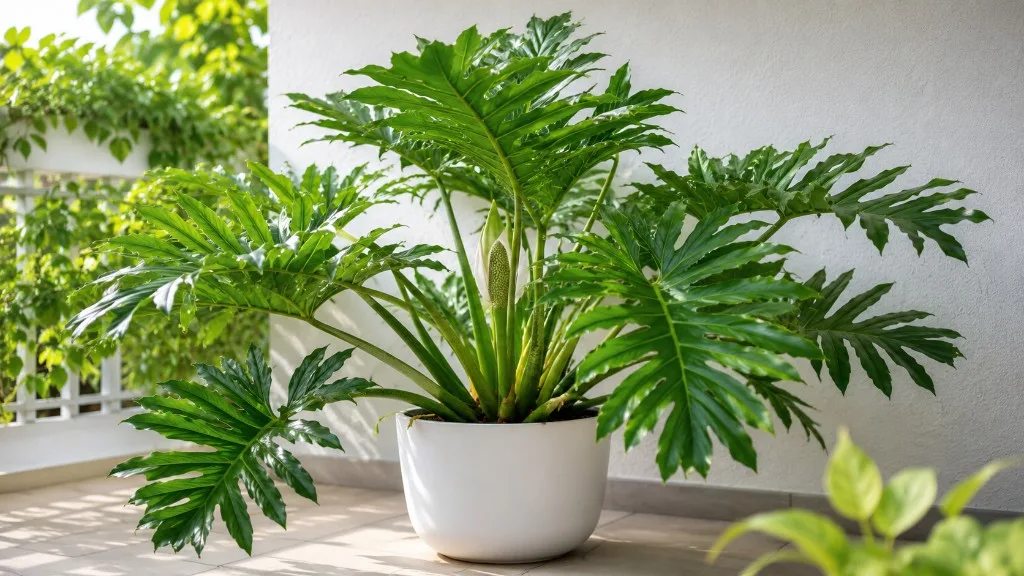
Philodendron Xanadu propagation at home means dividing the plant at repotting when you can see multiple crowns or offsets — not rooting a single leaf in a water jar like a heartleaf philodendron. Thaumatophyllum xanadu (still sold as Philodendron Xanadu or ‘Winterbourn’) is a dense, mounding self-heading aroid native to southern Brazil and Paraguay. It builds a compact bush of deeply lobed leaves from a central crown rather than climbing a pole. That growth habit determines which methods work: crown division is the reliable path; stem sections with nodes are a backup when mature stems carry aerial roots; detached leaves without nodes will not become plants.
The practical workflow: wait until spring or early summer active growth, repot the parent when roots circle the pot, gently tease apart offsets that each have roots plus at least one growth point, pot divisions into the same airy mix you use for the parent, water once, and place in bright indirect light at roughly 18–29°C (65–85°F). Iowa State Extension notes that non-trailing philodendrons propagate from offsets gently separated from the parent or from stem sections with at least two nodes — aerial roots on those sections root more reliably. Hold fertilizer until each division pushes firm new growth.
Quick Answer: Division at Repot, Not Vine Cuttings
For most indoor growers, division during repot is the best way to propagate Philodendron Xanadu:
- Time it for spring or early summer when the plant is actively growing.
- Unpot a healthy parent and look for separate crowns or offset clumps with their own roots.
- Tease or cut between crowns so each piece keeps roots, a stem base, and leaves.
- Pot each division into a small container with drainage and fresh well-draining mix.
- Water once, drain fully, and keep in bright indirect light with moderate humidity for four to eight weeks.
- Resume normal watering when the top 3–5 cm dries on the new plant’s schedule — see the watering guide.
Water-jar propagation works on trailing philodendrons with obvious nodes on a vine; on Xanadu it is a backup for stem sections, not the default for the whole bush.
What You Need Before You Divide
Propagation multiplies healthy plants. It does not rescue a drowning one. If the parent shows widespread yellowing, sour soil, or soft stems, stabilize watering and check for root issues before you cut anything apart.
Tools, Sanitation, and Pet Safety
Gather before you unpot:
- Sharp bypass pruners or a serrated kitchen knife for dense root masses — dull blades crush stems
- 70% isopropyl alcohol to wipe blades between cuts
- Fresh potting mix with 20–25% perlite and pots one size smaller than you think — divisions start compact
- Nitrile gloves — Xanadu contains calcium oxalate crystals that irritate skin and mouths; the ASPCA lists philodendrons as toxic to cats and dogs with oral irritation and drooling if chewed
- A tarpped table away from pets — sap and trimmings look like toys
Work on a surface you can wipe down. Bag discarded tissue in a closed bin. Wash hands after handling sap.
Parent Plant Health and Best Timing
Divide only when the parent has firm upright petioles, no active pest webs, and steady turgor in existing leaves. NC State places indoor Xanadu in bright indirect light at 65–75°F (18–24°C) — conditions that also help divisions recover fastest.
Best timing is spring through early summer when new lobed leaves unfurl regularly. Clemson HGIC notes philodendrons may be propagated at any season, but indoor winter divisions in cold dim rooms root slowly and stay wet longer. Avoid dividing immediately after a stressful move, heavy pesticide spray, or a long drought — wait until the plant pushes one clean new leaf or shows normal dry-down speed.
Pair propagation with scheduled repotting every one to two years when roots circle the pot — the same interval NC State recommends for container plants.
Why Xanadu Propagation Is Different From Vining Philodendrons
Heartleaf and Pink Princess philodendrons produce long internodes you can snip, strip, and root in water. Xanadu produces a mounded rosette that spreads sideways. There is no trailing vine to harvest every few weeks. Attempting to propagate Xanadu like a pothos — one leaf in a jar — wastes months.
Clemson HGIC separates philodendrons into vining types and self-heading types that send leaves from a heavy basal clump. ‘Xanadu’ is explicitly described as a dense low grower maturing around three feet tall. That matches the dense, mounding, spreading habit on NC State’s profile — a floor bush, not a climber. No moss pole is required or helpful for propagation.
Self-Heading Crown Anatomy
On a mature Xanadu, multiple growth points can appear as the crown widens: separate tufts of lobed leaves emerging from shared or adjoining root zones, sometimes with stout reddish stems and large aerial roots near the soil line (NC State). Each viable division needs:
- At least one active growth point (visible leaf bud or unfurling leaf)
- Its own root strands — not just snapped leaves
- Enough stem base to sit stable in mix at the same depth as before
Aerial roots on stem sections are bonus tissue. Iowa State Extension confirms stem sections with aerial roots tend to root more reliably than bare internodes — relevant when you remove a thick peripheral stem instead of splitting the whole crown.
What Will Not Root
These approaches fail on Xanadu reliably enough that you should skip them:
- A single lobed leaf without stem and crown tissue — leaves lack the meristem to build a new plant
- Leaf petioles pushed into water — common social-media advice copied from vining species
- Division without roots — a crown tuft torn off with no roots rarely survives unless you switch to high-humidity moss rooting on a stem section with nodes
- Oversized pots after division — wet unused soil invites rot in the weeks when roots are recovering
If you want more plants than your parent offers, grow the parent larger first with better light and patient watering until offsets appear — Xanadu spreads naturally as it matures.
Method 1: Division at Repotting (Step-by-Step)
Division is the default method because each piece already has roots and leaves — you skip the fragile unrooted cutting phase that velvet and vine philodendrons endure in jars.
Identifying Multiple Crowns or Offsets
Unpot during repotting and brush away loose old mix from the root ball. Look for:
- Two or more leaf clusters emerging from distinct stem bases
- Natural gaps in the root mass where sections pull apart with gentle tension
- Offset shoots smaller than the main clump but with their own petioles and white root tips
If you see only one tight central crown, the plant is not ready to divide — repot intact and revisit next spring. Forcing a single crown apart creates two weak halves with transplant shock and no upside.
Separating Roots Without Snapping Petioles
Steps:
- Water lightly the day before so roots flex instead of snapping dry.
- Tip the plant out and support the foliage — petioles are long and brittle.
- Work from the bottom up: tease roots with fingers or a blunt stick along natural seams. If the mass is dense, sterilize a knife and slice vertically between crowns, keeping equal root share per piece.
- Inspect each division: trim mushy brown roots (soft, smelly) with clean shears; keep firm white or tan roots.
- Pot each division at the same soil depth as before — burying the crown too deep encourages stem rot; leaving aerial roots exposed is fine.
- Backfill with fresh well-draining mix, tamp lightly, and water once until a little drains from the holes.
- Place in bright indirect light. Avoid direct sun on wilted divisions for the first two weeks.
Iowa State Extension directs growers to gently separate offsets from the parent and pot them up — the same gentle language applies to manual crown splits.
Most divisions show visible perking within one to two weeks when roots were healthy and watering stays restrained. Full bushiness returns over six to twelve weeks as new lobed leaves expand.
Method 2: Stem Sections With Nodes (Secondary Option)
When the plant is not yet multi-crowned but sends thick peripheral stems with aerial roots, you can propagate a stem section instead of splitting the whole bush. This is secondary to division — use it when you see obvious nodal tissue, not as a substitute for a single-leaf experiment.
When Stem Cuttings Make Sense on Xanadu
Choose this route when:
- A mature stem at the pot edge has aerial roots and at least two nodes
- You are pruning an overwide plant and want to save removed sections
- The parent is too young to divide but has one expendable stem
Steps:
- Cut a section 7–15 cm (3–6 inches) long with at least two nodes, per Iowa State’s stem-section guidance for non-trailing types.
- Remove lower leaves that would sit underwater or bury in soggy mix.
- Root in moist perlite, damp sphagnum, or water — change water weekly if using a jar; include the node and any aerial root below the waterline or in the moss.
- Optional rooting hormone on perlite cuts can accelerate rooting (Iowa State); many Xanadu sections with aerial roots root without it.
- Pot up when roots are several inches long and firm, into the same mix as mature plants.
The RHS water-cutting method — 10 cm stem below a leaf joint — applies to climbing or trailing philodendrons first. On Xanadu, only take cuttings from stems that actually show nodes and aerial roots, not from random lower petioles.
Expect two to six weeks for root formation in warm bright conditions; cool winter rooms extend that timeline.
Aftercare Weeks 1–8 for New Divisions
New divisions are whole small plants, not bare cuttings — they usually settle faster than water-rooted vines. They still lose some roots to handling and need conservative water.
Watering and Light for Settling Plants
Weeks 1–2: Keep mix lightly moist, not saturated. Check the top 3–5 cm before each soak — divisions with reduced root mass dry slower than you expect if you water on autopilot. Bright indirect light; no direct afternoon sun on wilted leaves.
Weeks 3–4: As new root hairs grow, the pot will lighten faster between waterings. Shift toward the parent’s normal watering rhythm — soak when the top 3–5 cm is dry.
Weeks 5–8: If each division pushes one new lobed leaf or shows firm turgor in existing foliage, care is working. Persistent drooping with wet mix means too much water or damaged roots — let the top half of the pot dry once, then reassess.
Maintain moderate humidity (50–60%) if your home is dry, but prioritize airflow over sealed bags — stagnant humidity on lobed leaves invites fungal spotting, the same vulnerability NC State notes for overwatered Xanadu.
When to Resume Fertilizer
Do not fertilize divisions in the first four to six weeks unless you see active new leaf expansion. Fresh repot mix usually carries enough starter nutrients; early feeding on stressed roots causes brown tips. After the first new leaf hardens, follow the fertilizer guide at half strength during spring and summer active growth.
Common Propagation Failures and First Fixes
| Symptom | Likely cause | First action |
|---|---|---|
| Whole division wilts, wet mix | Overwatering after divide | Let top 5 cm dry; confirm drainage holes open |
| Yellow lower leaves week 1 | Normal stress or overwater | Check stem base firmness; reduce water if mix stays heavy |
| Mushy stem base | Crown buried too deep or rot | Unpot, trim soft tissue, repot shallower in fresh mix |
| No new growth after 8 weeks | Too dim or too cold | Move to brighter indirect light; keep above 18°C |
| Stem cutting rotting in water | Stale water or no node | Switch to damp moss; verify node tissue present |
Dividing a sick parent multiplies problems. If you uncover widespread black roots during repot, trim aggressively, repot one consolidated plant first, and propagate later from healthy offsets.
When to use this page vs other Philodendron Xanadu guides
- Philodendron Xanadu overview — Identification, mature size, and daily care summary before you multiply plants.
- Repotting guide — Pot sizing and root inspection; division happens during this workflow.
- Watering guide — Dry-down checks for parent and new divisions after propagation.
- Pruning guide — Shaping an overwide bush and harvesting stem sections with nodes.
- Soil guide — Mix recipe for newly potted divisions.
Related Philodendron Xanadu guides
- Philodendron Xanadu overview
- Philodendron Xanadu watering
- Philodendron Xanadu light
- Philodendron Xanadu soil
- Philodendron Xanadu fertilizer
- Philodendron Xanadu repotting
- Philodendron Xanadu pruning
Conclusion
Philodendron Xanadu rewards patient crown division more than creative water-jar experiments. Wait for a healthy multi-crowned parent, split during spring repotting so each piece keeps roots and a growth point, pot small with drainage, and water conservatively for the first month. Stem sections with aerial roots are a useful backup when the bush is not yet divisible. Once new lobed leaves appear, return to normal cluster care — and enjoy a self-heading philodendron that fills floor space without a moss pole.