Philodendron Xanadu Light Needs: Best Window & Signs
Philodendron Xanadu Light Needs: Best Window & Signs
Philodendron Xanadu Light Needs: Best Window & Signs
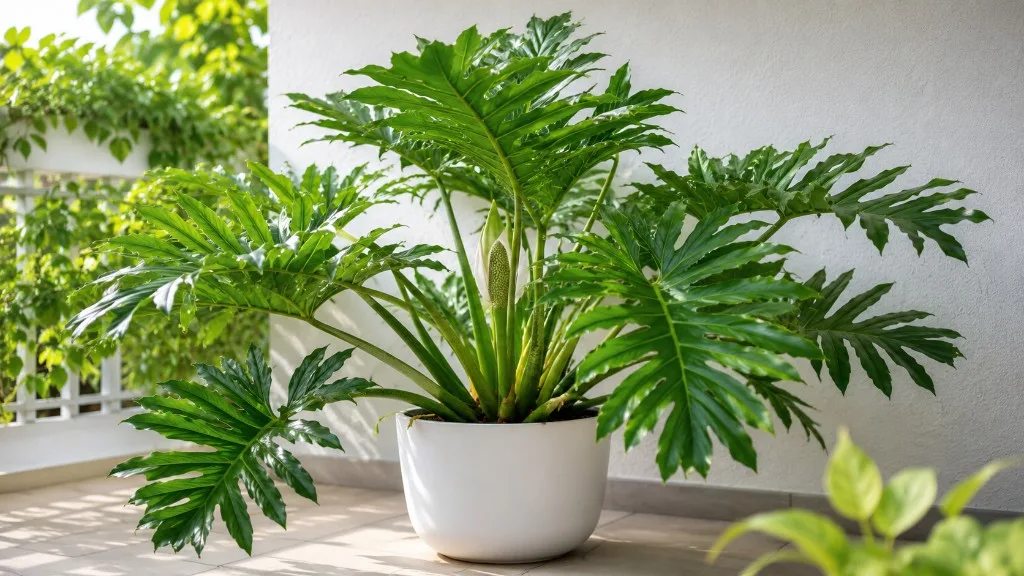
Philodendron Xanadu light needs decide whether you get a dense mound of deeply lobed glossy green leaves or a pale, stretched bush with tiny divisions. Xanadu is a self-heading aroid — it builds a mounded rosette from a central crown rather than climbing a moss pole. That shape means every leaf competes for the same horizontal light cone, and dim corners show up fast as longer petioles and smaller lobes. Botanists now classify the plant as Thaumatophyllum xanadu (synonym Philodendron ‘Xanadu’), though nurseries still use the philodendron label.
Quick Answer
Give Philodendron Xanadu medium to bright indirect light for most of the day — roughly 150 to 400 foot-candles (about 1,500–4,000 lux) at the leaf surface. An east-facing window with the pot 30–90 cm (1–3 feet) from the glass, or a filtered south or west window set back behind sheer fabric, suits most homes. UF/IFAS commercial guidance notes that philodendrons tolerate light as low as 75 foot-candles but 150 fc or more maintains leaf size and color indoors; RHS recommends bright filtered light with shade from hot sun under glass. Judge success by the last two new leaves: firm texture, deep lobes, and short spacing between petioles mean today’s placement works.
Why Xanadu Light Is Not About Room Brightness
A bright living room can still starve a floor pot placed far from glass. Light intensity drops sharply with distance, and Xanadu’s wide crown shades its own lower leaves. A pot on a side table three metres from an east window may look fine to your eyes while the plant receives survival-level brightness.
Plant-Facing Exposure vs Room Ambience
Run a shadow test on a clear day. Hold your hand between the plant and the window at foliage height. A soft shadow with readable edges near the outer leaves usually means adequate bright indirect light. A faint or absent shadow means the plant is too far back, the window is too dim, or both — common on north exposures and interior shelves.
The new-growth test beats room aesthetics: compact petioles, glossy lobes, and leaves that match the size of the previous pair mean placement is working. Long smooth petioles, smaller new divisions, and an open airy crown mean plant-facing light is limiting growth — even if older leaves still look acceptable.
Best Light for Philodendron Xanadu Indoors
Xanadu is more forgiving than variegated philodendrons but less tolerant of deep shade than heartleaf types. Clemson HGIC groups philodendron, pothos, and monstera among houseplants that prefer indirect or curtain-filtered sunlight indoors. UF/IFAS FP474 lists Xanadu’s landscape light requirement as shade, reflecting its tropical understory origin in Brazil and Paraguay — but indoor “shade” still means bright filtered, not a windowless hallway.
Unlike climbing heartleaf philodendrons that can lean toward a single light source, Xanadu stays upright and clump-forming. You want even brightness across the entire crown, not just one side.
Foot-Candle Benchmarks for Self-Heading Xanadu
Practical indoor targets based on UF interiorscape data and collector practice:
| Light level | Approximate foot-candles | What Xanadu typically does |
|---|---|---|
| Too dim long-term | Below 100 fc | Long petioles, small lobes, sparse crown, slow growth |
| Maintenance | 100–150 fc | May survive; leaves shrink; spacing widens |
| Target range | 150–400 fc | Firm new leaves; deep lobes; compact mound |
| Too intense unfiltered | Above 2,000 fc at leaf surface | Bleached or crisp patches on lobes; heat stress |
UF/IFAS EP150 documents that during production, excessively long petioles and an open plant appearance indicate light levels are too low — the same signal appears on finished plants moved to dim interiors.
Best Window Placement by Direction
Window direction changes both intensity and heat — important for lobed leaves that can bleach before you notice wilting.
| Window | Typical indoor Xanadu outcome | Placement tip |
|---|---|---|
| East | Strong default: morning brightness plus steady indirect day | Set pot 30–90 cm from glass; rotate weekly |
| North | Often maintenance-only without supplemental light | Add grow light or expect smaller leaves |
| West | High afternoon heat risk | Sheer curtain or 90–120 cm setback |
| South | Brightest; scorch risk without filtering | Sheer fabric or 90–150 cm back; never jump here from a dim shop |
East, North, West, and South Windows Compared
East windows deliver the best balance for most Xanadu setups: enough intensity to keep lobes deep without the sustained heat load of afternoon sun. Place the centre of the crown, not just the pot rim, within the light column.
North windows work only when the room receives strong reflected brightness or you add artificial light. Expect wider petiole spacing and smaller new divisions through winter unless you supplement.
West and south windows can support vigorous growth when filtered, but harsh direct beams bleach or brown lobe tips first. Use sheer curtains and increase distance before increasing duration of direct sun.
Self-heading habit matters: there is no moss pole to raise the growing tip into brighter air. The entire bush must sit where light is adequate — see the overview guide for why Xanadu does not need vertical support.
Can Philodendron Xanadu Take Direct Sun?
Limited early-morning direct sun through east glass is tolerable for many acclimated plants — roughly one to two hours when leaves formed in similar brightness. NC State Extension recommends partial shade and avoiding direct sunlight for philodendron culture indoors, and Xanadu lobes scorch faster than heart-shaped leaves under harsh rays.
Never move a plant straight from a dim nursery shelf to an unfiltered south or west sill. Warning signs of too much direct exposure include bleached green patches, crisp brown lobe tips, leaf curl during peak hours, and sudden leaf drop after relocation. UF/IFAS EP150 lists burned patches in leaf centres and tips as sunburn, treated by increasing irrigation frequency and moving to lower light — fix placement first, then revisit watering in our watering guide.
Low-Light Limits and Warning Signs
Xanadu will persist in moderate indirect light longer than a Pink Princess or Prince of Orange, but it is not a true low-light plant like heartleaf philodendron. Chronic dim conditions produce a leggy, open mound — the plant survives on stored energy while new leaves emerge smaller and farther apart.
When Dim Corners Produce Small Leaves and Wide Spacing
Very dim corners produce smaller leaves and wider spacing between petioles — the classic Xanadu stress pattern noted in LeafyPixels grower data and consistent with UF’s observation of long petioles under low light. Fixing placement can improve the next leaves; mature foliage keeps the size and division depth it formed under — judge recovery only on new growth.
If growth stays stalled after a brighter move, rule out root stress from overwatering in low light before assuming the window is still too dim. Chronic wet mix in shade invites rot — pair light corrections with the soil guide and check saucers after every soak.
Using Grow Lights for Philodendron Xanadu
When window light is weak — especially north rooms and short winter days — a full-spectrum LED is the most reliable fix. Clemson HGIC notes that philodendrons benefit from adequate light near appropriate windows; grow lights extend that when building orientation or latitude fails.
Hours, Distance, and Coverage for a Floor Pot
Practical starting points for a single floor pot:
- Duration: 10–12 hours daily on a timer
- Distance: 30–45 cm (12–18 inches) from the top of the crown for typical household LED grow lamps
- Heat check: if outer leaves feel warm after two hours, raise the fixture or reduce intensity
- Coverage: angle the lamp to illuminate the whole mound, not just one side — rotate the pot a quarter turn weekly
Grow lights should deliver steady plant-facing brightness in the 150–400 foot-candle target band. Combine a modest east window with supplemental light through winter if petioles stretch despite open curtains.
How to Move or Acclimate Xanadu Safely
Sudden jumps in exposure cause scorch, leaf drop, or stalled growth. Use incremental moves over 10–14 days:
- Days 1–3: Shift the pot 30 cm closer to the target window during morning hours only; return to the previous spot if afternoon sun is harsh.
- Days 4–7: Leave the plant in the brighter position full-time behind a sheer curtain if west or south.
- Days 8–10: Remove one layer of filtering or move 15–30 cm closer if no bleaching appears on new growth.
- Days 11–14: Set final position; stop adjusting water and fertilizer until a new leaf unfurls.
Worked example: A Xanadu on a coffee table 2 metres from an east window shows 15 cm petiole gaps and smaller new lobes. You move it to 60 cm from the glass using the schedule above. At day 12, a new leaf opens with deeper divisions and shorter petioles — light placement confirmed. If lobes bleach instead, pull back 30 cm and repeat more slowly.
Change one variable at a time. Do not simultaneously repot, fertilize heavily, and jump to a south sill.
Warning Signs: Too Much vs Too Little Light
| Symptom | Likely cause | First response |
|---|---|---|
| Long petioles, small new lobes, open crown | Too little plant-facing light | Move closer or add grow light |
| No new leaves for months in a dim room | Insufficient light and/or root stress | Improve light; check mix dry-down |
| Bleached patches, crisp lobe tips | Too much direct sun or heat | Filter window or increase distance |
| Sudden leaf curl at midday | Heat + intensity spike | Sheer curtain; move back 30–60 cm |
| Old leaf blemishes unchanged but new growth healthy | Past damage only | Keep current placement |
Judge by new growth after any move, not old scars from a previous location.
Light Changes Watering — What to Adjust
Light and water move together. A Xanadu in brighter exposure transpires faster and dries its mix sooner. After you increase light, revisit the top 3–5 cm dry checkpoint from our watering guide rather than keeping the old calendar.
If you move dimmer to slow a scorch issue, extend the dry window — roots consume less when photosynthesis drops, and soggy mix in low light invites rot. UF/IFAS EP150 links water stress combined with high light to irregular necrotic leaf margins; balanced moisture and filtered brightness prevent both extremes.
Do not compensate for pale stretched growth with fertilizer alone. Leaf size and lobe depth follow light first — see the fertilizer guide only after placement is stable.
Know Your Plant: Self-Heading Thaumatophyllum xanadu
Philodendron Xanadu is a patented hybrid developed in Australia, classified today as Thaumatophyllum xanadu. UF/IFAS FP474 describes a self-heading shrub reaching 2 to 4 feet tall with deeply lobed leaves 12 to 18 inches long, growing fast in suitable conditions. RHS lists a clump-forming, upright habit with glossy dark green divided foliage and a native range in Brazil and Paraguay — tropical forest understory where bright filtered light is the norm.
Unlike Philodendron selloum or lacy-tree types that need high light indoors, Xanadu was bred for interiorscape floor use at roughly 3 feet maximum height per UF/IFAS EP150. Commercial growers produce it in shaded greenhouses at 80–88% shade (about 1,500–2,500 foot-candles) — translate that indoors as bright indirect, not dark corners.
Pet safety: RHS notes the plant is harmful if eaten and an irritant to skin and eyes. Keep Xanadu away from pets and children who chew plants; elevated placement helps on the toxicity front even though this page focuses on light.
Seasonal Light Adjustments
Day length and sun angle shift placement needs without any care change from you. Late autumn through winter, north and east rooms lose intensity — petiole stretch or stalled new leaves often appear even when summer placement seemed perfect. Add a grow light or move the pot 15–30 cm closer temporarily, then revisit in spring.
Late spring through summer, west and south glass gains heat. A spot that was safe in March may scorch lobes by July. Add sheer filtering or pull the pot back before leaves bleach.
Rotate the pot a quarter turn weekly so one side does not dominate growth toward the glass. Rotation manages shape; it does not fix a fundamentally dim room — relocate or supplement instead.
Common Philodendron Xanadu Light Mistakes
- Judging by room brightness instead of shadow test at crown height
- Expecting a moss pole to solve dim light — Xanadu does not climb; the whole mound needs brightness
- Moving straight from shop dim shelf to unfiltered south glass
- Fertilizing when lobes shrink instead of increasing filtered brightness
- Overwatering after a dim move — roots in wet mix plus low light compound yellowing
- Changing light, water, pot, and fertilizer the same week — impossible diagnosis
- Judging recovery on old leaves instead of the next two new ones
For cluster context, see the overview, propagation when dividing crowns, and repotting after a stable light routine is established.
Conclusion
Philodendron Xanadu light success is self-heading-aware placement: medium to bright indirect exposure at the crown, east or filtered south/west windows for most homes, 10–12 hour grow-light supplementation when winter or north exposures fall short, and gradual acclimation that protects lobed foliage. Read new growth for petiole length and lobe depth; distinguish temporary stretch from root stress in dim wet mix. When you increase light, tighten the watering rhythm; when you filter harsh sun, expect slower dry-down. Get placement right first — fertilizer cannot replace photons on a dense tropical mound.
When to use this page vs other Philodendron Xanadu guides
- Philodendron Xanadu overview — Start here for whole-plant context before deep-diving light placement.
- Philodendron Xanadu watering — Use when dry-down rhythm, not window direction, is the main question.
- Philodendron Xanadu problems hub — Jump to symptom-specific fix guides when light adjustments alone do not resolve yellowing or drooping.